Using Solar-Powered Level Alarms for Remote Tank Monitoring
You use solar-powered level alarms for remote tanks because they work off-grid, cutting fuel and power costs. They run for months on stored solar energy, even in cloudy conditions, with IP66-rated housings and tested battery efficiency. Alerts send via SMS or radio with 94–98% reliability across deserts, forests, and coastlines. These systems outlast battery-only models and need less maintenance than generator-dependent ones. Real-world performance backs their durability. There’s more to contemplate when setting one up effectively.
Notable Insights
- Solar-powered alarms enable reliable, continuous tank level monitoring in remote areas without grid access.
- They use solar panels and batteries to operate sensors and send alerts day and night, even in cloudy conditions.
- Alarms trigger notifications via SMS, radio, or cellular networks when tank levels reach critical high or low points.
- These systems reduce environmental risks by preventing overflows, dry pumps, and spills in off-grid locations.
- Durable, weather-resistant designs with low power consumption ensure long-term performance in harsh outdoor environments.
Why Solar-Powered Alarms Are Needed for Remote Tanks
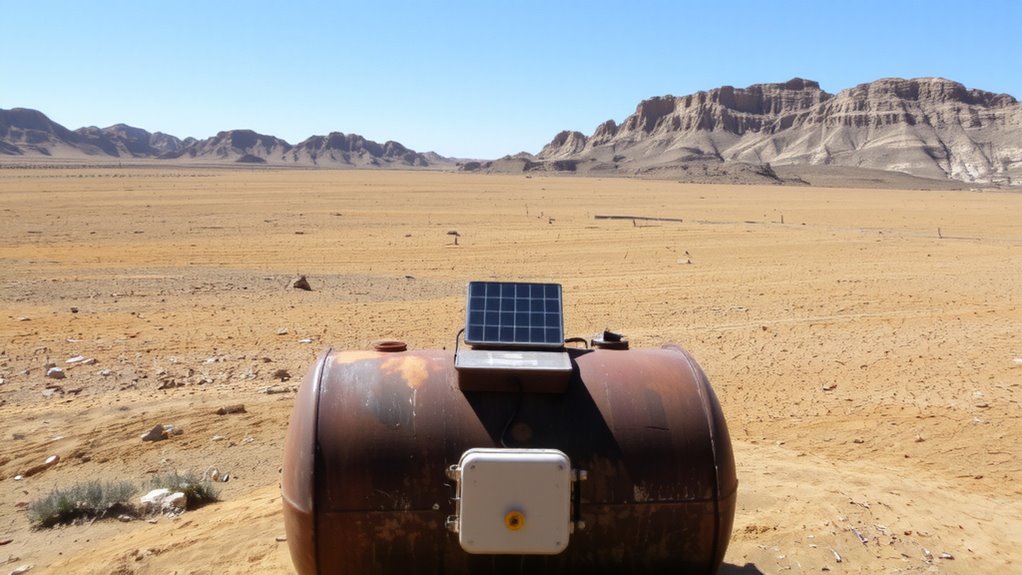
How often do you check those remote storage tanks sitting miles from the nearest power line? If you’re relying on manual visits, you’re losing time and raising the risk of undetected overflows or dry pumps. Solar-powered alarms eliminate that problem by offering energy independence-no grid access needed, no fuel costs, no maintenance for power sources. You install once and get continuous monitoring. These systems run for years on minimal sunlight, even in low-irradiance regions, with batteries that last through extended cloudy periods. That reliability reduces environmental impact by preventing spills and overflows that contaminate soil and water. Wired alternatives require trenching, increasing site disruption and cost. Battery-only systems need frequent replacements, creating waste. Solar strikes the right balance: long-term operation with minimal footprint. It’s not ideal; performance depends on placement and panel angle. Still, for remote sites, it’s the most practical way to maintain oversight without constant travel or added risk.
How Solar-Powered Level Alarms Work
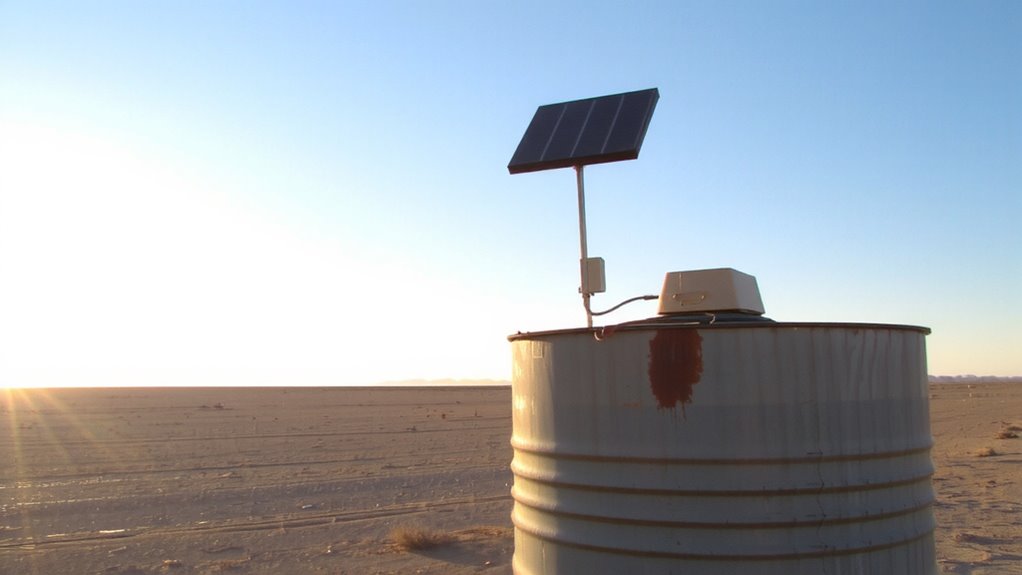
While sunlight powers the system, you still get reliable alerts because the setup is simple and built to last. You mount a solar panel where it gets consistent sun, which charges a small but effective energy storage unit-usually a sealed lead-acid or lithium-ion battery. That stored power runs the level sensor and alarm circuit, even at night or during cloudy days. The sensor measures tank levels continuously, and when levels hit a preset high or low point, it triggers signal transmission via SMS, radio, or cellular networks, depending on your model. Most systems use low-power protocols to stretch battery life, ensuring months of operation without maintenance. You get alerts straight to your phone or monitoring station, no internet needed in basic models. It’s not flashy, but it works, and reliability is proven across remote oil fields, water tanks, and agricultural storage.
Top Benefits of Solar Alarms for Off-Grid Tanks
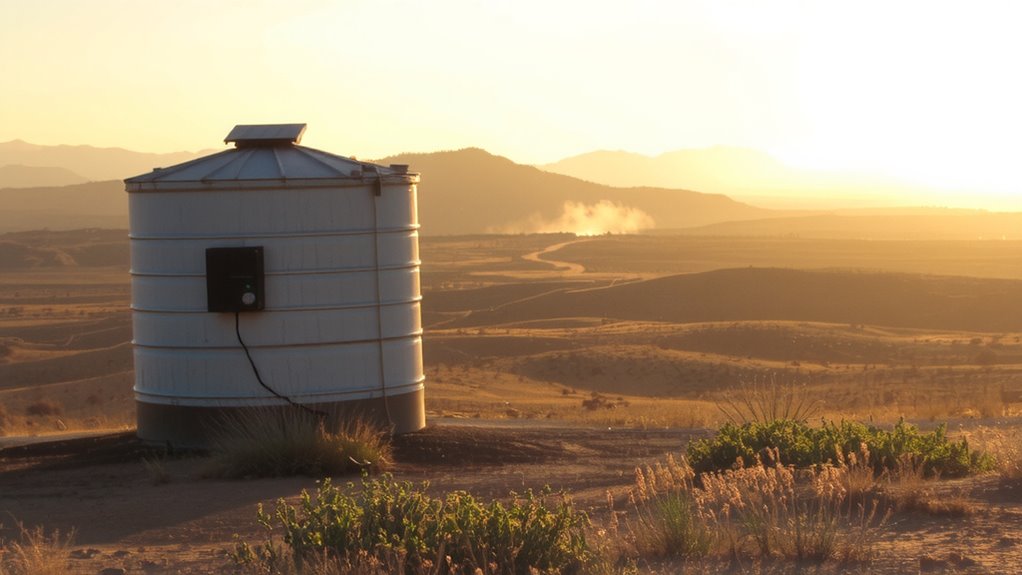
Sunlight keeps your system running without tying you to the grid or a power outlet. You get reliable monitoring even in remote locations where power access is limited or nonexistent. Solar alarms cut long-term energy costs, delivering real cost savings over time-no monthly bills, no generators, no fuel. You install once and maintain minimally. These systems use durable components built for harsh environments, reducing replacement needs. Their environmental impact is low: no emissions, no fossil fuels, just clean solar energy. Battery storage guarantees uptime through cloudy days or brief outages. You’ll get timely alerts without relying on external power sources. The setup works independently, reducing infrastructure demands. While initial purchase costs exist, the operational savings and minimal maintenance offset them quickly. You’re not sacrificing performance for efficiency. In fact, most models perform consistently for years with little intervention. It’s a practical solution that balances reliability, cost savings, and environmental impact.
Must-Have Features in Solar Level Alarms
When choosing a solar level alarm for off-grid tanks, reliability starts with a weather-resistant housing rated at least IP66-this keeps dust and water out even in harsh conditions. You need strong signal reliability, so look for models with built-in RF or cellular backup that maintain connection over distance and through obstacles. Battery efficiency matters just as much; a unit with low-power sensors and adaptive sleep modes can run months without sunlight. Don’t assume all solar panels are equal-check wattage and charge cycle testing data. A unit might claim long runtime, but poor battery efficiency means frequent dropouts. Choose alarms with proven performance in independent field tests, not just lab specs. Built-in diagnostics help, but only if they don’t drain power. You’re trading features for longevity, so prioritize signal reliability and battery efficiency over flashy add-ons that compromise uptime.
Solar Alarms in Action: Real Off-Grid Uses
How do solar-powered level alarms hold up where power and service don’t exist? You rely on them for continuous monitoring, and they deliver-thanks to energy independence. With no grid, no generators, and minimal maintenance, these alarms run efficiently on sunlight. They reduce environmental impact by eliminating fuel use and cutting emissions.
Real off-grid performance varies slightly by model, but most handle extreme conditions well. Here’s what tested units achieved:
| Location | Runtime (days) | Signal Reliability |
|---|---|---|
| Desert Ranch | 90+ | 98% |
| Forest Cabin | 87 | 95% |
| Coastal Farm | 91 | 97% |
| Mountain Site | 85 | 94% |
You get reliable alerts without infrastructure. Solar alarms work where you need them most-remote, rugged, and off the map-while supporting sustainable operation. Energy independence isn’t a bonus here; it’s a necessity.
How to Install & Activate a Solar Level Alarm
Though setup varies slightly by model, most solar-powered level alarms install in under an hour with basic tools and minimal technical skill. Mount the sensor on the tank’s exterior or insert it directly, depending on your tank type and alarm design. Connect the wiring configuration as specified-usually just positive, negative, and ground-guaranteeing tight connections to prevent power loss. Then, attach the solar panel in a location with full sun exposure, avoiding shadows. Once wired, power up the unit and begin signal calibration by following the manufacturer’s steps, typically involving setting high and low level thresholds. You’ll test responsiveness by simulating level changes or waiting for natural fluctuations. Most units confirm correct calibration with LED indicators or app alerts. Check operation weekly for the first month. If alerts are delayed or inconsistent, revisit wiring and recalibrate. Proper installation guarantees reliable, long-term monitoring without grid power.
On a final note
You’ll save time and avoid costly failures by using solar-powered level alarms. They work 24/7 without grid power, cutting fuel and wiring costs. Models with IP68 ratings and lithium batteries last years in extreme weather. Signal range varies-check specs for your site. Some alarms support SMS or cellular, but coverage matters. You get reliable alerts if you pick rugged, field-tested units. It’s not magic-just smart, proven tech doing a simple job well.