Purifying Brackish Water With a Solar Still in Coastal Survival Scenarios
You can purify brackish water with a solar still by using sunlight to evaporate moisture and condense fresh water on a plastic sheet, yielding 0.5–1 liter per day. It’s best when stranded and unable to move, using just a hole, container, and plastic. Wind and heat boost output, but salt buildup and material risks require daily checks. Output is low, so efficiency tweaks matter most in survival. There’s more to optimizing it under coastal conditions.
Notable Insights
- A solar still purifies brackish water by using sunlight to evaporate moisture, leaving salts and impurities behind.
- Dig a pit in damp coastal sand, place a container in the center, and cover with clear plastic to build a basic still.
- Condensation forms on the plastic and drips into the container, yielding 0.5 to 1 liter per day depending on conditions.
- Increase output by pre-warming water, angling plastic to catch wind, and positioning the still in sunny, breezy areas.
- Avoid contamination by inspecting materials, cleaning daily, and checking for salt buildup or plastic degradation.
How Does a Solar Still Work?
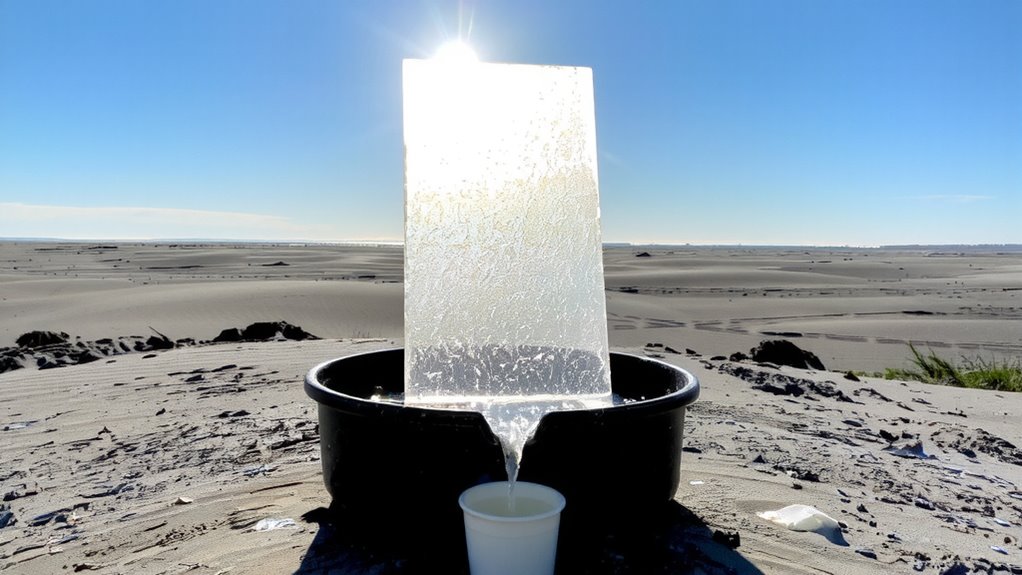
While sunlight isn’t always strong enough to purify water quickly, a solar still uses that energy efficiently by relying on evaporation and condensation. You dig a hole, place a container in the center, and lay a plastic sheet over the top. Sunlight heats the brackish water, starting the evaporation process-moisture rises, leaving salts and impurities behind. The vapor hits the cooler plastic, undergoes condensation collection, and drips into the container. You get 0.5 to 1 liter per day depending on sun intensity and setup size. It’s slow, but reliable. The still works in arid or humid coastal zones, though output drops under cloud cover. There are no moving parts, no fuel required, and no maintenance. It’s simple physics, not magic. You trade speed for consistency, and that’s a fair deal when survival’s on the line.
When Should You Use One on the Coast?
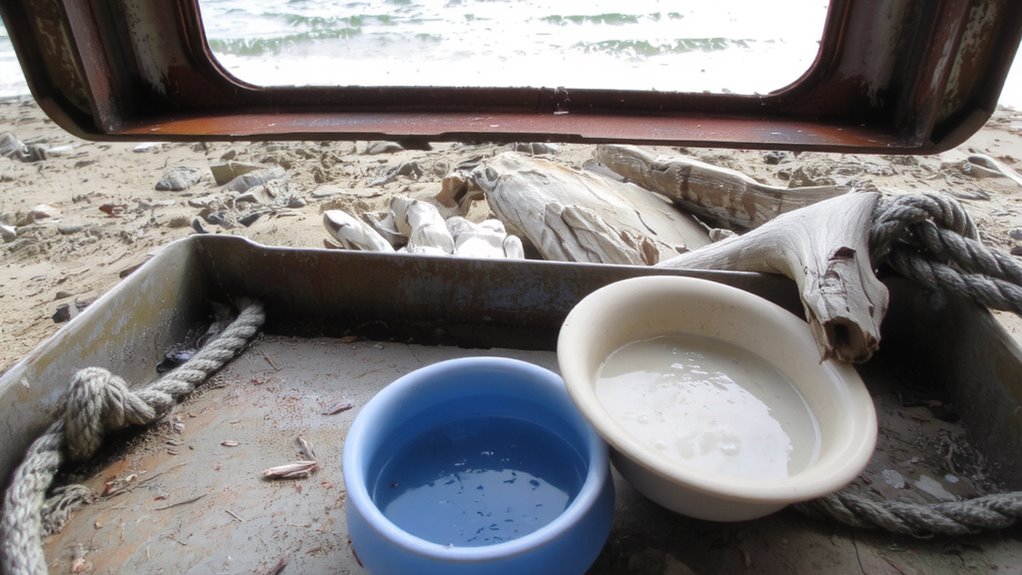
Why rely on a solar still when you’re stuck on the coast with nothing but brackish water? Because in coastal survival scenarios, you face water scarcity even with the ocean nearby-saltwater isn’t drinkable. A solar still offers emergency desalination using only sunlight and basic materials. You should use one when no fresh water source is available and you can’t move to find it. It works slowly-expect 0.5 to 1 liter per day-so it’s not ideal for groups or long-term use. However, in short-term survival, it’s reliable and requires no fuel or power. The trade-off is time and output versus safety. If you’re injured, stranded, or waiting for rescue, the still gives you a steady trickle of potable water. It won’t replace proper hydration planning, but it reduces dehydration risk when options are gone.
Build a Solar Still With Found Materials
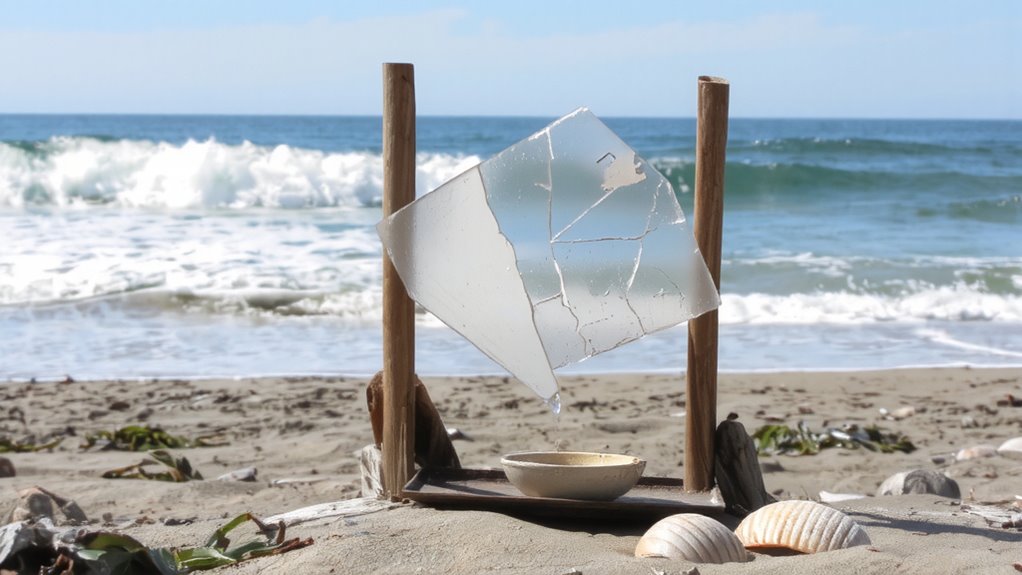
You’ve got no fresh water and the coast offers only salt-soaked options, so it’s time to build a solar still using what’s around you. Start by digging a shallow pit in damp sand near brackish water-depth matters, about 18 inches deep to maximize condensation. Lay a container in the center to catch purified water. Stretch a sheet of clear plastic over the top, securing edges with rocks or driftwood-this creates a seal using found materials. Place a small stone in the center to create a drip point above the container. Sunlight heats the soil, evaporating moisture; humidity condenses on the plastic and drips into the vessel. This method yields roughly 1–2 cups per day, depending on sun intensity. It’s a slow process, but reliable among coastal survival techniques. No extra tools are needed, making it practical and self-sustaining in emergencies.
Get More Water in Coastal Heat and Wind
If you’re stuck in coastal heat with wind drying every surface, boosting your solar still’s output means working with the environment, not against it. Wind increases evaporation rate, which you can harness by angling the plastic cover to catch breezes. More airflow across the surface speeds up moisture formation, directly improving desalination efficiency. Pre-warming brackish water in a dark container before adding it to the still also helps maintain higher internal temperatures.
Consider these simple modifications:
| Factor | Basic Setup | Enhanced Setup |
|---|---|---|
| Evaporation Rate | Low | High (with airflow) |
| Desalination Efficiency | 30% | 60% (pre-heated water) |
Position the still where wind flows freely, and use rocks to adjust the plastic slope. These tweaks don’t require extra gear but do increase yield. You won’t double production, but even 20% more water matters when survival’s on the line.
Avoid Solar Still Risks and Hazards
A common oversight in survival scenarios is assuming the solar still is inherently safe-no risk, no downside. You can’t afford that mindset. Chemical contamination is a real threat if your still uses contaminated materials or sits on polluted ground; toxins can leach into the condensation, making the water unsafe despite appearing clear. You must inspect all materials before assembly-plastics, containers, sealants-and avoid anything that might degrade in heat or sunlight. Salt buildup is another issue. Over time, salts concentrate in the basin and reduce efficiency by blocking evaporation. You’ll need to clean it daily, especially in high-salinity environments. This means losing time and effort, but skipping it means less output. Also, prolonged use without maintenance risks structural failure. Your still isn’t maintenance-free. Monitor it closely, rotate materials when possible, and assume every batch needs checking before consumption.
On a final note
You can rely on a solar still in coastal survival, but expect slow output-typically 0.5 to 1 liter per day. It works when no freshwater exists, using sunlight and evaporation. It requires plastic, a container, and a digging tool. Wind and heat help, but output drops in humidity. It’s low-effort and passive, though larger stills or multiple units boost yield. Know that it won’t replace faster methods once rescue nears.