Safe Methods for Dehydrating Wild Cranberries Into Chewy Snacks
Sort fresh, firm wild cranberries and rinse them clean. Float test to remove bad ones, then dry lightly. You can blanch briefly for softer skins or soak to reduce tartness, though both affect flavor differently. Dehydrate at 135°F for 8–12 hours with good airflow-use a dehydrator with temperature control to guarantee even results. Check for a plump, leathery chew. Store in airtight containers. Proper prep and temp mean safe, shelf-stable snacks that last months. You’ll find the best texture comes from small adjustments based on your setup.
Notable Insights
- Harvest only firm, deep red cranberries and discard soft or damaged ones to ensure quality and safety.
- Rinse and thoroughly sort berries to remove debris, then perform float testing to eliminate unripe or spoiled ones.
- Blanch berries briefly in boiling water followed by ice water to soften skins and preserve tart flavor.
- Dry at 135°F for 8–12 hours in a clean dehydrator with proper airflow, avoiding overcrowded trays.
- Store fully dried cranberries in airtight containers in a cool, dark place for up to twelve months.
How to Prepare Wild Cranberries for Drying
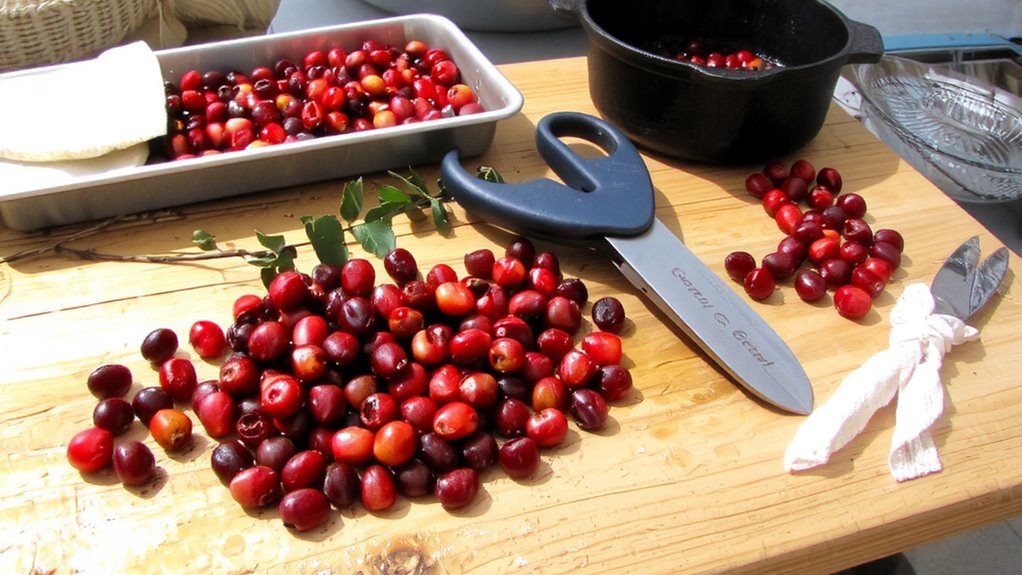
While harvesting wild cranberries yourself gives you control over quality, you’ll still need to sort and clean them properly before drying. Harvest timing affects firmness-berries picked too early shrivel, while overripe ones rot during dehydration. You’re looking for deep red, plump fruit that resists light pressure. Start berry sorting by removing leaves, stems, and debris. Discard soft, moldy, or punctured berries-they’ll spoil the batch. Float testing works: place berries in water; good ones sink, damaged or unripe ones float. Rinse them under cool running water after sorting to eliminate dirt and insects. Dry them lightly with a clean cloth before loading the dehydrator. Skipping proper sorting risks uneven drying and contamination. This prep takes 15–20 minutes per quart, but it’s necessary for safe, shelf-stable results. No shortcuts guarantee consistency and edibility in the final product.
Blanch or Soak? Best Ways to Improve Flavor and Texture
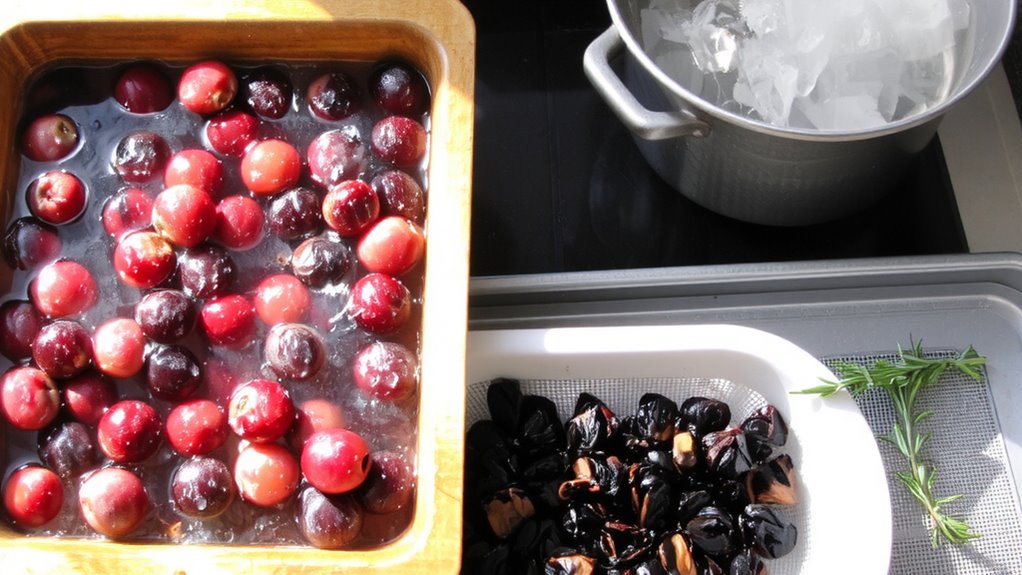
Why do some cranberries turn out tough or bitter after drying? Because skipping blanching or soaking leaves the skins too firm and the flavor too sharp. For texture improvement, blanching works faster-it softens skins in under a minute. Just drop them in boiling water, then ice water. Soaking is slower but still effective, especially if you use warm water over several hours. Both methods support flavor enhancement by reducing natural bitterness. Blanching tends to preserve more tartness if that’s what you prefer, while soaking leaches out more of the sharpness. Choose based on your taste and texture goals. Neither method affects safety, but both directly impact chew quality and flavor balance. You’ll get more consistent results with either step than skipping it entirely. For chewy snacks, some prep is non-negotiable.
3 Safe Methods to Dehydrate Wild Cranberries at Home
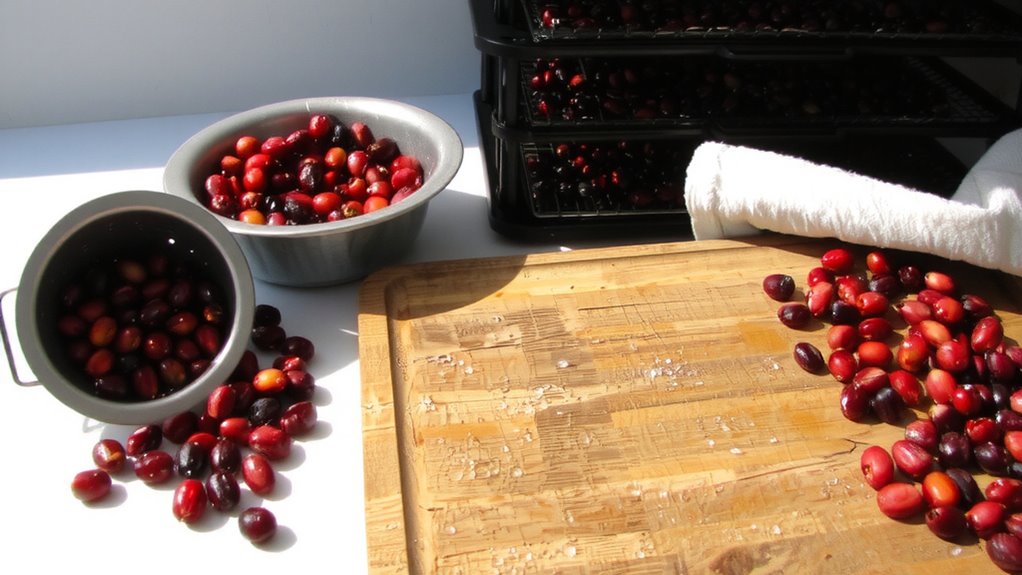
A reliable dehydrator set to 135°F works best for drying wild cranberries safely and evenly. Your equipment selection directly affects consistency and safety. Stick to models with adjustable temperature and airflow control. Always follow basic safety precautions: clean the unit before use and keep it away from moisture or flammable materials. Best Food Dehydrators for Preppers offer reliable options designed for long-term, consistent performance ideal for safe home food preservation.
| Step | Purpose |
|---|---|
| Wash cranberries | Removes dirt and debris |
| Inspect fruits | Discard moldy or damaged ones |
| Tray placement | Prevent overcrowding |
| Temp setting | Guarantees safe, even drying |
| Ventilation check | Reduces risk of contamination |
Check seals and airflow regularly-faulty parts compromise performance. Never leave the dehydrator unattended for long periods. Proper equipment selection and safety precautions minimize risks and improve results every time.
Drying Times and Temps for Chewy, Tangy Results
Most wild cranberries take 8 to 12 hours to dry at 135°F, but you’ll need to check them early if you prefer a chewy texture with a tangy bite. Drying precision matters-pull them at 8 hours for softer results, or go longer for denser chew. At 135°F, moisture drops steadily without cooking the fruit, preserving the bright, tart flavor you want. Going hotter than 140°F risks tough skins and uneven drying. You’re aiming for a plump, leathery feel, not brittleness. A properly dried berry should bend slightly, not crack. This tangy consistency means acids and natural sugars remain balanced. Check trays hourly after the 8-hour mark, rotating them if your dehydrator has hot spots. Wild cranberries vary in moisture, so time isn’t fixed. Your final call should be based on texture, not the clock. Drying precision gives you repeatable results, batch after batch.
How to Store Dried Wild Cranberries for Months
Once your wild cranberries reach that ideal chewy, leathery texture, it’s time to think about keeping them that way for months. Proper container selection is critical-use airtight glass jars or food-grade plastic containers with tight seals to block moisture and pests. Avoid bags unless vacuum-sealed, as they offer weak protection. Before storage, perform moisture detection: let a few berries sit in a sealed bag for 24 hours. If condensation forms, they’re too moist and risk mold. Fully dried cranberries should feel uniformly firm with no soft spots. Store the container in a cool, dark pantry or cupboard-temperatures below 70°F extend shelf life. When done right, your cranberries can last six to twelve months without spoiling. Check them monthly for texture changes or moisture buildup. Good storage isn’t complicated, but ignoring details like container selection or moisture detection cuts longevity short. For maximum shelf life, consider using Mylar bags with oxygen absorbers to prevent degradation from light, air, and moisture.
On a final note
You’ve got options that work. Oven-drying is reliable but uses more energy; dehydrators offer even results at lower temps. Blanching softens texture, but soaking preserves more tartness. Aim for 135°F for 8–12 hours, depending on method. Berries are done when leathery, not sticky. Store in airtight containers for up to six months. Each approach delivers shelf-stable snacks-choose based on your tools and time.