Using Steam Canning for High-Acid Wild Fruit Preserves
You can safely steam-can high-acid wild fruits like blackberries, raspberries, and elderberries if their pH is 4.6 or lower. Process pints for 15 minutes, quarts for 20 minutes at sea level, using ¼-inch headspace. Steam canners heat faster and use less water and energy than boiling baths. Avoid chipped jars, cold fills, or inconsistent steam to prevent seal failure. Proper technique guarantees shelf stability-mistakes risk spoilage. Follow tested guidelines closely to maintain safety and effectiveness. More details on ideal practices follow.
Notable Insights
- Steam canning is safe for high-acid wild fruits with pH 4.6 or lower, like blackberries, raspberries, elderberries, and gooseberries.
- Proper processing requires 15 minutes for pints and 20 minutes for quarts at sea level using consistent steam flow.
- Always sterilize jars and maintain ¼-inch headspace to ensure proper sealing and prevent contamination.
- Underripe fruit is preferred for higher acidity; avoid overripe or spoiled fruit to maintain safety.
- Steam canning uses less water and energy than boiling water baths, offering faster heat-up and easier cleanup.
Best High-Acid Wild Fruits for Steam Canning
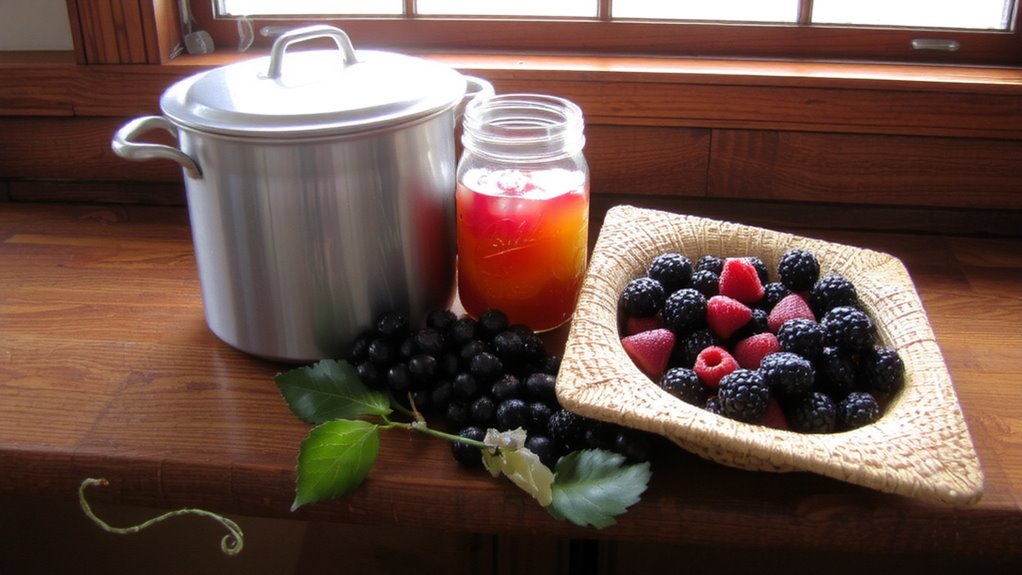
When it comes to steam canning wild fruit preserves, acidity matters most-your safety and shelf life depend on it. You need naturally high-acid fruits to prevent spoilage and guarantee safe processing. Choose wild blackberries, raspberries, elderberries, and gooseberries-they’re consistently acidic enough for steam canning. Fruit ripeness affects acidity; underripe fruit is often more acidic, but fully ripe fruit balances flavor and safety when handled correctly. Overripe or spoiled fruit lowers acidity and increases risk-toss any that looks questionable. Foraging safety is critical: positively identify each plant to avoid toxic look-alikes. Only collect from clean, unpolluted areas. Some wild fruits, like wild apples or pears, are too low in acid and require added citric acid or lemon juice. Stick to proven high-acid varieties to maintain safety without guesswork. Your effort pays off in stable, shelf-stable jars when you start with the right fruit.
Why Steam Canning Is Safe for Wild Fruit Preserves
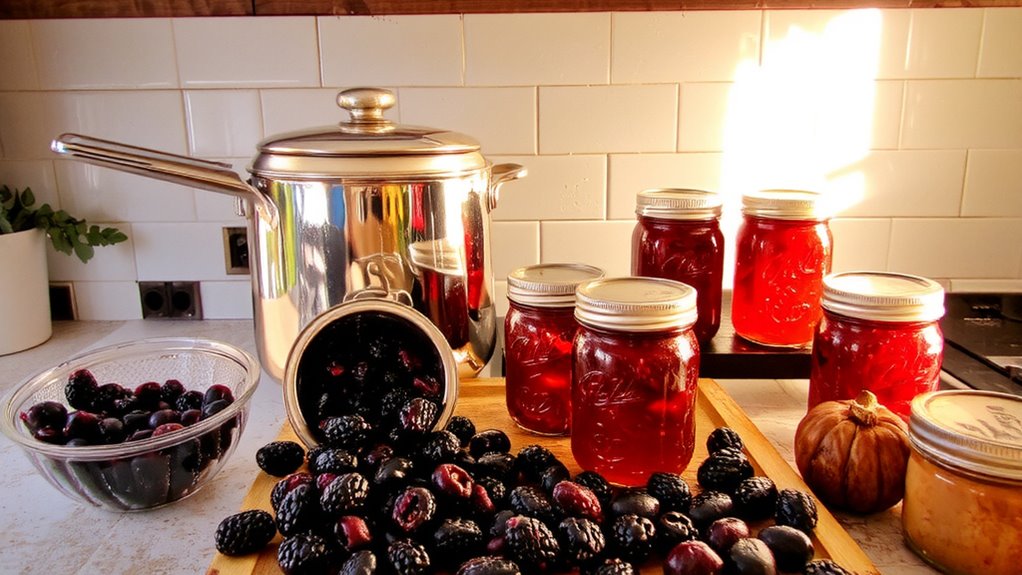
Although steam canning relies on moist heat rather than full submersion, it’s safe for wild fruit preserves as long as the fruit meets minimum acidity standards-pH 4.6 or lower-since that prevents harmful bacteria like *Clostridium botulinum* from growing. You can rely on tested steam canners that deliver consistent heat penetration, bringing jar contents to safe temperatures within the recommended time. Modern units maintain stable steam flow, ensuring even processing across all jars. Proper pH levels combined with adequate heat penetration destroy pathogens and inactivate enzymes that cause spoilage. You must use only high-acid wild fruits or adjust pH with citrus or vinegar when necessary. Altitude adjustments still apply, so follow current guidelines. Steam canning works like boiling water canning when done correctly-just don’t cut corners on time, temperature, or jar sealing. Your safety depends on both acidity and accurate heat penetration.
How to Steam Can Wild Fruit Preserves
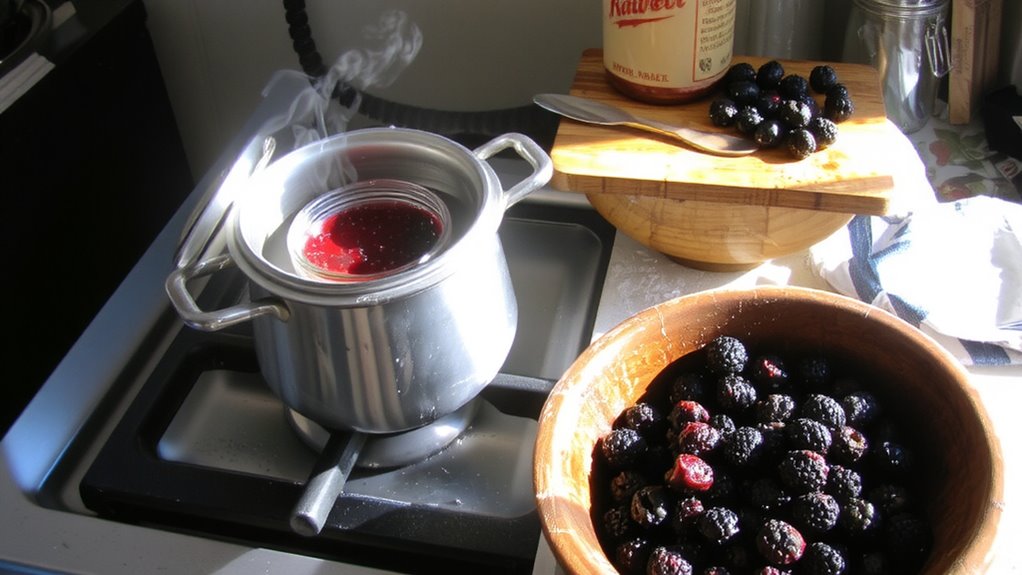
How do you get reliable results with steam canning for wild fruit preserves? Start with proper jar sterilization-wash jars in hot, soapy water, then heat them in boiling water for 10 minutes to eliminate contaminants. Fill sterilized jars, leaving ¼-inch headspace, and wipe rims clean to guarantee effective sealing techniques. Use a steam canner with a tight-fitting lid and steady steam output, maintaining consistent 212°F (100°C) at sea level. Process pints for 15 minutes, quarts for 20, adjusting time for altitude. The canner must deliver uninterrupted steam; any gap risks underprocessing. Once done, turn off heat and let jars cool in the canner for 5 minutes before transferring to a towel-lined surface. Check seals after 12 hours-properly sealed lids don’t flex when pressed. Label and store in a cool, dark place. Correct jar sterilization and sealing techniques directly influence shelf life and safety.
Mistakes That Risk Safety (And How to Avoid Them)
If you skip preheating the jars before filling, you’re risking thermal shock that can lead to cracks or shattered glass during processing-always warm your jars in simmering water before adding hot preserves to maintain structural integrity. Using cold or poorly cleaned jars increases the chance of contaminated jars, which can introduce spoilage-causing microbes. Improper sealing often results from chipped rims or overfilling, so inspect each jar carefully and follow headspace guidelines.
| Mistake | Prevention |
|---|---|
| Skipping jar preheating | Warm jars in simmering water |
| Using contaminated jars | Wash with hot, soapy water |
| Improper sealing | Check rims, follow headspace rules |
| Inconsistent heat | Guarantee steady steam flow |
Maintaining these steps guarantees safe, shelf-stable preserves without guesswork.
Steam vs. Boil: Time and Energy Savings
You’ll usually save time and energy with steam canning compared to boiling, since steam units heat up faster and use less water. The energy efficiency of steam canners is clear: they operate on about half the electricity or fuel, depending on your heat source. A typical steam canner reaches processing temperature in under 10 minutes, while a full boil can take 20 to 30. That’s a significant time comparison when you’re processing multiple batches. Steam units also maintain stable temperatures with less fluctuation, reducing the risk of overcooking. You’ll use roughly 1.5 quarts of water per load versus 4 to 6 in boiling water baths. Less water means faster cleanup and lower utility costs. Just make certain your model meets current safety standards. For high-acid wild fruit preserves, steam canning delivers reliable results without wasting resources. It’s a practical upgrade if you value efficiency and consistency.
On a final note
You save time and energy with steam canning, cutting processing time by nearly half compared to boiling. It works safely for high-acid wild fruits like blackberries and plums when you follow tested guidelines. Pressure isn’t extreme, but seal failure risks increase if jars tilt or water pools. Stick to approved recipes, avoid altitude mistakes, and you get reliable results without extra cost or equipment. It’s efficient, but precision matters.