Assessing Scene Safety in a Remote Area With Active Flash Flood Risk
You’re in a remote area-watch for sudden water changes or muddy runoff, which mean a flood is coming fast. Move to high ground within 100 meters, heading uphill and away from narrow channels. Avoid crossing flowing water deeper than six inches or faster than 1 foot per second. Grab only essentials: a beacon, first-aid kit, water filter, tarp, and headlamp. After the surge, expect unstable soil and hidden debris. There’s more to staying safe when conditions shift without warning.
Notable Insights
- Watch for sudden water flow changes or muddy runoff, which signal imminent flood danger upstream.
- Listen for low rumbling sounds that may precede a flash flood surge in dry channels.
- Immediately identify escape routes to high ground within 100 meters, moving perpendicular to water flow.
- Avoid narrow canyons and loose terrain; prioritize stable, elevated ground over speed or convenience.
- Assess water depth and speed before crossing-never attempt if flow exceeds 1 foot per second or is knee-high.
Spot Flash Flood Warning Signs Early
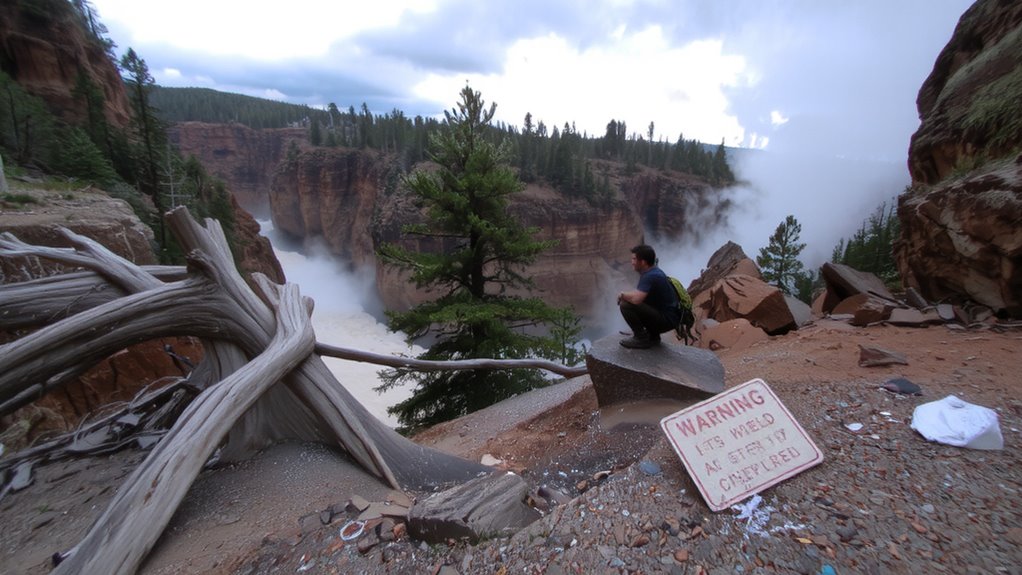
If you’re hiking in a narrow canyon or dry wash, keep an eye out for sudden changes in water flow or discoloration, because these can signal an upstream flood even when the sky overhead is clear. Muddy runoff rushing into a dry channel means rain fell miles away, and it’s already moving toward you. You’ll hear it before you see it-a low rumble or wall of water carrying debris. Rising currents develop fast, turning manageable streams into deadly flows in minutes. Water just six inches deep can knock you off your feet. Cold temperature or frothy water also hints at distant storms feeding the surge. Stay alert when skies are partly cloudy; danger often arrives without local warning. Recognizing muddy runoff early gives you critical time to react. Rising currents mean escape is no longer optional-it’s necessary. These signs aren’t subtle. Ignore them, and terrain you crossed easily on the way in becomes a trap. Pay attention, act fast.
Find High Ground and Escape Routes Fast
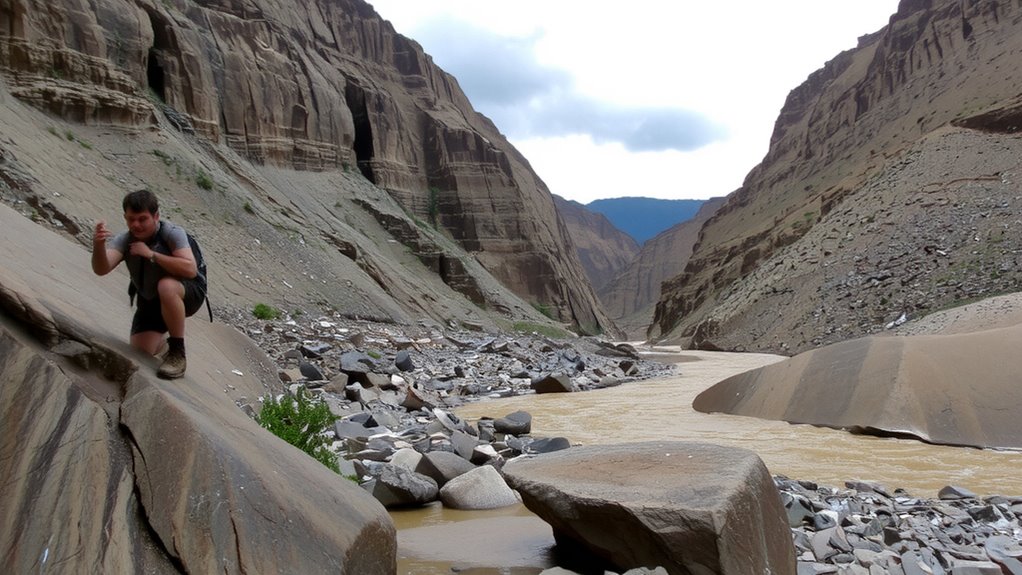
You’ve spotted the muddy surge downstream and heard the roar-now you need to move. Flash flood urgency means every second counts; don’t wait to confirm. Start with rapid terrain assessment: look uphill for stable ground, avoid narrow canyons, and identify natural barriers like ridges or elevated benches. Your best escape routes are perpendicular to water flow-diagonal or upstream movement wastes time. Stick to solid ground; loose rocks or soil increase slip risk. If you’re near a dry wash, assume it’s now a river. Move fast, but stay aware-panic leads to poor choices. Test footholds briefly, but don’t pause. Carry a whistle or mirror to signal if trapped, but rely first on your own mobility. Your boots and balance matter more than gear. High ground within 100 meters is ideal; beyond that, flood energy may overtake you. Prioritize elevation and route clarity-no shortcuts through debris chutes.
Check Water Speed and Depth Before Crossing
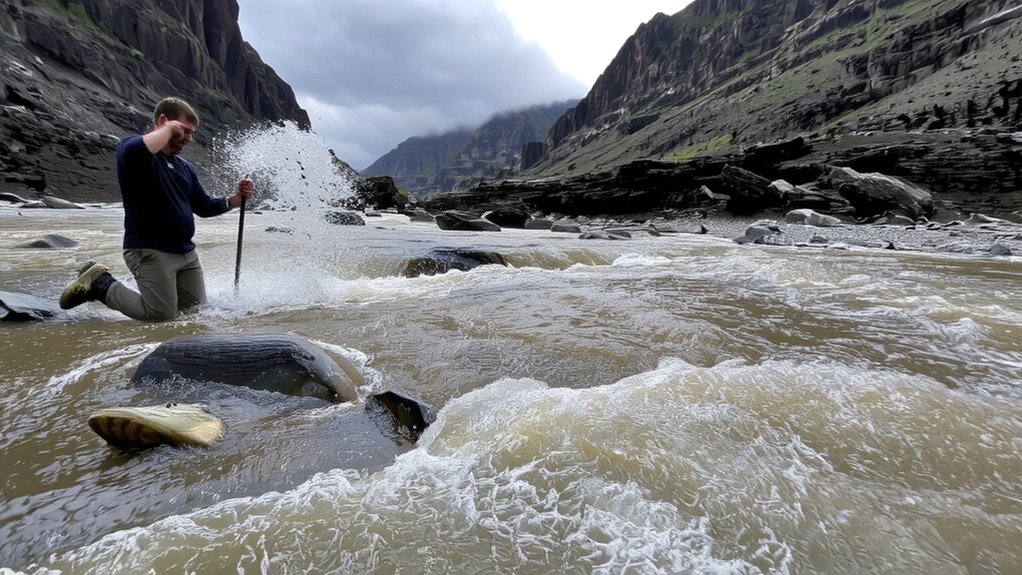
Water movement matters-know its speed and depth before stepping in. If water’s moving faster than 1 foot per second, crossing becomes risky; most adults lose stability in flow exceeding 2 fps. Depth matters just as much-knee-high water reduces balance, especially if the bottom’s uneven. Use a stick to probe depth and feel for drop-offs. Check water clarity; murky water hides obstacles and increases danger. Reduced visibility means you can’t see strong undercurrents or shifting terrain. Watch for signs of debris flow-branches, mud, or foam moving downstream signal rising water and possible flash flooding. Debris flow means the situation’s worsening, not stable. Even if the crossing seems calm now, delayed surges can arrive without warning. Don’t rely on appearance-conditions change fast. Assess flow and depth every time, even on repeat crossings. Your safety depends on accurate, ongoing evaluation, not assumptions.
Grab Only Critical Supplies: Don’t Delay
When seconds count, carrying extra gear slows you down and increases risk-stick to what’s essential. A rapid response demands minimal gear: every ounce not carried is time gained. You don’t need your full pack-just the tools that guarantee survival and communication. Below is what you should grab:
| Item | Purpose | Weight (oz) |
|---|---|---|
| Personal locator beacon | Emergency signal | 3.5 |
| First-aid kit (compact) | Treat injuries | 4.0 |
| Water filter (straw) | Safe hydration | 2.0 |
| Emergency tarp | Shelter from elements | 10.0 |
| Headlamp (with spare battery) | Visibility at night | 3.0 |
These items support core survival needs without excess. Minimal gear improves mobility and focus during a rapid response. Test each item in advance-they must function when needed and pack small. Your life depends on what you choose now. A reliable water purification method is critical when clean sources aren’t available.
Help Others Without Risking Your Life
If you spot someone in distress during a flash flood event, your first move is to assess whether helping them puts you in danger-because once you’re compromised, there are now two victims. Your personal safety must come first. Perform a quick risk assessment: consider water speed, depth, and debris. If currents are swift or rising, direct intervention is too hazardous. Instead, use reach or throw techniques-extend a pole or toss a rope-keeping yourself anchored and dry. These methods maintain distance while offering aid. Shout clear instructions to help them self-rescue if possible. Never enter moving water above ankle depth; it can knock you off your feet instantly. Your instinct might push you to rush in, but effective help means staying safe. A failed attempt worsens the crisis. Smart action beats heroics-prioritize stability, assess continuously, and act only when the risk assessment supports a safe outcome.
Watch for Hidden Hazards After the Water Recedes
What’s left behind after the water drains away? Hidden dangers. The ground’s unstable, especially on slopes-mudslides can strike again with little warning. You might not see the risk until it’s too late. Debris piles look harmless but hide sharp objects, chemicals, or weak structures beneath. Don’t step on or near them without checking first. Move slowly, test each step. Wash hands or tools if they contact flood residue-it’s often contaminated. Check your gear for damage; even small cracks compromise performance. Boots can trap bacteria; dry and disinfect them. Visibility matters-use a headlamp in low light to spot hazards early. Don’t assume the area’s safe just because the water’s gone. Conditions change fast. Stay alert, scan uphill for movement, and keep a clear escape route. Your safety depends on what you *don’t* see, not what you do.
On a final note
You act fast when flash floods threaten-delaying gets you killed. You trust your eyes: if water rises quick, you move. You pick high ground, know escape routes, and never cross fast-moving water deeper than your ankles. You grab only what keeps you alive. You help others only if it’s safe. After the flood, you watch for hidden risks. Speed, depth, and timing decide survival.