Starting a Fire With a Capacitor From a Disposable Camera
You can start a fire with a disposable camera’s capacitor-it stores 300 volts and releases 10–15 joules in milliseconds, creating a spark hot enough to ignite fine steel wool or char cloth. Always discharge it first with an insulated tool to avoid shock. Connect charged terminals via a switch and insulated wires, then trigger the spark near dry tinder. It works in dry conditions but isn’t as reliable as matches. Success depends on proper gap, clean contacts, and full charge-adjustments improve results. More details follow on optimizing each step.
Notable Insights
- A disposable camera capacitor stores 300 volts and can deliver 10–15 joules to ignite tinder quickly.
- Discharge the capacitor safely with an insulated screwdriver before handling to avoid electric shock.
- Use fine steel wool or char cloth as tinder for reliable ignition from the spark.
- Fully charge the capacitor using the camera’s battery or a 1.5V external source for a strong spark.
- Create a controlled spark by bridging the capacitor’s terminals with insulated wires and a switch.
How This Tiny Capacitor Starts a Fire
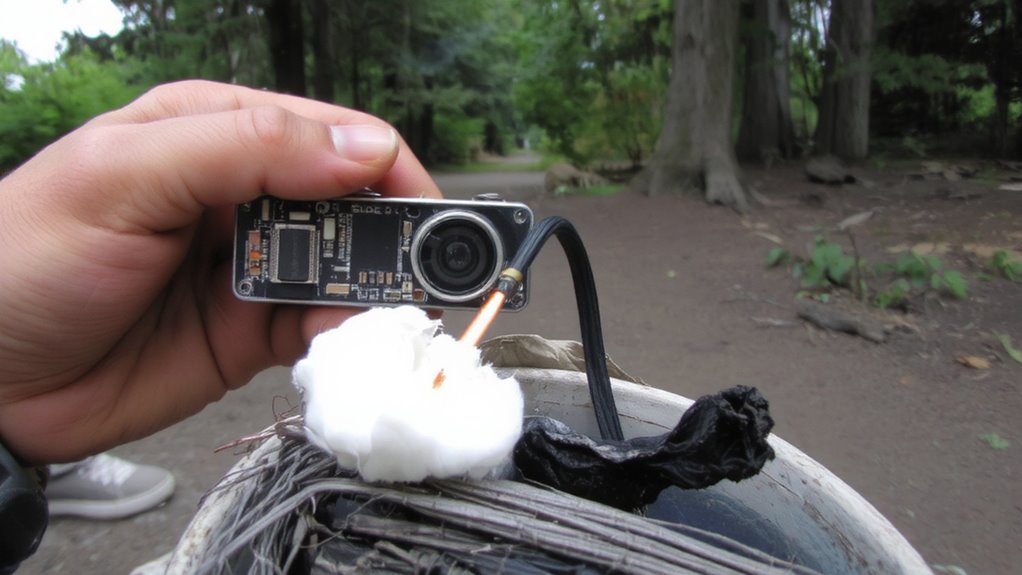
How can something smaller than a coin deliver enough energy to ignite a fire? The capacitor in a disposable camera stores 300 volts, capable of rapid energy transfer when discharged. You connect its terminals to fine steel wool or dry tinder, and the sudden surge creates intense heat at the contact point. That heat triggers thermal ignition in materials with low ignition thresholds. While the total energy is modest-around 10–15 joules-it’s released in milliseconds, concentrating power where it’s needed. This isn’t magic; it’s physics. The capacitor doesn’t sustain flame, but it delivers a critical spark under the right conditions. Success depends on using highly flammable tinder and minimizing resistance in the circuit. Don’t expect it to light damp wood. It works best in dry, sheltered environments with proper preparation. Used correctly, it’s a viable emergency option, though slower and less reliable than a match or lighter.
Safely Remove the Capacitor From a Camera
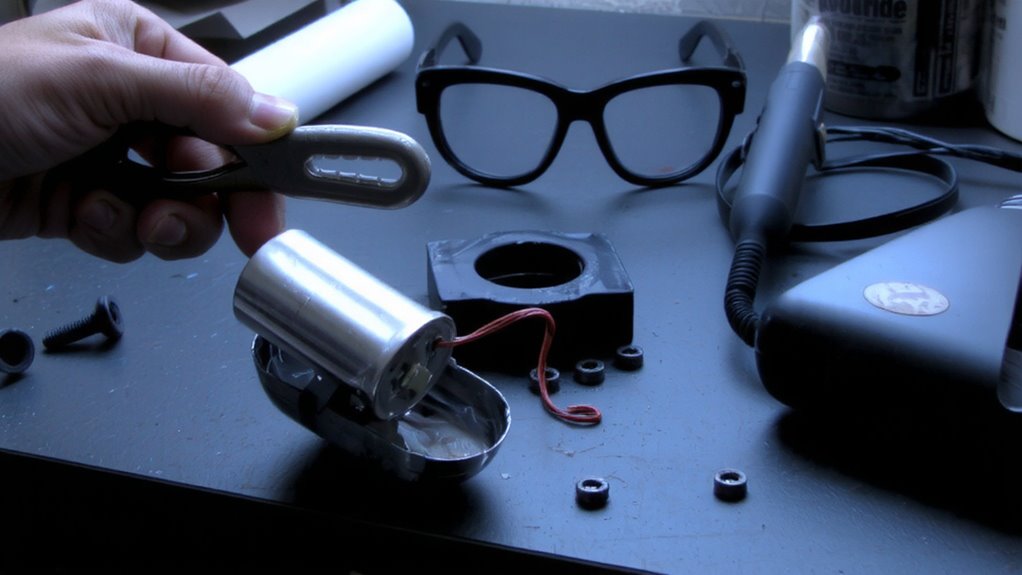
Even though the capacitor holds a dangerous charge after the camera’s been turned off, you can remove it safely by discharging it first with an insulated screwdriver. Bridge the terminals carefully-the spark is normal. Once discharged, inspect the board to identify capacitor polarity; getting this wrong risks damage or failure later. Use a proper soldering technique: heat each joint just long enough to melt the solder, then lift the wire cleanly. Don’t force it-you’ll damage the pads. Work in a well-ventilated space with steady lighting. The capacitor is usually the largest component on the board, making it easy to locate. Keep your tools close and movements deliberate. Always double-check that the device remains unpowered. A slow, controlled approach reduces risk. This step isn’t complex, but attention to detail guarantees safety and success. Mistakes here compromise everything that follows.
What You Need to Make It Work
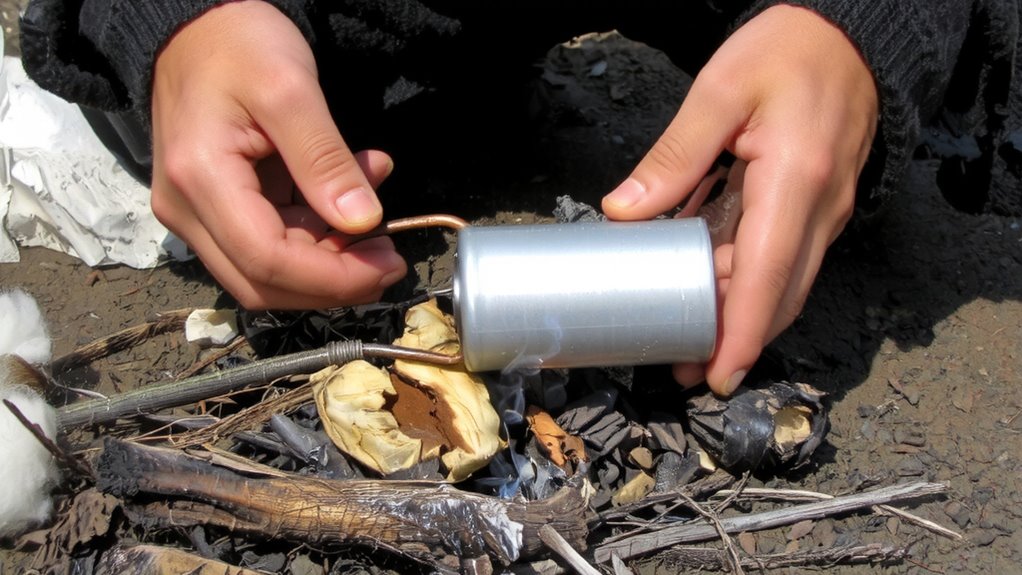
While you can get a spark from just the capacitor, you’ll need a few additional items to make it reliably ignite tinder. A capacitor from a disposable camera typically meets the voltage requirements for ignition-around 300 volts-delivered in a quick burst. You’ll need fine steel wool or char cloth as tinder; both catch sparks easily. The capacitor storage unit must be fully charged, so keep the camera’s battery connected or use an external 1.5V source to rebuild the charge. Use insulated wires to safely direct the spark. Without proper grounding and a closed circuit, the discharge won’t occur. A switch or momentary button helps control the spark timing. These components work together: voltage jumps the gap, igniting prepared tinder. Success depends on matching the energy output with suitable ignition material. Test the system in dry conditions first. Real-world function is reliable if voltage and storage conditions are maintained.
Trigger a Spark Using the Capacitor
What does it take to get a spark on demand? You need a charged capacitor and a clear path for electrical discharge. Once the capacitor from the disposable camera is fully charged, typically to around 300 volts, you’re ready for spark generation. Use insulated tools to connect a wire from the negative terminal to the positive, but don’t touch the leads directly-this voltage can deliver a painful shock. The spark jumps across a small air gap when the circuit closes, creating intense localized heat. This electrical discharge lasts milliseconds but is enough to ignite fine tinder like steel wool or dry grass. Success depends on timing and proximity-hold the materials close but not so close that they short the leads. It’s not flashy, just functional. No moving parts, no fuel, just stored energy released precisely. Test it in dry conditions first to gauge reliability.
Fix It When the Spark Fails
You charged the capacitor, connected the wires, and expected a spark-only to get nothing. First, check the spark gap; if it’s too wide, the voltage won’t jump. Reduce it to about 2–3 mm. If the gap’s right, inspect the electrode alignment. Misaligned electrodes won’t create a clean path for the arc. Straighten them so they face each other directly, with a consistent distance. Dirty or oxidized tips can also block arcing-clean with fine sandpaper. Verify the capacitor fully charged; a weak charge won’t deliver enough voltage. Faulty wiring or loose connections often cause failures-ensure all joints are secure and conductive. Some camera circuits need a completed trigger circuit; pressing the original button might help. There’s no magic fix-just precise spacing, proper alignment, and solid connections. Spark reliability improves when electrode alignment and spark gap are correct. Retry methodically.
On a final note
You can start a fire with a disposable camera’s capacitor, but it’s unreliable under real conditions. The spark it produces is weak and demands perfect fuel-bone-dry tinder, finely shredded. Humidity or wind kills ignition. It works once, maybe, then needs recharging. Matches or a ferro rod deliver more sparks, faster, in wet or cold. This method is a last-resort stunt, not a dependable tool. Save it for emergencies, not campfires.