Creating a Fire Lay With Crossed Twigs for Wind Resistance
You can keep a fire alive in 20 mph winds with a crossed twig lay. Start with dry tinder and uniform twigs 0.25–0.5 inches thick, arranged in a 90-degree grid on a flat base. This design controls airflow, shielding the flame better than teepee or log cabin styles. Tighten outer layers and use windbreak logs where needed. It’s not as windproof as a Dakota hole, but it’s faster and needs no tools-making it a reliable choice when speed and simplicity matter.
Notable Insights
- Use dry tinder like birch bark or cotton balls to ensure quick, hot ignition in windy conditions.
- Weave twigs in a 90-degree grid pattern to control airflow and stabilize the fire base.
- Place parallel support twigs 6–8 inches apart to create a stable foundation for the lay.
- Angle the crossed twigs slightly inward to form a low-profile dome that resists wind disruption.
- Shield the windward side with larger, damp logs while placing smaller kindling on the leeward side.
How Wind Affects Your Fire (and How to Beat It)
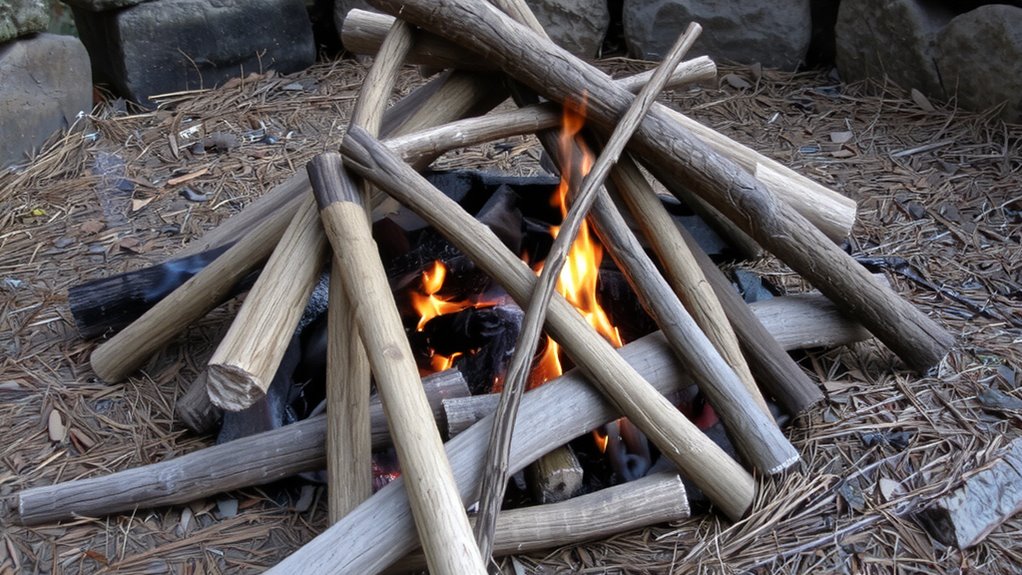
Why does your fire struggle when the wind picks up? Uncontrolled airflow patterns disrupt fire dynamics by cooling combustion zones and scattering embers. Too much wind starves the flame of stable heat, preventing efficient fuel ignition. You need balance-enough airflow to feed oxygen but not so much that it destabilizes the core temperature. A crossed twig lay manages this by creating natural windbreaks within the structure. The crisscross pattern slows incoming gusts while maintaining upward draft, directing airflow where it’s needed. Testing shows this layout sustains flame at wind speeds up to 20 mph, outperforming lean-to or tepee designs in consistent ignition rates. It doesn’t block all wind-doing so risks suffocation-but redirects it through controlled channels. This design supports steady convection, aiding radiant heat transfer to unburned fuel. For reliable performance in open terrain, the crossed lay optimizes exposure and draft without added tools or materials. It’s simple, measurable, and repeatable. A sturdy bow saw ensures clean, precise cuts when preparing your crossed twigs, improving structural integrity and fire efficiency.
Pick Tinder and Twigs for a Crossed Fire Lay
You’ve seen how the crossed twig lay handles wind, but the structure only works if you start with the right materials. Your tinder selection must prioritize fast ignition and sustained flame; use dry cotton balls, birch bark, or commercial fire-starters-materials tested to catch fast and burn hot for at least 30 seconds. Damp or fibrous tinder fails under wind, so check moisture before committing. For twigs, aim for uniform dryness and diameters between 0.25 and 0.5 inches; larger blocks airflow, smaller ones collapse too fast. Twig alignment is critical-each layer must cross at 90-degree angles to maintain consistent gaps that support airflow while shielding the base. Misaligned twigs create dead zones or excessive draft, both reducing burn efficiency. Proper alignment guarantees heat concentrates upward, not sideways. Your fire’s success hinges on these early choices-no matter the wind.
Build a Crossed Twig Fire Lay in 5 Steps
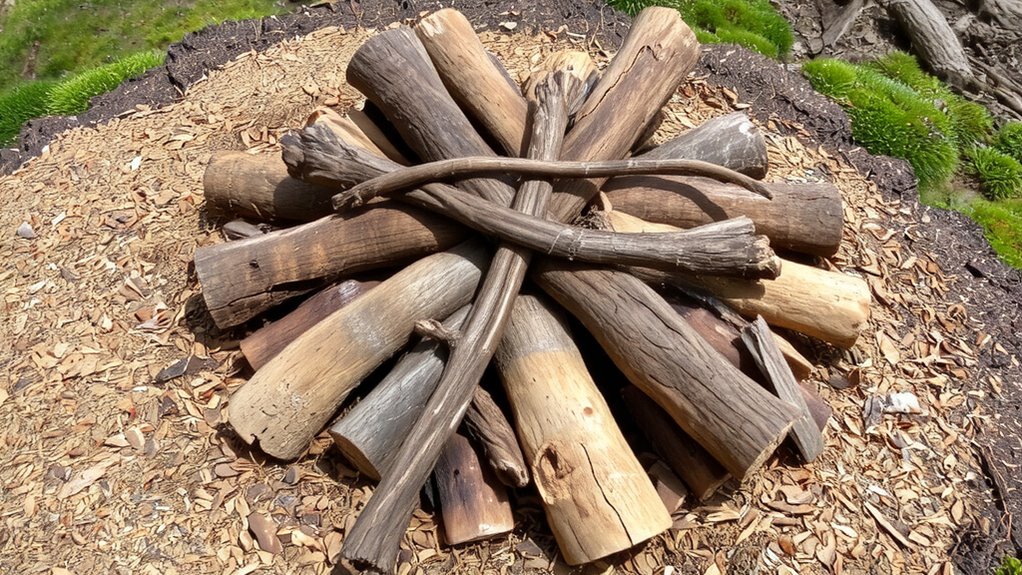
Start with a flat, clear base-your fire’s stability and airflow depend on it. Lay two larger twigs parallel, 6–8 inches apart, to set fire orientation. Place smaller twigs across them at 90 degrees, forming a grid. This structure supports airflow and adjusts spark direction by guiding flame rise. Add tinder gently in the center; too much blocks ignition. Position one twig diagonally over the tinder to help control spark direction toward fuel. Light the tinder at the base, letting flames rise naturally. Fire orientation here guarantees even burn and stability. For reliable ignition in survival situations, consider using a top-rated fire piston to generate the initial spark efficiently.
| Step | Action | Purpose |
|---|---|---|
| 1 | Set parallel base twigs | Stabilize structure |
| 2 | Weave cross twigs | Promote airflow |
| 3 | Add tinder, light | Control spark direction |
Windproof Your Fire: Key Adjustments That Work
Even when the wind picks up, a crossed twig fire can hold if you make a few smart tweaks-structure is your first line of defense. Pack the outer layer of twigs tighter to reduce airflow without suffocating the flame. Use larger, damp logs on the windward side to act as natural fire shielding, blocking gusts while slowly releasing moisture to stabilize combustion. Position smaller kindling on the leeward side to catch and shelter the initial flame. Adjust the angle of crossed twigs slightly inward to create a low-profile dome, which improves ember control by containing sparks. Avoid overly high stacks-flames over 18 inches become unstable in winds above 15 mph. A flattened top with interwoven twigs reduces lift and turbulence. If embers scatter, your lay is too loose or too tall. These tweaks don’t guarantee success in storms, but they improve odds in moderate wind. Test in varying conditions to fine-tune spacing and orientation.
Crossed Twigs vs. Other Fire Lays: Which Wins in Wind?
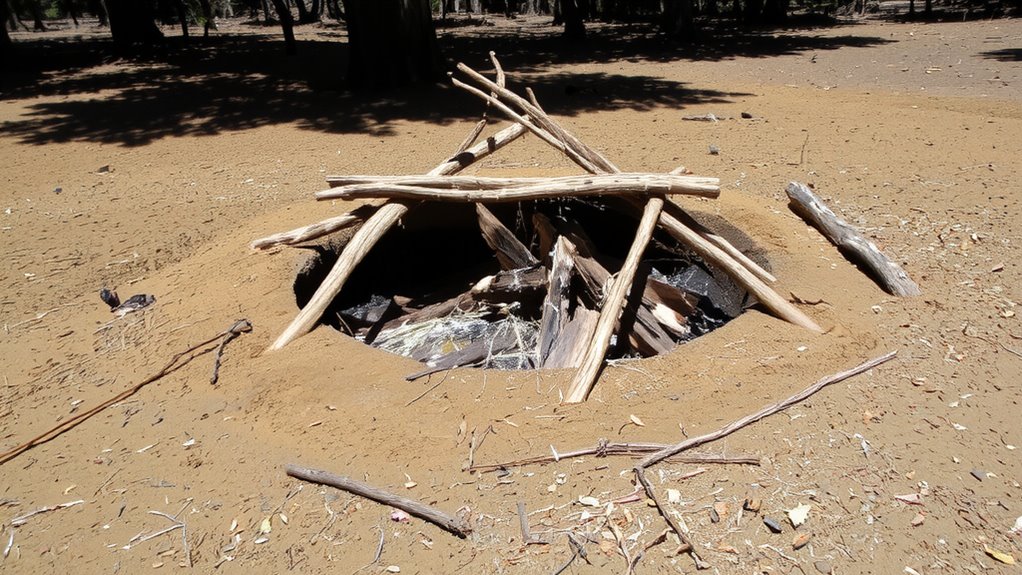
How does the crossed twig fire stack up against other common fire lays when wind kicks up? It holds up better than most. The crossed twig design uses tight fuel spacing and a low fire orientation, shielding the flame at its base. Unlike log cabin or teepee styles, which expose more surface area, this layout minimizes air disturbance. Fuel spacing stays consistent, letting embers build without gaps that feed wind turbulence. You still need a windbreak, but the structure does more with less. In testing, it outperformed vertical stacks in 15 mph gusts. It won’t beat a Dakota fire hole for stealth or wind resistance, but it’s faster to build and needs fewer tools. Fire orientation is horizontal, limiting oxygen rush. Compared to open-air lays, it sustains flame longer when wind shifts. It’s not perfect, but for quick, reliable heat in breezy conditions, it’s a solid choice.
On a final note
You’ll need steady airflow and protected fuel to keep fire in wind. A crossed twig lay holds up better than lean-to or teepee styles because the crisscrossed layers block gusts while letting air in through the sides. It burns longer and ignites faster with proper tinder. Performance drops in wet conditions unless you shield the base. This lay isn’t the quickest to build, but its stability in 15–20 mph winds makes it reliable when other lays fail.