Understanding the Risk of Waterborne Parasites After Flooding
You’re at risk for waterborne parasites like Giardia and Cryptosporidium after flooding, even in clear water. Floodwaters carry contamination from sewage, farms, and soil, spreading infectious pathogens into homes and drinking sources. These parasites survive for days or weeks, causing diarrhea, cramps, and dehydration. Warm, stagnant water extends their spread. Wear gloves, avoid skin contact, and wash thoroughly after exposure. If symptoms develop, seek medical care. You’ll find out which specific parasites are most common and how to protect yourself effectively.
Notable Insights
- Floodwaters can carry dangerous parasites like Giardia and Cryptosporidium from sewage and animal waste.
- Contaminated water may look clean but still contain infectious parasites in water and sediment.
- Climate change increases flood frequency, extending the risk of parasite exposure in affected areas.
- Symptoms of infection include diarrhea, cramps, and nausea, appearing 3–7 days after exposure.
- Wear protective gear and wash thoroughly after contact; seek medical care if symptoms develop.
What Causes Waterborne Parasites After Flooding?
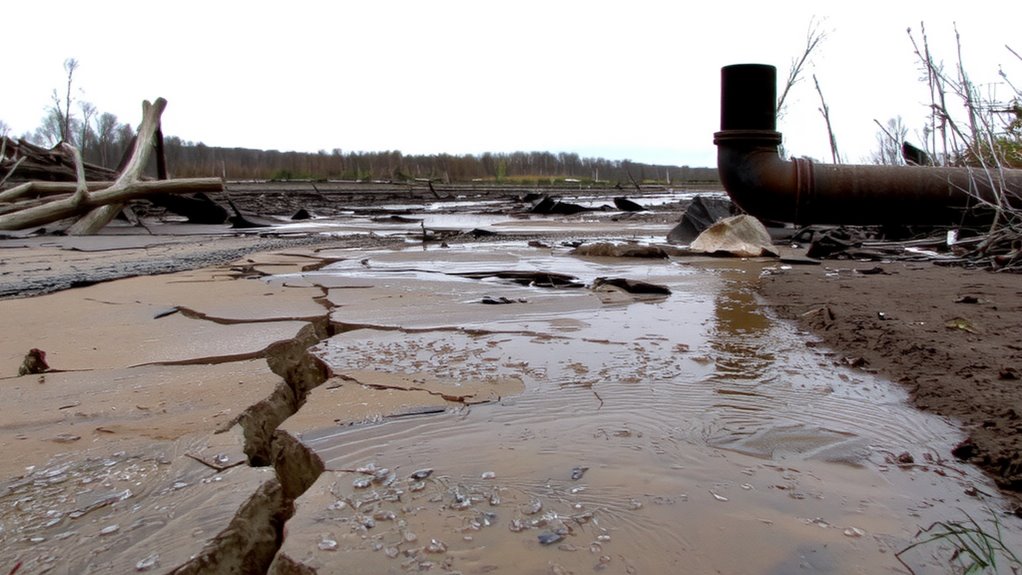
While floodwaters recede, they leave behind contaminated water that can carry parasites like Giardia and Cryptosporidium, especially if sewage systems overflow or runoff from farms enters drinking sources. You’re at higher risk because climate change increases flood frequency and intensity, creating more opportunities for contamination. Stagnant water acts as a breeding ground, allowing parasites to survive longer and spread more easily. Warmer temperatures from climate shifts further support parasite persistence. After flooding, untreated standing water-whether in puddles, containers, or damaged infrastructure-can remain infectious for days. You can’t see or smell these pathogens, so assuming any stagnant water is unsafe is practical. Regular water testing post-flood isn’t always feasible, so relying on proven filtration or boiling is essential. Infrastructure wear, heavier rainfall, and poor drainage extend exposure risks. Preventing illness means treating all potentially still water as compromised, regardless of appearance. A reliable emergency solution involves using a water filtration survival kit to remove harmful microorganisms when clean water access is disrupted.
How Floodwater Spreads Dangerous Parasites
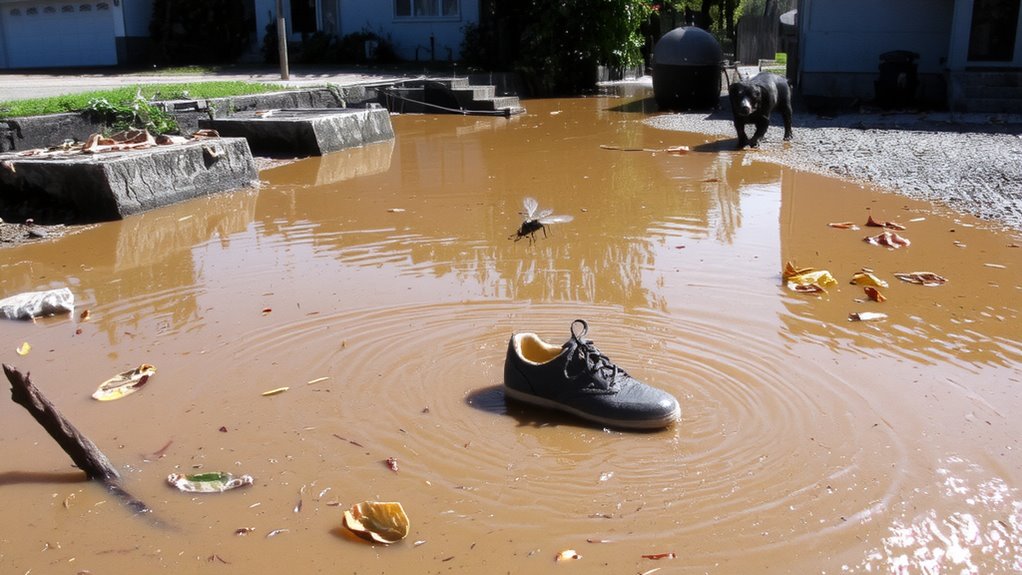
Floodwater spreads dangerous parasites by moving contaminated water across wide areas, carrying pathogens like Giardia and Cryptosporidium from sewage, animal waste, and flooded farms into drinking supplies, yards, and homes. You see increased risk where soil erosion exposes buried contaminants and allows them to mix with surface water. This runoff creates stagnant pools, ideal for mosquito breeding, which further threatens health, though mosquitoes don’t spread the parasites themselves. The flooded environment lets these microbes travel far beyond their origin, often reaching wells or reservoirs you rely on. Standing water after floods lasts days or weeks, maintaining infectious conditions. You can’t always see the contamination, so assuming all floodwater is hazardous is the safest approach. Even dried areas may harbor residues. Protective gear and water treatment are necessary during cleanup. Relying on visual clarity or smell won’t protect you-tested filtration or boiling does. Using a reliable survival water purifier can effectively remove harmful pathogens from flood-affected water sources.
3 Parasites Lurking in Floodwater
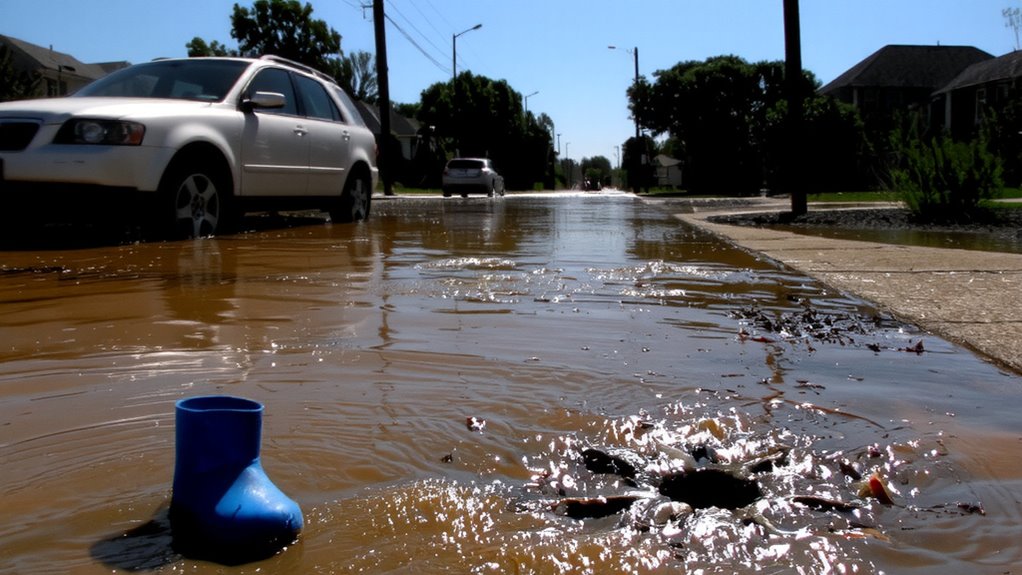
Though you can’t see them, parasites like Giardia and Cryptosporidium are often present in floodwater, surviving for days or even weeks in cool, moist conditions. You might assume clean-looking water is safe, but appearance means nothing when it comes to parasite detection. Without proper floodwater testing, you’re at risk of exposure. These pathogens come from sewage overflows, animal waste, and contaminated runoff - all common after floods.
| What You See | What You Can’t See |
|---|---|
| Murky water | Giardia cysts |
| Floating debris | Cryptosporidium oocysts |
| Calm surface | Harmful microbes |
| Clear patches | Contaminated sediment |
| Receding flow | Persistent pathogens |
Testing is the only way to confirm contamination. Relying on sight or smell won’t protect you. Effective parasite detection requires lab analysis, not guesses. Floodwater testing gives you actionable data - use it before cleanup or reentry. Using emergency water purification tablets can help reduce the risk of infection if safe water isn’t available.
What Waterborne Parasite Infections Feel Like
You won’t always know when you’ve been exposed, but the symptoms of waterborne parasite infections make their presence clear after a few days. Symptoms onset typically occurs 3–7 days post-exposure, though some parasites delay signs for weeks. You’ll likely experience diarrhea, cramps, nausea, and fatigue-sometimes with fever or dehydration. The infection duration varies: giardia can last 2–6 weeks without treatment, while cryptosporidium may resolve in 1–2 weeks but linger longer in weakened immune systems. Some cases feel mild at first but worsen without intervention. Others remain asymptomatic yet still spread the parasite. In general, symptoms are self-limiting but uncomfortable enough to disrupt daily function. The infection duration impacts recovery time and risk of spreading. Not everyone gets sick at the same rate, but delayed symptoms don’t mean reduced risk. Monitoring your health closely after floodwater contact is essential.
How to Avoid Parasites During Flood Cleanup
Safety starts with what you wear-especially boots, gloves, and a mask. Proper footwear, like waterproof boots with sealed seams, blocks contaminated water from touching your skin. They should be tall enough to prevent splash exposure. Clean gloves, made of nitrile or heavy-duty rubber, protect your hands from parasites in floodwater or soaked materials. Latex isn’t strong enough and tears easily. Always wear both, even during short tasks. Avoid walking barefoot or with soaked, unwashed shoes. Don’t touch your face while working. After cleanup, wash gloves before removing them, then wash hands with soap and clean water. Equipment should be disinfected, too. Clothing worn during cleanup must be laundered separately. These steps reduce exposure risk markedly. Protection isn’t optional-consistent use of proper gear is the most effective barrier against infection.
What to Do If You’ve Been Exposed?
What if you’ve already stepped in contaminated floodwater or touched something soaked without gloves? You should act quickly. First, wash exposed skin with soap and clean water. Contaminated water can carry parasites like *Leptospira* or *Giardia*, which enter through cuts or ingestion. You might not feel sick right away, so monitor symptoms like fever, diarrhea, stomach cramps, or unusual fatigue over the next few days. Some infections take time to develop. If symptoms appear, do not wait-seek medical attention immediately. Mention your floodwater exposure so doctors can test for waterborne pathogens. Early diagnosis improves treatment outcomes. Even if you feel fine, monitoring is essential. There’s no benefit in downplaying risks. Quick response reduces complications. Prevention matters, but once exposed, timely care and vigilance are your best tools.
On a final note
You face real risks from waterborne parasites after flooding, but smart steps reduce them. Wear gloves and boots during cleanup-exposure drops substantially with basic barriers. Boil or filter water until authorities confirm it’s safe. If you feel sick afterward, seek testing fast; early treatment stops complications. Clean gear thoroughly afterward. These measures won’t eliminate risk, but they cut it hard. Your best defense is knowledge and action, not luck.