Safe Techniques for Cooking Wild Foods With Minimal Equipment
Start by identifying edible plants with a reliable field guide-mistakes can be deadly. Boil or roast them to neutralize toxins; changing water helps with acorns and ferns. Cook wild game until juices run clear and meat pulls from bone-especially with poultry or rabbit. Use a knife and fire steel to build a fire with dry tinder and careful sparks. Keep meat off surfaces by using separate wood boards or wraps. Simple steps like these cut risks markedly in the wild. You’ll find even safer outcomes once you see how each method combines.
Notable Insights
- Identify wild plants accurately using leaf shape, scent, and growth patterns to avoid toxic species.
- Boil wild plants like acorns and ferns in multiple water changes to remove natural toxins safely.
- Roast roots and tubers over fire using hot stones or a simple pit to break down harmful irritants.
- Cook game thoroughly until juices run clear and meat separates easily from bone to kill pathogens.
- Build a fire with knife-carved tinder and fire steel, using dry materials to ensure reliable ignition.
Identify Edible Wild Foods First
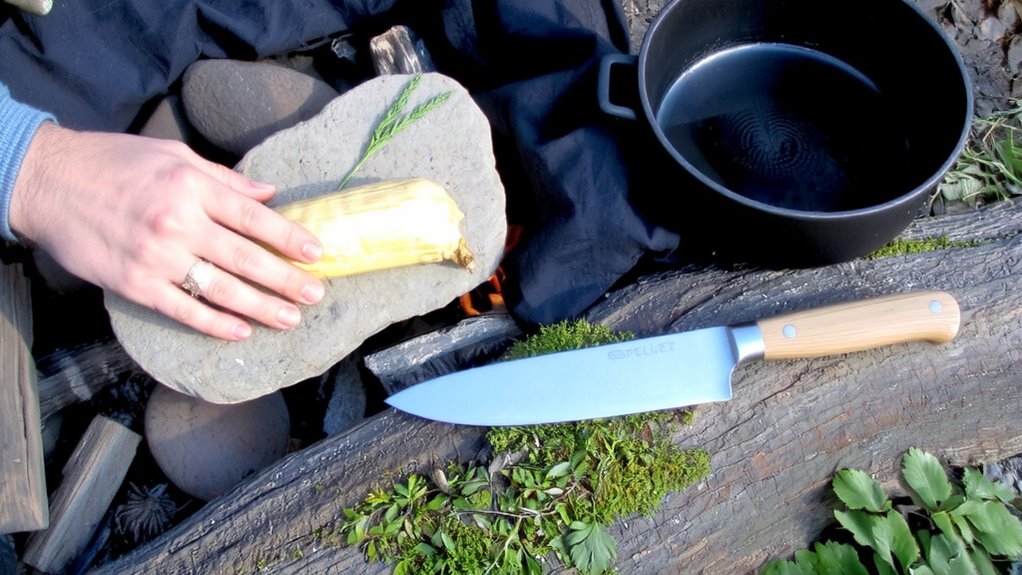
While some plants might look harmless, misidentifying them can turn a survival meal into a dangerous mistake, so you’d better take the time to learn key features before picking anything. Proper plant identification isn’t optional-it’s essential. You’ll need to study leaf shape, stem structure, scent, and growth patterns, as small differences separate edible species from toxic look-alikes. Relying on memory or vague photos increases risk. Carrying a durable field guide or offline app improves accuracy. Seasonal awareness matters too-some plants are safe only in spring, while others turn toxic as they mature. For example, wild mustard is edible when young but bitter and less nutritious later. Misjudging timing affects both safety and taste. You can’t assume a plant is safe just because it’s green or familiar. Double-check every specimen. Your survival depends on precision, not guesswork. Practice identification in your region year-round to stay prepared.
Boil or Roast Wild Plants to Remove Toxins
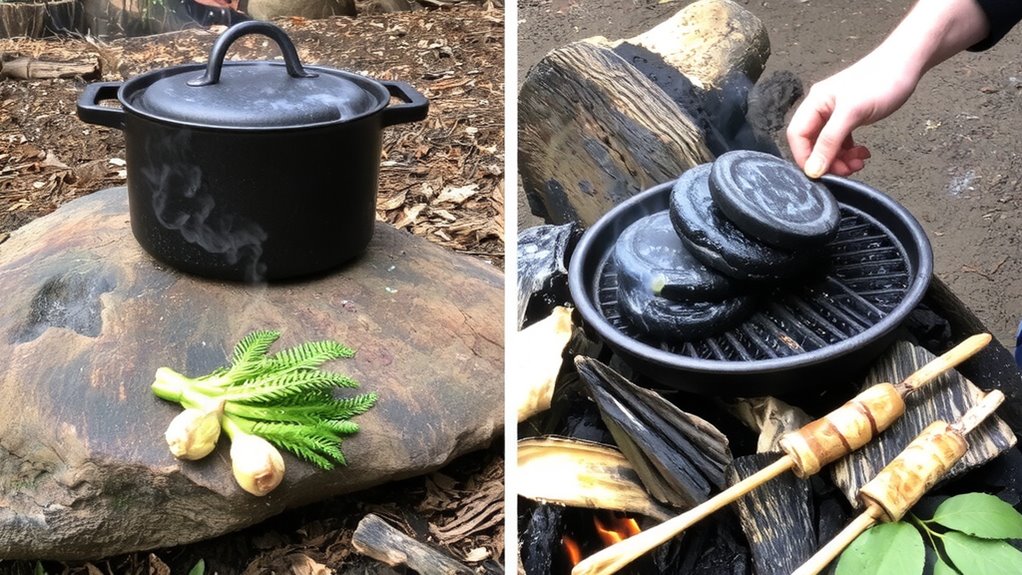
If you’re gathering wild plants to eat, you’ll want to boil or roast many of them because these methods reduce or eliminate natural toxins that can make you sick. Boiling is effective at helping to detoxify plants like acorns or fiddlehead ferns, as heat and water work together to leach out harmful substances. You’ll typically need to change the water several times to fully neutralize compounds. Roasting works well for roots and tubers, such as jack-in-the-pulpit or certain lilies, by breaking down irritants through dry heat. Both methods alter the plant’s chemical structure in ways that make them safer for digestion. You don’t need special gear-just a fire-safe container or hot stones. Always research the specific plant you’re using, since preparation varies. Skipping this step risks nausea, cramps, or worse. When done right, boiling or roasting makes wild foods both edible and safer.
Cook Wild Game Thoroughly Without a Thermometer
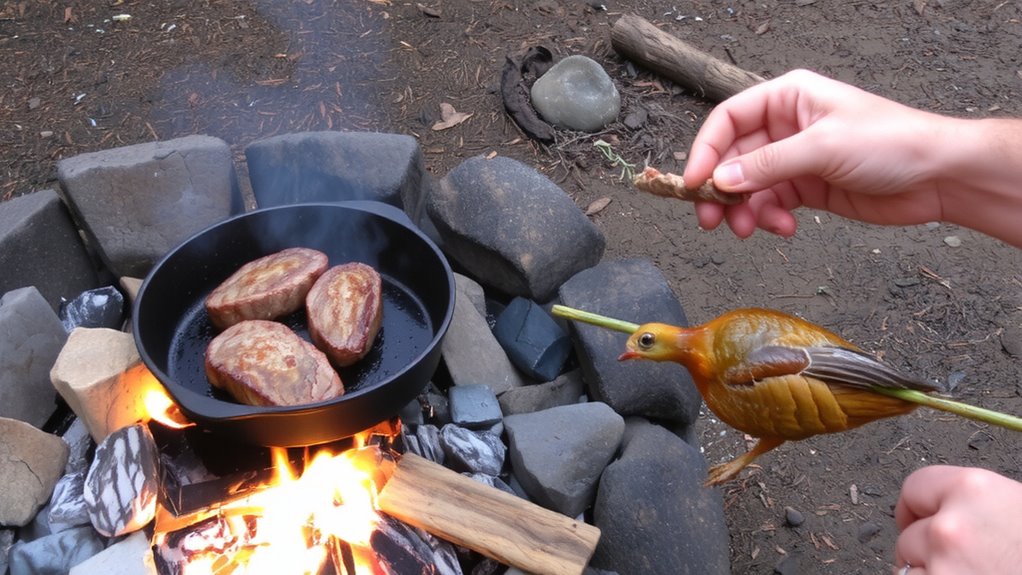
Cooking wild game properly matters just as much as preparing wild plants, but you won’t always have a thermometer on hand to check doneness. Ensuring proper internal heat is essential to kill pathogens, even if you’re relying on visual doneness cues. Cut into the thickest part-if juices run clear and the meat is no longer pink, it’s likely safe. Smaller cuts cook faster and more evenly, reducing risk. Use these indicators to judge:
| Meat Type | Visual Doneness Cue |
|---|---|
| Poultry | No pink, clear juices |
| Rabbit | Flesh separates easily from bone |
| Venison | Gray-brown, firm texture |
| Squirrel | Meat pulls cleanly from bone |
| Wild boar | No trace of red, opaque throughout |
Internal heat must be sufficient, but without tools, visual doneness is your best practical guide.
Build a Cooking Fire With Just a Knife and Fire Steel
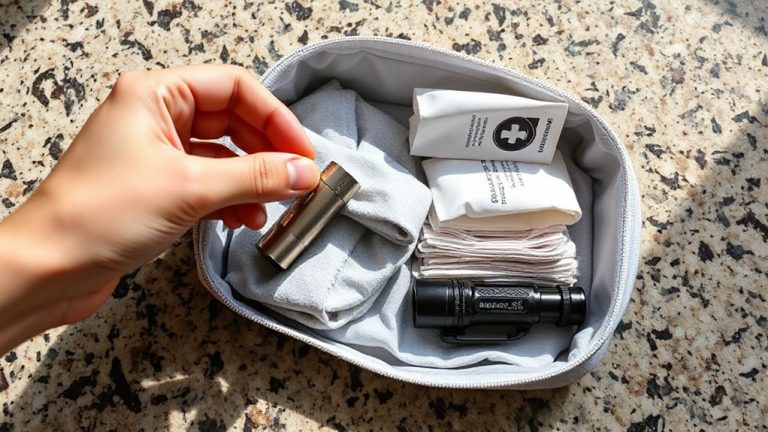
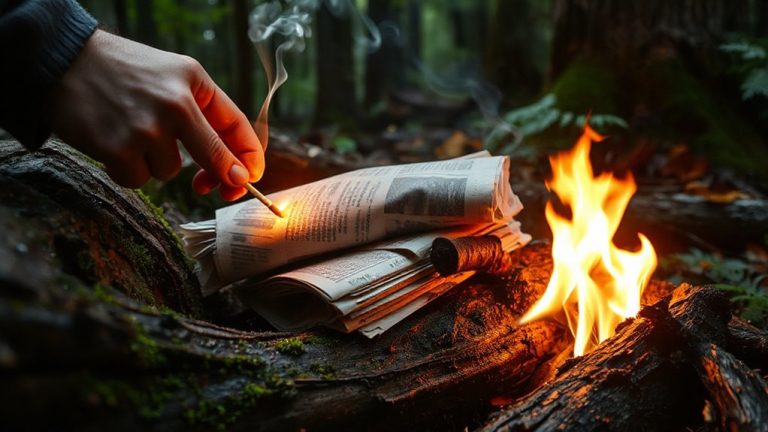
Since you’ve got only a knife and fire steel, your success hinges on selecting the right materials and using them efficiently. Fire lighting starts with quality tinder-use dry bark, grass, or wood shavings you’ve scraped with your knife. Tinder selection is critical; damp or bulky material won’t catch the spark. Shape your tinder into a loose nest about the size of a baseball. Hold the fire steel close to it, strike the knife spine down the rod firmly, and direct sparks into the pile. Angle the blade correctly-it’s not slashing, but a controlled scrape. Once smoldering, gently blow to ignite. Build up with pencil-thick sticks, then larger wood. The knife also splits kindling when needed. This method works reliably in dry conditions, but high wind or moisture reduces success. Practice improves speed and effectiveness. Minimal gear demands precision, not guesswork. For reliable performance in tough conditions, choose a high-quality fire steel that produces consistent sparks even when wet.
Keep Raw Meat Separate With Basic Tools
With your fire built and heat under control, it’s time to handle the raw meat you’ve gathered or harvested. You need to keep it separate from other foods to avoid cross-contamination. Use a dedicated cutting board made from hard wood or bamboo-these are easier to clean and less porous than plastic. If you don’t have one, carve a flat section from green wood with your knife, but replace it often. Store raw meat in sealed storage containers made of metal or thick food-grade plastic when possible. If not, wrap it tightly in waxed cloth or cured hide to reduce exposure. Keep the meat on a rack or in a shaded, elevated spot away from cooking and prep areas. Clean cutting boards and storage containers with boiling water and let them dry fully. This routine limits bacteria spread. No fancy tools are needed-just discipline and basic separation.
On a final note
You now know how to safely cook wild food with minimal gear. Identify plants correctly-mistakes cause poisoning. Boiling or roasting removes many toxins. Cook game until juices run clear, no pink inside. A knife and fire steel are enough to build and control a fire. Use separate sticks or stones for raw meat to avoid cross-contamination. These methods work reliably in real survival tests. They require no gadgets, just skill.