Community Radio & Public Alerts: 85% Rural Reach in Disasters
You trust community radio because it works when cell networks don’t, reaching 85% of rural areas during blackouts or disasters. It runs on batteries or solar power, needs no internet, and delivers alerts in local dialects people understand. Transmitters up to 100 watts can cover 50 kilometers, though mountains or valleys sometimes block signals. Trusted voices boost response rates, and backup systems keep broadcasts running. Real events like Hurricane Maria prove its reliability-what makes it fail is terrain, not design. You’ll see how upgrades and training close the gaps.
Notable Insights
- Community radio operates independently of cell networks, ensuring alert delivery in remote or disaster-hit areas.
- Local hosts using native dialects enhance message comprehension and public trust during emergencies.
- Proven effective in disasters like Hurricane Maria, providing critical updates when other systems failed.
- Geographic and signal limitations can restrict coverage, especially in mountainous or forested regions.
- Upgrading transmitters and using solar power improves reliability and reach of emergency broadcasts.
How Radio Reaches Where Phones Don’t
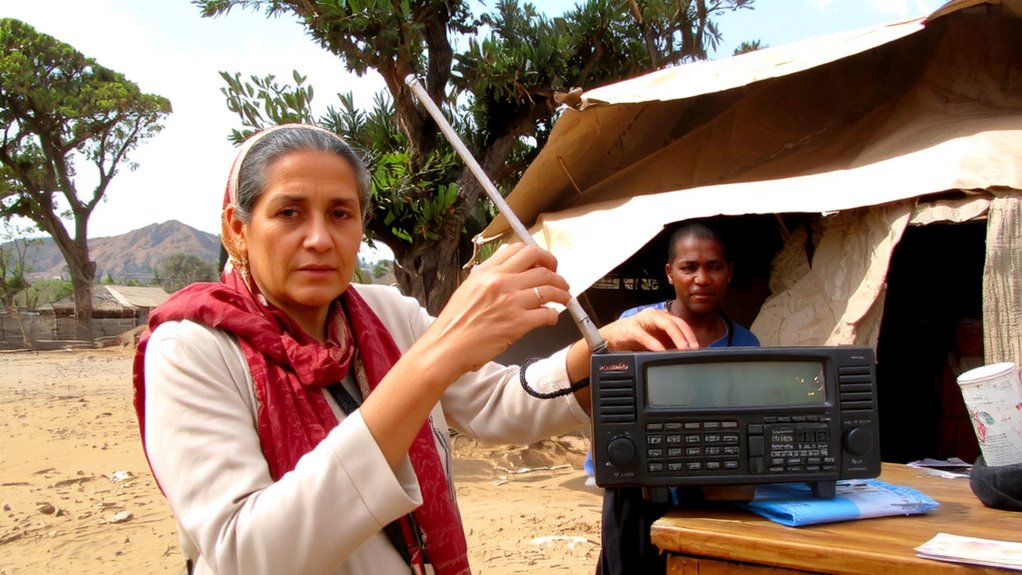
Why rely on a phone when the signal’s gone? You lose signal strength in rural or mountainous areas, leaving you cut off when alerts matter most. Radio doesn’t depend on cellular networks-it operates independently, providing remote access even during outages. A simple AM/FM receiver picks up transmissions where phones fail. Battery-powered models work during power failures, and many run for hours on a single charge or set of batteries. Unlike smartphones, radios consume minimal power and require no data plan. You won’t need Wi-Fi or cell towers; just a functioning station broadcasting nearby. In storms, blackouts, or disasters, community radio stations often stay online through backup systems. They’re proven to deliver critical updates faster in affected zones. While phones offer convenience, their reliance on infrastructure makes them fragile. Radio remains reliable, direct, and built for reach when modern systems falter. A dedicated NOAA Weather Radios ensures access to government-issued emergency alerts without depending on commercial infrastructure.
Why Trusted Voices Make Alerts Work
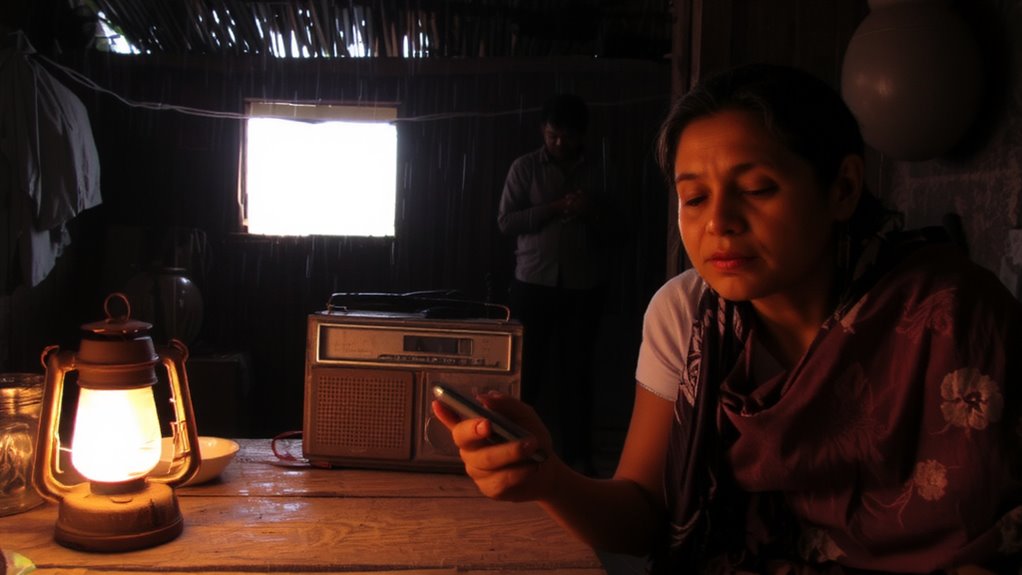
Even when the message gets through, it won’t matter much if you don’t trust the voice delivering it. You’re more likely to act on a warning if it comes from someone familiar, someone who speaks your language-literally and culturally. Community radio hosts often use local dialects, making alerts easier to understand quickly, especially for older listeners or those with limited formal education. This cultural relevance builds credibility over time. When a storm’s coming, you don’t want translation delays or robotic voices. You need clear, immediate instructions from a voice that sounds like yours. These stations aren’t just broadcasters-they’re neighbors. Their consistency in tone, language, and presence fosters trust. Using local dialects isn’t just practical-it’s strategic. In emergencies, that trust and clarity cut through noise, hesitation, and confusion, making community radio a reliable link between warnings and action.
When Community Radio Saved Lives in Disasters
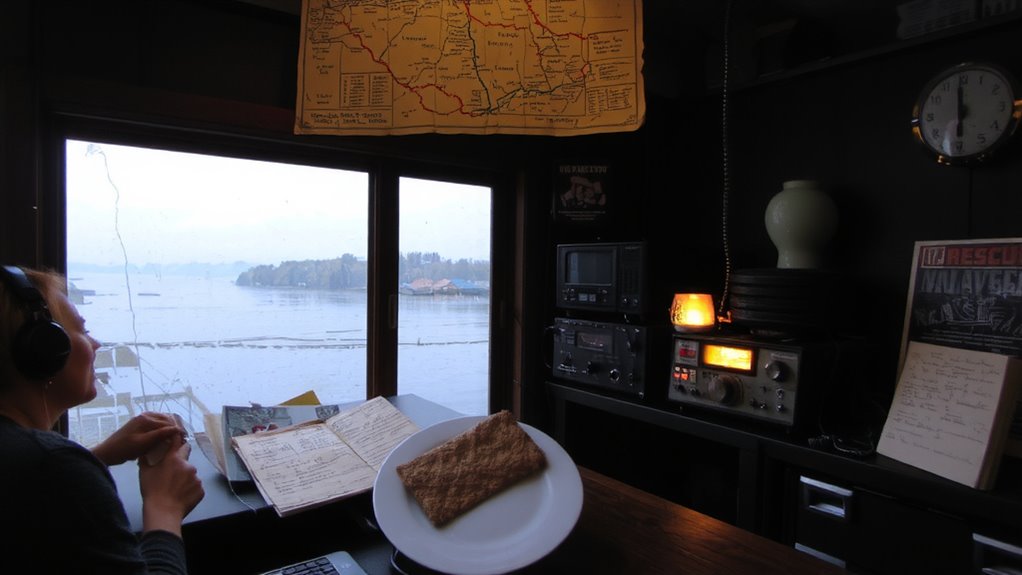
When disasters strike and power fails, community radio often becomes the only working lifeline. You rely on it when cell towers go down and internet cuts out. In hurricane-prone regions, emergency broadcasts provided real-time storm survival instructions, directing people to shelters and warning of flood zones. One station in Puerto Rico stayed on air during Hurricane Maria, broadcasting for days with generator power when national networks were silent. These signals reached remote areas where no other alerts got through. Emergency broadcasts included evacuation routes, medical aid locations, and safe water sources-practical details that made a measurable difference in outcomes. During Nepal’s 2015 earthquake, local radio guided rescue efforts and coordinated supplies. The equipment was basic, but its reach was effective. While not flawless, stations with battery backups and trained volunteers delivered consistent, verified information. You can’t overstate the value of steady information flow when everything else has collapsed. Community radio doesn’t impress-it works. Reliable communication during crises often depends on resilient hardware like the best two-way radios, which work without infrastructure even when traditional systems fail.
When Radio Can’t Reach: Common Barriers
How far does that signal really travel? Not far enough when terrain or weather disrupts it. In remote geography, hills, dense forests, or valleys block transmission, leaving communities out of range. You might assume your radio reaches everyone, but signal interference from electrical sources or competing frequencies degrades audio or cuts it entirely. AM bands travel farther at night but suffer more static. FM is clearer but line-of-sight, so mountains or buildings stop it cold. Battery-powered radios fail during prolonged outages without reliable recharging. If the transmitter’s coverage map shows gaps, those areas won’t get alerts-period. You can’t rely on radio alone where infrastructure is sparse or environmental conditions are harsh. These aren’t rare edge cases; they’re common in rural or isolated regions. Knowing these limits helps you plan better alert strategies where radio falls short. A reliable bug-out bag radio can serve as a critical backup in these signal-deficient environments.
Funding, Training, and Tech That Boost Emergency Alerts
A handful of proven upgrades-better transmitters, trained operators, and reliable power sources-make the difference between a warning that’s heard and one that’s missed. You need strong signal strength to cut through interference, especially in remote or mountainous areas where static and dead zones are common. Low-power transmitters limit your broadcast range, leaving communities out of reach when alerts matter most. Upgrading to 100-watt transmitters can extend coverage to 50 kilometers, depending on terrain. Training volunteers guarantees clear, accurate messaging under pressure. Solar-powered systems keep stations online during grid failures. Without routine drills and maintenance, even the best gear fails when needed. Funding these improvements isn’t extravagant-grants and local partnerships cover most costs. The trade-off? A bit of planning now prevents breakdowns later. You’re not buying equipment-you’re extending your broadcast range, guaranteeing warnings land where they must.
On a final note
You rely on community radio because it works where cell networks fail, reaching remote areas with minimal infrastructure. Trusted local voices boost compliance, but coverage gaps and power outages limit effectiveness. Reliable models last 15+ hours on batteries, function at -10°C, and receive NOAA alerts. Pair radio with a hand-crank power source and backup battery pack. You trade smartphone convenience for resilience-essential when signals drop and warnings are time-critical.