Assessing Scene Safety When a Hiker Falls From a Cliff Edge
You stay back at least three feet from the edge to avoid unstable ground. Look for cracks, loose rocks, or shifting soil before moving closer. Use binoculars or zoom to spot the hiker-don’t risk the edge. Secure yourself with a tree, boulder, or staked gear if you must stay nearby. Call 911 right away; help is faster with GPS. Talk to the hiker to check responsiveness, but wait for rescue teams-they’re equipped for the real danger you can’t see. Next steps depend on what you observe while staying safe.
Notable Insights
- Stop immediately and assess risks like loose rocks, unstable ground, or hazardous weather before approaching the edge.
- Avoid the cliff edge; stay at least three feet back to prevent further collapse or accidental falls.
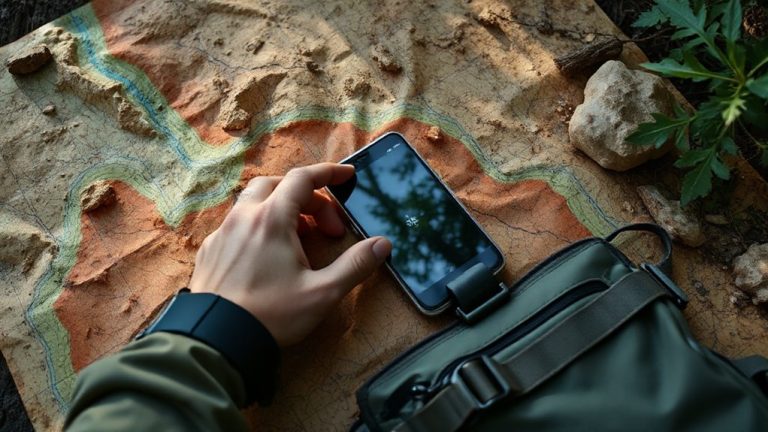
- Use binoculars or phone zoom to locate the fallen hiker without compromising your safety.
- Secure your position using anchor points like trees or boulders, and kneel to lower your center of gravity.
- Call 911 right away, provide GPS coordinates, and wait for professional rescue teams to arrive.
Stop First: Prioritize Your Safety in a Cliff Fall Emergency
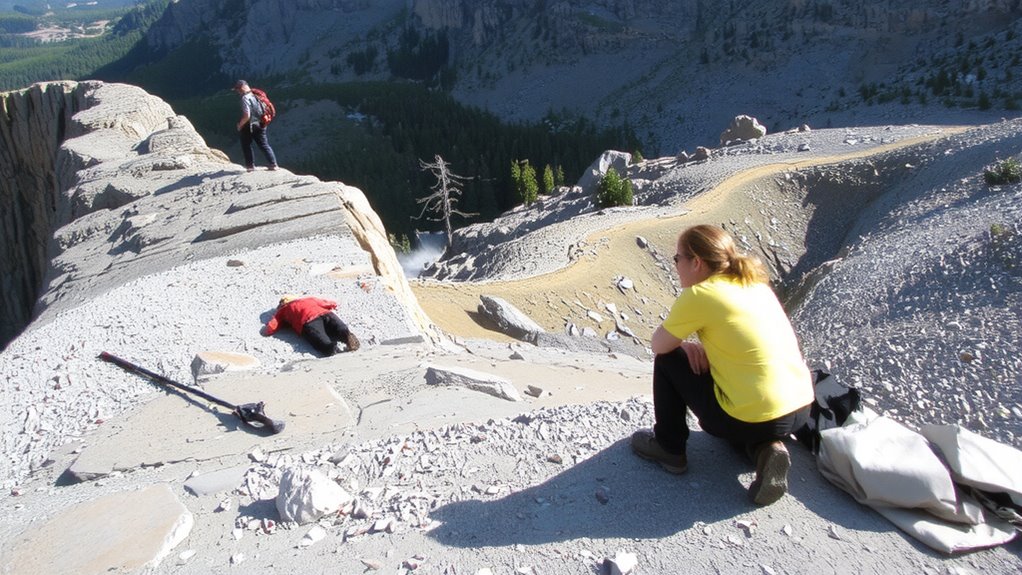
If you rush in without thinking, you could end up falling too-so your first move must be to stop and assess. Your safety comes before any rescue attempt. Begin with a quick risk assessment: look for loose rocks, unstable ground, or weather conditions that could threaten you. You can’t help anyone if you become another victim. This isn’t hesitation-it’s responsible emergency response. Keep a safe distance from the edge while scanning for the fallen hiker. Use binoculars or zoom on your phone to check for movement without moving closer. Note terrain features that might affect access or evacuation. Every second counts, but reckless action wastes them. A clear head and cautious approach improve outcomes. Prioritize your position, stability, and available tools. Only after you’ve secured your own safety should you plan the next move. Measured steps prevent secondary incidents.
Spot Ongoing Dangers at the Cliff Edge
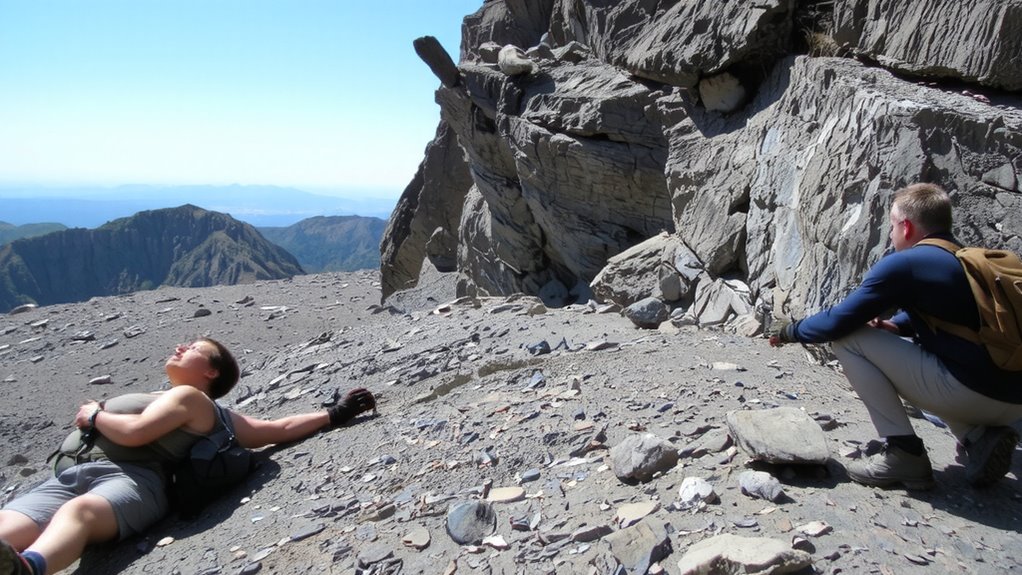
While scanning the cliff edge, you should watch for shifting rocks or weakened soil that could give way underfoot-these hazards aren’t always obvious, but they’re often visible as cracks, tilted ground, or debris trails. Loose rocks may tumble without warning, especially if the slope has been disturbed or is composed of fractured stone. You can’t assume stability just because the ground looks solid; water seepage, root decay, or previous erosion often weakens structural integrity. Unstable terrain might support your weight initially but fail mid-step. Listen for faint cracking or shifting sounds, and avoid areas where vegetation is sparse or broken. Don’t test the edge by stepping near it-use visual cues from a safe distance. Spotting these signs early reduces risk. Each movement matters; even minor vibrations can trigger a collapse. Your awareness of loose rocks and unstable terrain directly determines how safely you can assess the scene.
Secure Your Spot Before Getting Closer
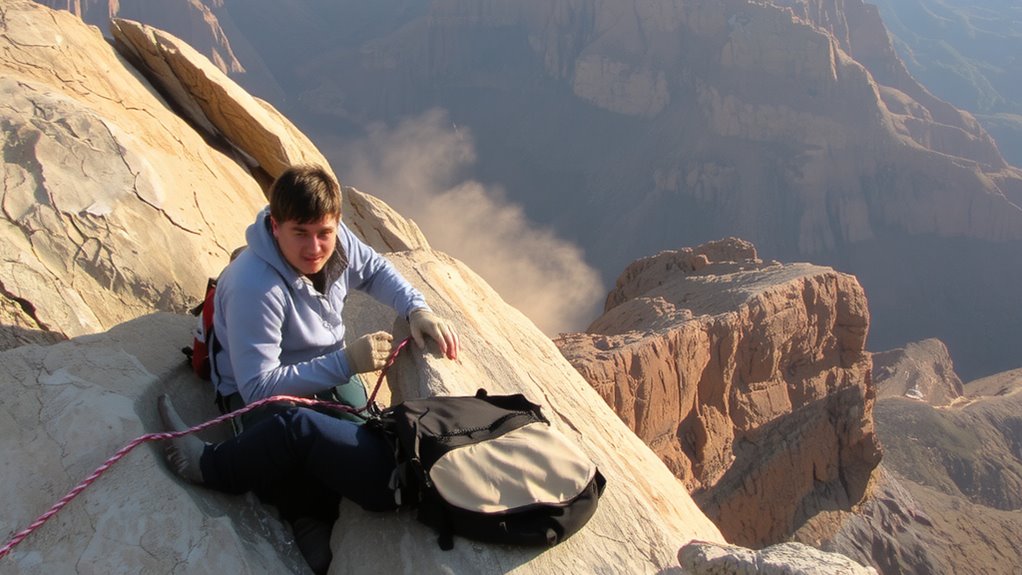
Every second counts, but rushing toward the edge puts you at risk-secure your position first. Perform a quick risk assessment: look for loose rocks, unstable ground, or overhangs that could give way. Position yourself at least three feet back from the drop-off, where soil is firm and vegetation is rooted. Use trees, boulders, or fixed gear as anchor points if available. Personal protection isn’t optional-kneel to lower your center of gravity and avoid slipping. If you have a trekking pole or rope, stake it into the ground behind you for added stability. Never lie flat near the edge; distribute your weight carefully. Your safety guarantees you can help, not become another casualty. Securing your spot takes seconds but drastically reduces fall risk. Simple actions-kneeling, anchoring, staying back-make the difference between effective aid and added danger.
Call 911 Immediately for Cliff Fall Help
Time is your most critical resource when a hiker goes over a cliff, and calling 911 immediately gives you an edge in survival odds. Do it before attempting any other action-delayed emergency response reduces chances of a successful outcome. Your phone’s GPS helps dispatch locate the site quickly, cutting down professional rescue setup time. Even if the person seems stable, internal injuries may not be visible, and terrain can shift without warning. A proper emergency response includes medical personnel and technical rescue teams trained for cliff environments. They arrive with gear that’s proven effective in real extrication scenarios. You can’t improvise this level of support. Wait for instructions from dispatch before moving closer or signaling the fallen hiker. Every minute counts, and the system is designed to respond fast-when activated promptly. Calling 911 starts that chain with minimal delay.
Talk to the Hiker Without Descending
Once you’ve called 911, stay where you are and call out to the hiker to check if they’re conscious and able to respond. This is your first step to assess responsiveness safely. Listen for verbal replies or movement. If they answer, ask simple questions to gauge awareness. If not, continue calling while preparing to monitor breathing remotely. Don’t risk a fall-stay anchored. Use visual cues like chest rise to monitor breathing from above. A loud, consistent voice helps determine orientation and injury level.
| Signal | What It Means |
|---|---|
| Verbal response | Likely conscious |
| Moaning | Possible pain, limited awareness |
| No sound | May be unconscious |
| Coughing | Airway likely open |
| Irregular breathing | Requires urgent medical input |
Assessing responsiveness and monitoring breathing from a safe position guides rescuers’ priorities.
Stay Put Until Help Arrives
While the urge to rush down can feel overwhelming, staying put is how you prevent turning one casualty into two. You’re safest where you are-moving increases the risk of another fall. Wait patiently; emergency response times in remote areas average 30 to 90 minutes, depending on location. Remain calm and use your phone to call for help if you haven’t already. Monitor the hiker’s condition without taking risks. Shifting terrain, loose rocks, and poor footing make descent dangerous even for experienced climbers. Your primary role now is to stay visible and alert rescuers. A stationary position allows helicopters or search teams to spot you quickly. Do not attempt a rescue unless you have proper gear and training. Wait for professionals-they’re equipped for this. Every minute counts, but safety comes from patience, not panic. Stay put, wait patiently, and remain calm. It’s the most effective way to help.
On a final note
You stay put because movement risks your safety and worsens the situation. Assess terrain, weather, and visibility-they dictate response, not emotion. Calling 911 guarantees trained help arrives with proper gear. Talking to the hiker checks consciousness without added danger. Ropes or descent attempts without training often fail; statistics show most rescuer injuries happen this way. Your role is alert, not actor-secure, observe, report. That’s what works.