How to Assess the Safety of Your Home During a Biological Outbreak
Check your kitchen sponge-if it’s damp and older than two weeks, it’s likely loaded with E. coli or salmonella. Disinfect high-touch surfaces daily with EPA-registered products, ensuring they stay wet for the full dwell time. Open windows or use a HEPA air purifier with a CADR over 200 to reduce airborne pathogens. Place dual door mats and remove shoes to cut tracked-in contaminants. Set up an isolation space with a HEPA filter and avoid central HVAC. A well-stocked two-week supply kit improves readiness when exposure risk rises-your next steps depend on how well each measure is implemented.
Notable Insights
- Replace kitchen sponges every two weeks and microwave wet sponges for two minutes to reduce harmful bacteria.
- Disinfect high-touch, non-porous surfaces daily using EPA-registered products with specific virus claims.
- Improve indoor air quality by combining HEPA air purifiers, MERV 13 filters, and natural cross-ventilation.
- Prevent pathogen entry by using dual door mats and enforcing a no-shoes policy indoors.
- Designate an isolation room with a HEPA filter, separate ventilation, and strict hygiene protocols for sick individuals.
Identify Your Home’s Germ Hotspots
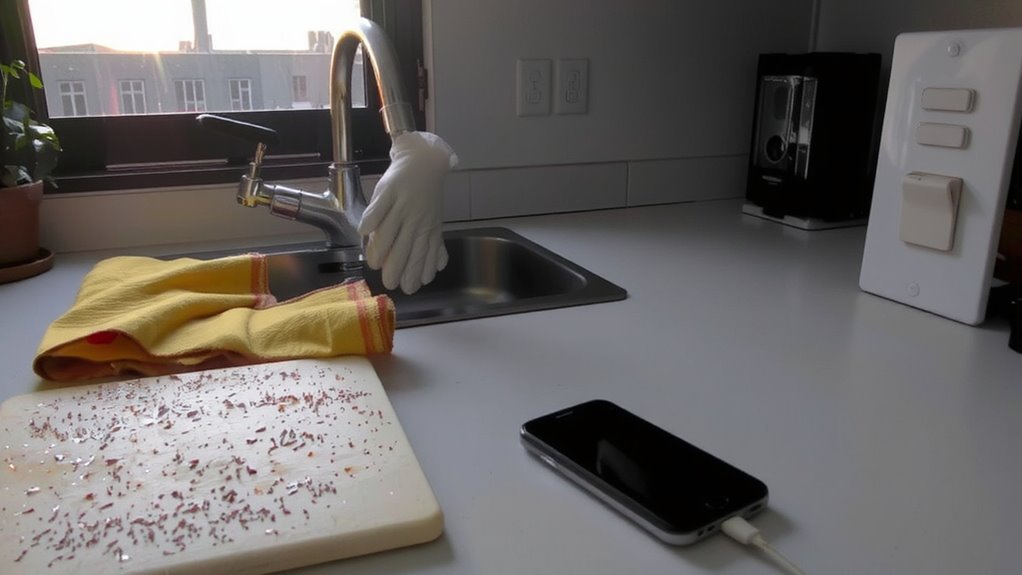
While you might not think about it daily, knowing where germs gather in your home could make a difference during a biological outbreak. Kitchen sponges are among the filthiest items in your house, harboring millions of bacteria like E. coli and salmonella, especially when kept damp. Studies show they can transfer pathogens across surfaces even after rinsing. You should replace them every two weeks or microwave wet sponges for two minutes to reduce microbes. Pet dander also contributes to contamination, carrying allergens and trapping microbes in dust. It accumulates in carpets, furniture, and air filters. High-traffic areas where pets roam need frequent vacuuming with HEPA-filter vacuums to limit spread. These hotspots aren’t always obvious, but they’re consistently present. Evaluating them isn’t about perfection-it’s about reducing risk where exposure is most likely and persistent.
Disinfect Surfaces That Spread Outbreaks
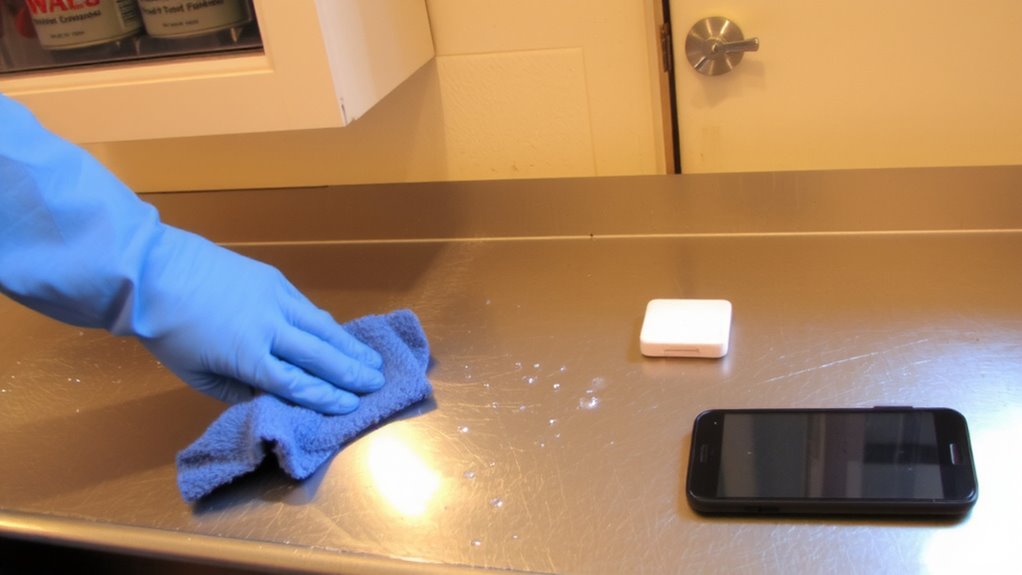
Since not all cleaning products kill viruses and bacteria effectively, you’ll want to choose disinfectants proven to work on common outbreak-causing pathogens. Check labels for EPA registration and specific claims against viruses like influenza or norovirus, as these indicate tested efficacy. Viral persistence varies by surface, lasting hours on plastic and days on stainless steel, so high-touch areas need daily disinfection. Surface porosity matters-non-porous materials like glass or metal allow easier pathogen removal, while porous surfaces like cloth or wood may trap microbes, reducing disinfectant contact. For these, cleaning with detergent first improves results. Apply disinfectant as directed, ensuring the surface stays wet for the required dwell time-usually 1 to 10 minutes-so it can inactivate pathogens. Don’t wipe too soon. Replace sponges and cloths often, since they can harbor germs. Paper towels or microfiber cloths work better when used once and discarded or laundered.
Boost Airflow to Cut Indoor Contamination
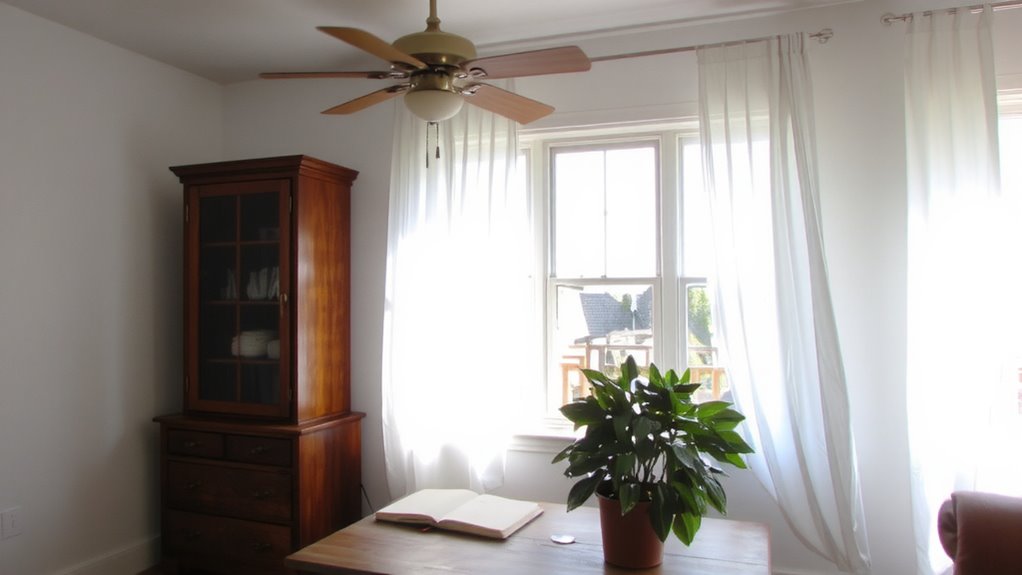
If you’re trying to reduce the risk of airborne transmission indoors, increasing airflow is one of the most effective steps you can take. Open windows and doors to create cross-ventilation-this natural ventilation dilutes contaminants quickly and costs nothing. Even 10 minutes of airing out a room every few hours helps. For continuous improvement, use fans to exhaust stale air and pull in fresh air from outside. Pair this with air filtration using a portable HEPA filter, which captures 99.97% of particles as small as 0.3 microns. Units with a CADR (Clean Air Delivery Rate) of at least 200 are effective for medium rooms. Running an HVAC system with a MERV 13 filter also supports air filtration but only if the system can handle it without airflow loss. Natural ventilation and mechanical air filtration together reduce indoor contamination more reliably than either method alone.
Block Germs at the Front Door
When you come inside after being out, you might track contaminants into your home without realizing it, so creating a simple entryway routine can cut that risk considerably. Place dual door mats-one outside, one inside the entryway-to capture dirt and microbes before they spread. The outer mat should be coarse to scrape boots, while the inner one absorbs moisture and finer particles. Perform shoe removal immediately upon entry; this step alone reduces indoor contamination by up to 90%. Store shoes in a designated bin or rack away from living areas. If space allows, install a small bench near the door to support balance during removal. These measures require minimal effort but markedly lower exposure risk. They’re especially effective during outbreaks when reducing pathogen transfer is critical. No special gear is needed-just consistent use of door mats and disciplined shoe removal.
Set Up a Home Isolation Room
Even though space and resources vary, setting up a dedicated isolation room at home can considerably reduce transmission risk during a biological outbreak. Choose a room with a door that closes tightly and, if possible, has a separate ventilation system. Place a HEPA air filtration unit inside to reduce airborne pathogens-models like the Alen BreatheSmart 75i can clean a 1,300 sq ft room in 30 minutes. Avoid central HVAC use that connects to other areas. Limit shared items and clean them after use. Enforce strict personal hygiene: always wear a mask when entering, use gloves if handling soiled materials, and wash hands immediately after leaving. The person in isolation should manage their own waste when possible. A portable UV-C sanitizer can supplement cleaning. This setup works best with minimal contact and clear boundaries-reducing exposure while maintaining essential care. For added respiratory protection, consider using a best gas mask that is certified to filter biological agents.
Stock a 2-Week Outbreak Supply Kit
Since you can’t predict how long supply chains might be disrupted, it’s smart to stock a 2-week outbreak supply kit with essentials that cover food, hydration, hygiene, and medical needs. Focus on non-perishable foods with at least a 12-month shelf life, like canned goods, dried beans, and ready-to-eat meals, ensuring they require no refrigeration or complex prep. Store one gallon of water per person per day in food-grade containers. Include soap, hand sanitizer, disposable wipes, diapers, and feminine products. Add a first aid kit, prescription meds, and at least a 14-day supply of any chronic condition medications. Emergency planning means accounting for pets, infants, and elderly household members. Label each item with its purchase date and use supply rotation: place newer items behind older ones to use up expiring stock first. Rotate supplies every six months to maintain freshness and effectiveness. Consider including Top Emergency Preparedness Supplies You Need to ensure all critical items are covered.
On a final note
You’ve sealed the key entry points and cleaned the high-touch zones, but real protection means consistency. A HEPA filter cuts airborne pathogens by up to 99.97%, and bleach wipes beat sprays on porous surfaces. Your isolation room works only if airflow stays controlled. Stockpiled supplies last just 14 days, so plan refills. No product replaces routine-germs win when habits slip.