Using Sunflower Seeds as a Macronutrient-Rich Emergency Crop
You can count on sunflower seeds for emergency nutrition-they pack 165 calories and 5.5g protein per ounce, with healthy fats, vitamin E, and magnesium. They grow in poor soil and need little water once established. You can eat them raw, no cooking required, and they store up to a year in a cool, dark place. Their resilience and nutrition make them practical for survival. You’ll find even more ways they support long-term preparedness.
Notable Insights
- Sunflower seeds provide 165 calories and 5.5 grams of protein per ounce, making them a nutrient-dense emergency food source.
- They grow in poor soils and withstand drought, thriving where other crops fail with minimal care.
- Seeds can be eaten raw without cooking, preserving nutrients and enabling consumption during infrastructure disruptions.
- Harvested seeds store for up to a year in airtight containers when kept cool and dark.
- These plants enhance soil health, support pollinators, and yield over 1,000 seeds per head in resilient varieties.
Why Sunflower Seeds Are Perfect for Emergency Food
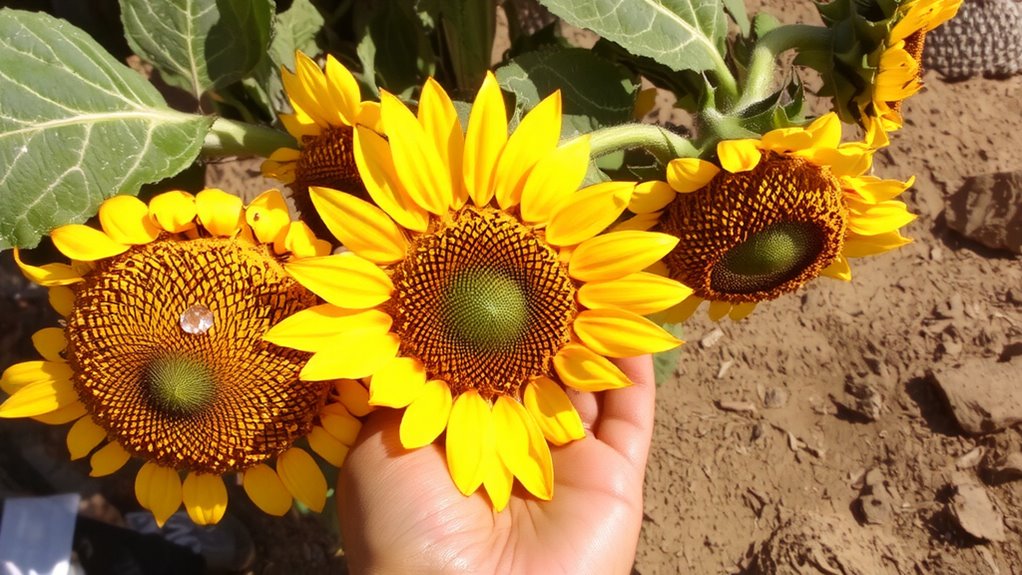
A handful of sunflower seeds gives you 165 calories and 5.5 grams of protein per ounce, making them a solid choice when food’s scarce. You’ll want high nutritional density in emergencies, and sunflower seeds deliver vitamins E and B6, magnesium, and healthy fats-all in a compact form. Their caloric efficiency means you get sustained energy without bulk, essential when storage and weight matter. They don’t require refrigeration and stay shelf-stable for months in sealed containers. Unlike perishable proteins, they’re reliable when supply chains break. Yes, they’re calorie-dense, so portion control helps stretch supplies. But overall, they balance macronutrients well. You’re not just filling your stomach-you’re maintaining function. In real-world testing, they outperform many emergency rations in energy retention and ease of use. Sunflower seeds won’t replace a full diet, but when you need dependable fuel fast, their blend of nutrition, shelf life, and efficiency makes them a practical staple.
Grow Sunflower Seeds in Tough Conditions
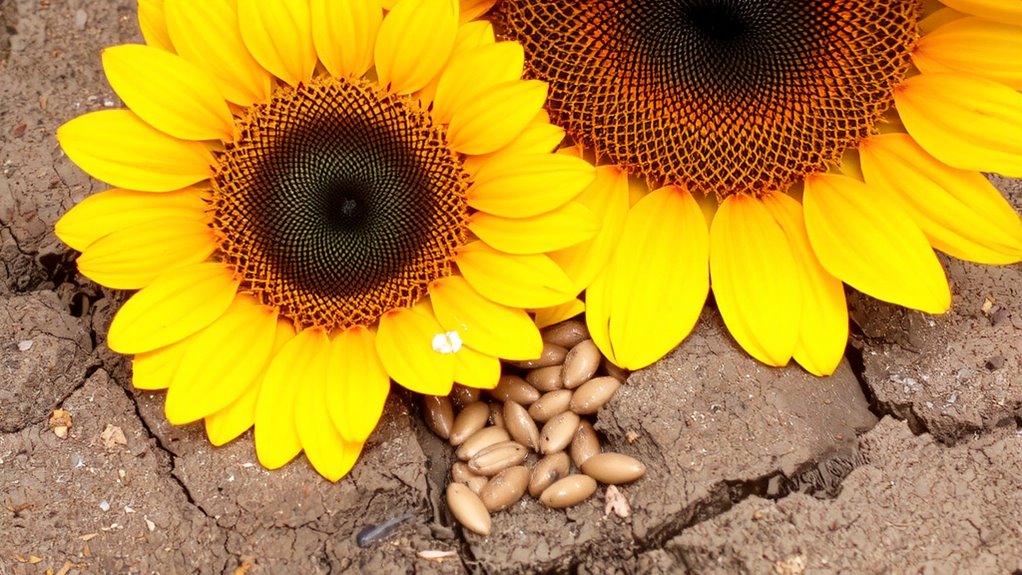
Even if your soil’s poor or the weather turns harsh, sunflowers will still grow because they’re tough and adaptable. You can count on their drought tolerance once established-they need minimal watering, making them ideal when resources are scarce. Their deep roots help them access moisture other plants can’t reach. Sunflowers also show strong soil adaptation, thriving in sandy, clay, or compacted ground where crops like corn fail. They tolerate pH imbalances better than most staples. Plant them in full sun, space seeds 6–12 inches apart, and thin as needed. Weeds are their main competition early on, so keep the area cleared. They grow fast, usually reaching maturity in 70–100 days. Pests are rare, though birds may target young sprouts. Use row covers if needed. With little input, you get high-calorie seeds and biomass. They’re not perfect, but in tough conditions, few crops deliver as reliably.
Harvest and Store Seeds for Months
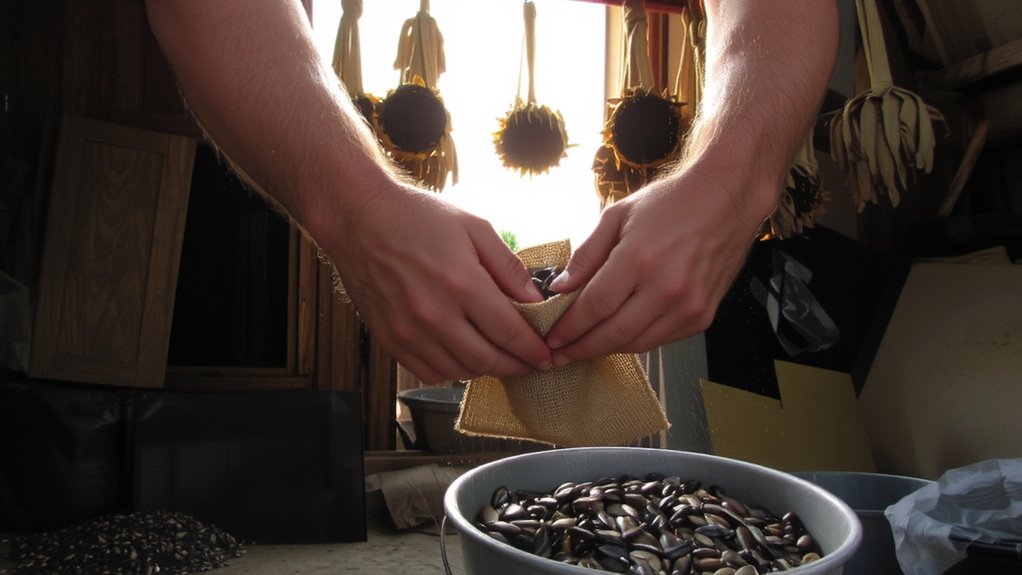
When those sunflower heads start drooping and the backs turn from green to yellow or brown, it’s time-you’ve got a narrow window to harvest before birds and weather take their share. Cut the heads, leaving 12 inches of stem, and hang them upside down in a dry, well-ventilated space for seed drying. This step is critical-moisture leads to mold. After 2–3 weeks, when seeds rattle loose, rub the head to release them. Inspect and discard any discolored or shriveled seeds. For long term storage, use airtight containers like glass jars or heavy-duty plastic, and keep them in a cool, dark place. Properly dried seeds stored this way last up to a year without significant nutrient loss. Temperature stability matters more than humidity once dried. If stored near heat or light, oils degrade faster. You won’t need special equipment-just consistency and attention to moisture during seed drying.
How to Eat Sunflower Seeds With No Kitchen?
If you’re without a kitchen, cracking sunflower seeds by hand is your most reliable option-just use your teeth or pinch them between fingernails to split the hull, then discard the shell and eat the kernel. This method requires no tools and provides immediate access to the edible part. Sunflower seeds offer portable nutrition, rich in fats, protein, and vitamins, making them efficient for energy when cooking isn’t possible. Direct consumption is practical and preserves nutrients without processing. You can eat them raw straight from storage-no prep needed. While hulls are indigestible, the kernels digest efficiently. Chewing thoroughly improves nutrient absorption. Portion control matters; too many at once may cause digestive discomfort. For long-term scenarios, this simplicity supports sustainability. Though unprocessed seeds may taste bland compared to roasted versions, the trade-off is reliability. Direct consumption guarantees you get calories and nutrients when infrastructure fails. It’s a proven method used in real-world food shortages.
Use Sunflowers as a Survival Garden Staple
You’ve already seen how sunflower seeds can keep you fed without a kitchen, but growing them yourself takes your resilience a step further. Sunflowers establish quickly in most soils, needing minimal inputs once planted. Their deep roots improve soil regeneration by breaking up compact layers and increasing organic matter turnover. You’ll notice fewer weeds and better water infiltration within one growing season. The plants also offer wildlife support-birds and pollinators are drawn to the blooms and seeds, boosting garden biodiversity. While some seed loss to birds occurs, you can cover heads with netting to retain harvest. Varieties like ‘Russian Mammoth’ yield 1,000+ seeds per head under field conditions. They require 90–120 days to mature, depending on climate. Drought tolerance is moderate; prolonged dry spells reduce head size by up to 30%. Still, for calories, nutrition, soil regeneration, and wildlife support per square foot, few survival crops match sunflowers. Plant them in rows 24 inches apart for reliable yields.
On a final note
You can rely on sunflower seeds in emergencies. They grow fast, need little water, and tolerate poor soil. Each plant yields 1,000+ seeds, packed with fat, protein, and calories. You can eat them raw, roasted over fire, or pressed for oil. Stored in airtight containers, they last six months to a year. They take space, and birds may target them, but their yield and nutrition outweigh the drawbacks. Sunflowers are a practical, measurable boost to any survival garden.