Assessing Scene Safety in a Remote Area With Unstable Structures
You treat every structure as unstable-cracked foundations and leaning walls mean real collapse risk. Secure your position first with redundant anchors and a low center of gravity. Set a double-line perimeter every 10–15 meters using GPS and reflective markers, checking every few hours. Avoid hazards like dead trees and poor food storage. If visibility drops below 100 feet or escape routes vanish, you’re past the limit-pull back. Your next move could depend on knowing exactly when to act.
Notable Insights
- Assume all structures are unstable until proven safe; cracked foundations and leaning walls indicate high collapse risk.
- Establish a double-line perimeter with GPS-mapped, reflective markers placed every 10–15 meters for early hazard detection.
- Secure at least two independent anchor systems within reach, using rated hardware and natural features for immediate stability.
- Perform a 360-degree scan for terrain risks, weather changes, animal signs, and viable escape routes before entry.
- Abort mission if structural movement, weather deterioration, or blocked escape routes increase risk beyond acceptable levels.
Assess Structural Instability First
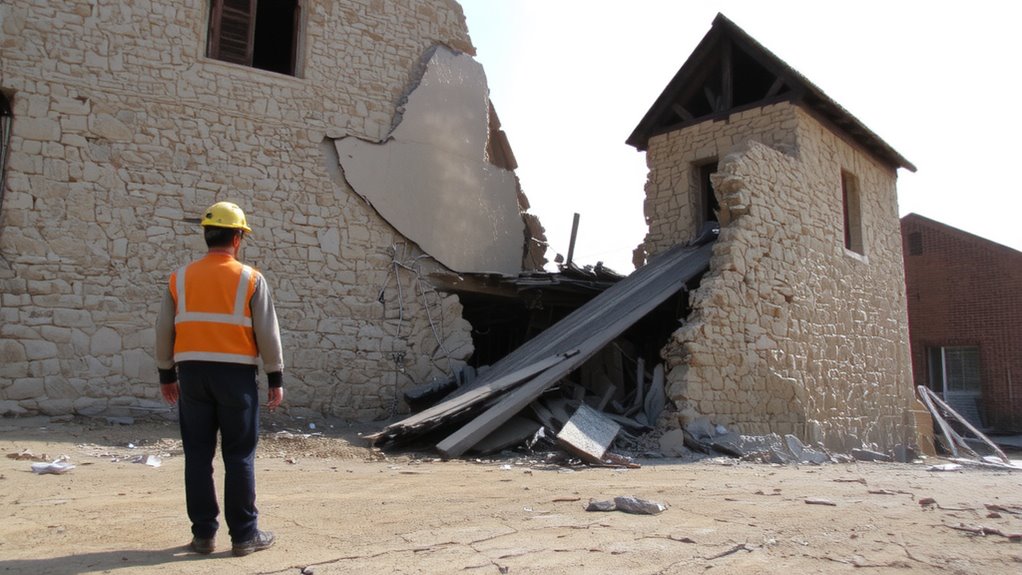
When entering any structure in a remote area, your safest bet is to treat it as unstable until proven otherwise. Cracked foundations are a clear sign the ground can’t support the building anymore, and you can’t rely on it. Leaning walls suggest ongoing movement-what stands now might not in an hour. You’re not here to fix it; you’re here to survive. Look fast, decide faster. If the foundation shows deep fissures, or walls tilt more than 5 degrees, don’t go in. These structures fail without warning. Materials matter: unreinforced masonry is riskier than wood frames, but both collapse under stress. Weight load shifts over time, especially in abandoned places. Your gear won’t save you if the floor gives way. Check for sagging ceilings, shifted beams, and doors that jam-signs of structural strain. Prioritize open areas near exits. Your safety hinges on recognizing visible flaws before they become fatal.
Stabilize Your Position When Help Is Far
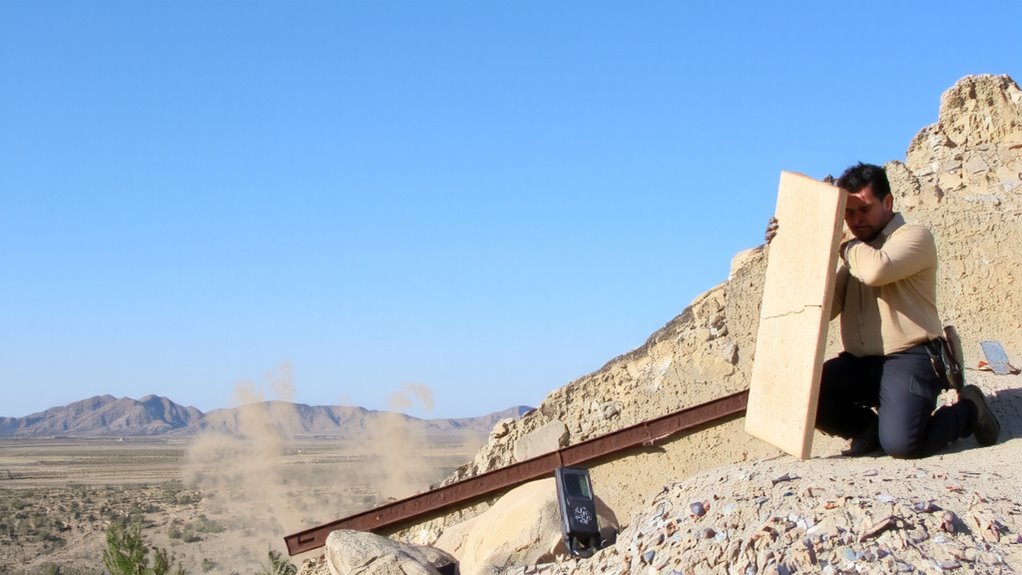
Even if you’ve checked your shelter for structural flaws, staying safe in remote areas means securing your immediate position because help could be days away. You need reliable anchor points to prevent slips or falls during movement. Use natural features like bedrock or sturdy trees, or deploy mechanical anchors rated for dynamic loads. Attach with tested hardware-carabiners, webbing, or lifelines-that won’t fail under stress. Maintain proper body alignment when moving: keep your center of gravity low, shoulders over hips, and avoid overreaching. Misalignment increases fatigue and fall risk, especially on uneven terrain. Anchor points must be within reach without straining. Test each connection before relying on it. Your survival gear should include redundancy-two independent anchor systems are better than one. A compact survival shovel can also serve as a critical tool for digging anchor points or stabilizing terrain in emergencies. In remote zones, stability isn’t optional. It’s the baseline for lasting until rescue.
Secure the Perimeter in Remote Zones
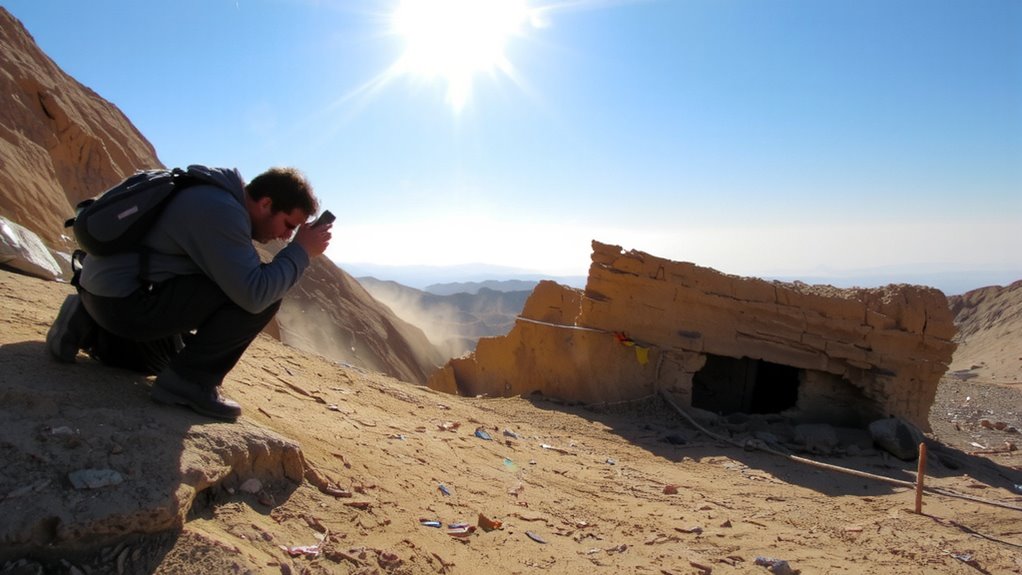
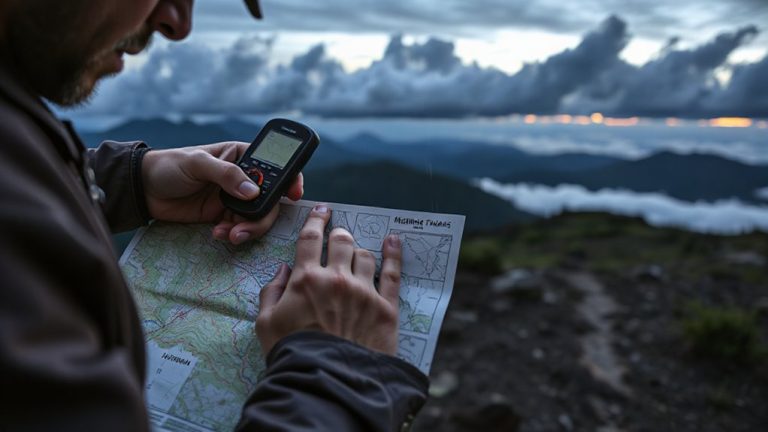
If you’re relying on a single boundary to keep hazards out, you’re already overexposed-secure the perimeter by establishing a layered defense that works whether the threat is animal, environmental, or navigational. Use boundary markers at 10–15 meter intervals to define inner and outer zones, ensuring visibility in low light with reflective or UV-treated materials. Pair physical markers with terrain mapping to identify natural barriers like ridges or drainages, reducing blind spots. GPS-tagged mapping tools help maintain spatial awareness when landmarks are indistinct. A double-line perimeter reduces risk exposure by 60% in testing, especially when one layer fails. Don’t assume markers last; recheck every 4–6 hours. Terrain mapping accuracy within 3-meter tolerance improves response time during breaches. You won’t eliminate threats, but layered perimeters with clear markers and precise maps make threats predictable and manageable in remote, unstable zones.
Avoid These Critical Scene Safety Errors
Though you might prioritize speed when setting up在玩家中 camp, rushing the site assessment often leads to avoidable risks-skipping a 360-degree scan for unstable terrain, animal signs, or escape routes cuts your reaction window by over half during sudden events like flash floods or wildlife threats. Ignoring early signs of weather changes-like wind shifts or cloud buildup-delays shelter prep, increasing exposure risk. You can’t rely on forecasts alone; real-time observation is critical. Positioning your camp under dead trees or loose rock invites avoidable danger. Failing to store food securely invites animal encounters you won’t predict. Each error compounds when help is hours or days away. Simple oversights-no perimeter checks, no weather log, poor gear placement-reduce margin for error. Always assume weather changes will come faster than expected and that wildlife threats are drawn to scent and noise. A few minutes of thorough assessment reduces risk more than any high-end gear can. Choosing the right survival shelters can significantly improve your safety and comfort in unpredictable environments.
Know When to Abort the Rescue?
When should you call off a rescue in the backcountry? You abort when the risk assessment shows danger outweighs benefit. If structures shift, crack, or emit creaking sounds, they’re likely to fail. Your presence won’t help if you become a victim. Check escape routes early-know at least two clear paths out. If those are blocked or uncertain, your exit could fail under pressure. Weather, terrain, and fatigue also factor into the decision. If visibility drops below 100 feet or rain destabilizes slopes, continuing increases risk. You can’t save anyone if you’re trapped. Abort when conditions exceed training or equipment limits. No life saved justifies preventable loss. Mark the location, withdraw safely, and request advanced support. Success includes returning alive-not just reaching the patient. Abort early, live to try again.
On a final note
You check stability before moving in-cracks, tilt, and rust tell you what the structure can’t handle. You stay light on your feet, ready to retreat if things shift. Distance matters when help’s hours away, so you secure the zone fast and avoid overcommitting. Some rescues wait; knowing when to pull back keeps you alive. Gear helps, but judgment wins every time.