Fire Plow Method: Cedar Base & Hickory Stick (Ember in 90 Sec)
Use a dry softwood base like cedar and a dense hardwood plow like hickory for best results. The softwood gouges easily, creating fine, combustible dust, while the hardwood maintains structure and focus. Apply steady pressure with long, controlled strokes-ember forms in 60–90 seconds when aligned correctly. Green or misaligned wood fails. Proper technique beats strength. You’ll see how small adjustments dramatically improve success.
Notable Insights
- Use a softwood base like cedar or poplar for easy abrasion and fine, combustible dust production.
- Select a hardwood plow stick such as hickory or maple to maintain structural integrity during friction.
- Ensure both woods are dead and dry to maximize ignition potential and reduce moisture interference.
- Carve a straight groove in the softwood base and use a blunted hardwood stick for focused friction.
- Apply consistent, firm pressure with long strokes, concentrating heat in the groove to form an ember in 60–90 seconds.
How Soft and Hard Woods Create Fire Through Friction
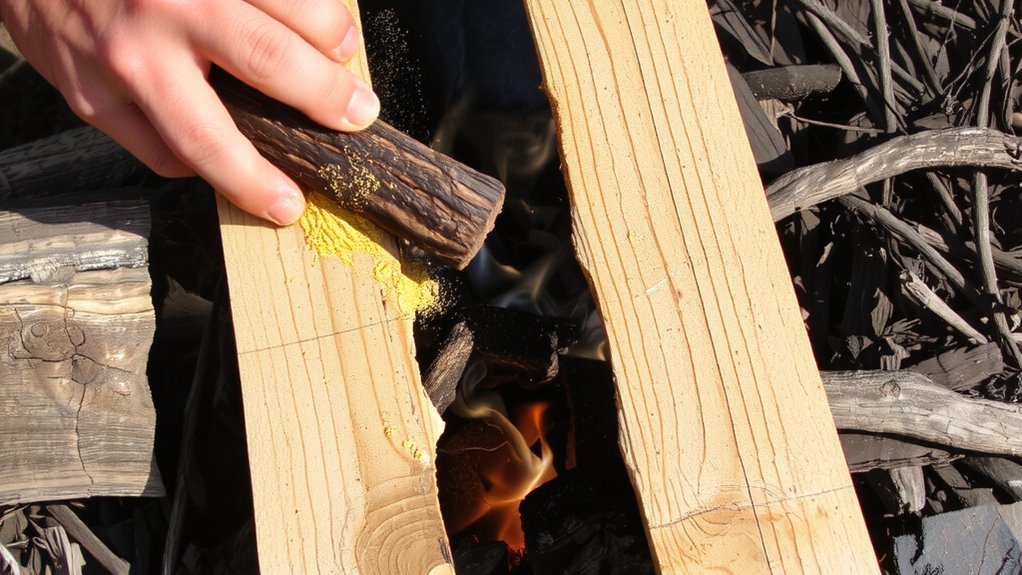
While any wood can technically generate friction, softwoods and hardwoods work together in a fire plow because they wear at different rates-softwoods abrade quickly to produce fine, combustible dust, while hardwoods hold up longer to maintain the plow’s structure. You rely on this contrast: the softwood’s low wood density allows rapid material breakdown, creating tinder-like powder in the groove. As you push the hardwood stick back and forth, its higher wood density resists wear, keeping the plow aligned and effective. This consistent motion generates friction heat directly in the softwood trench. The concentrated heat, focused where the plow contacts the dust, raises the temperature to ignition point. No external flame is needed-just steady pressure and speed. Success depends on matching material properties to function. Softwood supplies fuel; hardwood delivers force. Together, they turn mechanical effort into fire through controlled abrasion and sustained friction heat.
Choose the Right Softwood and Hardwood for Fire Plow Success
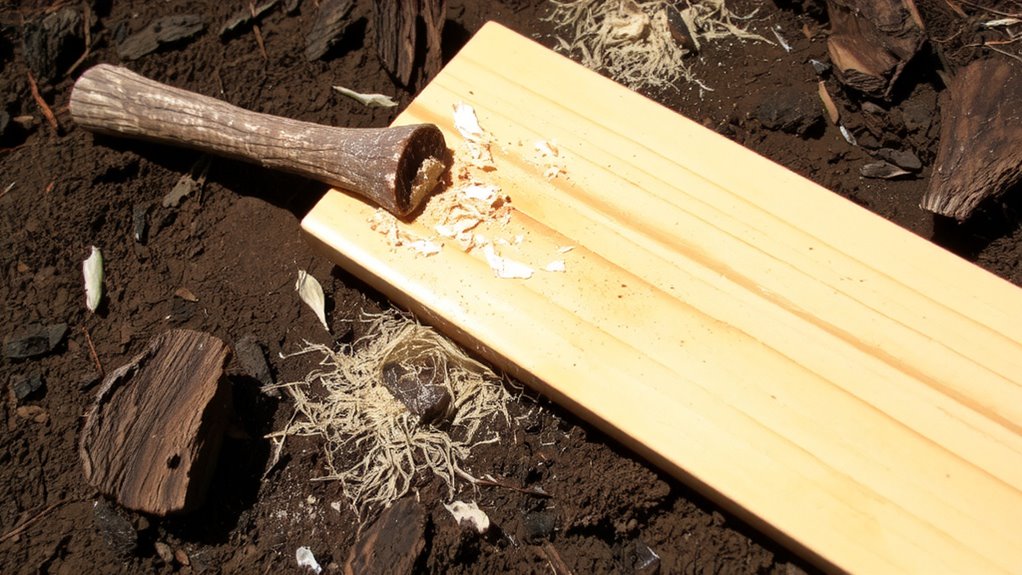
Your best bet for a working fire plow starts with picking the right wood pair-softwood for the base board, hardwood for the plow stick. You need dry wood; high moisture content slows combustion and increases effort. Aim for softwoods like cedar or poplar that powdery when abraded, not splintery. Their low density allows easier groove formation. Pair them with a dense hardwood stick-hickory or maple work well-because it holds up under friction without crumbling. Wood grain alignment matters: straight, consistent fibers in both pieces prevent splitting and guarantee smooth plowing. Avoid warped or knotted sections. Test the softwood by scratching it; if it gouges easily, it’s a good candidate. The hardwood should resist fingernail pressure. Both pieces must be dead and dry-seasoned for days, preferably weeks. No green wood. Proper selection cuts effort and increases success odds in real conditions.
Build Your Fire Plow Step by Step
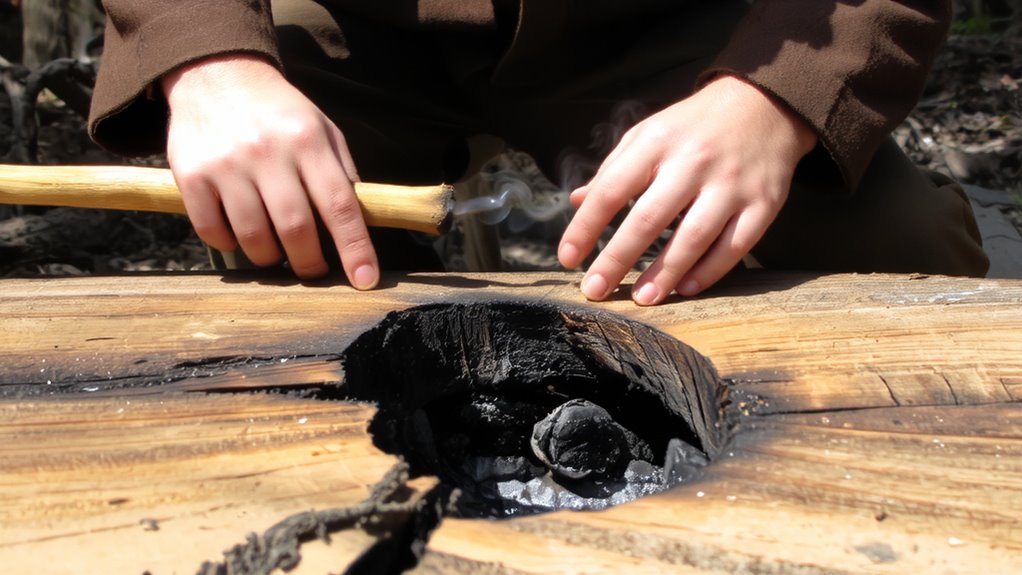
A solid fire plow starts with preparation-get your materials right and the rest follows. You need a softwood base, straight and dry, about 18 inches long, with a groove carved along its length. Use a hardwood stalk for the plow, around 12 inches, with a blunted tip to prevent digging in. Position the base securely; tilt it slightly so debris clears the groove. Fire placement matters-angle it where glowing dust collects but won’t scatter. Kneel and pin the base with one foot. Your hand positioning is critical: grip the plow between palms, apply downward pressure, and push forward in steady strokes. Keep your wrists rigid to avoid slipping. Use long, even motions to build friction. Too much tilt wastes energy; too little won’t generate heat. Align everything straight-plow, groove, and pressure-to maintain contact. No part should wobble.
Make an Ember Without Wasting Energy
How much effort you waste depends on your technique, not just your strength. Maintaining proper posture reduces strain and improves control, letting you focus energy where it matters-on the plow. Apply consistent pressure to keep friction steady; too light and you won’t generate heat, too hard and you’ll burn out fast. Use your body weight smartly, leaning forward slightly to drive the plow without overworking your arms.
| Action | Result |
|---|---|
| Proper posture | Even force, less fatigue |
| Consistent pressure | Stable heat, faster ignition |
Short, controlled strokes work better than long, wild ones. Let the wood do the work. Your rhythm should feel sustainable-like walking, not sprinting. If your arms shake or your back aches, adjust your stance. Efficiency comes from repeatable motion, not brute force. A good ember forms in 60–90 seconds with the right balance.
Top survivalists often pair primitive techniques like the fire plow with modern tools such as fire pistons for reliable ignition in challenging conditions.
Why Your Fire Plow Isn’t Working (And How to Fix It)?
Getting an ember from a fire plow isn’t about how hard you push-it’s about setup and material choice. If you’re struggling, poor technique is likely the culprit. You’re either moving too slowly or not maintaining a straight, consistent plow path. The hardwood stalk must press firmly into the softwood base, but incorrect pressure will kill your progress. Too light, and you won’t generate enough friction; too hard, and you’ll crush the groove or stall the motion. Use steady, moderate pressure with rapid back-and-forth strokes. The softwood needs to be dry and punky-think cedar or yucca stalk-while the plow rod should be dense and straight. Check that your plow stays aligned with the groove. Misalignment scatters material instead of compressing it. Keep the dust gathered in the notch and focus on speed over force. With correct form, embers form in under a minute.
On a final note
You’ll need softwood for the base and hardwood for the plow to generate friction effectively. A correctly matched pair produces embers faster with less effort. Softwood like cedar or poplar works best when dry and straight-grained. Hardwood plows, such as maple or oak, resist crushing. Efficiency drops if materials are damp or too dense. Test both woods for consistency and grain alignment. Proper setup reduces fatigue and increases success.