Identifying Local Community Shelters Accepting Pets During Regional Evacuations
Check your local emergency management website or call officials now to find pet-friendly shelters in your area. Confirm they accept your pet’s species, size, and breed, and ask about vaccination proof, carriers, and registration rules. Many require advance sign-up and only allow pets in designated zones. Keep records updated and verify openings during active evacuations. Shelter space isn’t guaranteed-know your options ahead of time to act fast when it matters. Next steps clarify exactly what to pack and practice.
Notable Insights
- Check local emergency management websites for a list of pet-friendly shelters in your area.
- Register your pet in advance if required by community shelter policies.
- Call shelters directly to confirm current pet acceptance during active evacuations.
- Verify which pets are allowed, as many shelters only accept dogs and cats.
- Keep vaccination records and pet carriers ready for quick shelter access.
Find Pet-Friendly Shelters Before Disaster Strikes
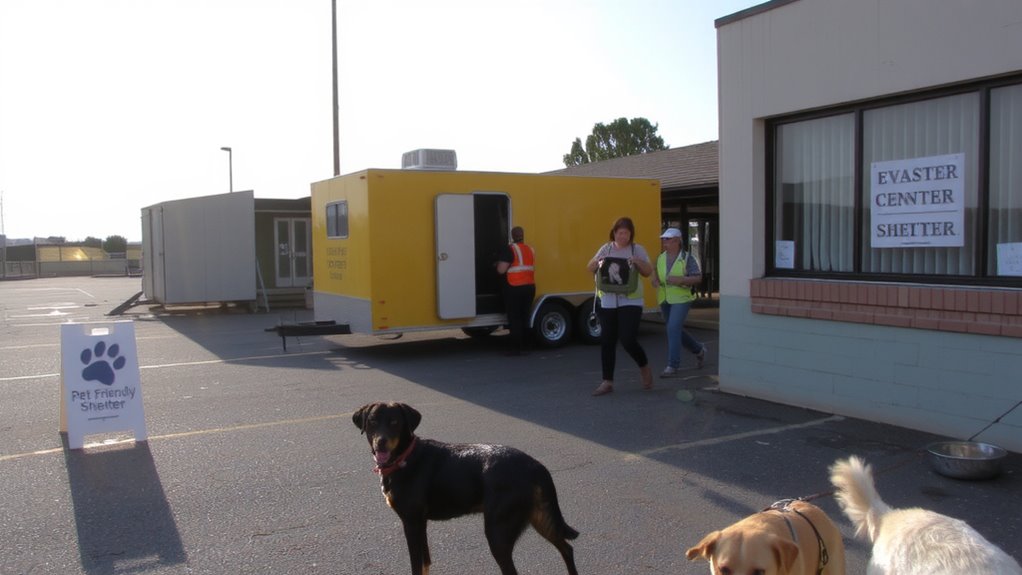
While disasters are unpredictable, knowing where to go with your pet isn’t something you should figure out in the moment. You need to locate pet-friendly shelters ahead of time to guarantee shelter accessibility during evacuations. Waiting until an emergency limits your options and increases risk. Many communities require pet registration before allowing animals in shelters, so enrolling early saves time and avoids denial of entry. Check local emergency management websites or contact officials to confirm which shelters accept pets and what documentation they require. Not all shelters offer the same level of access or services, so assess proximity, capacity, and entry rules now. Pet registration often involves proof of vaccinations and ID, so keep records updated. Relying on informal plans puts your pet at risk. Planning guarantees faster, smoother access when every minute counts. Shelter accessibility depends on preparation-start today.
Confirm If a Shelter Accepts Pets: Key Questions to Ask
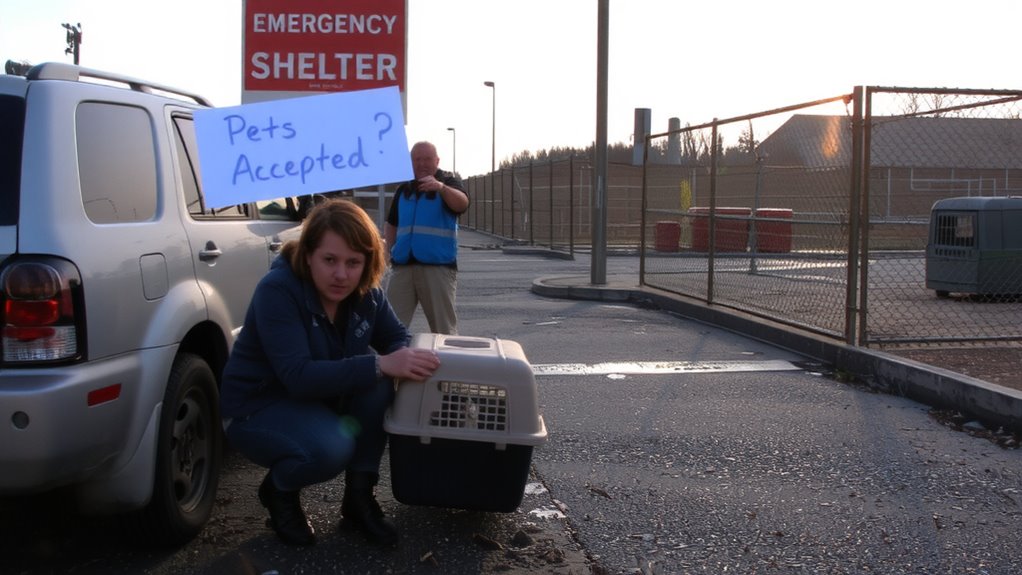
How do you know for sure a shelter will let your pet inside when you need it most? Don’t assume-call ahead and ask specific questions. Verify current pet policies, as they can change without notice. Ask if the shelter allows pets during active evacuations and whether they have space reserved for pet owners. Shelter availability varies by event, location, and timing, so confirmation during each emergency is essential. Find out if pets must stay in designated zones or if they’re allowed inside main areas. Request details on vaccination records, carrier requirements, and any size or species restrictions. Some shelters only accept pets during certain hours or with advance notice. Written policies may not reflect real-time capacity. Double-check with local emergency management or animal control right before evacuating. Getting clear, current answers now could save your pet’s life.
Which Pets Are Allowed in Emergency Shelters?
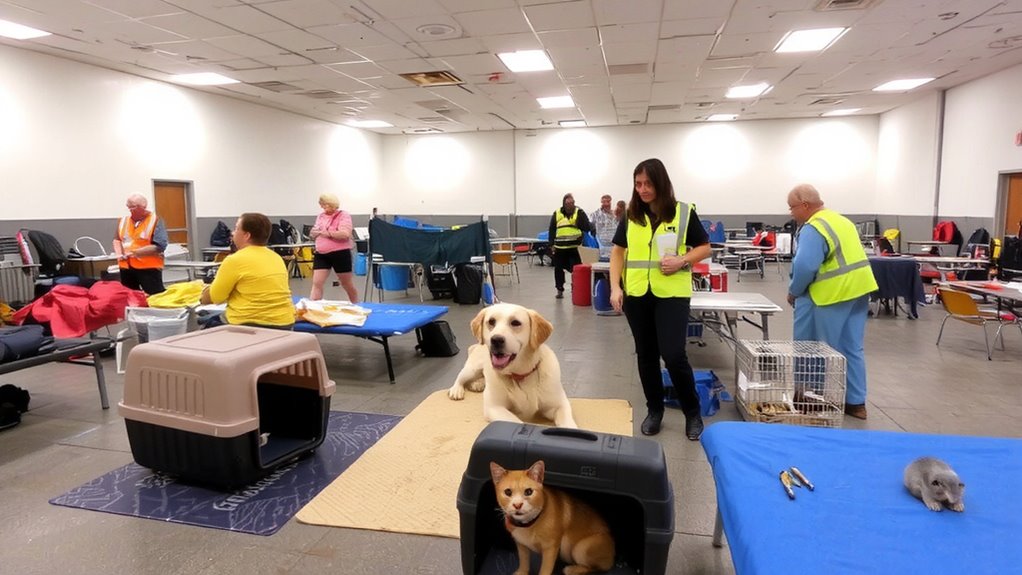
You’ve confirmed the shelter takes pets, but that doesn’t mean your pet qualifies. Most shelters only accept common household animals like dogs and cats-these are the pet types they’re equipped to handle. You can’t assume reptiles, birds, or exotic animals will be allowed; many shelters lack the space or supplies. Shelter restrictions often limit pets to those in carriers, under a certain weight, or non-aggressive breeds. Service animals are usually exempt from these rules, but emotional support animals may not be. Vaccination records and proper containment are typically required. If your pet doesn’t meet the criteria, you’ll need another plan. Knowing these shelter restrictions ahead of time prevents last-minute surprises. Always verify permitted pet types directly with the facility-don’t rely on general lists. Real preparedness means matching your pet to actual shelter capabilities.
Pack a 72-Hour Emergency Kit for Your Pet
A pet’s survival during an emergency depends on your prep work now-specifically, a 72-hour kit stocked with the essentials. You need to include at least three days’ worth of pet nutrition, accounting for your animal’s size, age, and dietary needs. Dry food stays fresh longer, but pack a few wet meals if your pet needs the moisture. Don’t forget a manual can opener if required. Include a seven-day supply of emergency medications, clearly labeled with dosage instructions. Store all items in a sealed, waterproof container. Add a collapsible bowl, leash, waste bags, and a printed copy of your pet’s medical records. Rotate food and meds every six months to maintain freshness. This kit isn’t optional-it’s a functional necessity. You’ll move fast during evacuations, and you won’t have time to shop. Be ready.
Monitor Alerts for Open Pet-Friendly Shelters
Where will you go when evacuation orders drop and your pet can’t be left behind? You need reliable access to real time alerts about shelter availability. Local emergency management agencies and animal services often issue updates through apps, texts, or social media. Sign up now for county alert systems-they deliver critical notifications when pet-friendly shelters open. These real time alerts reduce guesswork and save time during fast-moving evacuations. Shelter availability changes rapidly; a full shelter at noon might have space by evening, or vice versa. Relying on outdated info risks delays or being turned away. Don’t assume shelters will accept pets-only some are equipped. Verify pet policies in advance, then monitor updates closely. A working smartphone with location services and emergency apps is essential. This isn’t about convenience-it’s a functional necessity for getting your pet to safety when minutes count.
Practice Your Evacuation Plan With Pets
Getting alerts about open pet-friendly shelters means nothing if you’re not ready to act on them quickly. You need to practice your evacuation plan with pets regularly. Evacuation drills help you identify delays, like when your dog hides or your cat resists the carrier. Repeating the process reduces panic and improves response time for both you and your animals. Pet behavior under stress is unpredictable-some freeze, others bolt. Drills condition them to follow cues during chaos. Use the same route, carrier, and command each time. Time each drill to track improvement. Include leashes, harnesses, and transport containers-test their functionality under real conditions. Assess what works; adjust based on observed pet behavior. Practicing guarantees you can move fast and safely when seconds count. It’s not about perfection-it’s about preparedness backed by repetition and observation.
Why Pet-Friendly Shelters Are Essential for Family Safety
If you’re not counting your pet as part of your family evacuation plan, you’re compromising your household’s safety-because people won’t leave pets behind, even during disasters. Delaying evacuation to find pet-friendly shelter endangers everyone. Pet inclusion in emergency planning guarantees faster, safer departures and reduces stress for both people and animals. Pets provide emotional support during crises, helping children and adults manage anxiety. Separating them worsens trauma and undermines recovery.
| Factor | Without Pet-Friendly Shelter | With Pet-Friendly Shelter |
|---|---|---|
| Evacuation Compliance | Low – people delay or refuse | High – families leave promptly |
| Family Stress | Increased – due to pet separation | Reduced – pets offer emotional support |
| Shelter Safety | Crowded, unpredictable behavior | Calmer environment with pet inclusion |
| Reunification Risk | High – lost or injured pets | Minimal – pets stay supervised |
| Public Health | Higher risk from abandoned animals | Controlled, managed pet populations |
On a final note
You need to find pet-friendly shelters now, not during an emergency. Confirm policies in advance, as many shelters exclude pets or accept only service animals. Pack a 72-hour kit with food, meds, and carriers. Test your evacuation plan annually. Real-world evacuations show delays increase risks for both you and your pet. A shelter that allows pets improves compliance and safety-don’t assume they’re available. Check local lists, verify openings during alerts, and have backup options.