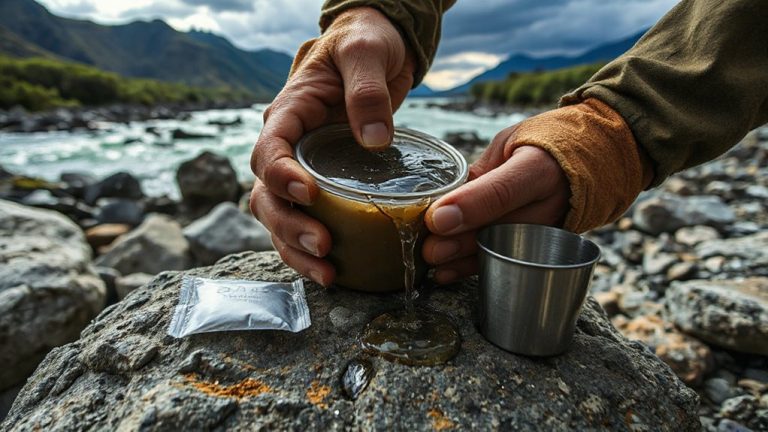
How to Efficiently Source Water for Long-Term Survival Situations
You can find water by tracking animal signs, damp vegetation, or depressions in the land. Collect rain off a clean roof-1,000 sq ft gives 600 gallons per inch of rain-using gutters and food-grade barrels. Shallow seepage pits near cattails or willows access groundwater without deep digging. Purify with boiling, solar disinfection in clear bottles, or cloth straining followed by treatment. Store in sealed #2 HDPE containers, rotated every six months. There’s a better way to keep it clean long-term.
Notable Insights
- Follow animal tracks downhill and observe lush vegetation like willows to locate natural water sources.
- Harvest rainwater using clean roofs, gutters, and food-grade barrels for efficient collection and storage.
- Identify groundwater by inspecting damp areas, creek beds, and vegetation indicators without deep excavation.
- Purify water by boiling for at least 1 minute or using solar disinfection in clear PET bottles under direct sunlight.
- Store treated water in labeled, food-grade containers kept in cool, dark places and rotate every 6 months.
Spot Water in the Wild Using Clues
Where do you even begin looking for water when you’re stuck in the wild? Start by reading the landscape for clues. Animal tracks often lead to water-follow them downhill, especially at dawn or dusk. Dips, gullies, and game trails converging usually signal a water source nearby. You’ll also notice increased insect activity and bird flight patterns pointing toward moisture. Plant indicators are just as reliable. Lush, green vegetation like willows or cattails typically grows near water. In arid regions, look for dense clusters of reeds or even ants, which nest close to moisture. Note that not all plants mean drinkable water, but they narrow your search. These signs won’t guarantee safety, but they improve your odds. Use them together-animal tracks plus plant indicators-for better accuracy. It’s not foolproof, but it’s efficient and based on observable patterns.
Catch and Use Rainwater Off Your Roof
Why rely on uncertain sources when rainwater’s free and easy to collect? You can harvest it directly from your roof with minimal equipment. Start with proper roof maintenance-clean surfaces prevent contamination, ensuring safer water. Pair that with reliable gutter installation to channel water efficiently into storage. Metal or PVC gutters work best, directing flow without leaching toxins. A 1,000-square-foot roof can yield 600 gallons per inch of rain. That’s enough for drinking, cooking, and cleaning if filtered. Use first-flush diverters to discard initial runoff, which carries dust and debris. Screens keep out leaves and insects. Store in food-grade barrels with tight seals to block light and pests. Over time, this system beats hauling water. It won’t work in prolonged droughts, but during wet seasons, it’s a predictable, low-cost source. No pump needed-just gravity and smart setup. For optimal safety, consider filtering stored rainwater through a best water filters system to remove pathogens and contaminants.
Find Groundwater Without Digging a Well
How do you know where to find water without breaking your back digging? You use groundwater mapping and seepage inspection to locate likely sources. Groundwater mapping identifies aquifers using elevation, soil type, and vegetation patterns-damp areas with cattails or willows often indicate shallow water. You don’t need advanced tools; a topographic map and observation are enough. Seepage inspection means checking slopes, creek beds, or rock crevices where water may surface. Look for damp soil, insects, or animal trails leading downhill-these hint at hidden moisture. Digging isn’t required; shallow pits or sand dams can collect seepage. Success depends on terrain: valley floors yield more than ridges. While not 100% reliable, these methods offer consistent results when used together. You trade time for tools, using patience instead of equipment. It’s practical, immediate, and low-risk. Once water is sourced, filtering it with a reliable water filtration system ensures it’s safe to drink.
Clean Water With Boiling, Sun, or Cloth
You found the water-now you need to make it safe. Boiling is reliable: bring water to a rolling boil for 1 minute (3 minutes at high altitude) to kill pathogens. It’s effective but fuel-intensive. If you lack fuel or heat source, try solar disinfection. Fill a clear PET bottle, shake it for oxygenation, and leave it on a reflective surface in direct sunlight for 6 hours (or 2 days if cloudy). UV-A rays and heat deactivate bacteria and viruses. It’s low-effort but weather-dependent. For visible debris, use cloth straining. Pass water through tightly woven fabric-like a bandana or coffee filter-to remove dirt and larvae. It doesn’t kill microbes, so combine it with boiling or solar disinfection. Cloth straining extends the life of filters and improves clarity. Each method has trade-offs: boiling uses resources, solar disinfection needs time and sun, and cloth straining only removes particulates. Use them in sequence for best results. For longer-term scenarios, consider using a portable water filter for survival to efficiently remove contaminants and reduce reliance on fuel and time.
Store Water Safely for Weeks or Months
If you’re planning for long-term water storage, start with clean, food-grade containers made from high-density polyethylene (HDPE), marked with a #2 recycling symbol-they resist cracking and won’t leach harmful chemicals. Use only water containers designed for potable storage; avoid repurposed milk jugs or soda bottles, as they degrade and harbor bacteria. Fill containers with treated municipal water or disinfect your own using unscented bleach (8 drops per gallon), then cap tightly. Store them in a cool, dark place-heat and sunlight encourage algae and weaken plastic. Check seals regularly for leaks. Practice storage rotation: label each container with the fill date and replace contents every 6 months. This guarantees freshness and detects container wear. Don’t stack containers more than two high unless designed for it-overstacking risks cracks and leaks. Well-maintained water containers and routine storage rotation keep your supply safe and usable over weeks or months.
Build a Filter From Sand, Charcoal, and Gravel
Once your long-term water storage is secure, focus shifts to ensuring a sustainable supply when stored reserves run low. You can build a basic filter using sand, charcoal, and gravel-materials that support layer filtration and aid in natural purification. Start with coarse gravel at the bottom, then add finer gravel, sand, and crushed activated charcoal on top. This sequence traps debris and reduces contaminants as water seeps through. While it won’t remove pathogens, it improves clarity and odor. Field tests show turbidity drops markedly after filtering, though boiling is still required for safety. Charcoal helps adsorb some chemicals, but performance varies by source. This method is low-cost and uses readily available materials, but requires maintenance and frequent replacement of layers. It’s not a complete solution, but it’s practical when paired with further disinfection.
Refresh Stored Water Monthly
Though stored water can remain stable for extended periods, replenishing it monthly helps prevent microbial growth and maintains quality over time. Ignoring water expiration increases contamination risks, especially in non-sterile or improvised containers. Regular rotation guarantees chemical stability and palatability. Below is a comparison of common storage methods and their monthly maintenance needs.
| Container Type | Contamination Risks | Water Expiration (Unrotated) |
|---|---|---|
| Plastic Jugs (5gal) | Moderate (if not sealed) | 6 months |
| Glass Carboys | Low (non-porous) | 12 months |
| Water Bricks | Low (BPA-free) | 6–12 months |
| DIY Containers | High (variable seals) | 3–6 months |
You should label all containers with fill dates and inspect seals monthly. Even sealed water isn’t immune to long-term degradation. Rotation limits algae and bacterial buildup, especially in warm or sun-exposed areas. Stick to this routine to guarantee your supply remains safe and functional when needed.
On a final note
You can secure water long-term by using reliable methods that require minimal gear. Collecting rainwater gives you a consistent supply if stored properly. Finding groundwater without a well works but takes effort. Boiling and sand-charcoal filters remove most contaminants. Stored water lasts months if sealed and rotated monthly. No single method is perfect, but combined, they reduce risk and keep you hydrated in emergencies.