How to Extract Water From Plants in a Wilderness Survival Scenario
You can get water from plants using several reliable methods. Cut into prickly pear pads or chew young cattail stems to extract moisture, but avoid any with milky sap. Use vines with clear sap-cut the base and raise the end to collect drips, then filter and boil. A plastic bag over a leafy branch in sunlight yields ¼ to ½ cup in hours. Build a solar still with plants in a hole covered by plastic for up to a cup per day. Roots like dandelion offer small amounts when crushed-always purify. Each method has limits, but combining them improves your odds. More techniques await that could boost your hydration chances in tough conditions.
Notable Insights
- Harvest water from prickly pear cactus by cutting open pads and chewing the gel-like inner pulp to extract moisture.
- Cut vines at the base, raise one end, and collect dripping clear sap, avoiding any with milky or discolored fluid.
- Place a clear plastic bag over a leafy branch to collect transpired water, securing it tightly and angling it for pooling.
- Build a solar still by placing plants and a container in a hole covered with plastic, allowing condensation to collect in the container.
- Chew or crush the inner core of young cattail stems or plant roots like dandelion to extract small amounts of water.
Find Plants That Give You Water in the Wild
While not every plant stores drinkable water, some species are reliable sources when you’re stranded and thirsty. You’ll want to target edible succulents like Prickly Pear cactus-common in arid regions-whose pads contain moisture rich stems you can safely consume. These plants store water in fleshy tissues, and though the taste is mild to bitter, hydration matters more than flavor in survival. Not all succulents are safe; avoid milky sap producers, which may be toxic. Instead, focus on known species with clear, gel-like interiors. Cut away the outer layer, then chew the inner pulp to extract moisture, spitting out fibrous material. You won’t get liters, but even small amounts delay dehydration. Edible succulents aren’t high-yield, but they’re predictable when other sources are absent. Always verify plant identity before use-mistakes risk illness.
Tap Water From Vines Without Getting Sick
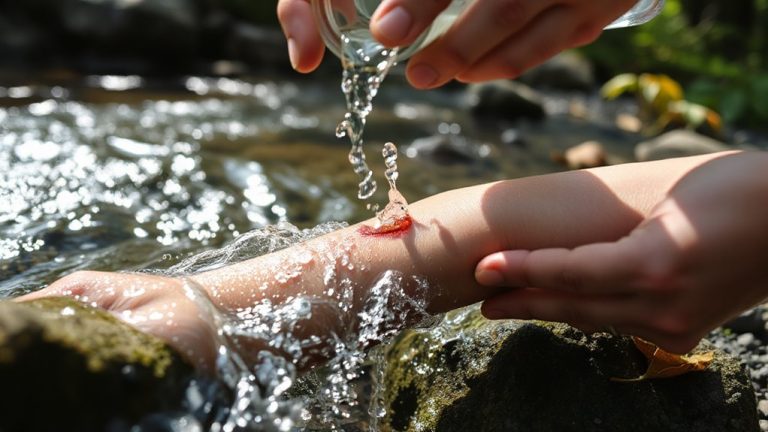
You can also get water from certain vines when succulents aren’t available. Cut a vine at the base and raise the end, letting water drip into your mouth or container. Not all vines are safe-avoid milky or discolored sap, which may be toxic. Stick to known species like trumpet or liana vines. The water you collect won’t be sterile, so use basic filtration methods like cloth straining or portable filters to reduce risk. Though vapor condensation isn’t practical here, remember that internal vine moisture isn’t exposed to external contaminants, making it cleaner than pooled sources. Still, boiling remains the best way to prevent illness. Some survival filters remove bacteria but not viruses, so weigh that trade-off. You’re balancing speed and safety-drink quickly in urgent cases, but purify if you can. Always test water over time to avoid dehydration or sickness. For reliable on-the-go purification, consider using a water filtration survival kit.
Make Water From Leaves Using a Plastic Bag
If you need drinkable water in a survival situation, placing a clear plastic bag over a leafy branch can collect moisture through transpiration. This method relies on transpiration trapping, where plants release water vapor that condenses inside the bag. Use a clear, heavy-duty plastic bag to maximize condensation collection-thin bags may tear or leak. Secure the opening tightly around the branch with duct tape or cord to prevent vapor escape. Position the baged branch in direct sunlight, angling the lowest corner downward so condensed water pools there. You can expect between 1/4 to 1/2 cup of water in 4–6 hours, depending on humidity and sunlight. Avoid foliage with milky sap or strong odors, as some plants emit toxic vapors. The water is generally safe to drink, though it may taste bland. This technique works best with broad-leafed, non-toxic plants. Yield is low, but it’s a reliable passive method when other sources are unavailable.
Build a Solar Still With Plants and Sunlight
A solar still turns sunlight into drinkable water using evaporation and condensation, and it’s one of the most effective ways to extract moisture from plants when no surface water’s available. Your success depends on proper plant selection and sunlight exposure. Use non-toxic, moisture-rich plants like ferns or leafy greens-avoid woody or dry species. Place them in a hole with a container at the center, then cover with clear plastic.
| Factor | Why It Matters | Practical Tip |
|---|---|---|
| Plant selection | Moisture content affects yield | Pick green, fleshy plants |
| Sunlight exposure | Drives evaporation rate | Position in full sun, no shade |
| Plastic clarity | Allows maximum UV penetration | Use clean, transparent sheeting |
| Seal tightness | Prevents vapor loss | Secure edges with rocks or soil |
Condensation collects in the cup-expect ½ to 1 cup per day.
Get Drinkable Water From Cattails and Roots
Cattails and certain plant roots can provide drinkable water in survival situations, though the yield and effort vary considerably. You’ll get the most water from young cattail stems found in wetlands-use cattail peeling to strip the outer layers and chew or squeeze the soft inner core for moisture. It’s not much-maybe a mouthful per stem-but it’s immediate and requires no tools. For root harvesting, focus on broad-leafed plants like dandelions or burdock; their taproots store more water. Dig carefully to avoid breaking the root, then crush or chew it to extract fluid. Roots yield more than leaves but demand more energy to collect. Neither method provides large volumes, and both risk ingesting harmful fibers or pathogens if not done carefully. Always filter or boil when possible. These techniques work in emergencies but aren’t efficient long-term solutions.
On a final note
You can get water from plants, but results vary. Vines offer the most volume, though you must avoid milky sap. Plastic bags on leaves work slowly-expect a few ounces after hours. Solar stills need full sun and produce little unless humidity is high. Cattails and roots give small amounts with effort. None replace finding a real water source. These methods are backups, not solutions-use them only when necessary.