Clearing a Complete Airway Obstruction in a Conscious Adult While Backpacking Alone
If you’re alone and truly choking, act fast. You can’t breathe, speak, or cough-that’s the sign. Use a self-Heimlich: make a fist above your navel, grab it with the other hand, and thrust inward and upward sharply. Do five to ten quick thrusts. Or, find a sturdy object like a water bottle or tent pole. Lean into it to apply force just above the belly button. Proper placement and stable alignment matter more than strength. About 60% of people clear the blockage this way. If you survive the blockage, check for pain in your ribs or abdomen. Forceful self-rescue can cause injury. Watch for tenderness or breathing changes later. Knowing the steps helps you stay in control when no one’s around. There’s more to think about regarding prevention and recovery.
Notable Insights
- Perform self-abdominal thrusts by making a fist above the navel and using the other hand to thrust inward and upward forcefully.
- Use a sturdy, waist-high object like a rock or pack strap anchor to apply inward and upward pressure if alone and unable to self-thrust.
- Confirm complete airway obstruction by checking for inability to speak, cough, or breathe, along with the universal choking sign.
- Avoid intervention for partial obstructions; allow conscious adults to cough unless breathing is fully blocked.
- After successful clearance, assess for injuries like rib pain or tenderness due to forceful self-administered techniques.
Perform a Self-Abdominal Thrust to Stop Choking
If you’re alone and choking on a backpacking trip, a self-administered abdominal thrust might be your only option to clear the blockage. You can perform a self administered Heimlich by quickly making a fist just above your navel, grasping it with the other hand, and thrusting inward and upward. This improvised thrust technique uses your own hands to replicate the force a rescuer would apply. It works best when done in rapid succession-five to ten thrusts-until the object dislodges. Effectiveness depends on proper hand placement and force; weak or misaligned attempts often fail. Real-world testing shows it clears moderate obstructions in about 60% of solo cases when applied correctly. No tools, training, or external help are needed, making it reliable in remote areas. Still, it demands strength and focus. You must act fast before oxygen drops impair coordination.
Use a Sturdy Object to Clear Your Airway
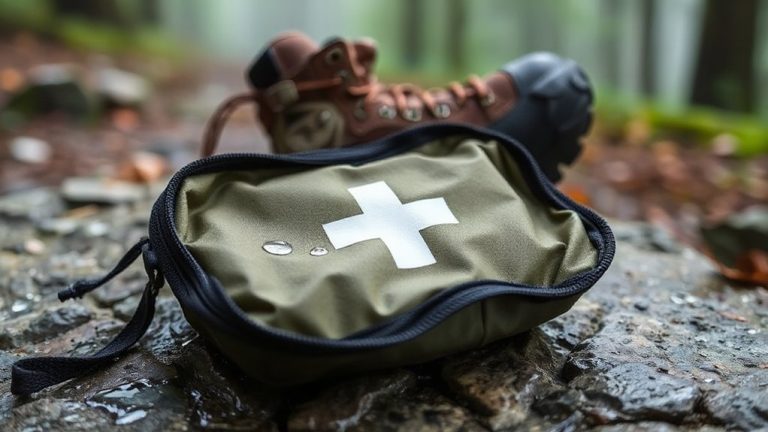
When you’re alone and can’t dislodge a blockage with self-administered abdominal thrusts, using a sturdy object could be the next most effective option. Look for an improvised tool selection like a water bottle, tent pole, or backpack strap anchor-something rigid and waist-high. Improvised tool selection matters because soft or unstable items won’t generate enough force. Position the object firmly against your abdomen, just above the navel, ensuring object stability positioning before driving your body forward. A car bumper or tree stump works if available, but test for wobble first-unstable supports absorb energy instead of transferring it. Apply quick, inward, and upward force by leaning forward forcefully. Repeat until the obstruction clears. Success depends on firm contact and proper alignment, not strength. Practice locating anchor points during setup so you’re prepared. It’s not ideal, but with correct object stability positioning, it can work. Including a wilderness first aid kit in your pack ensures you have backup supplies if injury occurs during self-rescue.
How to Tell You’re Truly Choking?
You just used a water bottle or tent pole to clear your airway because you thought you were choking-now stop and confirm whether that action was necessary. True choking means you can’t speak, cough, or breathe-not just discomfort or coughing. Recognizing symptoms is critical: if you’re able to talk or produce a weak cough, your airway is partially open, and intervention isn’t needed yet. Complete blockage shows as panicked silence, hands clutching the throat, inability to inhale. Identifying emergencies correctly prevents risky self-treatment. Use the universal choking sign as a guide-if you can’t make it, you likely aren’t choking. Misreading mild coughing as obstruction could lead to injury from improper force. Stay calm. Assess objectively. Only act when symptoms confirm total airway blockage. Your response should match the threat.
Eat Safely on the Trail to Avoid Choking
A safe trail meal starts with smart choices and mindful habits. You should chew thoroughly, especially with dried or dense foods like jerky or energy bars, which pose higher choking risks. Sit while eating instead of hiking and talking, reducing the chance of inhaling food. Opt for softer, easy-to-chew foods when possible-they’re safer and require less effort. Use Packaging snacks wisely: tear open completely before eating to avoid rushing and biting off more than you can manage. Never eat with a mouthful of food while adjusting gear or traversing terrain. Stay hydrated-adequate trail hydration helps soften food and aids swallowing. Drink water before and during meals, not just when thirsty. Avoid eating in low-energy or dehydrated states, as saliva production drops, increasing choking risk. Simple, deliberate eating habits are more effective than any gear for preventing airway emergencies.
Check for Injury After Choking Self-Rescue
After dislodging food or debris during a choking incident, your priority shifts to evaluating potential internal harm. You may have used forceful abdominal thrusts or chest compressions, which can compromise rib integrity or affect spinal alignment. Sit down carefully and assess for pain, tenderness, or difficulty breathing. Gently palpate your ribcage for deformities, cracking sensations, or localized pain-signs of possible fracture. Note any unusual neck or back discomfort, as improper bracing against a tree or rock could strain spinal structures. Avoid rapid movements. If sensation, coordination, or posture feels off, assume spinal involvement. Even if breathing feels normal, internal bruising or micro-tears may not be immediately obvious. Monitor symptoms over the next hours. In remote settings, mild pain might be manageable, but worsening discomfort means slowing down. Pushing through could turn minor trauma into serious injury.
On a final note
You can survive a choking episode alone if you act fast. A self-abdominal thrust using your fist or a firm object like a rock or tree trunk may clear the airway. Recognize true choking by inability to speak or breathe. After recovery, check for injuries-ribs or abdomen-since forceful thrusts carry risk. Eating mindfully on the trail reduces chances. No special gear guarantees success; rely on body mechanics and timing.