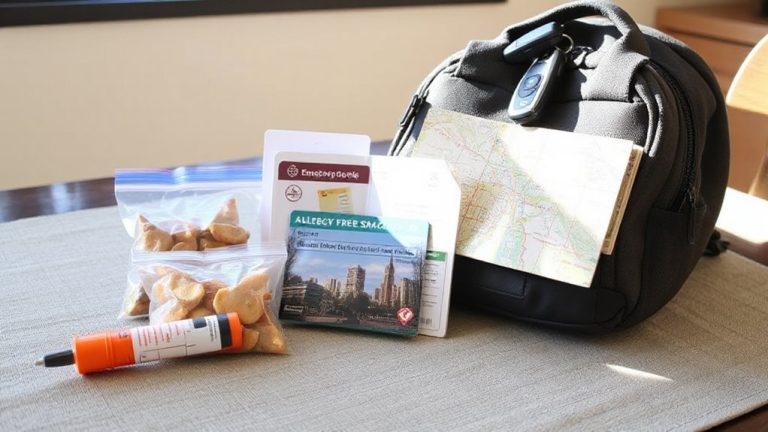
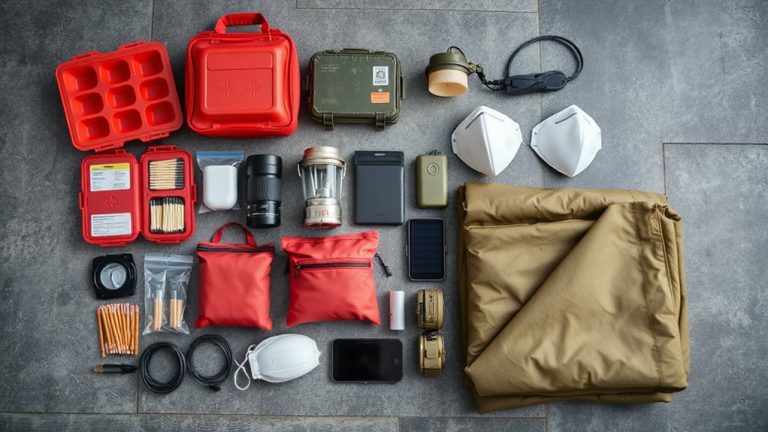
Creating a Financial Emergency Kit for Your Bug-Out Bag
Keep small bills ($1, $5, $10, $20) in a waterproof pouch for fast, reliable access when ATMs fail or power’s out. Store it in an outer pocket for under-10-second reach. Add a sealed credit card for backup-works if networks run, but don’t count on it. Include copies of ID, birth certificate, and insurance docs in tamper-proof sleeves. Place the whole kit near your main exit, ready to grab. Test the route at night. You’ll see how each piece fits when seconds matter.
Notable Insights
- Include small-denomination cash in a waterproof pouch for reliable, power-free transactions during emergencies.
- Store cash in easily accessible outer pockets or compartments for sub-ten-second retrieval under stress.
- Keep one credit card sealed in a waterproof pouch as a backup payment method if cash runs low.
- Carry physical copies of essential documents like ID and insurance in tamper-proof, waterproof sleeves.
- Position your bug-out bag near a main exit for 15-second access, avoiding hard-to-reach storage areas.
Pack These Financial Essentials
Cash in small denominations is your most reliable financial tool when banks and ATMs are down. You can use it immediately, without signal or power, and vendors prefer it in crises. Pair this with digital wallets, which work when networks are up but may fail during outages. Store access codes securely, but don’t rely on them exclusively. Include cryptocurrency backups only if you’ve tested transactions under real-world conditions-most people haven’t. They’re volatile and require internet-enabled verification, making them unreliable in true emergencies. Physical cash has no such dependencies. For broadest utility, carry U.S. dollars in $1, $5, and $10 bills, sealed in waterproof pouches. They’re lightweight, space-efficient, and universally accepted. Digital wallets offer convenience, but only cash guarantees you can buy food, fuel, or transport when systems fail. Your survival depends on what works-not what’s trendy.
Store Cash for Quick Access
If you need money fast during an emergency, having cash staged for immediate access matters more than how much you carry. Use discreet cash storage solutions like a waterproof money pouch or sewn-in bag compartment to protect bills from damage and theft. Keep small denominations-$1s, $5s, and $20s-for easier transactions when change is scarce. Position the cash in an outer pocket or inside flap of your bug-out bag to allow quick withdrawal without unpacking. Avoid zipped main compartments that slow access. Test your setup: can you retrieve cash in under ten seconds under stress? Damp conditions, dust, and rough handling are likely, so choose durable, low-profile storage. While digital options exist, they fail when networks don’t work. Cash works immediately. Balancing visibility and security is key-too hidden means delay, too exposed invites loss. Your system must be reliable, simple, and practiced. Consider using a waterproof waist bag for secure, accessible, and weather-resistant cash storage on your person.
Add Backup Payment Options
You’ve got cash staged for fast access, but counting on paper money alone limits your options when supplies run short or vendors don’t have change. Adding backup payment options like credit cards gives you flexibility if ATMs fail or cash runs low. Most credit cards offer fraud protection and can be canceled quickly if lost. Keep one card sealed in a waterproof pouch to reduce exposure. Digital wallets add another layer-they work even if your phone loses signal, using NFC in offline mode at some terminals. They’re faster than swiping and leave no physical trace. However, digital wallets depend on battery life and device compatibility, so they’re not universal. Pairing cash with credit cards and digital wallets balances reliability and convenience. Each method covers gaps the others leave, especially when networks are down or merchants have limited resources. Test all options beforehand to confirm functionality under stress.
Secure Emergency Documents Now
While digital backups are convenient, they’re useless without power or internet access-so keep physical copies of critical documents in your bug-out bag. You’ll need them for identity verification, banking access, and emergency aid. Protect originals with tamper-proof sleeves and store them in a waterproof pouch.
| Document Type | Purpose |
|---|---|
| Government ID | Identity verification |
| Birth certificate | Legal and medical access |
| Insurance policies | Claim processing |
Use copies-not originals-whenever possible to preserve source documents. Update your kit after major life events. Relying solely on digital backups puts you at risk during prolonged outages. A well-organized document sleeve guarantees quick access under stress. This system supports real-world utility without excess.
Keep Your Kit in an Easy Spot
Your documents are only as useful as their availability during an emergency, so store the bug-out bag where you can grab it in seconds. An easy location guarantees quick retrieval when seconds count. Place the informant near an exit you use daily, like a front or back door, but not so exposed that it’s visible to intruders. Avoid basements or garages if they require extra steps or keys. The goal is immediate access, not a scavenger hunt. A closet near your bedroom works if you you can reach it fast. Test the route at night-can you get the bag in under 15 seconds? If not, reposition it. Quick retrieval depends on consistency, not convenience. Rotate the bag every few months to keep it top of mind. Your response time matters more than the kit’s contents if you can’t reach it. Position matters as much as preparation.
Why Your Bug-Out Bag Needs a Financial Kit
If you’re assuming cash alone will cover your needs during a sudden evacuation, think again-modern crises often require multiple forms of financial access, and relying on just one method risks leaving you stranded. Your bug-out bag needs a financial kit because ATMs fail, card networks go down, and digital payments aren’t always an option. Including small bills, coins, a backup debit card, and even a prepaid card increases your flexibility. You’ll also need copies of insurance policies-health, auto, and home-so you can file claims quickly and manage costs. Store contact info for legal contacts in case you face disputes, custody issues, or property damage. These documents, sealed in a waterproof pouch, take up little space but offer critical support. A complete financial kit isn’t luxury-it’s risk mitigation. You won’t trade convenience for safety; you’ll balance both.
On a final note
You need cash, backups, and docs in your bug-out bag because ATMs fail when power’s out. Keep $100–$300 in small bills-it’s reliable, immediate, and works anywhere. Add a prepaid card or credit card as a secondary option, but don’t rely on signal. Store IDs, insurance, and bank details in a waterproof sleeve. Test access monthly. If you can’t grab it fast, it’s useless. Location matters-keep it with your bag, not hidden.