Using Two-Way Radios to Maintain Contact During Evacuation Without Cell Service
You can keep in touch during an evacuation without cell service by using two-way radios that transmit directly, no towers needed. Pick models with 15+ mile range, 12–24 hour battery life, and rugged, waterproof build. Higher 5W output and good antennas beat terrain issues. Use UHF in cities, VHF in rural areas, and assign clear team channels. Test signals early and stick to short, clear calls. More setup tips follow.
Notable Insights
- Two-way radios work without cell service by using direct short-range communication independent of towers or power grids.
- Choose high-wattage radios with long battery life and rugged, waterproof designs for reliable evacuation use.
- Assign dedicated channels to each team and use clear labels to prevent crosstalk and confusion during evacuations.
- Plan ahead by testing signals in evacuation areas and establishing protocols like call signs and emergency codes.
- During evacuation, use short, clear transmissions on pre-coordinated channels and conserve battery with spare lithium packs.
Why Two-Way Radios Work When Cell Phones Fail
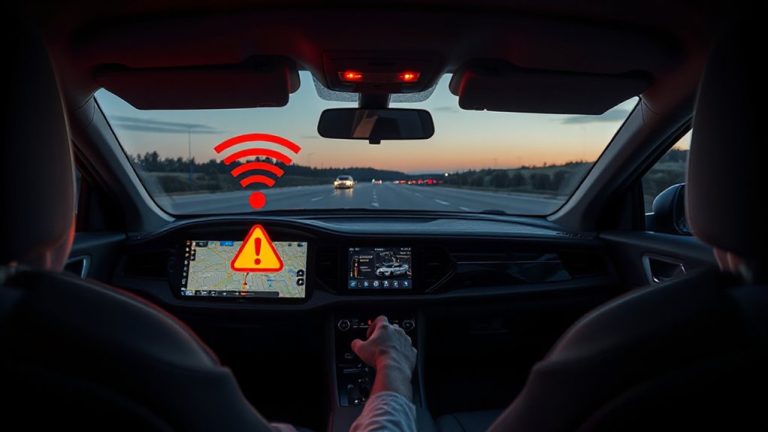
While cell networks rely on distant towers and complex infrastructure, two-way radios create direct, short-range communication that keeps working even when power grids and cellular service go down. You don’t need satellites or cell towers-just line-of-sight or near-line-of-sight between units. Signal reliability stays high in emergencies because radios aren’t dependent on third-party systems that can fail under load or damage. You’ll still face terrain challenges, like hills, dense forests, or urban buildings, which can block or reflect signals, reducing range. But with higher wattage models (5W vs. 0.5W), you can push through some obstacles. FM frequencies at 150–174 MHz or 450–470 MHz perform better in rugged areas than UHF in cities. Radios with removable antennas let you upgrade for better penetration. Battery life, range estimates, and durability all affect real-world use. Testing your setup in advance reveals actual performance. For reliable options, consider checking the best two-way radios based on expert evaluations and user feedback.
Pick Radios Built for Evacuations
You’ll want radios built to handle rough conditions and long-range communication when evacuation routes take you off-grid. Look for models with strong signal range and long battery life-these are non-negotiables. Cheap models often fail in terrain with obstructions, while high-output radios can reach 20+ miles in open areas. Battery life should support at least 12 hours of active use; lithium options hold up better in cold weather. For reliable performance under pressure, consider the best two-way radios designed for emergency scenarios, as they often include features like weather alerts and emergency communication capabilities.
| Feature | Basic Radio | Evac-Specific Model |
|---|---|---|
| Signal Range | 2–5 miles | 15–25 miles |
| Battery Life | 6–8 hours | 12–24 hours |
| Build Quality | Plastic, fragile | Rugged, waterproof |
Choose a model designed for durability and extended use. Signal range and battery life make the difference when you’re hours from safety.
Use the Right Channels for Evacuation Teams
How do you guarantee your team stays coordinated when cell networks are down? You use proper channel coordination and smart frequency allocation. Assign each evacuation group a dedicated channel to avoid crosstalk and confusion. Stick to UHF or VHF bands based on terrain-UHF for urban areas, VHF for open rural zones. Pre-set radios with clear frequency assignments so everyone’s on the same page. Don’t overcrowd one channel; spread teams across frequencies to reduce interference. Test channel coordination during drills to spot dead zones or overlap. Proper frequency allocation means fewer dropped messages and faster response. Use simple labels like “Medical Team” or “Rear Guard” so identification is instant. Keep channels silent unless necessary-noise wastes battery and causes errors. Clear channel use isn’t about gear specs-it’s about structure. Get it right, and your team moves as one. For reliable performance in emergency scenarios, consider investing in the best two-way radios recommended for durability and range.
Plan Your Radio Communication Before Disaster Hits
What good is a radio if you don’t know who’s listening? You need a plan before disaster hits. Set clear radio protocols everyone understands-assign call signs, designate listening times, and define emergency codes. Without structure, transmissions become chaotic and unproductive. You should also conduct signal testing regularly. Test range, clarity, and interference in areas you’re likely to travel during evacuation. Terrain, weather, and buildings affect performance, so real-world results matter more than manufacturer specs. Use these tests to adjust antenna types or power settings. Plan for battery life and carry spares. Radios only work if people know how to use them under stress. Practice with your group until responses are automatic. A well-drilled team with tested equipment is more reliable than last-minute improvisation. Prep now-when cell networks fail, your coordination could save lives.
How to Use Radios During Evacuations
Why wait until the roads are clogged and the skies are dark to figure out your radio routine? Start with signal testing before evacuating-verify range and clarity between vehicles and command points. Use simple, repeatable radio protocols: state your call sign, then the recipient’s, keep messages under 10 seconds, and confirm receipt. Stick to common channels like FRS/GMRS 462.5625 MHz unless pre-coordinated otherwise. Speak clearly, one word at a time, and pause after transmitting. Avoid clutter by limiting chatter. Test battery life ahead of time-many radios last 8–12 hours on alkaline cells. Rechargeables are lighter but require power you might not have. Radios with NOAA alerts add situational awareness but don’t replace coordination. Range varies-urban areas cut it to 1–2 miles; open terrain may allow 5. Signal testing isn’t optional. Radio protocols keep communication effective when seconds count.
On a final note
You’ll rely on two-way radios when cell networks fail, so pick models with at least 10-mile range and FRS/GMRS dual capability. Use pre-set channels to avoid confusion, and test communication plans before disaster strikes. Radios with weather alerts and waterproof housings perform better in real evacuations. They’re not perfect-battery life is limited-but they’re reliable for short-range coordination when every minute counts.