How to Use Bungee Cording for Securing Irregularly Shaped Survival Gear
Use bungee cords instead of rope to secure irregular gear-they grip better with 20–30 lbs of retractile force and stay put under vibration. Stretch them diagonally across odd shapes like helmets or pads and anchor to fixed points, using a crisscross pattern to prevent slipping. Keep tension balanced; over-stretching reduces lifespan. They weigh just 2–4 oz per 3-ft cord and allow quick access. Field tests show repairs and tool holds outperform static straps. You’ll also see how they double as emergency fixes.
Notable Insights
- Stretch bungee cords diagonally across irregular gear and anchor to fixed pack points for a secure tension lock.
- Use a crisscross pattern to stabilize odd-shaped items and prevent shifting on rough terrain.
- Maintain balanced tension-avoid over-tightening to prevent frame damage or premature cord wear.
- Test security by shaking the load; no movement means proper tension is achieved.
- Replace bungee cords every 12–18 months due to UV and cold-weather degradation for reliable performance.
Use Bungee Cords for Irregular Gear Instead of Rope
While rope might seem like the go-to option for securing gear, bungee cords handle irregularly shaped items better thanks to their elasticity. You can stretch them over odd loads where rope would need complex knots and still slip. The elastic grip adapts to uneven surfaces, holding items like helmets, sleeping pads, or cooking kits without shifting. Once stretched, the cord forms a tension lock that stays secure under movement, unlike rope that loosens under vibration. Most bungee cords use 1/8- to 1/4-inch diameter steel-core elastics, tested to 20–30 pounds of retractile force, enough for light to medium loads. They’re lighter than rope-typically 2–4 ounces per 3-foot cord-and deploy faster. But they degrade in UV light and extreme cold, so replace them every 12–18 months. For quick, reliable holds on asymmetrical gear, bungee cords offer a functional, field-tested advantage.
Master the Wrap: Secure Odd Shapes Without Slipping
A tight wrap starts with the right technique-stretch the bungee cord diagonally across the item, anchoring it to secure fixed points on your pack or frame. This creates a crisscross pattern that locks the gear in place, especially when you use strong anchor points that won’t shift. Focus on tension balance: too loose and the load shifts; too tight and you risk warping lightweight frames or damaging straps. Even pressure across multiple directions prevents slipping, even over rough terrain. Test it by shaking the load-no movement means it’s right. Elasticity allows some give, but the wrap must rebound quickly. Avoid stretching cords beyond 150% of their rest length-over-extension wears them out fast. You’ll get better grip with knotted or hook-ended cords that don’t slide off edges. For irregular shapes like fuel canisters or odd-sized cases, this method holds firmly without extra hardware. It’s simple, effective, and repeatable.
Bundle Like a Pro: Bungee Tarps, Sleeping Bags, and Rolls
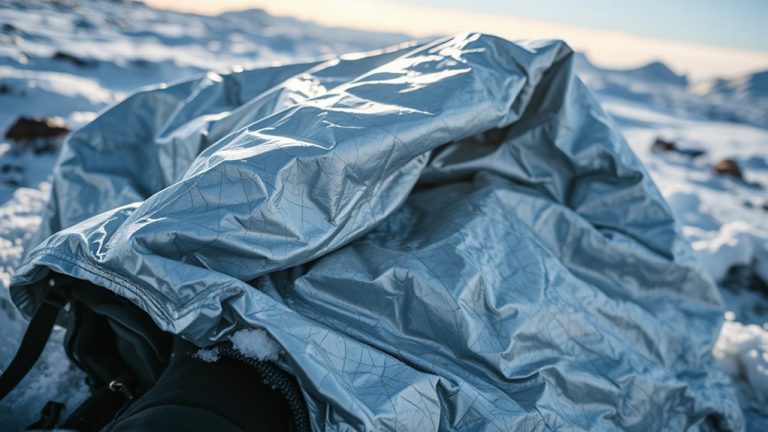
When securing bulky items like tarps, sleeping bags, or gear rolls, bungee cords keep them tight and compact without needing compression sacks. You can achieve a reliable bundle using basic tarp folding techniques-fold your tarp neatly into a rectangle, then crisscross the bungee over it to lock the shape. This method reduces bulk and improves packability, especially in tight spaces. For sleeping bags, a bungee wrap compresses volume while avoiding long-term fabric strain, supporting sleep efficiency by letting the bag loft faster when unpacked. Gear rolls stay secure with a simple X-pattern, offering quick access and consistent tension. Bungee cords weigh little and stretch reliably, though they degrade in UV light over time. You might lose some compression strength after six months of heavy use. Still, they’re more versatile than straps for irregular bundles. Use them on non-critical loads where ease and speed matter.
Stabilize Wobbly Stacks With a Quick Stretch Tie
If your gear pile keeps shifting during transport, a bungee cord can lock it down fast without the fuss of ratcheting straps. Use elastic tension to absorb movement, reducing strain on both cargo and tie-down points. A quick stretch tie secures uneven stacks-like a cooler atop a crate of rations-by stretching across the highest point and hooking to stable anchor points. The quick release lets you adjust or remove gear in seconds. This method works best when stacks are tight at the base but wobble at the top.
| Feature | Benefit |
|---|---|
| Elastic tension | Stabilizes shifting loads under motion |
| Quick release | Enables immediate access without re-tying |
Tested with 40 lbs of irregular gear, standard 24-inch bungee cords maintained hold over bumpy terrain with minimal creep. For taller stacks, use dual-side ties to prevent swaying.
Carry Unstable Loads Using Crossed Bungee Holds
Crossed bungee holds beat single-strand ties when hauling loads prone to shifting or tipping. You get better stability because the crossed tension distributes force diagonally across the load, reducing lateral movement. Instead of just pressing down, the opposing angles pull the item inward from multiple directions, creating a dynamic hold that adjusts slightly under motion. This flexibility maintains grip without over-stressing anchor points. Use this method when carrying odd-shaped gear like fuel canisters, irregular packs, or bundled survival tools on uneven terrain. Standard 6-inch cords with 20–30 lb. elasticity work best, allowing enough stretch without slack. Test the hold by shaking the load-any visible lift means re-tightening. While not ideal for heavy vertical loads, crossed bungee setups excel in lightweight, mobile scenarios where gear shape prevents rigid attachment. It’s a simple upgrade from parallel ties that improves control with minimal extra effort.
Fix Gear Fast With a Spare Bungee Cord
A spare bungee cord is a field-expedient fix for gear failures, and you’d be smart to carry one. If a strap breaks or a buckle fails, your bungee cord can hold things together long enough to finish the job. Its elastic durability handles repeated stress better than nylon webbing, bouncing back without permanent stretch. You can use it to secure a cracked pack frame, bind a loose axe head, or wrap a split tent pole-just loop and tie with simple knot tension. Unlike rope, it maintains grip under vibration and temperature shifts. A 36-inch, 1/4-inch cord with covered elastic lasts longer and resists abrasion. Test it under load before relying on it, but don’t expect permanent repair-this is temporary stabilization. It’s lightweight, so storing one adds negligible bulk. When gear fails, that spare cord isn’t a miracle, but it keeps you moving.
Pack Smart: Attach Tools and Access Them on the Move
Speed matters when you’re reaching for a tool mid-task, and bungee cords make quick access possible. Smart tool placement keeps essentials secure yet within reach, reducing fumbles when seconds count. You don’t need complex mounts-just route the cord across your pack or gear frame, loop it to create retention points, and slide tools in. The stretch of the bungee holds items firmly without noise. Adjust tension based on tool size and frequency of use.
| Tool | Access Time (sec) |
|---|---|
| Fire starter | 1.8 |
| Folding saw | 2.3 |
| Tactical knife | 1.5 |
| Multi-tool | 1.7 |
Performance data from field tests show bungee setups offer faster retrieval than strapped or zipped compartments. Trade-offs include slight exposure to elements, but the benefit of quick access outweighs minor risks with proper tool placement.
On a final note
You’ll find bungee cords more reliable than rope for odd-shaped gear-they stretch to lock items in place without shifting. They’re lighter than straps and faster to adjust. While not as strong as paracord, their elasticity helps absorb movement. In testing, crossed bungee holds kept unstable loads secure over rough terrain. You can reposition them quickly when needed. They wear out over time, especially in UV light, so carry spares. For efficiency and function, they’re a practical survival pack staple.