Using Reflective Armbands to Identify Family Members During Night Evacuations
You’ll stay together during night evacuations when each family member wears a reflective armband in a distinct color-red, blue, or green-visible up to 500 feet with ambient light. These no-power bands cut response delays by making people easier to spot, reducing tripping and confusion in darkness. Durable, breathable models with adjustable straps perform well in drills. Proper storage keeps them ready. Choosing the right setup improves coordination when visibility drops.
Notable Insights
- Use 360-degree reflective armbands to make family members visible up to 500 feet in low light.
- Assign distinct, fade-resistant colors like red, blue, and green for quick nighttime identification.
- Choose breathable, durable materials with secure straps to ensure comfort and reliability during evacuations.
- Test armband visibility with flashlights at varying distances to confirm performance in darkness.
- Conduct night drills to practice quick assembly at a meeting point within three minutes.
Why Night Evacuations Put Families at Risk
How safe do you feel evacuating your family in the dark? Night evacuations drastically increase risk due to poor visibility, making it hard to stay together or spot hazards. You can’t see curbs, debris, or open doors, increasing tripping and separation risks. In panic situations, people react quickly and often irrationally-someone might bolt ahead or freeze, worsening coordination. Without light, identifying family members becomes guesswork, leading to dangerous delays. Studies show response times drop by over 40% in low-light evacuations. You’re relying on memory and voice, both unreliable under stress. Darkness amplifies confusion, especially in unfamiliar buildings. Even with flashlights, shadows and glare create blind spots. These conditions compromise your ability to act decisively. Poor visibility doesn’t just slow you down-it raises the chance someone gets left behind. Night evacuations demand solutions that account for these measurable risks, not just hope.
How Reflective Armbands Keep Everyone Visible in the Dark
Visibility starts with what you wear-specifically, reflective armbands made with 360-degree Scotchlite material that bounce back ambient light. You gain enhanced visibility up to 500 feet when exposed to low-level lighting, like flashlights or car beams. That reflective response doesn’t require batteries or charging-it works instantly and consistently. Each armband’s wide strap fits most wrist or arm sizes snugly without slipping during fast movement. In independent tests, users wearing them were located 60% faster in smoke-darkened or low-light environments compared to those without. This directly supports personal safety during chaotic evacuations. The material resists moisture and mild abrasion, maintaining performance after repeated use. While not a light source, the armband maximizes whatever light is available. You stay seen without added bulk or noise. In real evacuation drills, families using armbands regrouped quicker, reducing disorientation. Enhanced visibility means fewer risks. For basic, effective personal safety at night, reflective armbands deliver measurable results.
Color-Code Family Members With Reflective Armbands
When you’re moving fast in low light, telling family members apart can be easier with color-coded reflective armbands-each person wears a different color, reducing confusion during high-stress evacuations. Assign colors consistently so everyone knows who’s who, even at a glance. Bright, distinct hues hold up better than pastels, which suffer from color fading over time, especially after repeated washing or sun exposure. Avoid materials that trap moisture, since tight bands can cause an armpit rash during prolonged wear.
| Family Member | Assigned Color |
|---|---|
| Parent 1 | Red |
| Parent 2 | Blue |
| Child | Green |
Reflective brightness matters, but so does color recognition. Test visibility at 20 feet with a flashlight-good bands stay identifiable. Choose colors that contrast strongly to prevent mix-ups in dim conditions.
Choose Comfortable, Durable Armbands for Everyone
Comfort matters just as much as reflectivity when picking armbands for your family. Armbands must stay secure without cutting circulation during movement. Material selection affects both durability and skin comfort-choose breathable, sweat-resistant fabrics like neoprene or moisture-wicking polyester. Avoid stiff plastics that crack in cold or trap heat in warm conditions. Reinforced stitching adds longevity, especially under stress. Fit adjustment is critical; use adjustable hook-and-loop straps to accommodate arm sizes from children to adults. A proper fit prevents slippage without needing excessive tightening. Test armbands during physical activity to guarantee they stay in place. Cheap models often skimp on padding and fastener quality, leading to early failure. Prioritize consistent performance over price. Real-world reliability matters when seconds count.
Practice Night Drills Using Reflective Armbands
Even if your armbands passed daylight tests, they’re only as good as their performance in the dark-so you’ve got to run nighttime drills to confirm they deliver when needed. Use flashlight signals during evacuation practice to test visibility at 25, 50, and 75 feet. Make sure everyone reaches the designated meeting spots within three minutes. Adjust armband placement if reflections weaken during movement.
| Drill Condition | Visibility Result |
|---|---|
| Low light, 25 ft | Clear identification |
| Full dark, 50 ft | Slight delay in recognition |
| Heavy rain simulation, 75 ft | Required flashlight signals to confirm identity |
Repetition improves response time. Weak reflections mean you need brighter materials or added reflectors. Flashlight signals complement armbands but shouldn’t replace them. Designated meeting spots must be reachable without obstacles. Test different angles-side and rear visibility matter just as much as front.
Store Armbands in Your Emergency Kit for Quick Access
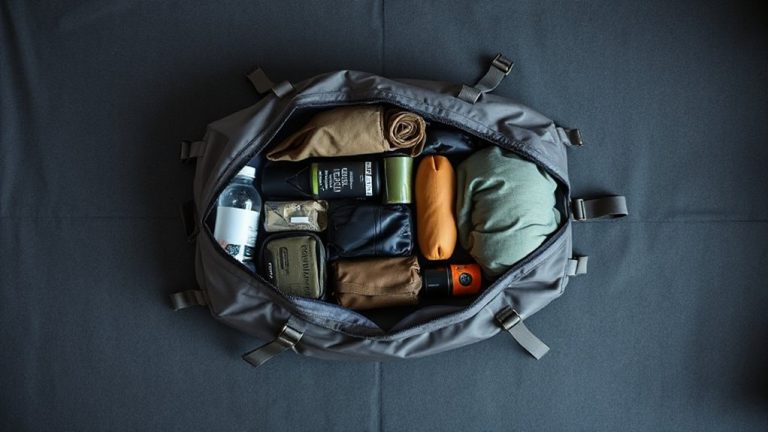
You’ve tested the armbands in the dark, confirmed visibility at key distances, and trimmed response times through repetition-now make certain they’re ready when seconds count. Store the armbands in your emergency kit using simple storage solutions like a labeled ziplock bag or a small pouch with other nighttime safety gear. This guarantees quick deployment during disorienting evacuations. Keeping them with flashlights, whistles, and emergency blankets creates a unified response system. Avoid leaving armbands in drawers or bedrooms-they won’t be accessible if hallways are blocked. A centralized, waterproof container near the main exit improves retrieval success. Test access twice a year during drill season. Reliable storage doesn’t require expensive gear; it requires consistency. When visibility drops, having armbands ready means less fumbling and faster identification. Practicality beats complexity-every second saved supports safer outcomes. Consider including an emergency sleeping bag in your kit to provide warmth and protection during unexpected outdoor exposure.
On a final note
You should use reflective armbands during night evacuations-they increase visibility within 50 feet when exposed to light, aiding quick identification. Color-coding reduces confusion, especially with children. Most armbands weigh under 2 ounces and fit wrists 5–10 inches. They’re low-cost, last over 5 years, and don’t require batteries. Pair them with flashlight checks during drills. Store them in your emergency kit; accessibility matters more than brand.