Boiling Water in a Metal Pot With a Wood-Burning Stove
Use a heavy-gauge stainless or cast iron pot with a flat bottom and tight lid for even heating and durability. Build a hot fire with dry, split hardwood using the top-down method to cut boil time to about 7 minutes. Center the pot where flames rise fully around it, avoiding wind with a shield. Wider pots reduce boil-over risk. Boil water for one minute to make it safe. Cool and store in clean containers. You’ll get reliable results every time-especially with adjustments based on real conditions.
Notable Insights
- Use a sturdy, flat-bottomed pot made of cast iron or heavy-gauge stainless steel for even heat distribution and durability.
- Build a hot, clean fire with dry, seasoned hardwood split into fist-sized pieces for efficient boiling.
- Position the pot in the center of the stove where flames make full contact to maximize heat transfer.
- Choose a wide pot to reduce boil-over risk and use a windshield to protect the fire from gusts.
- Boil water for at least one minute to ensure safety, then store it in a clean, covered container.
Choose a Sturdy Pot for Boiling Water on a Wood Stove
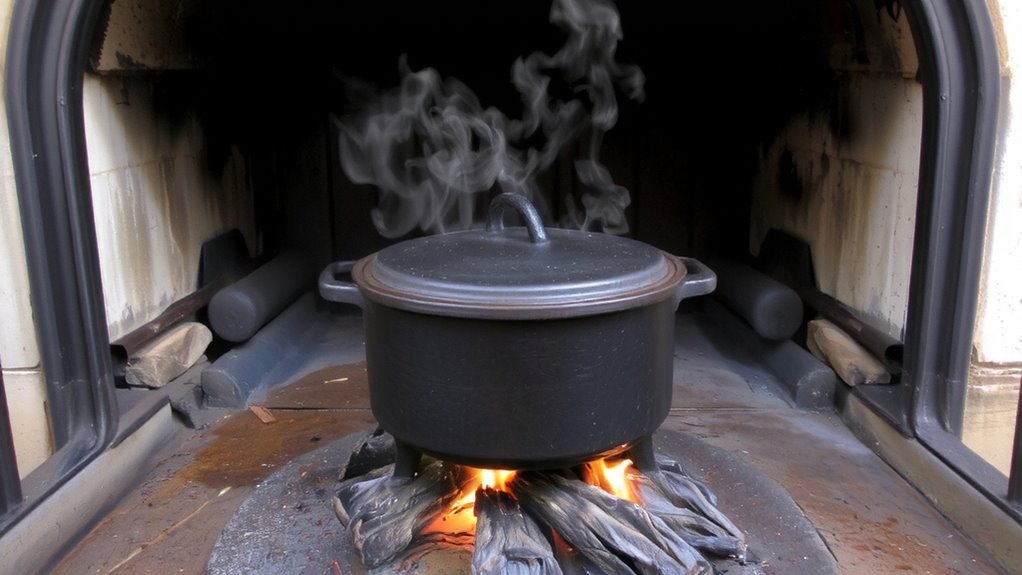
A thick-bottomed pot with a tight-fitting lid is your best bet when boiling water on a wood-burning stove-thin or warped cookware won’t hold up under uneven heat and could buckle or scorch quickly. You need material durability to survive repeated exposure to intense, fluctuating temperatures. Cast iron and heavy-gauge stainless steel perform best, resisting warping and corrosion over time. Aluminum dents easily and degrades faster, especially over prolonged use. A well-constructed pot guarantees even heat distribution, reducing hot spots that lead to scorching. Flat bottoms make full contact with the stove surface, transferring heat more efficiently than warped or ridged cookware. Riveted handles stay secure under stress. Lightweight pots may boil faster initially but fail in long-term reliability. Your pot must balance conductivity with structural integrity. Choose wisely-this isn’t about convenience, it’s about consistent function when resources are limited.
Build a Hot, Clean Fire for Fast Boiling
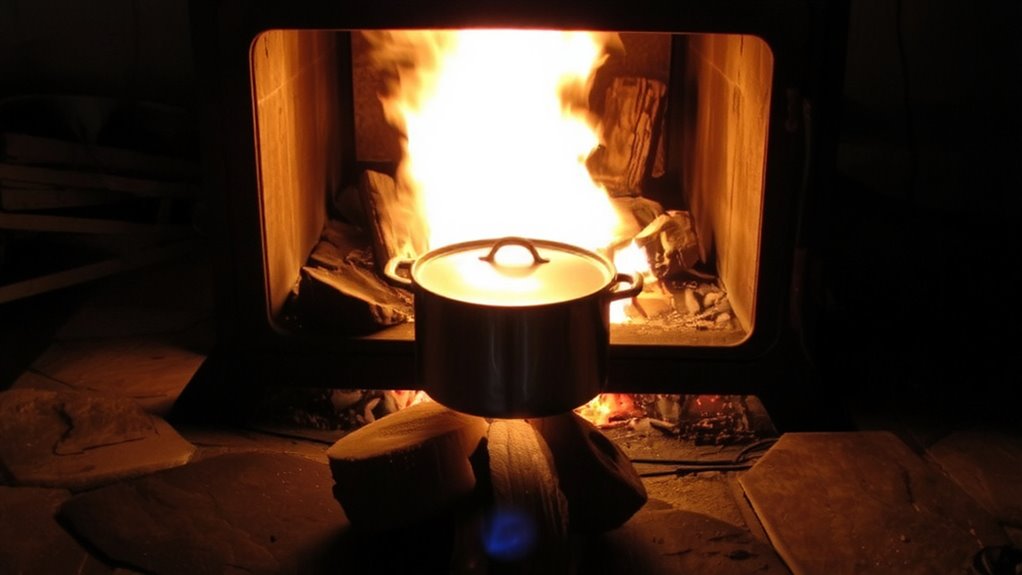
Heat output matters most when getting water to boil quickly on a wood stove, and that starts with firewood-you’ll need dry, seasoned hardwood split to fist-sized chunks. Moisture content below 20% guarantees better combustion and fuel efficiency. Poor fire placement wastes energy-center your fire under the stove’s hottest zone. Use the top-down lighting method: stack larger logs below, smaller kindling above, and ignite from the top. This reduces smoke and boosts clean, sustained heat. A well-designed camp wood stove can significantly improve heat transfer and boiling efficiency.
| Fire Type | Boil Time (min) | Fuel Efficiency |
|---|---|---|
| Wet wood | 18 | Low |
| Dry softwood | 12 | Medium |
| Dry hardwood | 9 | High |
| Optimized fire placement | 7 | Highest |
Place the Pot Where Flames Hit Best
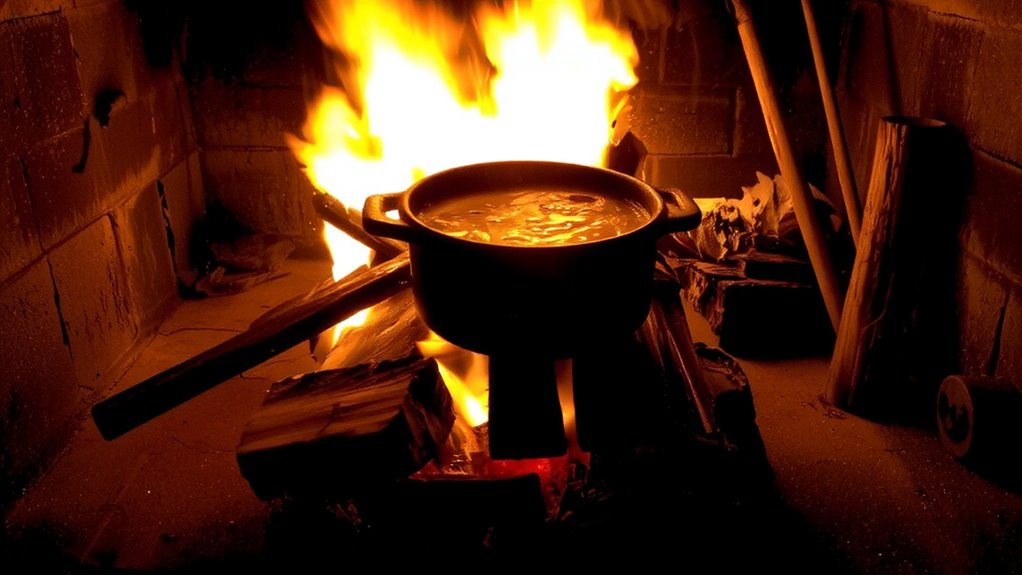
Right in the center of the stove’s cooking surface, position your pot where flames rise directly against its base-this spot delivers the most consistent and intense heat. Good flame distribution guarantees the entire bottom heats evenly, reducing hot spots that can slow boiling. Centering the pot maximizes heat efficiency, transferring more energy to the water instead of the surrounding air. Off-center placement wastes fuel and increases boil time. You’ll notice faster results when the pot sits where flames make full contact, especially with a well-built fire underneath. Heat efficiency improves noticeably when you match the pot size to the stove’s burn zone-too small, and you lose heat; too large, and flames can’t wrap around the sides effectively. Adjust position slightly if needed, but keep the target on full flame contact. This simple step doesn’t guarantee speed on its own, but it’s essential for reliable performance.
Watch for Boil-Over and Wind Loss
Once the pot’s in position and flames are hitting evenly, keep an eye on how close the water is to boiling over-especially if you’re using a narrow or deep container, since those give less room for expansion and bubble buildup. Boil over risks increase once the water reaches a rolling boil, and excess foam can spill into the fire, reducing heat efficiency and creating smoke. Use a wider pot if possible-it lowers boil over risks by allowing more surface area for bubbles to break. Wind interference is another factor; gusts can blow flames unevenly or extinguish them, slowing the process. Position the stove behind a natural windbreak or use a portable shield to minimize wind loss. You’ll maintain consistent heat and reduce fuel use. Monitoring both boil over risks and wind interference guarantees steady progress without wasted effort or unexpected setbacks.
Use Boiled Water for Cooking or Purifying
If you’ve brought water to a rolling boil using your wood-burning stove, it’s safe to use for both cooking and purification-boiling for at least one minute kills bacteria, viruses, and protozoa commonly found in untreated water. This meets basic water safety standards, even at elevation. Once boiled, you can use the water immediately for rehydrating meals, brewing coffee, or making soups-tasks that also maximize energy efficiency by eliminating the need to reheat later. Letting the water cool and storing it in a clean container allows for drinking or later use, reducing fuel consumption over time. Using boiled water this way streamlines your cooking process and supports reliable purification without filters or chemicals. While fuel use is inherent to wood stoves, boiling only the amount you need improves energy efficiency. You get safe, usable water with minimal gear and no ongoing costs-just sound judgment and timing.
Clean and Store Your Stove and Pot After Use
Let the stove cool completely before touching it, since working with hot metal increases the risk of burns and can warp components. Once cooled, wipe down the stove with a dry cloth to remove soot and debris-this simple step counts among key maintenance tips for preserving metal integrity and preventing corrosion. Check the pot for mineral deposits; rinse with vinegar if needed, then dry thoroughly. Avoid storing either item while damp, as moisture accelerates rust. For long-term care, store the pot inside the stove if space allows, or nest them with a cloth barrier to prevent scratching. These storage solutions maximize space and minimize damage during transit. Keep the unit in a dry, covered area to reduce exposure to humidity and contaminants. Regular cleaning and smart storage extend lifespan and guarantee reliable performance when needed.
On a final note
You’ve boiled water efficiently using basic gear. The metal pot withstands direct flame, and the wood stove delivers sustained heat when fueled properly. Boiling takes 5–10 minutes with a hot fire, depending on water volume and wood dryness. This method works without fuel canisters or electricity. You lose heat in wind, so shield the stove. Boiled water is safe for drinking or cooking. Clean the pot and stove afterward to prevent corrosion and guarantee reliability.