Assessing Risk of Heatstroke in Parked Vehicles
You’re at risk of heatstroke in a parked car within minutes, even on mild 70°F days. Interior temps can jump 20°F in just 10 minutes, hitting 100°F fast. Kids and pets heat up faster than adults, and cracked windows don’t help-tests show they change little. Most tragedies happen when caregivers forget a child is inside. A quick habit check or alert system could save a life. Simple steps now cut the biggest risks. There’s more you should know to stay safe.
Notable Insights
- Interior car temperatures can rise over 20°F in just 10 minutes, creating dangerous conditions even on mild days.
- Children and pets are at extreme risk because their bodies overheat much faster than adults’.
- Heatstroke can occur in less than an hour, even when outside temperatures are below 70°F.
- Cracking windows provides almost no cooling effect and does not prevent lethal heat buildup.
- Most fatalities happen when caregivers forget children, so reminders and sensors can save lives.
How Hot a Parked Car Gets in 10 Minutes
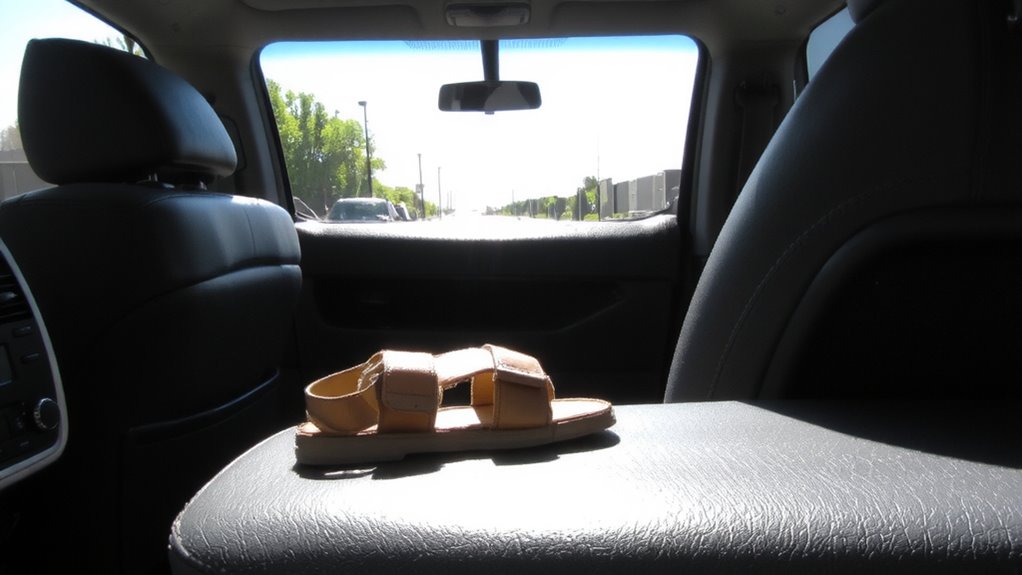
Even in mild 70°F weather, the interior of a parked car can hit 90°F within 10 minutes-no exaggeration. You’re exposed to rapid heat buildup because glass traps solar radiation, turning the cabin into a greenhouse. The interior temperature rises quickly, often by 20°F or more in the first 10 minutes alone. Dark surfaces absorb solar radiation and re-radiate heat, accelerating the effect. Even with windows cracked, airflow is too limited to counter the increase. This isn’t dependent on extreme outside heat; solar radiation drives the change, not ambient air. In 20 minutes, temperatures can exceed 100°F. You can test this with a simple thermometer, and results are consistent across vehicle types. Understanding this helps assess real danger fast-heat doesn’t creep in, it surges. Protection isn’t about comfort; it’s about limiting exposure during those first critical minutes.
Who’s Most at Risk in a Hot Car: and Why?
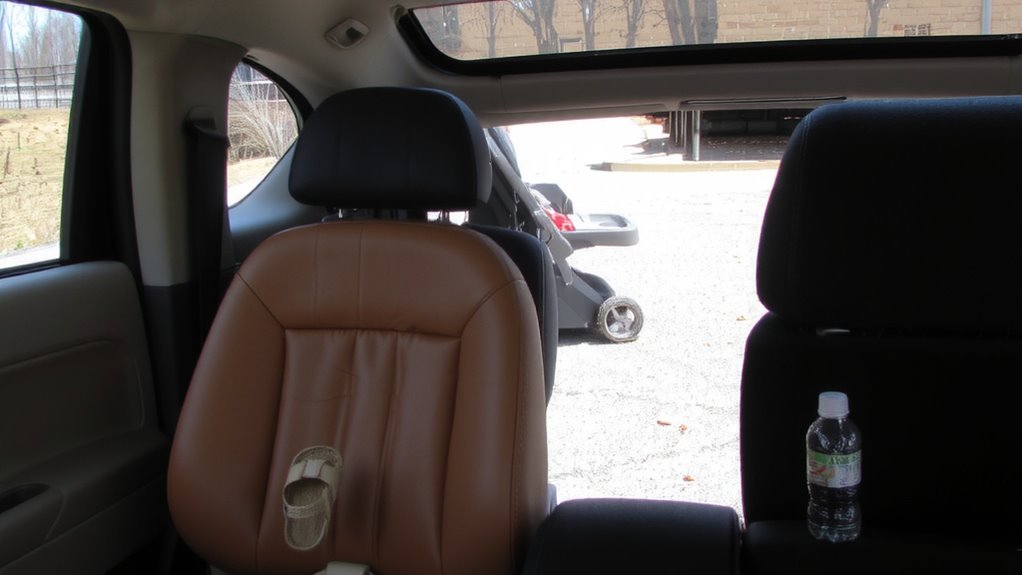
A child or pet left in a parked car faces the highest risk of heatstroke, and here’s why: their bodies heat up three to five times faster than an adult’s. You need to recognize infant vulnerability-babies can’t sweat efficiently and rely entirely on you to monitor their environment. Even a few minutes in a warm vehicle can push their core temperature into dangerous ranges. Pets, especially dogs, also lack effective cooling mechanisms. This isn’t just about extreme heat; it happens faster than most expect. That’s where caregiver responsibility comes in. You must act before it’s too late-check the back seat, use reminders, never assume someone else will do it. The consequences are measurable and irreversible. A lapse in attention leads directly to risk of organ failure or death. Your consistent habits are the only real safeguard. There’s no backup, no second chance. You’re the critical control.
How Even Mild Weather Can Turn a Car Deadly
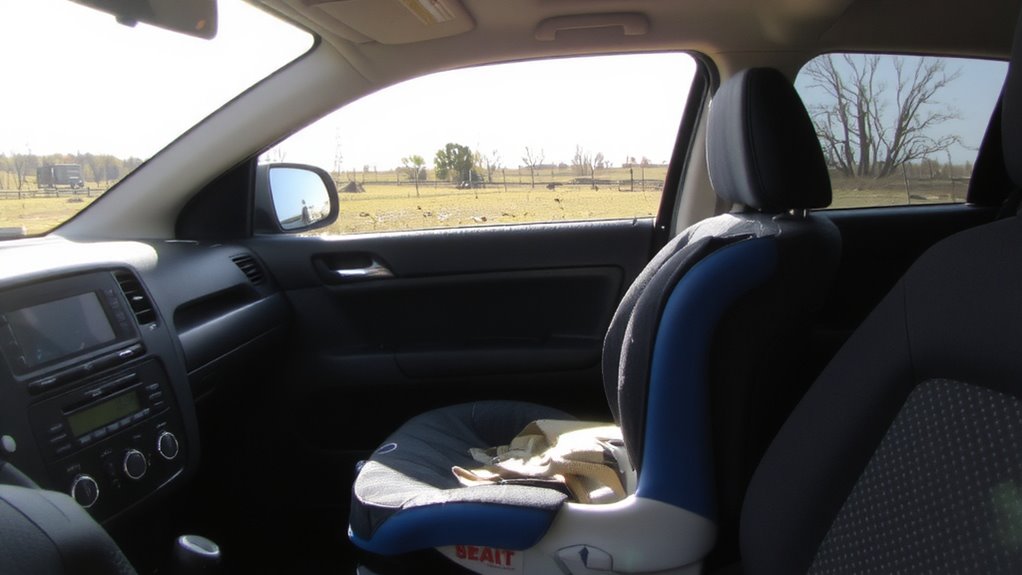
One in five heatstroke deaths involving children in parked vehicles happens when the outside temperature is below 70°F, showing how quickly danger can arise even on mild days. You might think it’s safe to leave a child in the car for “just a minute,” but interior temperatures can climb rapidly due to heat absorption through glass and dark surfaces. Within 10 minutes, the radiant temperature inside can surge 20°F above the outside air, even with windows up. A 60°F day can turn your car’s interior into a 100°F environment, a level that impairs thermoregulation in toddlers. Your vehicle acts like a greenhouse, trapping heat faster than many realize. Real-world tests confirm cabins reach lethal conditions in under an hour. Relying on outside temperature alone underestimates risk. Mild weather doesn’t prevent fatal heat buildup. You can’t judge cabin safety by how cool it feels outside-heat absorption and radiant temperature make the car far more dangerous than you assume.
Do Cracked Windows Prevent Hot Car Deaths?
Why would cracking a window give you a false sense of security? Because even with window gaps, hot car temperatures rise rapidly-often 20°F in 10 minutes. You might think there’s air circulation, but studies show the effect is negligible. A cracked window doesn’t lower interior heat enough to be safe. In fact, tests reveal cabin temps with partially open windows are nearly identical to fully sealed ones. The sun’s radiation traps heat faster than the narrow gaps can release it. Air circulation through small openings can’t compete with solar gain. You’re relying on minimal airflow that can’t sustain safe conditions. Real protection isn’t window gaps-it’s never leaving a person or pet inside. No modification or partial open window offsets the risk. If you’re counting on a cracked window to prevent danger, you’re not preventing anything. The data is clear: it doesn’t work.
How Normal Routine Lapses Cause Tragedy
You might think cracking a window buys safety, but the real danger often starts long before you even park-when your routine slips just slightly and sets a chain reaction in motion. Routine distractions like a changed morning schedule or a silent backseat can override even careful habits. Memory failures aren’t signs of neglect; they’re biological lapses anyone can experience under stress or fatigue. A 2023 NHTSA study found 54% of hot car deaths involved caregivers who simply forgot a child was inside. These incidents usually happen during shifts in daily patterns, when habit breaks down and vigilance fades.
| Factor | Risk Level | Common Trigger |
|---|---|---|
| Routine distractions | High | New work schedule |
| Memory failures | High | Sleep-deprived adult |
| Silent backseat | Critical | Rear-facing car seat |
What You Can Do to Prevent Hot Car Deaths
While no single action guarantees safety, combining multiple low-effort habits markedly cuts the risk of leaving a child in a hot vehicle. Place your bag or phone in the backseat to force a check of the area before leaving. Use car ventilation systems to maintain airflow, but don’t rely on them to cool the interior when parked. Even cracked windows provide minimal protection from rising temperatures. Install a connected sensor that alerts you if the cabin heats beyond safe levels. Pair this with emergency preparedness, such as keeping a list of emergency contacts near the visor. Test alarms monthly. Some child safety apps work reliably, but their performance depends on Bluetooth range and phone battery. Physical reminders-like a stuffed animal moved to the front seat when a child is in back-are more consistent. These strategies don’t eliminate risk, but they reduce human error effectively.
What to Do If You See a Child in a Hot Car
If you spot a child alone in a parked car on a warm day, acting quickly could mean the difference between life and death-heatstroke can begin in minutes when interior temperatures climb above 104°F, which happens fast even in mild weather. Call 911 immediately to trigger emergency response. If the child appears distressed, don’t wait-break the window farthest from the child and get them out. Every second counts. Bystander intervention is critical; hesitating increases risk of organ failure or death. Stay with the child until help arrives, moving them to shade and offering water if conscious. You won’t be fined for breaking a window in most states under good faith rescue laws. Monitoring a car’s internal temperature isn’t reliable-outside air as low as 70°F can heat a vehicle to dangerous levels in 20 minutes. Your quick, calm action provides the only real safeguard.
On a final note
You can’t rely on cracked windows or mild weather to protect anyone in a parked car-temperatures rise fast, often by 20°F in 10 minutes. Kids and pets are most at risk, especially when routines break. A car gets deadly even at 70°F outside. Prevention comes down to habit: check the backseat, use reminders, act fast if you see a child alone. Real-world testing shows intervention within minutes improves survival. Be aware, be consistent, and treat every situation as critical.