Assessing Scene Safety During a Sudden Snowstorm in the Mountains
You see clouds building fast or feel a sudden temperature drop-storm’s coming. Get to shelter in 10 minutes or face hypothermia. Use a bivy or natural windbreak; it retains 30% more body heat. Check your group’s tethered with ski leashes or rope, and that everyone has a charged 200-lumen headlamp. If you hear “whumpf” or see cracks in the snow, avoid slopes over 30 degrees. A whistle works better than light in whiteouts. When visibility drops below 100 meters or wind hits 35 mph, conditions turn critical-your next move must be fast and informed.
Notable Insights
- Scan the sky every 15–20 minutes for rapidly building clouds or sudden light changes to detect approaching storms early.
- Seek shelter within 10–15 minutes if visibility drops below 50 meters to maintain body heat and avoid disorientation.
- Use natural windbreaks like rock overhangs or dense trees to reduce wind chill and improve shelter effectiveness.
- Immediately stop and assess for cracks or “whumpf” sounds in the snow, which signal high avalanche risk.
- Rely on real-time weather updates and physical cues over forecasts, as conditions can deteriorate rapidly in mountain storms.
Spot the Storm Before It Hits
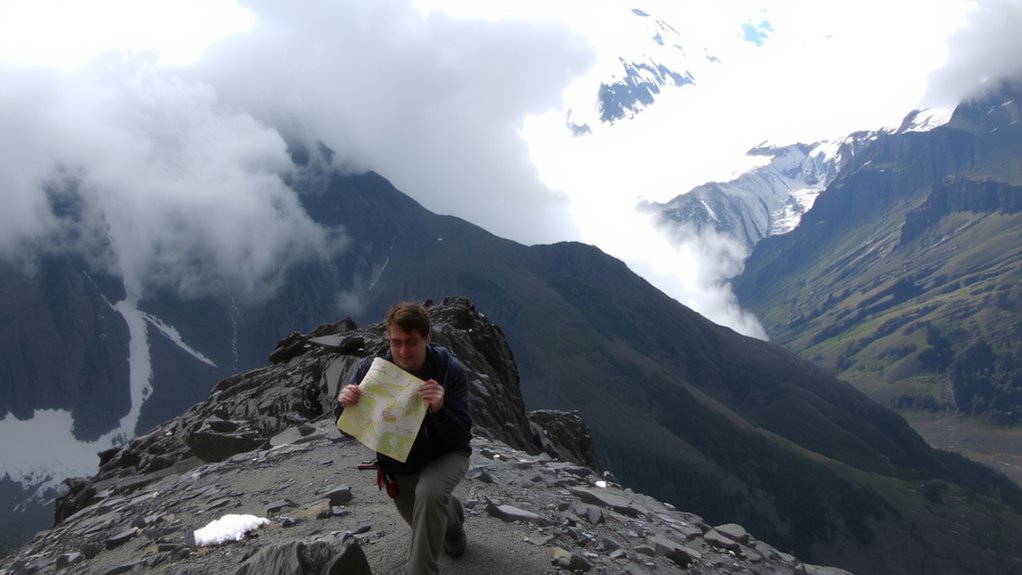
If you’re caught above treeline when the wind picks up and visibility drops, you’re already too late-reading the sky before a storm arrives is what keeps you out of trouble. You need early warning, and that starts with consistent observation. Clouds building rapidly, especially anvil-shaped cumulonimbus or lowering stratus decks, are reliable visual cues. A sudden temperature drop, wind shifts, or increasing humidity often precede snow within 30 to 60 minutes. You won’t always have a barometer, but you can feel pressure changes in your ears. Terrain shadows grow sharper as light diffuses-another subtle clue. These signs don’t guarantee shelter time, but they buy it. Ignoring them cuts your margin to zero. Storms move fast above treeline; ten minutes can mean the difference between safe descent and whiteout navigation. Train yourself to scan the sky every 15 to 20 minutes. Real-world testing shows most backcountry emergencies start when visual cues are missed.
Get to Shelter: Fast
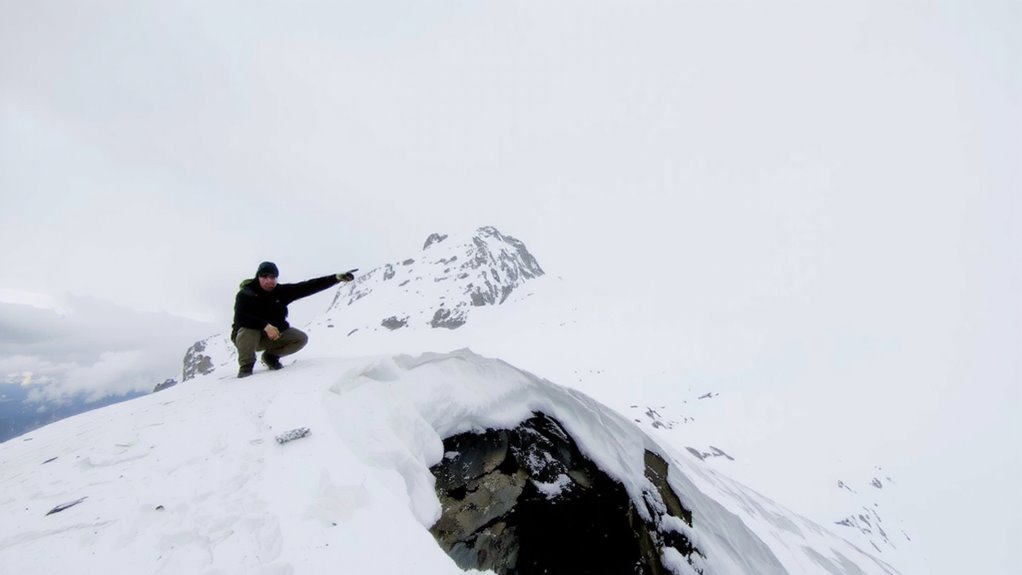
Once the sky shows signs of change-clouds thickening, wind shifting, light dulling-your window to act narrows fast, and moving quickly is your best defense. Every minute counts when temperatures drop and visibility falls below 50 meters. You need shelter within 10–15 minutes to maintain heat retention and avoid rapid core cooling. A lightweight emergency bivy or insulated tent raises body heat retention by up to 30% compared to exposed skin. If caught without gear, natural windbreaks like rock overhangs or dense tree lines reduce wind chill exposure. Move without delay, but stay alert to terrain traps like gullies or cornices. Carry a whistle and signal mirror-these emergency signals work reliably in whiteout conditions when electronics fail. Sound carries farther than light in storms, making audio signals more effective at close range. Your speed now determines survival odds later. A properly chosen bivy bag design can significantly improve insulation and moisture management in extreme conditions.
Gather Your Group and Gear
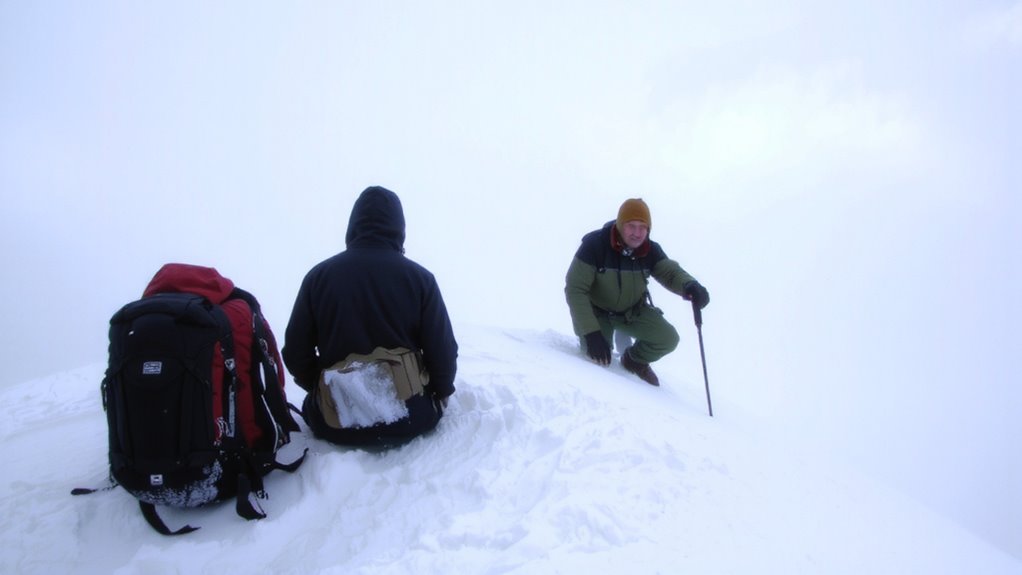
Most groups waste crucial time during a storm because they aren’t already tethered together physically or mentally-so secure your team with a climbing rope, carabiners, or ski leashes before moving. Maintaining group cohesion reduces separation risk and speeds up coordination. Do a quick gear inventory to confirm essentials are present and functional. Missing items compromise safety faster than weather changes.
| Item | Check Status |
|---|---|
| Navigation | GPS & map |
| Headlamp | Batteries charged |
| First Aid Kit | Fully stocked |
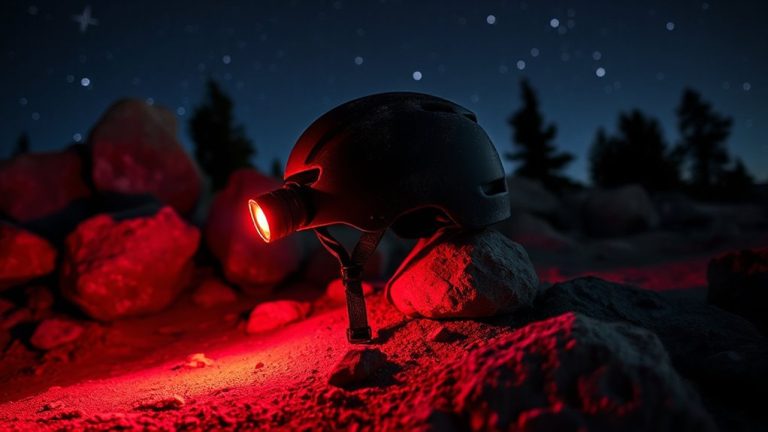
Tethering systems like ski leashes (tested to 300 lb) allow movement without losing contact. Climbing ropes (9–11 mm diameter) add strength but slow progress-choose based on terrain risk. A headlamp with 200+ lumens is non-negotiable. Confirm group cohesion and complete your gear inventory before advancing.
Spot Avalanche Danger Immediately
While moving through steep terrain in a snowstorm, you’ll need to recognize avalanche clues fast-because waiting for clear skies means waiting too long. If you see cracks in snow spreading around your feet, stop immediately-this means the slab layer is failing. That crack is a warning the snowpack can’t hold weight. You might also hear a hollow or “whumpf” sound, which signals collapsing moving snow layers beneath you. These shifts mean the weak layer is giving way under stress. Avoid slopes 30 degrees or steeper if you’ve noticed these signs. Travel across such terrain quickly and one at a time to reduce load. Visibility limits your view, so rely on what you feel underfoot. Trust those physical cues more than forecasts when storm clouds block the sky. Ignoring them cuts your margin of safety to zero.
Check the Weather: Then Decide
You’ve already learned to read the snow under your feet, but that won’t help much if you ignore what’s coming down from the sky. Checking current weather patterns gives you objective data on wind speed, temperature drops, and snowfall intensity-key inputs for safe movement. Storms now shift faster due to climate change, making hourly forecasts more reliable than long-term outlooks. Use a handheld weather radio or GPS device with live updates; don’t rely on memory or averages. If visibility falls below 100 meters or wind exceeds 35 mph, conditions become high risk. Sudden warming can destabilize snow layers just as much as heavy snow. Real-time monitoring lets you confirm whether the storm is worsening or passing. You can’t control the weather, but evaluating it accurately gives you actionable insight. Ignoring it cuts your reaction time to zero. Pack high-calorie, palatable meals like those in a best-tasting emergency food supply to maintain energy and morale during prolonged exposure.
Plan Your Next Move Now
If the storm’s not letting up, you’ll need to decide-retreat, push forward, or hunker down-based on what your gear can actually handle, not hope. Stay calm, think ahead, and weigh your options with what’s real, not what you wish were true. Below is a quick assessment of likely moves and what they demand:
| Action | Requires | Risk Level |
|---|---|---|
| Retreat | Clear trail, energy, time | Moderate |
| Push Forward | Good visibility, spare heat | High |
| Hunker Down | Shelter, insulation, fuel | Low |
| Wait 1 Hour | Monitoring, dry layers | Low-Moderate |
| Signal Help | Whistle, mirror, phone | Low |
Each choice depends on your actual supplies, not assumptions. Think ahead-your next move defines your safety. Stay calm, check your gear, and act with purpose. A reliable emergency sleeping bag can make all the difference in maintaining core body temperature during unexpected exposure.
On a final note
You stay visible and warm when you act fast. A headlamp with 300 lumens cuts through blowing snow; gloves with touchscreen sensitivity keep maps accessible. Shelter matters more than speed-tarp setups beat tents in high winds. Group accountability prevents panic; a quick gear check guarantees no one lacks essentials. Avalanche probes are light but save lives. You rely on real-time wind shifts, not forecasts alone. Decisions based on terrain and weather beat hope every time.