Practicing Nighttime Fire Drills With Children Using Flashlights Only
You need a flashlight your child can hold and aim during a nighttime fire drill-ideally under 6 ounces, with a simple switch and 100+ lumens. Use only flashlights in total darkness to simulate real blackouts, testing beam reach and battery life. Map two escape routes and practice crawling low while using the light to spot hazards. Assign each child a role, like checking doors or leading the way, and run drills quarterly. Skip glow sticks-they don’t cut through smoke. Pets should join to prevent surprises. A reliable beam in small hands builds confidence that lasts longer than the drill. You’ll see how small changes improve response when seconds count.
Notable Insights
- Conduct nighttime fire drills in complete darkness using only flashlights to simulate real emergency conditions.
- Choose child-friendly flashlights that are lightweight, durable, and have at least 100 lumens for effective visibility.
- Assign each child a flashlight role, such as lighting the path or checking doors, to build responsibility and coordination.
- Practice two escape routes from every room and use flashlight signals at windows on upper floors.
- Test flashlight battery life regularly and store spares in known locations to ensure readiness during actual emergencies.
Why Practice Fire Drills With Flashlights at Night
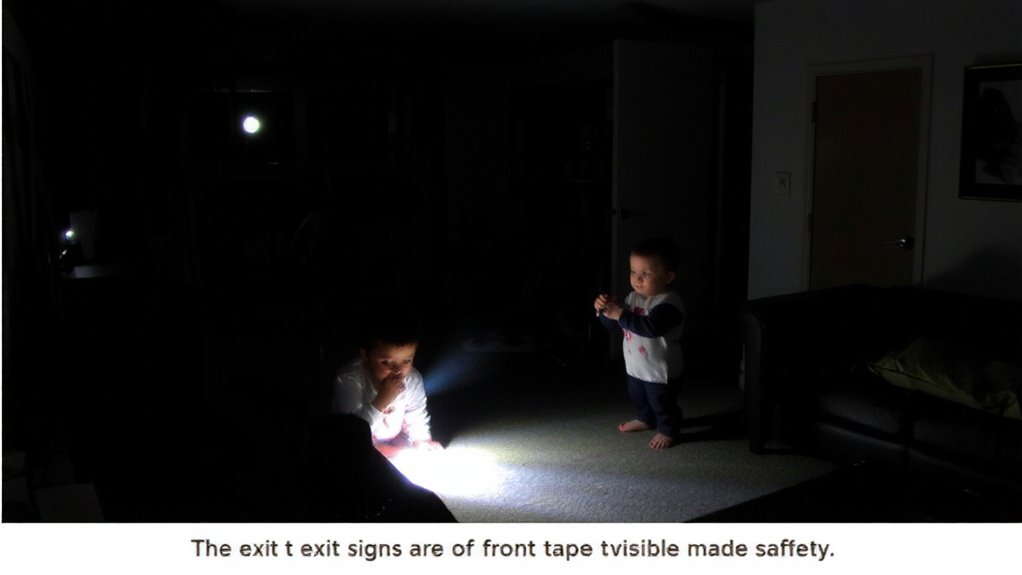
Why wait until an emergency to find out if your kids can handle the dark? Practicing fire drills with flashlights at night builds real emergency preparedness. Without power, nighttime visibility drops fast-most home fires occur at night, so testing how your children react in low light is practical, not dramatic. Flashlights help map escape routes when normal lighting fails. You’ll see if the beam is bright enough, batteries last, and if kids can hold and aim them while moving. It’s not about perfect conditions-it’s about function under stress. Some lights are too weak or confusing for young hands. You need consistent output, simple switches, and durability. A drill reveals what specs can’t: whether your child keeps calm and follows light cues. You’re not prepping for show. You’re testing response time, grip control, and real-world visibility. That’s measurable. That’s preparedness. Choosing the best flashlights can make a critical difference during these nighttime drills.
Pick Flashlights Kids Can Use Safely
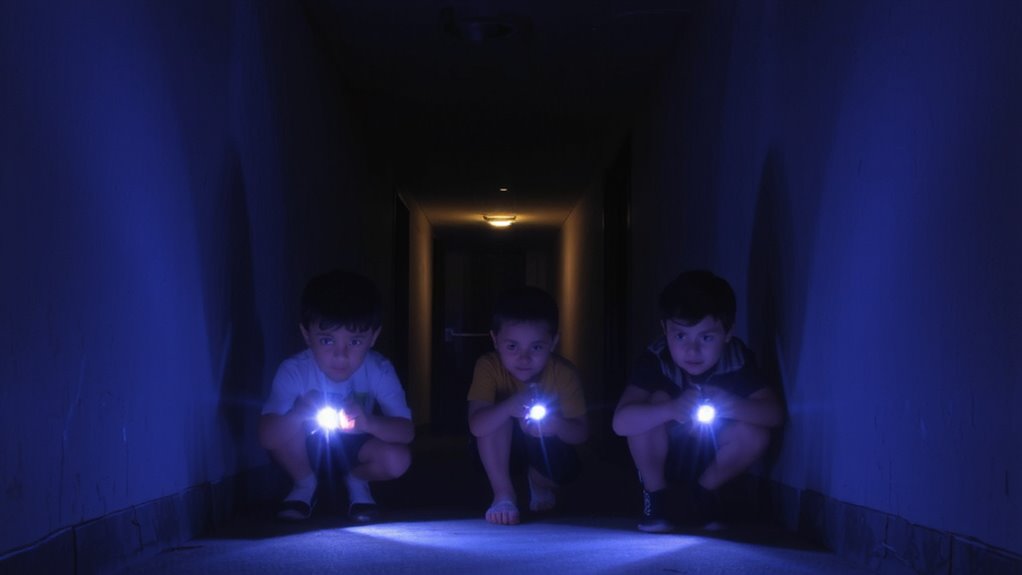
A child-sized flashlight should fit small hands and function under stress-because when the lights go out, you need something your kid can actually hold and operate. Look for models with a secure child grip, rounded edges, and lightweight builds, ideally under 6 ounces. Flashlight safety starts with simple controls: a single-button switch is easier for young hands to manage than twist heads or complex settings. LED models are best-bright (at least 100 lumens), energy-efficient, and durable. Avoid glass lenses; plastic is safer and less likely to shatter. Test it: can your child turn it on, aim it, and carry it while moving? Water resistance helps if accidents happen. Batteries matter: use long-life LEDs with alkaline or rechargeable options you already stock. Built-in lanyards prevent drops. Prioritize reliability over flashy features-this isn’t a toy. A functional grip and basic operation are what keep kids safe. For dependable options, consider checking out the top mini flashlights recommended for performance and durability.
Prepare Your Family for a Blackout Drill
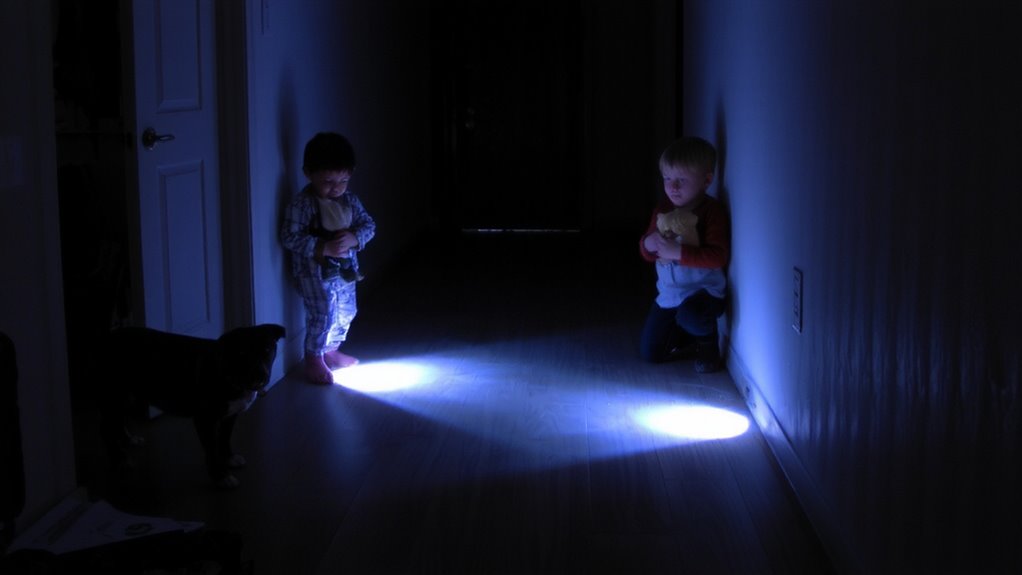
You’ve picked flashlights your kids can operate, but having the gear isn’t enough-your family needs to practice using it. Start with emergency planning: map two exit routes from every room and designate a meeting spot outside. Use simple language kids understand, and assign each child a flashlight role-like lighting the path or checking doors. Practice family communication by using quiet, clear phrases such as “I’m here” or “This way,” which prevent panic and maintain contact in the dark. Conduct the blackout drill under real conditions-lights off, no phones-but stay nearby for safety. Test how long flashlights last on a set of batteries, and store extras in a known location. This drill isn’t about speed; it’s about coordination, visibility, and ensuring everyone responds without confusion. Repeat monthly to reinforce habits. For reliable illumination during drills, consider using one of the best 2000 lumen flashlights recommended for various adventures.
Run a Realistic Nighttime Fire Drill
How often have you tested your family’s response when startled awake by a real alarm? A realistic nighttime fire drill simulates actual conditions, helping everyone react calmly and correctly. Start by setting off your smoke alarm briefly to mimic a true emergency. Use flashlights only-no overhead lights-to maintain low-light discipline. Follow your practiced escape routing exactly, ensuring all members reach the meeting point in under two minutes. Test both primary and secondary exits. For upper floors, confirm kids know how to perform window signaling with a flashlight, waving it side to side to attract attention. Verify that signals are visible from the street. Conduct drills quarterly to reinforce timing, coordination, and memory. Realistic repetition reveals flaws in planning and improves execution. Flashlights should be durable, with minimum 50-lumen output and long battery life. Avoid models that are overly bright-they can ruin night vision.
Teach Kids to Crawl Under Smoke With Light
When smoke fills a hallway or stairwell during a fire, visibility drops fast-so crawling under it becomes the only safe way out. You’ll need to teach your kids low-position movement during drills, using flashlights to simulate real smoke navigation. Keep the beam close to the floor, moving it slowly to identify obstacles without blinding their vision. This builds light discipline-using illumination only when necessary and minimizing glare. Practice in total darkness first, then add light restrictions. Children should crawl with one hand sweeping ahead, the other holding the flashlight. This method works: it reduces inhalation risk and improves directional control. Flashlight size matters-compact models fit small hands but test grip and weight beforehand. Teach consistency. Over time, the routine becomes automatic, increasing survivability when every second counts. Avoid high beams. Stick to low, focused light.
Avoid These Common Fire Drill Mistakes
Why do so many families botch fire drills despite good intentions? You might unknowingly make mistakes that reduce effectiveness. Using glow sticks instead of flashlights undermines preparation-glow sticks offer dim, diffused light that doesn’t simulate real escape conditions. Flashlights provide focused beams, helping children identify pathways and hazards in darkness, just like during an actual fire. Practicing with inferior light sources creates false confidence. Another common error is ignoring pet safety. Pets can block exits or panic, disrupting evacuation. Include them in drills so everyone learns to move quickly and safely. Don’t assume older kids remember procedures-reinforce actions consistently. Skipping practice on closed doors or second-floor rooms leaves critical gaps. These oversights compromise readiness. Avoiding them guarantees drills build reliable, transferable skills. Realistic conditions produce real preparedness. You need functional outcomes, not just participation.
Make Flashlight Drills a Calm Weekly Habit
You’ll likely succeed with flashlight drills if you run them weekly under realistic conditions. A calm, consistent schedule reinforces safety routines without causing anxiety. Treat each drill like a practice run: lights off, flashlights only, and everyone moving quietly to the meeting point. This repetition builds familiarity, reducing panic during real emergencies. Incorporate simple flashlight games to keep children engaged-like following a light trail or spotting marked exit signs-but keep the focus on procedure, not play. These games work best when they mirror actual escape paths. Over time, the routine becomes automatic. Test different start times, including late nights, to simulate real scenarios. Use durable, long-battery LED flashlights and check them weekly. Consistency matters more than duration-10 minutes weekly is enough. Well-practiced safety routines improve response speed and accuracy, especially in low visibility.
On a final note
You keep the flashlights you test-simple, durable models with long battery life. They work when needed, without flickering or failing. Running weekly drills guarantees your family reacts quickly, not out of fear but habit. Crawling under smoke with dim light builds real skills. This isn’t about gear hype; it’s about clarity in crisis. Low-light navigation, clear exits, practiced moves-those reduce risk. You make safety measurable, not just possible.