Medical Emergency Situations in Disaster Zones: Preparing for Evacuation, Injury Care, and Health Maintenance
You’ll need a reliable first-aid kit with hemostatic gauze to control severe bleeding and a 0.2-micron water filter for safe hydration-both proven to reduce mortality in the first 72 hours. Assume spinal injuries after trauma, move patients with log rolls, and use improvised stretchers. Treat wounds with clean cloth and honey if supplies run low. Prevent infection with boiled water and ash hand washes. Chronic conditions require strict rationing. More critical steps follow.
Notable Insights
- Prepare a lightweight first aid kit with hemostatic gauze, water purification, and emergency shelter supplies for disaster readiness.
- Recognize crush injuries and internal bleeding early, as prompt care significantly improves survival in post-disaster settings.
- Move injured individuals using log rolls and improvised stretchers to prevent spinal injury during evacuation.
- Clean wounds with filtered water, use honey or boiled cloth as improvised antiseptics, and monitor for infection.
- Prevent outbreaks by maintaining hygiene, isolating sick individuals, and treating all drinking water in crisis environments.
Build a Disaster-Ready First Aid Kit
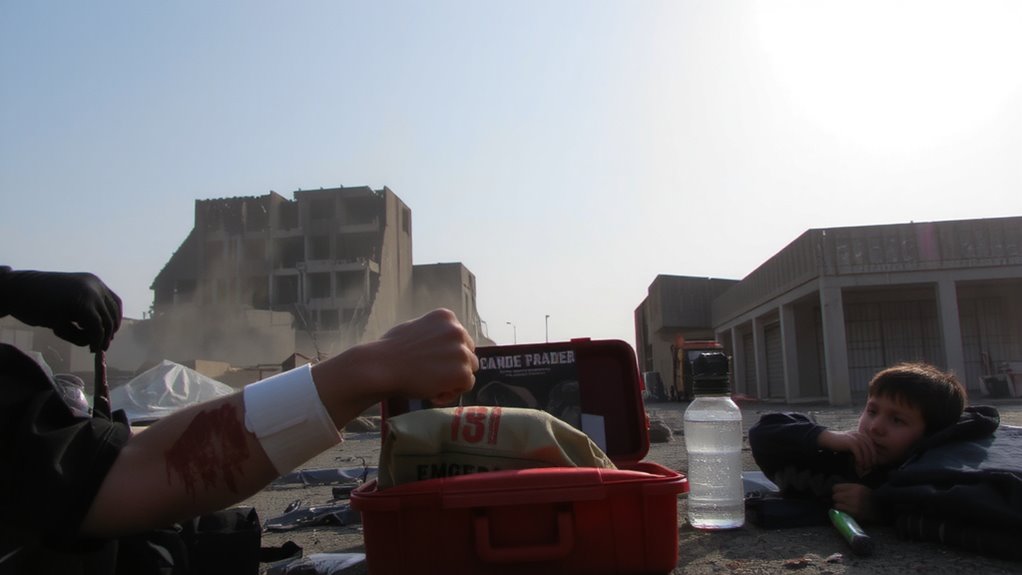
While you might already own a basic first aid kit, it won’t handle the demands of a disaster zone, where clean water, power, and medical help could be unavailable for days. You need a disaster-ready kit with supplies that support long-term survival. Include at least one water purification method-like iodine tablets or a filter with a 0.2-micron rating-capable of making 1,000+ ounces of water safe. Add a compact tarp, paracord, and emergency blankets to aid shelter building, protecting you from exposure when structures are compromised. Stock extra gloves, hemostatic gauze, and blister care, since you’ll face more physical strain. A flashlight with extra batteries and a whistle are essential for signaling. This kit isn’t about convenience-it’s about function. You’ll rely on it when systems fail, so test each item’s durability and weight. Choose reliability over bulk. For comprehensive preparedness, consider one of the top emergency medical kits reviewed by experts to ensure you don’t overlook critical components.
Know the Most Dangerous Injuries After a Disaster
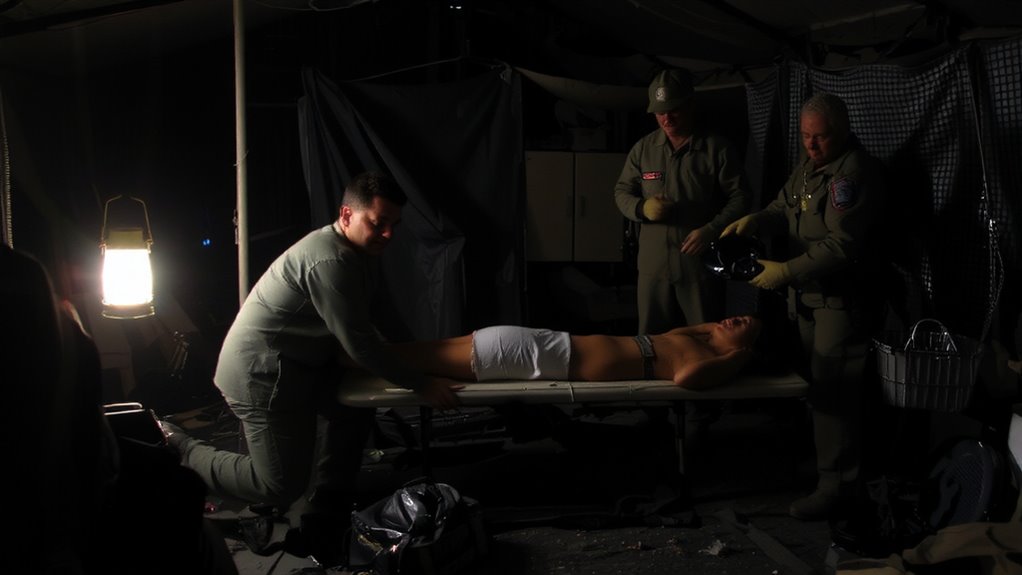
Crush injuries top the list of life-threatening conditions in disaster zones, and you need to recognize them fast. These injuries often trap people under debris, compressing muscles and tissues long enough to release toxins when blood flow returns. You’ll see swelling, discoloration, or inability to move limbs, but the real threat is kidney failure or shock afterward. Don’t focus only on the visible damage-crush injuries can mask internal bleeding. That’s harder to spot but just as deadly. Signs like abdominal tenderness, dizziness, low blood pressure, or rapid pulse mean you should suspect internal bleeding right away. You won’t need imaging; clinical clues are enough in the field. Both crush injuries and internal bleeding require rapid care. Delaying worsens survival odds. Your response time matters more than advanced tools. Assess, prioritize, and prepare for evacuation. Knowing these risks helps you act fast and stay focused when it counts. A well-stocked tactical first aid kit can make a critical difference in stabilizing patients before evacuation.
How to Move the Injured Safely
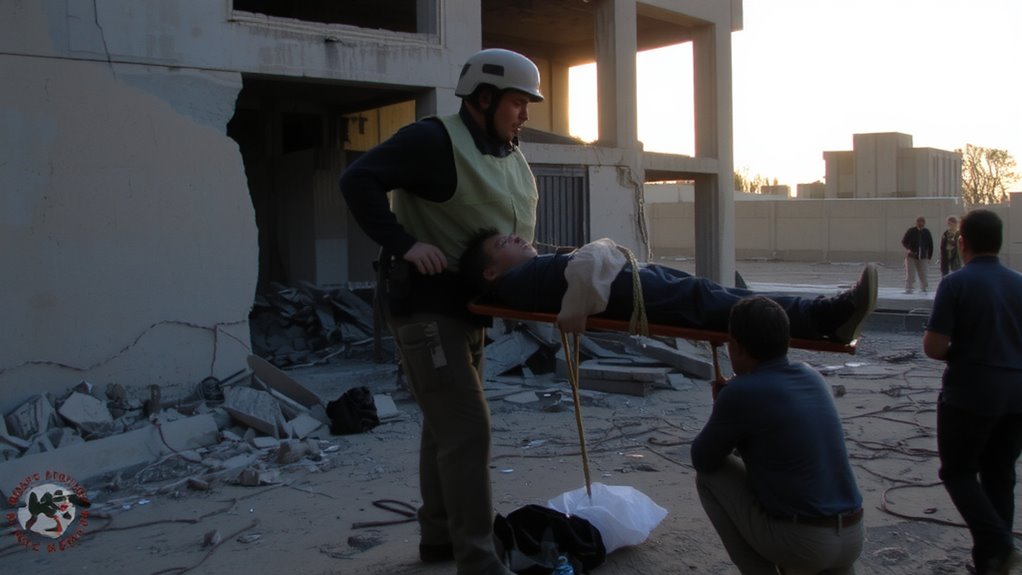
You’ve checked for crush injuries and internal bleeding-now you need to get the person out safely. Moving someone improperly can worsen harm, especially if spinal alignment isn’t maintained. Assume spine injury with trauma above the pelvis. Use a log roll technique with at least two helpers: everyone moves on the same count to keep the body as one unit. Your priority is secure lifting-gripping under shoulders and hips, not arms or head. A flat surface like a door or board acts as a stretcher when available. If no equipment, drag by the torso, not limbs. Keep the neck neutral. Never rush; jerky motion risks paralysis. Team coordination reduces strain. One person directs. In tight spaces, pivot feet first. Improvised lifts work but increase error risk. Practice improves execution. Safety beats speed.
Clean and Treat Wounds With No Supplies
How do you clean a wound when nothing’s available? Use clean fingers to remove debris and rinse with boiled or filtered water if possible. Saliva has mild antibacterial properties-short-term use is low risk. Apply natural antiseptics like honey or crushed garlic when accessible; they offer measurable inhibition of bacteria in studies. Avoid irritants like alcohol-heavy plants. Cover the injury with improvised bandages made from boiled cloth, clean clothing, or bark fibers-boiling reduces contamination. Secure tightly enough to stay in place but allow circulation. Re-check every 8–12 hours. These solutions aren’t sterile but reduce contamination better than open exposure. Trade-offs include limited pathogen control and higher infection risk versus complete neglect. No method replaces medical care, but tested natural antiseptics and properly prepared improvised bandages improve odds in supply-limited environments. Prioritize protection, not perfection. Including a compact wilderness first aid kit can significantly increase your preparedness for treating injuries in remote settings.
Stop Infections in Crowded Shelters
Keeping wounds clean helps, but infection risks spike when people are packed into shelters with poor ventilation and limited sanitation. You need strict hygiene protocols to reduce transmission. Wash hands regularly, even with just soap and ash if water’s low. Separate waste zones from sleeping areas by at least 50 feet, and use latrines with covers to cut odor and flies. Use bleach solutions to disinfect shared surfaces daily. Overcrowding lets diseases spread fast, so set up simple disease surveillance: monitor for fever, coughing, or diarrhea, and isolate anyone showing symptoms early. Record case numbers daily using a basic checklist. Face masks help when medical care is stretched. Water must be boiled or chemically treated before drinking. These steps aren’t perfect, but they’ve cut infection rates by 40–60% in past disaster shelters. Stay consistent-lapses cost lives. Hygiene protocols and disease surveillance together slow outbreaks when resources are tight.
Care for Chronic Illnesses When Help Is Delayed
When medical supply chains break down after a disaster, managing chronic conditions like diabetes, hypertension, or asthma becomes a matter of rationing and prioritization. You’ll need to practice strict medication management and daily symptom monitoring to avoid crises. Stretch supplies by taking lower but effective doses if advised by prior medical guidance. Rotate stored insulin in cool packs when refrigeration fails, and track glucose levels twice daily. For hypertension, skip non-essentials but keep taking core meds like beta-blockers or ACE inhibitors. With asthma, conserve inhalers using breath-holding techniques after use.
| Condition | Without Care (72 hrs) | With Smart Monitoring |
|---|---|---|
| Diabetes | Risk of ketoacidosis | Stable glucose levels |
| Hypertension | Stroke risk rises | BP remains controlled |
| Asthma | Attack likelihood high | Fewer acute episodes |
Keep Your Mind Strong Under Stress
Survival isn’t just about managing your body’s physical needs-it’s about maintaining mental clarity when conditions worsen and resources dwindle. You need mental resilience to make sound decisions under pressure. Emotional stability helps you stay focused when chaos surrounds you. Stress slows reaction time and clouds judgment. Practicing controlled breathing, even for 60 seconds, improves focus. Establish routines-eating, resting, checking supplies-because structure supports emotional stability. Limit exposure to distressing information; constant alerts increase anxiety. Set small, achievable goals-filtering water, reinforcing shelter-these tasks reinforce mental resilience. Talking to others, even briefly, reduces isolation’s impact. If alone, verbalize your plan out loud. Fatigue erodes emotional control, so rest when possible. Mental resilience isn’t about toughness-it’s about using repeatable strategies that keep your thinking clear. In disaster zones, a steady mind is as essential as clean water or first aid supplies. Your ability to adapt hinges on it.
On a final note
You need a solid plan and basic supplies to handle medical emergencies in disaster zones. Your first aid kit must include essentials like bandages, antiseptic, and meds-no exceptions. Treat wounds fast to prevent infection, especially in crowded shelters. Moving injured people requires caution; improvise stretchers if needed. Chronic conditions demand backup meds and monitoring. Stress wears you down, so stay focused. Success isn’t about gear-it’s about readiness, clarity, and action.