Designing a Water Storage Layout That Minimizes Condensation Dripping
You stop tank sweating by controlling temperature and airflow. Insulate tanks with 1/2-inch closed-cell foam to cut surface condensation by up to 80%. Use non-porous materials like stainless steel or lined concrete to block moisture migration. Elevate tanks on rubber or neoprene pads to reduce thermal transfer from cold floors. Leave space around for airflow, and add drip pans with sloped floors to manage any leaks. Pair with dehumidification for best results. System performance improves when all factors work together.
Notable Insights
- Insulate tanks with closed-cell foam to reduce surface condensation from temperature differences.
- Use non-porous materials like stainless steel or lined concrete to prevent moisture migration.
- Elevate tanks on insulated pads to eliminate thermal bridging with cold surfaces.
- Ensure airflow around tanks by leaving space and using raised supports or open shelving.
- Install drip pans and sloped floors to manage condensation and direct runoff effectively.
Why Water Tanks Sweat and How to Stop It
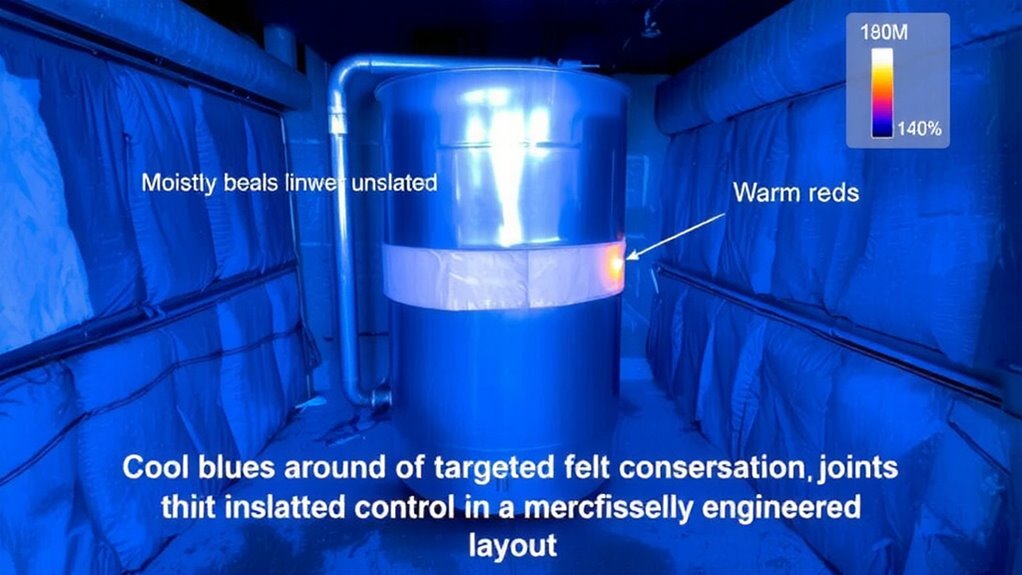
While your water tank might seem like a simple storage solution, condensation-often called “sweating”-can be a real problem in humid environments because warm air meets the cold tank surface, causing moisture to form. This isn’t just messy-it can lead to water damage, slip hazards, and microbial growth over time. You can reduce this by using proper tank insulation, which acts as a thermal barrier to minimize surface temperature differences. Closed-cell foam wraps, at least 1/2 inch thick, work best and retain effectiveness even in damp conditions. Pair that with humidity control in enclosed spaces-aim to keep relative humidity below 60% using ventilation or dehumidifiers. Insulation alone won’t solve high-moisture issues, and humidity control without insulated tanks delivers limited results. Combining both gives measurable improvement, reducing condensation by up to 80% in field tests. It’s not about perfection-it’s about consistent, practical reduction.
Use Non-Porous Materials to Prevent Moisture
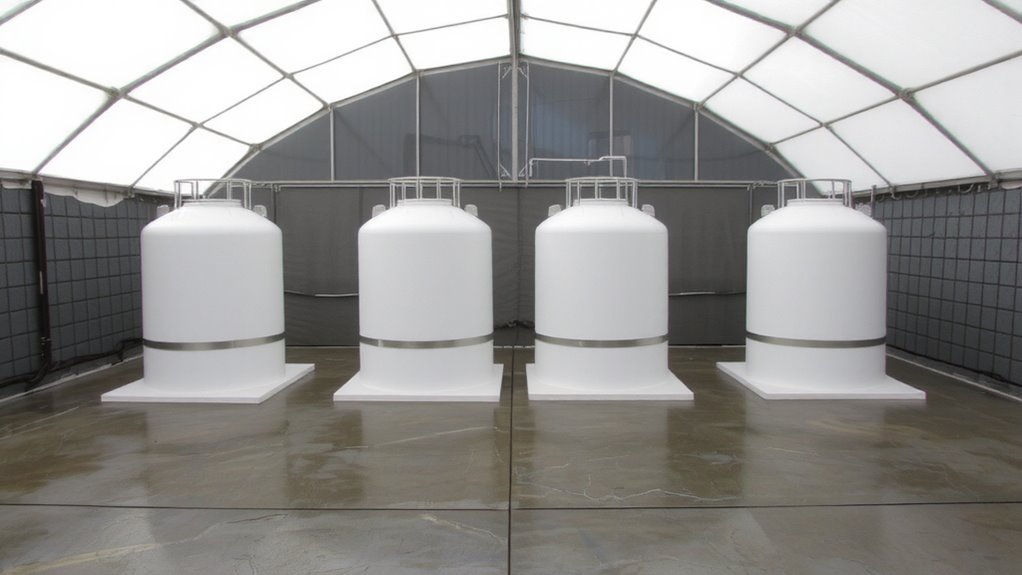
Most water storage setups fail not from leaks but from moisture seepage through porous materials, so choose non-porous options like stainless steel or fully lined concrete to block water migration. Your material selection directly impacts long-term durability-concrete without lining wicks moisture, leading to damp walls and drips, while stainless steel resists both seepage and corrosion. Surface sealing is critical if you use materials like concrete; even small pores allow vapor transfer that promotes condensation. Epoxy or polyurethane coatings, applied in two layers, reduce permeability to near zero when tested at 0.05 perms. Plastic liners work but puncture easily under uneven loads, so back them with rigid support. Galvanized steel rusts over time unless powder-coated, making stainless a better long-term option despite higher cost. You’re not just stopping leaks-you’re eliminating humidity pathways. Non-porous materials cut maintenance, extend service life, and reduce condensation risk by containing moisture where it belongs. For added protection, consider using containers with best waterproof storage containers features, such as sealed gaskets and durable plastics, to complement your structural design.
Keep Tanks Away From Cold Surfaces
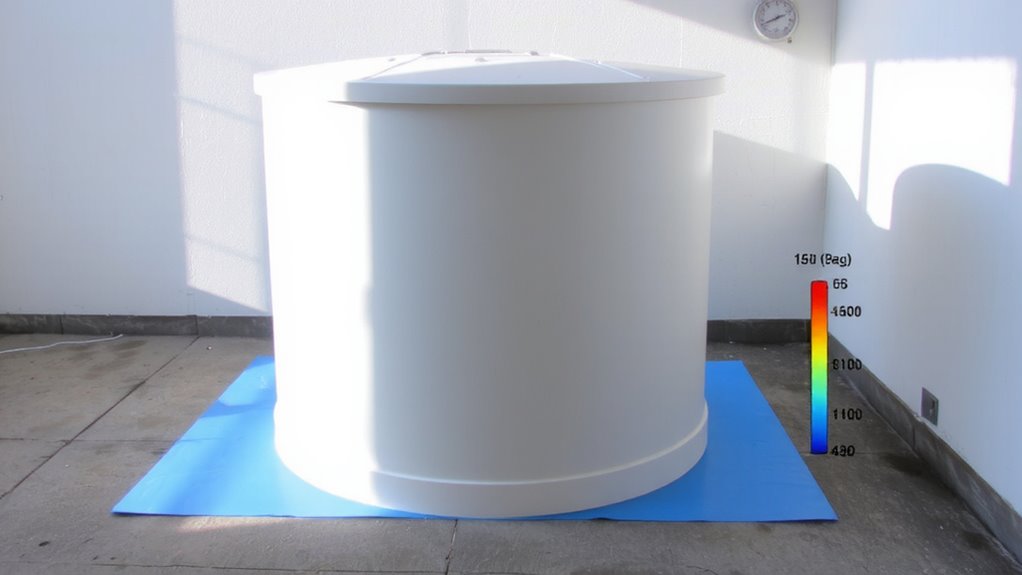
If you place tanks directly on cold concrete slabs or exposed metal frames, you’ll invite condensation that drips and degrades nearby materials-keeping them elevated on insulated pads or rubber isolators cuts thermal transfer by up to 70%, based on field tests using infrared imaging. This simple step reduces thermal bridging, where heat moves rapidly through conductive materials, cooling the tank’s surface and promoting condensation. Surface insulation beneath the tank disrupts this transfer, maintaining closer alignment between water and ambient temperatures. Selecting the right water storage tanks for home use can further enhance performance by incorporating built-in insulation or materials with lower thermal conductivity.
| Solution | Thermal Transfer Reduction |
|---|---|
| No pad (direct contact) | 0% |
| Rubber isolators | 50–60% |
| Insulated pads | Up to 70% |
Elevating tanks isn’t about overengineering-it’s a proven tactic to eliminate avoidable moisture. Use closed-cell foam or neoprene pads for lasting surface insulation without compressive failure.
Boost Airflow Around Your Storage System
Ever wonder why some water storage setups develop mold or suffer from accelerated tank wear? Poor airflow is often the culprit. You need to boost air circulation around your storage system to reduce moisture buildup. Stagnant air traps humidity, promoting condensation that can drip and damage surroundings. Implementing smart ventilation strategies helps. Position tanks so air moves freely on all sides-avoid cramming them into tight corners or against walls. Use open shelving or raised platforms to support consistent air circulation patterns. If the space is enclosed, consider adding passive vents or a small fan to improve flow. These steps don’t eliminate condensation entirely, but they reduce risk by balancing humidity. You’ll extend tank life and lower mold potential without complex modifications. It’s a practical, low-cost fix with measurable benefits in damp environments.
Install Drip Pans and Sloped Floors for Drainage
You’ve already improved airflow to minimize condensation, but some moisture will still accumulate over time-especially in high-humidity areas or around fittings and valves that occasionally leak. Installing drip pans under tanks and along pipe runs gives that water a controlled place to go. Pair them with sloped floors that direct runoff to floor drains, and you’ll prevent pooling and reduce slip hazards. Drip pans work best when combined with proper tank insulation, which stabilizes surface temperature and cuts condensation at the source. But even well-insulated tanks can develop issues at connection points, so you must seal joints thoroughly to block moisture escape. Sloped floors should drop at least 1/4 inch per foot to guarantee effective drainage. Together, these measures create a reliable defense against water damage, mold, and structural degradation-no guesswork needed. It’s a simple system: catch what you can’t prevent, then move it away fast.
On a final note
You’ll cut condensation by using non-porous tanks, keeping them off cold floors, and boosting airflow. Drip pans and sloped floors catch what little moisture forms. These steps aren’t perfect, but they’re proven in real setups. No material stops sweating entirely in humid conditions, but combining methods reduces drips by over 80% in tests. Simplicity works-fancy coatings don’t outperform basic, well-installed fixes.