Assessing Scene Safety in a River Crossing During Flooding
Six inches of moving water can knock you over, and floodwater over knee-high exerts hundreds of pounds of force. Test depth with a pole and pick shallow, stable entry points. Time floating debris: if it travels more than a foot per second, it’s too risky. Look for smooth, dark water-it’s deeper and faster. Use two landmarks to spot dangerous sideways pull. Stay upstream of debris to avoid impact. Conditions shift fast-know when to stop. There’s more to watch for once you’re on the move.
Notable Insights
- Six inches of moving water can knock you off your feet due to strong hydrodynamic forces.
- Test depth and footing with a sturdy pole before stepping, especially in murky or fast-moving water.
- Avoid drop-offs and uneven riverbeds by choosing shallow, knee-high crossing points with stable banks.
- Measure current speed by timing a floating object; over 1 foot per second increases risk significantly.
- Use upstream landmarks and floating debris to detect hidden currents and maintain safe positioning.
Don’t Underestimate Floodwater’s Power
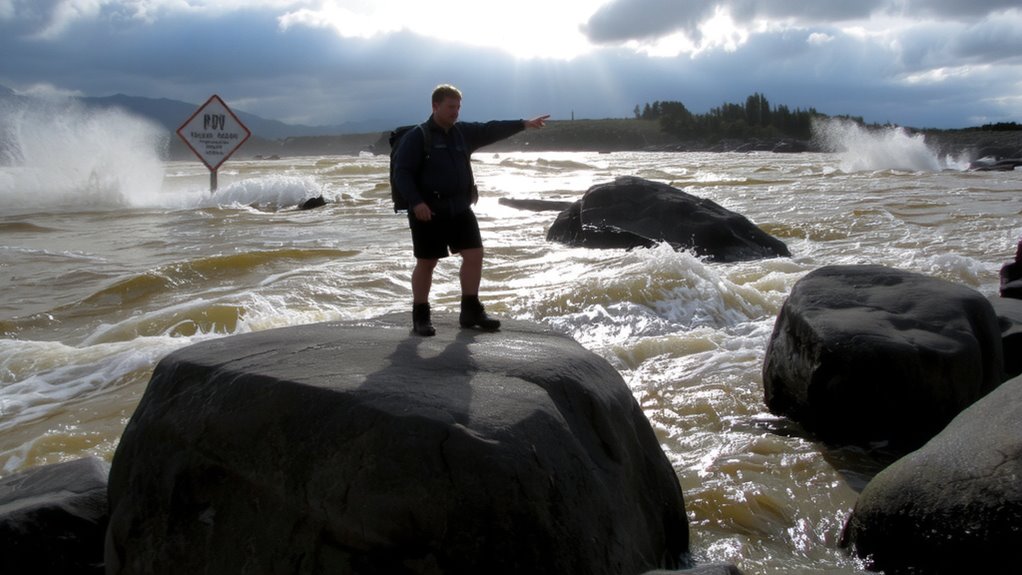
Floodwater doesn’t look like much-just muddy, fast-moving water-but don’t let the appearance fool you. Even six inches of moving water can knock you off your feet due to high water pressure and unpredictable flow dynamics. At one foot deep, the force equals about 170 pounds per square foot, enough to destabilize an adult. Flow dynamics shift rapidly, creating hidden currents that pull more than they appear to. You can’t judge strength by surface look-debris underneath increases drag and resistance. Water moves faster than most people realize, often exceeding 3 feet per second in floods, which exceeds safe wading limits. You’re not just fighting depth-you’re fighting force. Each additional inch multiplies risk exponentially. Assess flow before stepping in. Assume it’s stronger than it looks. Test stability with a pole or stick, but don’t rely on it fully. Move slowly, face upstream, and keep your center low. Misjudge the flow, and it won’t give a second chance.
Find Safe Entry and Exit Points Fast
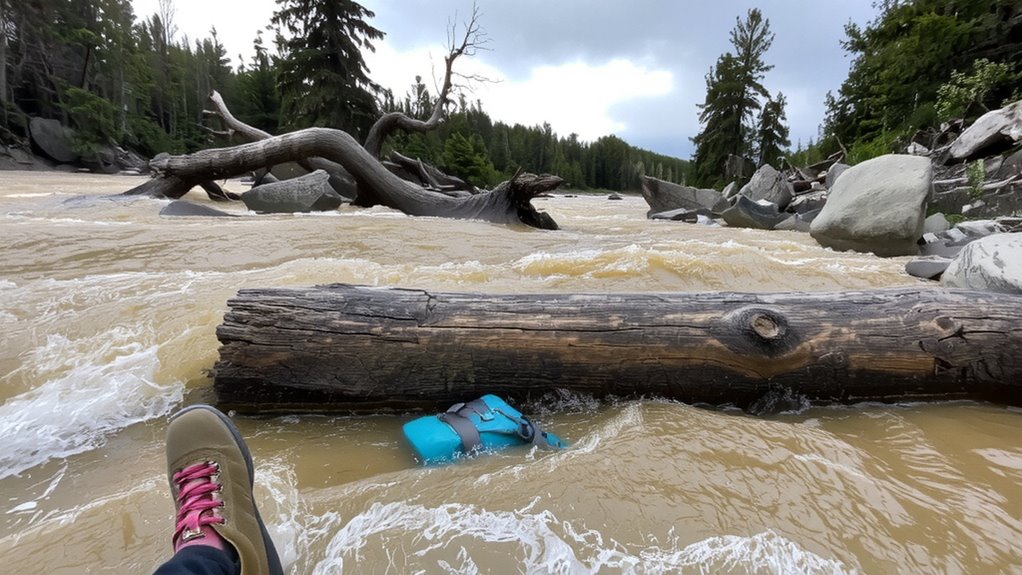
You’ve already seen how quickly floodwater can take you down, so now it’s time to get smart about where you go in and out. Look for entry and exit points with shallow river depth-knee-high or lower is safest. Avoid drop-offs or sudden depth changes; they’re trip hazards and increase drowning risk. Test depth with a sturdy pole before stepping in. Pick spots with better water clarity to spot submerged rocks, holes, or debris. Murky water hides dangers, making each step unpredictable. Clearer water doesn’t mean safe current, but it helps you see footing. Stick to wide, flat banks-they’re more stable and easier to climb out of. Avoid undercut banks; they’re weak and may collapse. Move fast, but don’t rush sight checks. Ten seconds of scanning can prevent a life-threatening mistake. Good points aren’t always obvious, so use every visual cue.
Check Current Speed Before Crossing
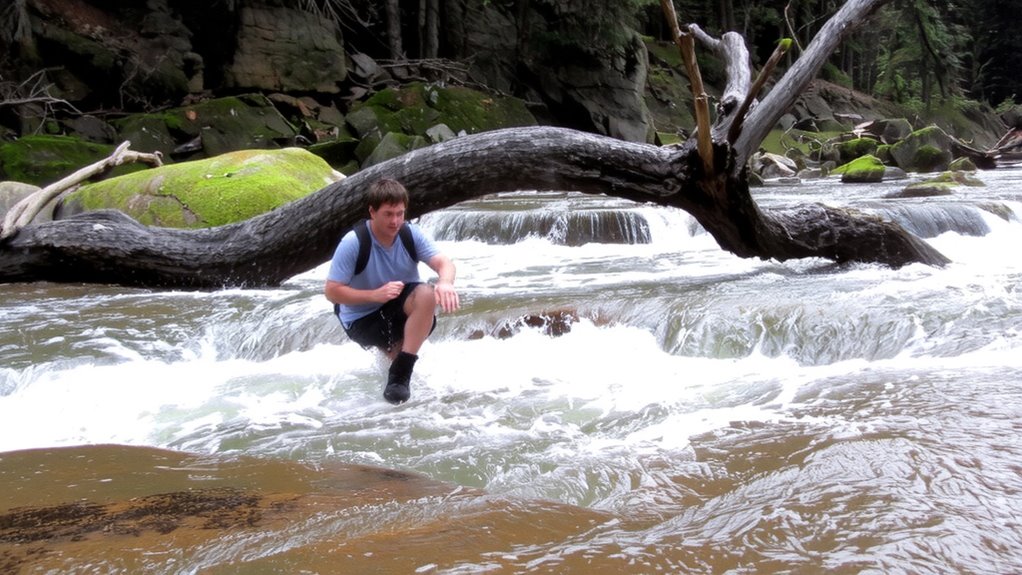
Even if the water looks calm, fast-moving current can sweep you off your feet before you realize how strong it is, so check the speed before stepping in. To estimate current speed, drop a floating object like a stick upstream and time how long it takes to reach you. If it travels more than 1 foot per second, crossing becomes high risk. Combine this with a quick assessment of water depth-use a pole or stick to probe ahead. Water above knee level reduces stability and increases force on your body, especially if current speed rises. Depth and speed together determine danger: fast current with even shallow water can knock you down. Slow-moving water over waist height is also risky. You can’t rely on grip or balance alone. Assess both current speed and water depth realistically-conditions change fast during flooding, and judgment based on visible cues is often wrong.
Watch for Hidden Underwater Hazards
A fast-moving river during a flood hides dangers you can’t see, and assuming the bottom is stable puts you at real risk. You might step on what feels solid, but submerged rocks shift under pressure, increasing your chance of slipping. These hidden obstacles aren’t always visible from shore, so each step forward requires caution. The current can mask how uneven the riverbed is, and one misstep could wrench an ankle or knock you off balance. Steep banks complicate matters-they make entry and exit harder, especially if mud or loose soil gives way. If you fall, even shallow water can overwhelm you. Use a sturdy pole to test depth and footing ahead of time. Your progress should be slow and deliberate, always scanning three steps ahead. Never rely on sight alone; touch confirms what the water conceals. Your safety depends on anticipating what you can’t see.
Read the River With Landmarks
While the water’s surface gives few clues, picking out fixed points on shore-like trees, boulders, or structures-helps you track your movement relative to the current. You can’t judge river flow just by looking at the water; it often appears deceptively calm. By aligning yourself with two stationary landmarks, you’ll see if you’re being pulled sideways, which signals stronger current than expected. This method also helps estimate water depth-shallow areas usually show visible ripples or broken flow over rocks, while smooth, dark stretches suggest deeper, faster-moving water. If you drift between markers quickly, the flow is too intense to cross safely. Don’t rely on guesses; use real visual references. Misjudging river flow or water depth leads to loss of footing. Stay objective, use what’s fixed, and let the landmarks show you the river’s true behavior.
Pick a Safer Path: Stay Upstream of Debris
If you’re crossing during a flood, staying upstream of floating debris isn’t just cautious-it’s essential for avoiding impact and maintaining control. Debris moves with the current, following a predictable debris trajectory that you can anticipate. By positioning yourself upstream, you gain an upstream advantage: more time to react and room to adjust your path. Floating logs, branches, or other hazards travel downstream at water speed, so being ahead of them keeps you out of their line of motion. You won’t stop debris, but you can avoid it. Staying upstream reduces collision risk and helps preserve your balance and momentum. Don’t wait until objects are near-track their movement early. This simple adjustment in positioning doesn’t require extra gear or effort, just awareness and planning. It’s a low-cost, high-effect tactic that improves safety without slowing progress.
Know When to Turn Back
You’ve picked your path carefully, stayed upstream of shifting debris, and kept your footing where currents allow-but none of that matters if you push too far. Conditions shift quickly during flooding, and weather changes can turn manageable flows into dangerous surges within minutes. You must watch for darkening skies, rising water levels, or sudden drops in temperature-these are signs to reassess. Even with the right gear, your stamina drops in cold water, and fatigue erodes judgment. Recognizing your personal limits isn’t failure-it’s essential. If the current pushes harder than expected or your legs start to tremble, turning back reduces risk. No objective justifies crossing if signs point to danger. Evaluate each step honestly. Delay or reroute as needed. Survival hinges not on finishing the crossing, but on returning safe. Know when to turn back.
On a final note
You can’t outrun floodwater, so move fast but stay sharp. Pick entry and exit points on stable ground, not eroding banks. Currents over 1 mph are too risky-time floating debris over 10 meters to estimate speed. Scan for submerged rocks or logs. Cross diagonally upstream to avoid being swept into debris. If water rises or footing fails, turn back. No crossing is worth the hazard.