Assessing Scene Safety When Responding to a Vehicle Accident on a Remote Road
Stop before rushing in-assess hazards first to cut your injury risk by 60%. Check for fires, oncoming traffic, and downed power lines; stay 30 feet away from fallen wires. Use flares 100 feet back from the scene for visibility. Approach from the uphill side, watch for fuel leaks, and park at a 45-degree angle with engine running. Remote roads mean slower help-know your escape routes. More signs to spot come into focus when you stay alert.
Notable Insights
- Stop and assess the scene before approaching to identify hazards like fire, traffic, or unstable terrain.
- Look for oncoming traffic and use flares or hazard lights to increase visibility, especially on remote roads.
- Assume downed power lines are live and stay at least 30 feet away to avoid electrocution risks.
- Approach with a clear escape route and park your vehicle at a 45-degree angle for quick egress if needed.
- Watch for vehicle instability due to terrain, suspension damage, or tire deflation that could lead to rollover.
Stop Before Rushing In
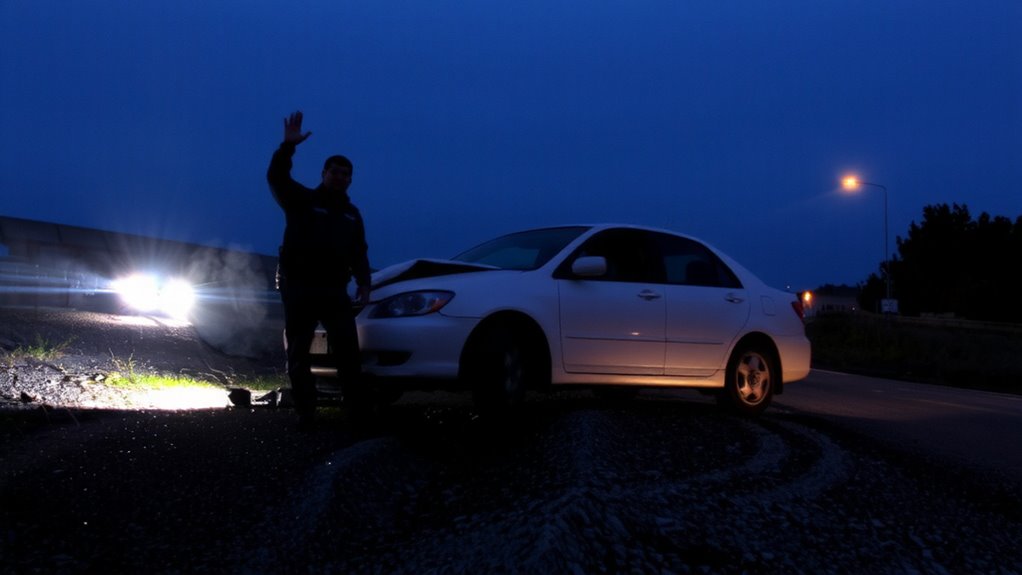
Before you sprint toward the wreck, take a beat to assess what you’re stepping into-your gut might say move fast, but rushing in can put you at risk. Personal safety comes first, not just for the victims but for you. Check for hazards like broken glass, sharp metal, or unstable ground. If visibility is low, turn on hazard lights or use a flashlight to improve it. Emergency signaling helps others see you and know help is on site. A reflective vest increases your visibility by up to 80% in low light. Don’t assume the scene is safe just because traffic isn’t nearby. Wait five seconds to scan for movement or danger. This pause costs little but boosts survival odds for everyone. Acting fast matters, but not at the cost of becoming another casualty. Smart response starts with observation, not action. Carrying a reliable emergency signaling device can significantly improve your chances of being seen and rescued in remote locations.
Look for Fire or Oncoming Traffic
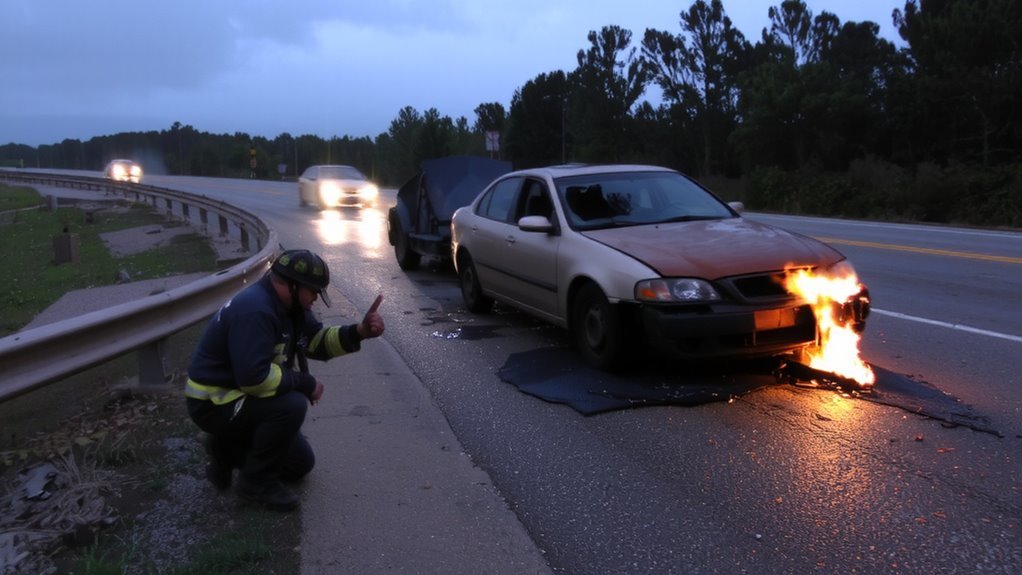
You’ve already taken a moment to stop and scan for immediate dangers like broken glass or uneven ground, but that’s only the first layer of risk assessment. Now you need to watch for fire or oncoming traffic, two fast-moving threats that can turn a rescue into a disaster. Check the vehicle for smoke signals-wisps of smoke from the engine or cabin mean fire is possible. If you see them, don’t hesitate; get clear and call for help. At night or on blind curves, use emergency flares to warn approaching vehicles. Place them 100 feet behind the accident to give drivers time to react. Flares last about 30 minutes and are more visible than headlights. Traffic on remote roads may be infrequent but fast, reducing reaction time. Always stand off to the side, not between the wreck and oncoming lanes. Stay alert-conditions change quickly.
Check for Downed Power Lines
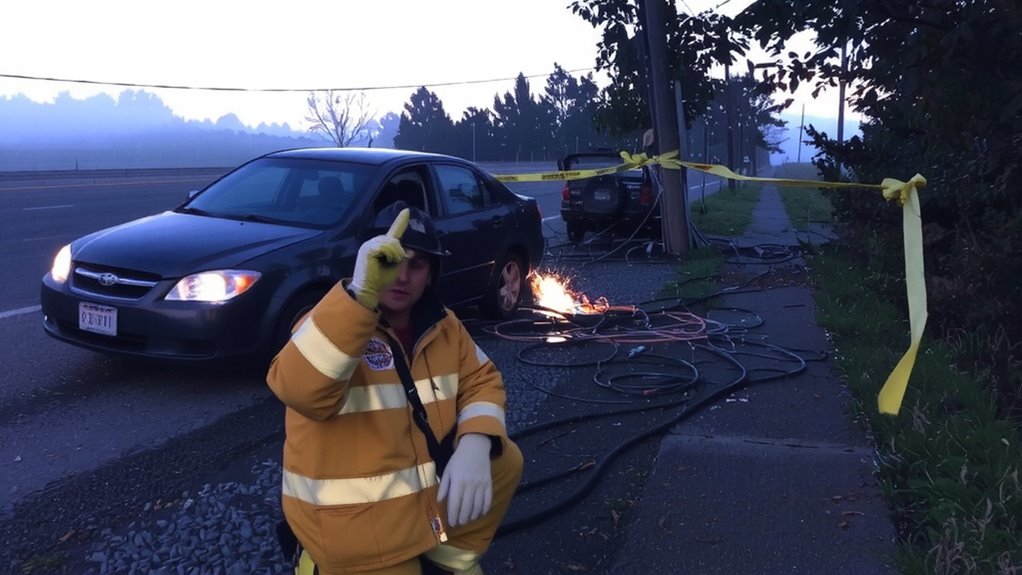
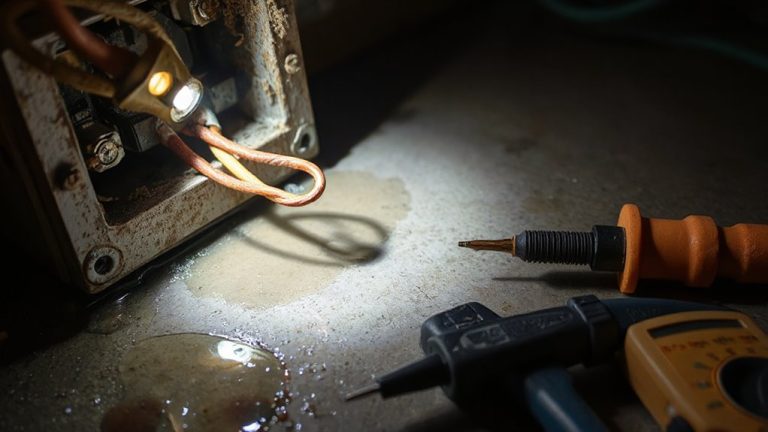
If you see any wires hanging low or lying on the ground near the wreck, assume they’re live and dangerous-downed power lines can carry thousands of volts and aren’t always obvious. This is a serious electrical hazard, even if the wires aren’t sparking. Stay at least 30 feet away, as voltage can spread through the ground. Avoid touching vehicles or debris that might be energized. Structural damage to poles or transformers increases risk, so scan for leaning support structures or broken insulators. Never assume power is off. You can’t visually confirm if a line is de-energized.
| Hazard Indicator | Risk Level |
|---|---|
| Downed wire on ground | Extreme |
| Wire touching vehicle | Extreme |
| Damaged utility pole | High |
| Flickering lights nearby | Moderate |
Plan Your Approach and Escape
While evaluating the immediate dangers, figure out how you’ll get close to the scene-and how you’ll leave quickly if things go wrong. Choose an approach route that gives you clear visibility and stable footing, using terrain navigation to avoid slippery slopes or loose gravel. Keep your vehicle parked a safe distance away, engine running, and keys ready. Position it at a 45-degree angle to the road to allow for quick departure. Identify at least two escape paths in case one becomes blocked. Carry a whistle or mirror for emergency signaling if you’re separated or need help. Test your signaling tools ahead of time to confirm they work in low light or dense woods. A reliable emergency whistle can significantly increase your chances of being heard over long distances or in high-wind conditions. Never assume help is nearby-remote areas delay response times. Your plan must account for limited visibility, weather changes, and poor cell reception. A solid approach and escape strategy reduces risk and keeps you in control.
Watch for Unstable or Rollover-Prone Vehicles
When evaluating a vehicle involved in an accident, check its position and support points right away-any car perched on uneven ground or propped up by soft soil, guardrails, or embankments could shift or roll with little warning. Vehicle stability is compromised in these cases, making even minor movements risky. Rollover hazards increase if the vehicle rests on a slope, is angled sharply, or has collapsed suspension. Tires may deflate slowly, destabilizing it further over time. Don’t assume a stopped vehicle is secure-assess contact patches and undercarriage support. A car balanced on gravel or vegetation won’t hold. Use visual cues: if the frame isn’t level or supports look weak, treat it as unstable. Mark safe zones and avoid lingering on downhill sides. Simple observation reduces exposure to rollover hazards. Stability isn’t guaranteed just because it hasn’t moved yet.
Identify Fuel Leaks and Explosion Risks
A fuel leak near a crash site means you’re in a potential blast zone-gasoline vapors ignite easy, and diesel isn’t much safer under the right (or wrong) conditions. You need to spot leaks fast because fuel pooling creates a large vapour ignition risk, especially near hot engine parts or sparks. Never assume the engine’s off means it’s safe-electrical shorts can still spark a flash fire.
| Fuel Type | Ignition Risk | Common Leak Source |
|---|---|---|
| Gasoline | High | Damaged tank or line |
| Diesel | Moderate | Cracked fuel rail |
| Ethanol blend | High | Connector seals |
Check for strong odours, sheen on surfaces, or dripping-signs of fuel pooling. Vapour ignition can happen even without visible flame sources. Keep ignition sources away and approach downwind when possible. Remote locations limit escape routes, so assess from a distance first.
Mark the Scene on Remote Roads
Every second counts at a remote roadside crash, so you’ve got to mark the scene quickly and clearly. Use reflective triangles or LED road flares-place them at least 100 feet behind approaching traffic, adjusting distance based on terrain assessment and visibility conditions. On blind curves or hills, add extra markers so drivers get early warning. If the terrain’s uneven or soft, stake markers securely so they don’t tip. LED devices last longer and are easier to position than candles or chemical lights, especially in wind or rain. In poor visibility conditions-like fog or dusk-activate high-visibility gear and use flashers on your vehicle. Don’t assume headlights will spot your markers; many remote roads lack street lighting. Always recheck placement after setup. Markers must stay visible from multiple angles. A well-marked scene reduces secondary collision risks. Accuracy matters-poor placement wastes time and endangers lives. For reliable visibility, consider using top-rated LED road flares that offer extended battery life and durable construction.
On a final note
You secure the scene before helping. Check for fire, traffic, downed power lines, and fuel leaks-each can kill. Approach with escape routes in mind. Unstable or overturned vehicles may shift or ignite. On remote roads, mark the scene clearly so help finds you fast. Your safety enables effective aid. Risk assessment isn’t delay-it’s necessary. One misstep compromises both you and the injured. Stay alert, stay distant from hazards, and act only when risks are clear and controlled.