Evaluating the Risk of Electrical Faults in Flood-Damaged Wiring
You can’t trust how flood-damaged wiring looks-moisture hides inside insulation and corrodes conductors, raising fire and shock risks. Even if things seem dry, brittle sheathing or discolored outlets mean hidden danger. Testing won’t catch all issues, and dried wiring isn’t safe wiring. Power down before checking anything, but assume compromised circuits need replacement. Outlets near water, GFCI trips, or musty smells mean call an electrician now-your next step could prevent a hazard.
Notable Insights
- Water exposure compromises wire insulation and can lead to short circuits or fire, even if damage isn’t visible.
- Corrosion on copper or aluminum conductors increases electrical resistance, creating hot spots and fire hazards.
- Moisture can wick into wiring above the waterline, causing hidden damage in conduits and outlet boxes.
- Damaged or brittle insulation greatly increases the risk of electrical faults and must not be relied upon.
- Testing cannot guarantee safety; replacement is the only reliable solution for flooded wiring systems.
Identify Signs of Flood-Damaged Wiring
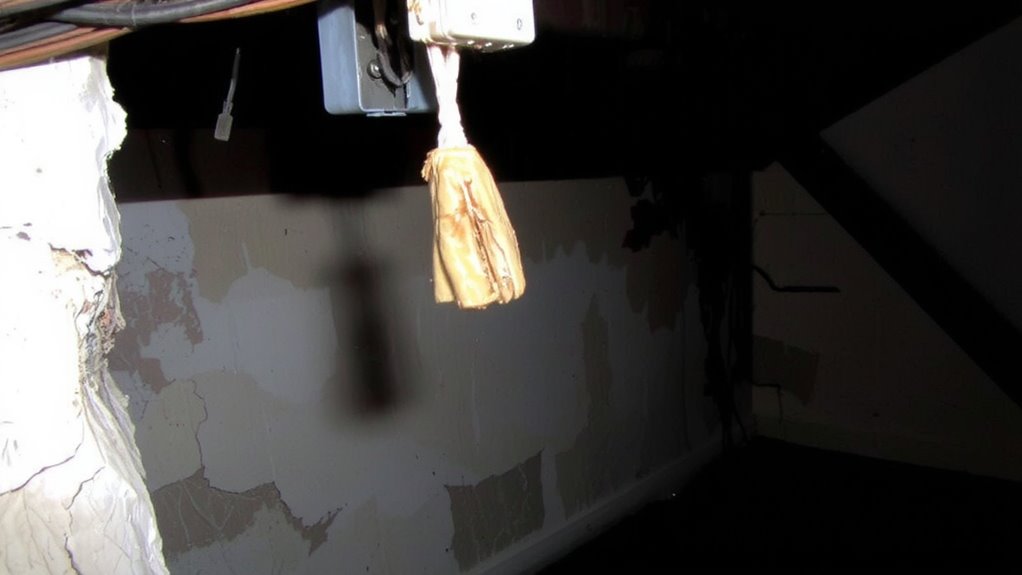
While floodwater may recede quickly, the damage it leaves behind in your home’s wiring often stays hidden until it causes a bigger problem. You should check baseboards and outlets for water stains, which signal moisture exposure that can compromise wire insulation. Corrosion spots on electrical panels or outlet screws are red flags-they mean metal components have begun deteriorating. Discoloration or a powdery residue around connections usually points to long-term oxidation. These signs don’t always mean immediate failure, but they reduce system reliability. Wires with damaged sheathing or stiff, brittle insulation are unsafe. You can’t assume appearance equals function; internal conductor damage isn’t always visible. Yet, when water stains and corrosion spots are present, the risk of short circuits or fire increases measurably. Ignoring these indicators skews safety margins. Early identification helps determine whether repair or full replacement is needed.
Inspect Flood-Damaged Wiring Safely
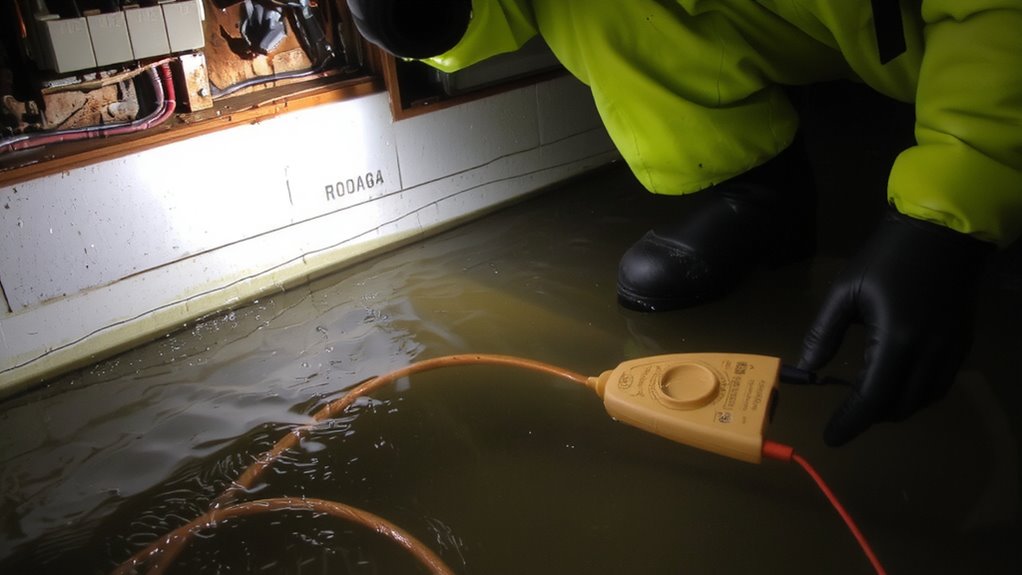
How do you know if your wiring’s still safe after floodwaters recede? You start by turning off the power-no exceptions. With the electricity off, check for visible water corrosion on wires and connectors. Corrosion weakens conductivity and increases fire risk. Look closely at insulation; if it’s cracked, brittle, or swollen, you’re dealing with insulation degradation. This kind of damage reduces the wire’s ability to contain current and raises shock hazards. Use a multimeter to test continuity and resistance only if the system is verified de-energized. Never touch wiring with wet hands or stand on damp flooring. Damage isn’t always obvious-surface grime might hide compromised sheathing. Moisture can wick up conduits, affecting areas above the waterline. Even if wires look intact, internal strands may have started corroding. Inspect each circuit systematically, but assume flood exposure has weakened performance. Safety isn’t guaranteed just because something still powers on.
Know When to Call an Electrician After Flooding
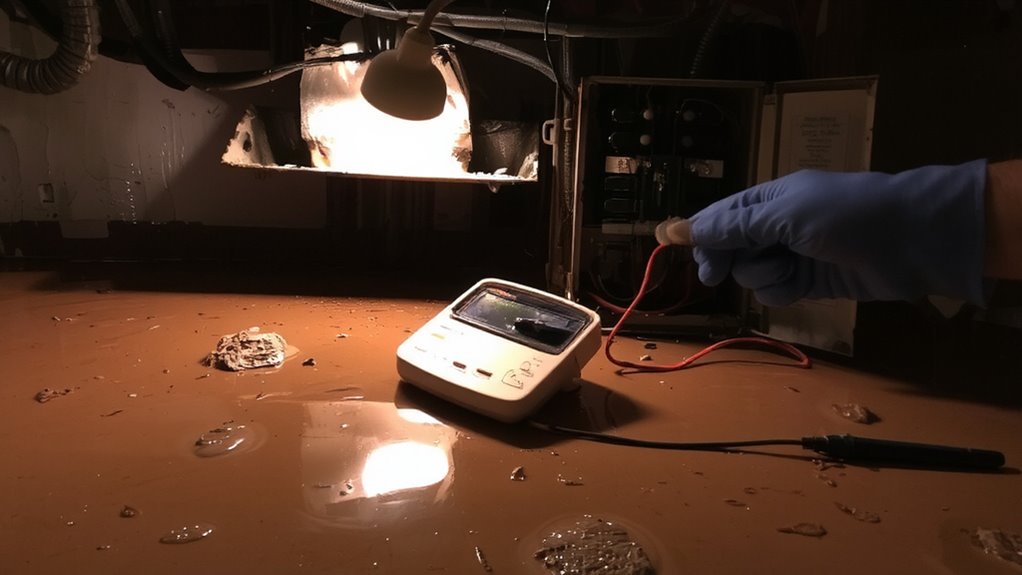
You’ve turned off the power and inspected what you can, but some risks aren’t something you can fix with a multimeter or visual check. Hidden corrosion, degraded insulation, and compromised connections often lie behind walls or in panels. Only a licensed electrician with proper safety certifications can assess these hazards accurately. They’ll verify system integrity and guarantee compliance with local codes-critical for insurance claims and resale. Don’t assume dry equals safe; moisture damage lingers.
| Condition | Risk Level | Action Required |
|---|---|---|
| Discolored outlets | High | Professional inspection |
| Musty electrical smell | High | Immediate shutdown |
| GFCI won’t reset | Moderate | Electrician assessment |
| Water above outlets | High | Required for insurance claims |
| No visible damage | Low-Moderate | Certification recommended |
Delaying professional evaluation risks fire or shock-call an electrician before restoring power.
Replace Wiring That’s Been Compromised by Water
If the floodwaters reached your wiring, don’t count on drying it out to make it safe-water exposure compromises the insulation and conductor integrity, even if things look fine on the surface. Moisture leads to water corrosion on copper and aluminum wires, increasing resistance and creating hot spots over time. You can’t always see this damage, but it reduces conductivity and raises failure risk. Insulation degradation occurs when materials absorb moisture, making them brittle or conductive when they shouldn’t be. Once insulation breaks down, shorts and ground faults become likely, even at normal voltages. Wires below flood level, in walls, or under slabs are especially vulnerable. Testing won’t reliably catch hidden compromise. Because electrical safety depends on intact materials and proper insulation, replacement is the only sure solution. Don’t risk long-term hazards-replace any wiring exposed to floodwater.
Stop Electrical Fires in Flood-Damaged Homes
While the water may have receded, your home’s electrical system could still be primed for disaster because flood-damaged wiring increases fire risk even after everything appears dry. Ignoring electrical safety now could lead to catastrophic failure. For effective fire prevention, inspect all circuits and devices-even those that look fine. Corrosion and insulation breakdown may not be visible. Use this table to assess components:
| Component | Risk Level | Action |
|---|---|---|
| Outlets | High | Replace if near water source |
| Circuit breaker | Medium | Test operation; replace if tripping |
| Wiring insulation | High | Look for brittleness or cracking |
| Light fixtures | Medium | Check for moisture traces |
| GFCI outlets | Critical | Test monthly; replace post-flood |
Power should remain off until a licensed electrician clears the system. Cut corners now, and you risk fire later.
On a final note
You should replace flood-damaged wiring-it’s not worth the risk. Water corrodes conductors, reducing conductivity and increasing fire hazard. Visual signs like discoloration or stiffness mean it’s compromised. Even if it works now, long-term reliability drops. Safety codes require replacement in most cases. DIY inspection helps, but licensed electricians confirm what you can’t see. Cut corners here, and you gamble with safety. No product survives flooding unscathed. Replace it-your home depends on it.