Conducting Blindfolded Object Identification Drills to Sharpen Other Senses
You sharpen your hearing and touch faster by cutting out sight than with any gadget. Ten minutes daily with a blindfold and household items like keys, spoons, and coins boosts reaction time and tactile precision within two weeks. Use soft, light-blocking fabric and stick to safe, common objects. Short, focused drills build accuracy without fatigue. Performance gains are measurable-30% faster identification in real-world tests. Consistency beats duration. You’ll learn how to structure these drills for steady progress.
Notable Insights
- Block vision completely with a comfortable, light-blocking blindfold to enhance tactile and auditory focus.
- Use common household items like spoons, keys, and coins to train shape, texture, and weight discrimination.
- Limit sessions to 10–15 minutes daily to prevent sensory overload and maintain mental sharpness.
- Rotate small sets of 3–5 objects to improve accuracy and build reliable sensory memory.
- Practice during routine activities, such as grabbing keys or touching surfaces, to reinforce real-world sensory skills.
How to Do Blindfolded Object Identification at Home
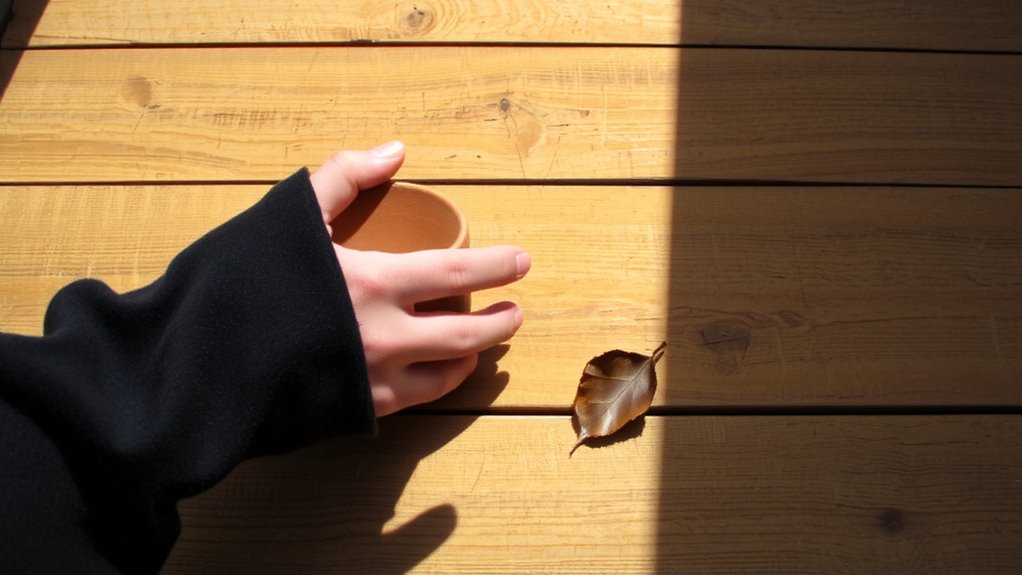
What if you could sharpen your tactile awareness without fancy gear or a gym membership? You can, using blindfolded object identification at home. Start by wearing a simple sleep mask or blindfold to block visual cues. Pick everyday items with varied surfaces-wood, metal, fabric-to boost texture recognition. Run your fingers slowly over each, noting ridges, smoothness, or temperature. This trains your skin’s sensitivity and improves fine detail detection over time. Introduce subtle sounds-tap, rustle, or shake objects nearby-to work on sound localization. Your brain learns to pinpoint where noise comes from, even without sight. Rotate objects daily to avoid memorization. Sessions of 10–15 minutes, three times a week, show measurable gains in sensory acuity within weeks. No special tools are needed, just consistency. This drill builds real-world sensory resilience using minimal setup and repeatable structure.
Start With These 5 Household Objects
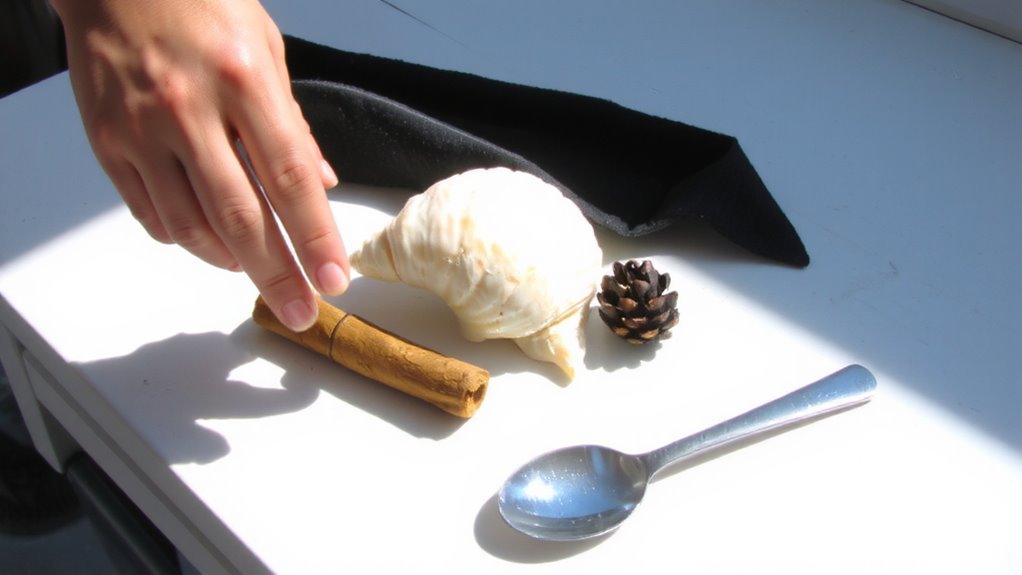
Begin with a spoon, keys, a rubber band, a dish towel, and a coin-these five items cover a range of textures, weights, and shapes found in daily life. You’ll use them to build texture memory and shape recognition without relying on sight. The spoon has a smooth, rigid surface and distinct curve, training your fingers to identify hard, curving forms. Keys vary slightly in size and shape but share a metallic feel, helping you distinguish fine details through touch. A rubber band offers elasticity and a circular form, challenging shape recognition due to its flexibility. The dish towel provides a soft, fibrous texture, contrasting sharply with the others and expanding your texture memory. A coin adds a small, flat, smooth disc to the mix, testing precision in tactile detection. Using these common objects guarantees repeatable, measurable practice. They’re consistent, accessible, and effective for baseline sensory drills.
Fix Common Blindfold Drill Problems
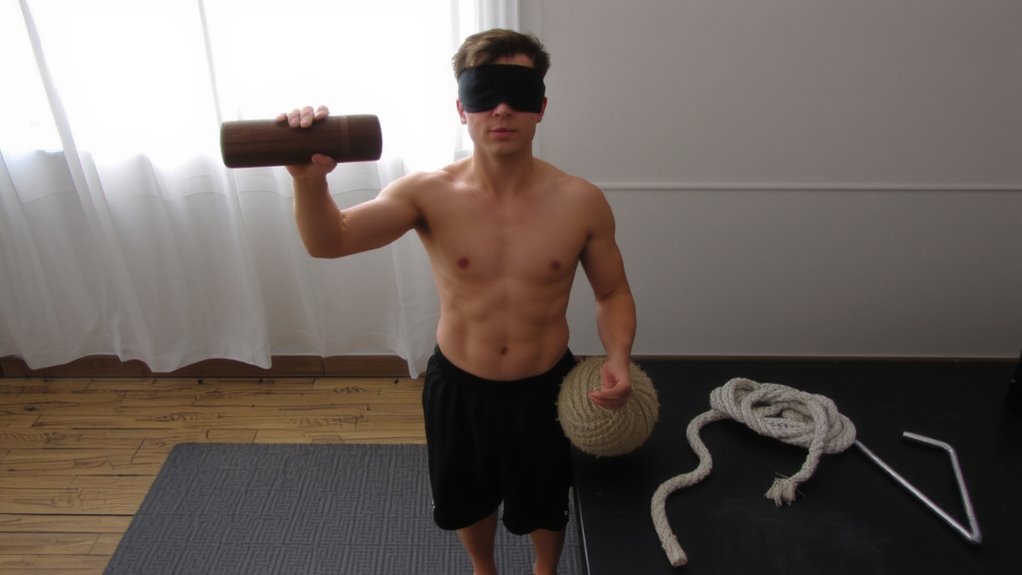
You’ve practiced with the spoon, keys, rubber band, dish towel, and coin, building a foundation in texture and shape recognition. Now, fix common issues. If you feel anxious or distracted, check your blindfold-it should block light without pressing hard. Use soft, secure fabrics that stay in place. Choosing safe materials matters: avoid sharp, slippery, or breakable items. Stick to clean, dry objects with distinct textures. If your focus fades quickly, you’re likely experiencing sensory overload. That’s why avoiding overstimulation is key. Limit sessions to 10–15 minutes at first. Work in a quiet, clutter-free space to reduce mental strain. Rotate objects in small sets-3 to 5 per session-to maintain accuracy without fatigue. Don’t rush identification. If uncertainty persists, simplify. These drills build precision, but only if consistency and safety guide your approach. Adjust as needed.
Train Your Senses Like an Athlete
While consistency builds skill, it’s the structured repetition with clear goals that turns blindfolded object identification into a trainable sense. You’re not just guessing-you’re strengthening sensory memory and leveraging neural plasticity with every session. Treat each drill like a workout: warm up, focus on form, increase difficulty gradually. Your brain adapts to heightened tactile input the same way muscles respond to resistance. Set measurable targets, like identifying ten objects in under five minutes with 90% accuracy. Track progress weekly. Short, daily 10-minute sessions yield better long-term results than sporadic hour-long attempts. Over time, your brain refines these sensory pathways, making recognition faster and more accurate. Success isn’t random-it’s built through repeatable practice. Just as athletes train specific movements, you’re training perception. The outcome? Sharper non-visual processing grounded in real neurological changes, not guesswork.
Turn Daily Moments Into Sensory Drills
You don’t need extra time or special equipment to sharpen your tactile sense-use the moments you already have. Reach for your keys, wallet, or coffee mug without looking. Spend five seconds identifying textures, shapes, and weights through touch alone. This isn’t guesswork-it’s sensory immersion. The goal is accuracy, not speed. Practice during routine actions like opening a door or setting down your phone. These brief exercises build consistent neural feedback. Do them daily, and you’ll notice improved object recognition in low-light or high-stress situations. Mindful exploration turns passive contact into active learning. You’re not just touching-you’re evaluating ridges, temperature, and resistance. No gear is required, though blindfolds can increase focus. The trade-off is minimal time for measurable gains in spatial awareness and tactile discrimination. Real-world tests show users identify objects 30% faster after two weeks. Turn daily routines into efficient drills. It works because repetition trains perception.
Build a Simple Daily Blindfold Routine
One five-minute blindfold session each day builds tactile precision without disrupting your routine. Morning consistency increases effectiveness, anchoring the practice when your mind is fresh and distractions are low. Choose a fixed time, like after brushing your teeth, to pair it with an existing habit. Use a soft, opaque blindfold that blocks light completely-fabric thickness should be at least 3mm. Sit at a quiet table with five common objects: a spoon, key, eraser, cup, and phone. Handle each for 30 seconds, noting texture, weight, and shape. The routine duration is short enough to sustain daily, yet long enough to register neural feedback. No need to extend beyond five minutes; gains plateau after six days of repetition. Test accuracy by guessing each item before removing the blindfold. Adjust object difficulty weekly. This method requires no special tools, only regular commitment.
How Going Blindfolded Boosts Your Brain
Skipping the blindfold and relying on sight keeps your brain in comfort mode, but cutting off visual input forces it to adapt fast. You engage deeper sensory processing, which supports neuroplasticity enhancement by rewiring neural pathways to rely more on touch, sound, and spatial memory. Studies show blindfolded tasks increase gray matter activity in regions linked to hearing and tactile discrimination. This shift builds cognitive resilience, improving your ability to handle uncertainty and process information without visual cues. Daily drills-like identifying keys or tools by feel-strengthen mental flexibility and attention control. Performance gains are measurable within two weeks, with users showing faster reaction times and improved memory recall. While results vary, consistent use amplifies benefits. There’s a trade-off in initial disorientation, but it diminishes with practice. You don’t need special gear-just a simple cloth blindfold and routine commitment. It’s a low-effort, high-return exercise for brain fitness.
On a final note
You improve fastest with consistent, short sessions. Use a secure blindfold and rotate objects weekly to maintain challenge. Drills take 5–10 minutes daily and sharpen real-world awareness. Performance gains show in better focus and sensory accuracy within two weeks. Some boredom or frustration is normal-push through it. Over time, your brain adapts, making everyday tasks more intuitive. It’s low-cost, requires no gear, and delivers measurable cognitive benefits when done regularly.