Methods for Extending Shelf Life of Foraged Foods Without Refrigeration
You can extend shelf life by sun-drying herbs and berries in hot, dry conditions, or air-curing greens in shaded, ventilated areas. Ferment wild plants in a 3–5% brine, keeping them submerged to prevent spoilage. Preserve berries with sugar or honey in sealed jars for up to a year. Salt or smoke mushrooms to inhibit mold and last months. Store roots in cool, humid sand-filled containers. Packaged correctly, these methods keep foraged foods safe and nutritious-each with clear trade-offs in time, effort, and storage needs. You’ll find better results by matching technique to food type.
Notable Insights
- Sun and air drying effectively preserves herbs, fruits, and berries in hot, dry climates with low humidity.
- Ferment wild greens in a 3–5% brine, keeping them submerged to prevent spoilage and encourage beneficial bacteria.
- Preserve berries by mixing with sugar or honey in sealed containers, stored in cool, dark locations for up to a year.
- Extend mushroom shelf life by salt-curing in jars or smoke-drying to reduce moisture and inhibit microbial growth.
- Store foraged roots in sand-packed boxes in cool, humid environments to maintain freshness without refrigeration.
Preserve Foraged Foods by Drying in Sun or Air
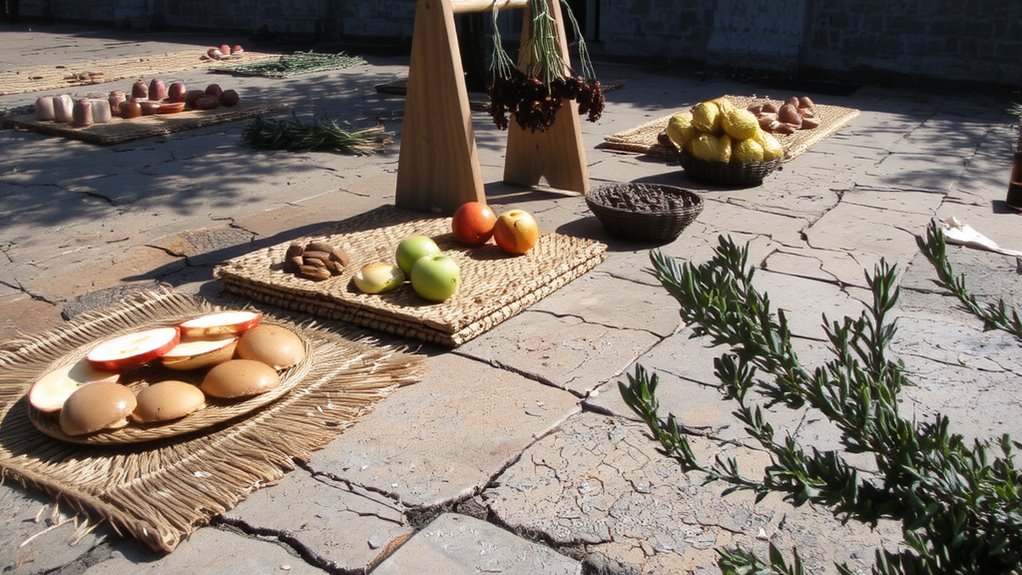
Sunlight and airflow are your most accessible tools for drying foraged foods. You can rely on sun drying to reduce moisture in herbs, berries, and thin-skinned fruits, but it works best in hot, dry climates with low humidity-typically above 85°F and below 60% RH. Expect drying times between 1 and 3 days, depending on thickness and placement. Sun drying lacks precise control, increasing mold risk if food isn’t turned frequently. For more consistent results, air curing in shaded, well-ventilated spaces reduces spoilage while preserving texture. Air curing suits mushrooms, roots, and leafy shoots, requiring 3 to 7 days. You’ll need mesh racks or breathable bags to maximize airflow and prevent contamination. Neither method uses energy, but both demand monitoring. Sun drying is faster; air curing offers more reliability in variable weather. Choose based on your climate and available space.
Ferment Wild Greens and Vegetables Safely
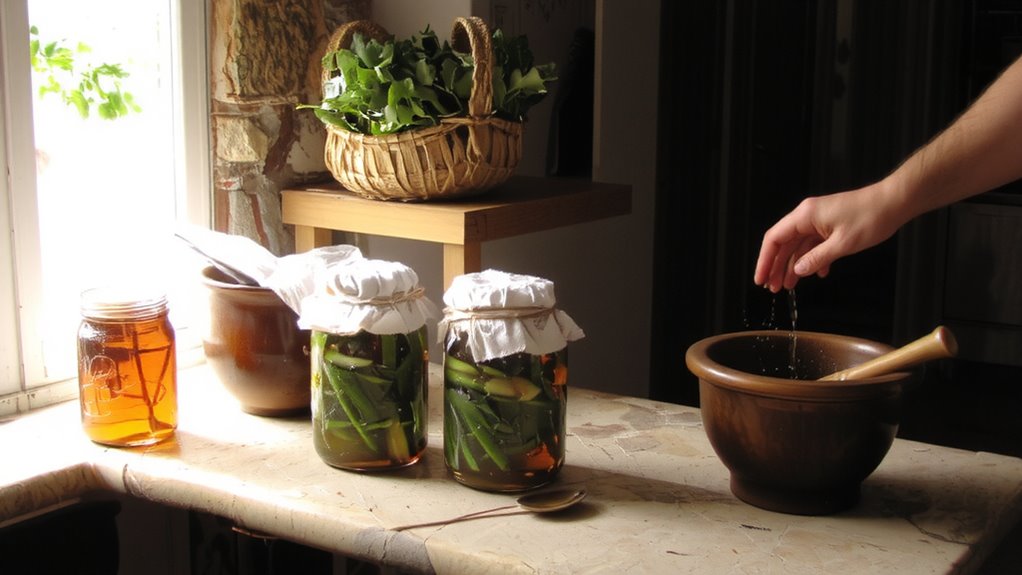
While you can preserve wild greens and vegetables through drying, fermenting them extends shelf life more effectively in warm conditions without needing refrigeration. Proper wild green selection is critical-only use fresh, blemish-free plants you’ve correctly identified. Avoid wilted or flowering specimens, as they may harbor toxins or spoil quickly. Fermentation safety depends on cleanliness, salt ratio, and submersion. Use a 3–5% brine to inhibit harmful bacteria while encouraging lactobacilli. Always weigh down vegetables to keep them below the brine line and prevent mold.
| Stage | Visual Cue |
|---|---|
| Day 1–2 | Bubbles begin |
| Day 3–5 | Cloudy brine, sour smell |
| Day 6–7 | Tangy taste, firm texture |
| Week 2 | Deep sour, still crisp |
| Spoilage | Fuzz, putrid odor |
Discard batches with mold or foul odors.
Preserve Berries With Sugar or Honey
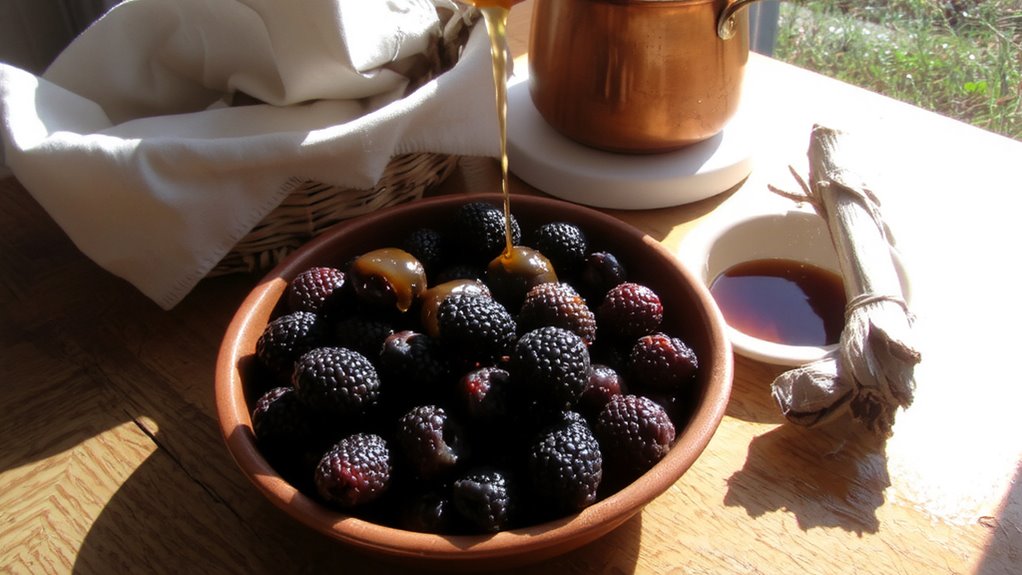
You can preserve foraged berries without refrigeration by using sugar or honey to inhibit microbial growth and lock in shelf life. Sugar balance is critical-use a 1:1 ratio of crushed berries to sugar to draw out moisture and create an environment too hostile for spoilage organisms. Pack layers tightly in sterilized jars, pressing down to release juices, then seal with wax paper if needed. Stored in a cool, dark place, these preserves last up to a year. For a natural alternative, try honey infusion: mix mashed berries with raw honey at a 3:1 ratio (berries to honey), ensuring full coverage. Honey’s low moisture and antibacterial properties prevent mold. Check seals periodically and discard if fermentation or cloudiness occurs. Both methods retain flavor and energy density effectively, though sugar offers longer stability while honey infusion adds antimicrobial benefits. Neither requires cooking, preserving more nutrients.
Preserve Wild Mushrooms Using Salt or Smoke
When properly preserved, wild mushrooms can last for months without refrigeration, and salt or smoke are two of the most effective methods to achieve that. Salt curing draws out moisture and inhibits microbial growth-layer clean, sliced mushrooms with coarse salt in a sterilized jar, press down, and store in a cool, dry place. They’ll keep for up to six months, though you’ll need to rinse them before use. Smoke drying works well for firmer varieties like porcini; slow, low-temperature smoke removes water while adding mild preservation compounds. Use a smokehouse or stovetop smoker, aiming for internal moisture below 10%. Rehydrate smoked mushrooms in warm water before cooking. Both methods reduce spoilage risk, but salt curing requires no fuel or special equipment, while smoke drying adds flavor and saves space. Choose based on your storage conditions and intended use.
Store Foraged Roots Without Refrigeration
Salt and smoke work well for mushrooms, but foraged roots need a different approach to stay usable without refrigeration. Root cellaring is your best option-it keeps temperatures cool and humidity high, which roots like. If you don’t have a cellar, use a buried container or shaded pit. Clean the roots, but don’t wash off all the dirt-damaged or wet ones rot faster. Remove any soft spots before storing. Sand packing helps by reducing contact between roots and maintaining moisture. Layer roots in a wooden box with damp sand between them-don’t let them touch. Check every few weeks and remove anything starting to spoil. This method keeps potatoes, carrots, and turnips firm for months. Root cellaring with sand packing works reliably as long as temperature stays between 32–40°F and humidity stays above 90%. It’s low-tech, effective, and requires no energy input.
Preserve Herbs in Animal Fat for Long-Term Use
A jar of herbs sealed in animal fat keeps flavor and potency for months without refrigeration. This fat infusion method works by depriving herbs of oxygen, slowing spoilage. You can use tallow, lard, or duck fat-just melt, pour over herbs, and let it set. It’s a reliable form of herb curing, especially for rosemary, thyme, sage, garlic chives, and oregano. Store in a cool, dark place. Check for rancidity periodically; a slight smell means it’s still usable, but discard if mold appears.
| Herb | Best Fat Pairing |
|---|---|
| Rosemary | Beef tallow |
| Thyme | Pork lard |
| Sage | Duck fat |
| Garlic chives | Chicken schmaltz |
| Oregano | Lamb fat |
Fat infusion is simple but effective-no energy, no waste. Just guarantee jars are clean and herbs are dry before curing.
On a final note
You can keep foraged foods safe and edible for weeks or months using simple methods. Drying, fermenting, salting, and fat-storing all work without refrigeration. Each has limits: drying fails in humidity, fermentation needs clean containers, salt draws moisture but adds sodium. You trade flavor, texture, or prep time for shelf life. Test each method in small batches first. Choose based on your climate, storage space, and intended use. These techniques won’t last forever, but they extend usability reliably when done right.