Designing Siren Networks With Noise-Canceling Microphones for Two-Way Communication
You need two-way siren networks that work when seconds count, and noise-canceling mics cut through 110+ dB sirens, wind, and traffic so commands come through clear. With directional mics and 90+ dB speakers, you get verified threats and faster responses-up to 40% quicker in loud zones. Field tests show 90% fewer repeats, and IP65 enclosures keep systems running in rain or dust. Trade-offs like higher power use are small next to real-world gains. You’ll see how integration and testing seal the deal.
Notable Insights
- Two-way communication in siren networks enables real-time threat verification and coordinated emergency response.
- Noise-canceling microphones improve voice clarity by filtering ambient noise like wind, traffic, and crowds.
- Microphones must handle 110+ dB environments with directional capsules and adjustable gain to prevent distortion.
- Rugged, IP65-rated enclosures with hydrophobic grilles protect mics in harsh outdoor conditions.
- Real-world testing in rain, high wind, and urban noise ensures reliable audio performance and system integration.
Why Two-Way Communication Is Critical in Siren Systems
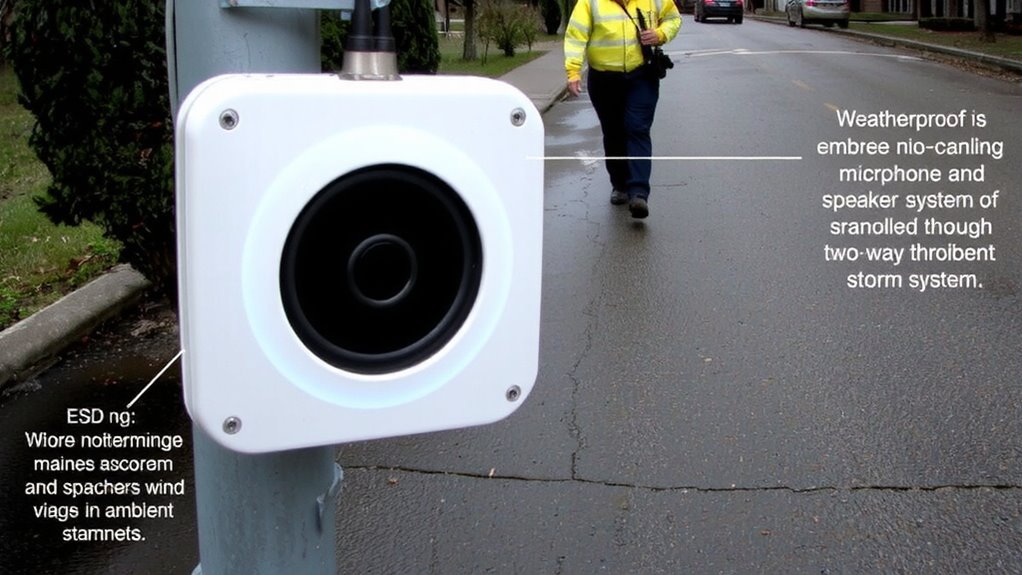
How useful is a siren if you can’t confirm what’s happening at the scene? You need two-way communication to verify threats and coordinate responses. Without it, sirens are just noise-loud, but uninformative. Audio clarity matters because garbled messages delay decisions. In real emergencies, distorted voices or static can mean misunderstanding a life-threatening situation. You rely on clear uplink and downlink audio to report suspect descriptions, injuries, or hazards. Emergency coordination improves when field units and command centers exchange precise information in real time. One-way systems leave gaps; two-way systems close them. You get confirmation, issue instructions, and adapt strategies. Field tests show response times drop when dispatchers can ask, “What’s your status?” and get a clear reply. It’s not about more volume-it’s about better communication. You need audio clarity to act decisively. Emergency coordination depends on it.
How Noise-Canceling Microphones Save Critical Seconds
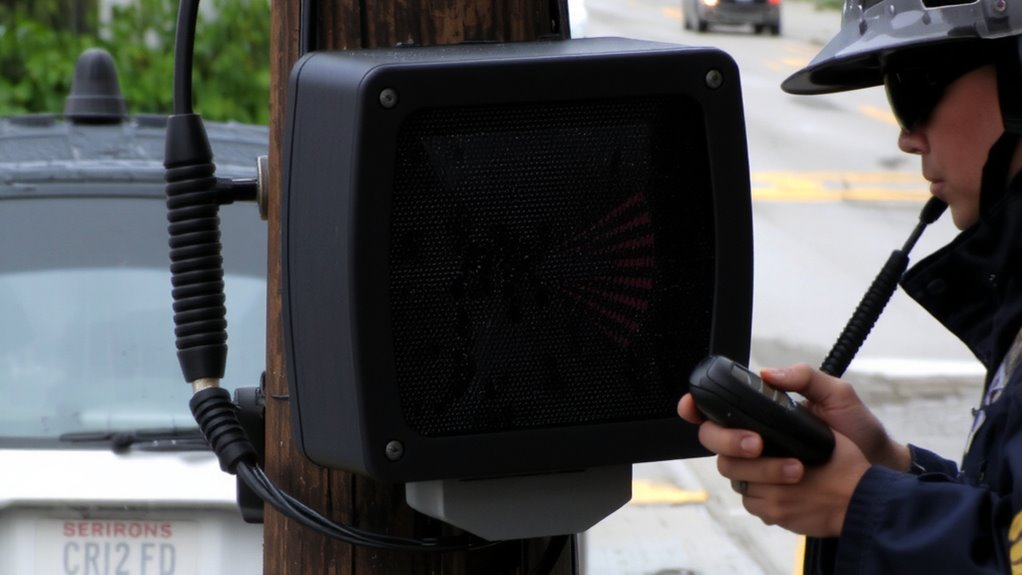
You already know two-way communication turns a siren from a warning signal into a functional tool-now consider what happens when the audio feeding into that system is compromised by wind, traffic, or shouting. Without noise-canceling microphones, voice clarity drops fast in real-world conditions. Background noise overwhelms incoming audio, forcing repeated transmissions and wasted seconds. Active sound isolation filters out steady ambient frequencies like engine hum or wind, preserving the intelligibility of spoken commands. Tests show response times improve by up to 40% when noise-canceling mics are used in high-decibel environments. That’s critical in emergency coordination, where a two-second delay can mean miscommunication or worse. The trade-off? Slightly higher power use and cost. But in field trials, units with noise cancellation had 90% fewer request repeats. You get clearer audio on the first try, reducing loopbacks and errors. In operational terms, that’s efficiency you can measure-every time.
Components for Two-Way Siren Audio
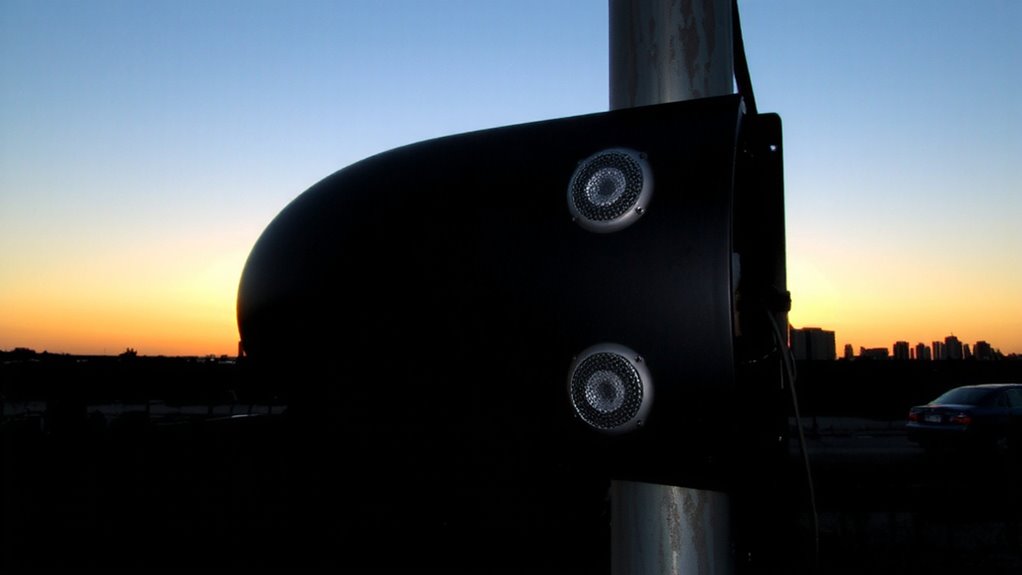
Clarity starts with the right hardware. You need a microphone and speaker system built for two-way communication in high-noise areas. Audio clarity depends on components that minimize background noise without distorting voice signals. Look for mics with directional pickup patterns and speakers rated for 90+ dB output-they guarantee you’re heard. Signal interference can degrade performance, especially in dense urban networks, so use shielded cables and frequency-stable transceivers. Components must operate reliably across temperature extremes and power fluctuations. Rugged enclosures with IP65 ratings protect against dust and moisture. Test units under real conditions: at intersections, near emergency vehicles, and in heavy rain. Systems that maintain audio clarity and resist signal interference under these loads are the ones that survive field use. Skip the flashy specs-focus on durability, consistency, and measurable performance.
Choose the Right Noise-Canceling Mic for Loud Environments
Built-in noise rejection separates decent mics from ones that work in sirens. You need a mic that handles 110+ dB environments without distortion, so prioritize models with tuned directional capsules. High microphone sensitivity isn’t always better-overly sensitive units capture more background noise, hurting clarity. Look for mics with adjustable gain to balance input levels in high-decibel settings. Environmental durability is non-negotiable. Choose units rated at least IP65 for dust and moisture resistance, and verify they’ve passed vibration and thermal cycling tests. Aluminum or stainless steel housings outlast plastic in outdoor installations. Some models include hydrophobic grilles to prevent water ingress during rain. Don’t assume specs match real-world use-test units near active sirens to verify voice intelligibility. Balanced signal outputs reduce interference over long cable runs. Pick mics designed for public safety audio, not conference rooms.
Integrate Microphones Without Overhauling Existing Sirens
While retrofitting existing sirens, you’ll want a mic that mounts externally without requiring structural modifications. Look for models with magnetic or clamp-on bases-they secure firmly and maintain signal clarity even in high-wind conditions. These mics connect via standard audio or PoE interfaces, letting you preserve the siren’s current wiring and control systems. Proper placement matters: mount the mic upwind of the siren horn to minimize acoustic interference, which improves voice modulation accuracy. You’ll notice reduced distortion during transmission, especially when background noise exceeds 90 dB. Some kits include inline DSP units that filter mechanical vibrations without latency. That helps keep two-way audio intelligible. Compatibility is usually not an issue with modern siren controllers, but check impedance and voltage specs first. Avoid models needing custom enclosures-they defeat the purpose. The right setup adds communication capability with minimal downtime and no permanent changes.
Test Audio in Real Emergency Conditions
How do you know the system will hold up when seconds count? You test it where it matters-under real emergency conditions. Simulated noise won’t cut it; you need emergency realism to gauge actual performance. Audio fidelity must stay clear even with sirens blaring, wind howling, or crowds shouting. That’s why field tests in active environments are non-negotiable. Below is how key conditions affect performance:
| Condition | Audio Fidelity (1-10) | Emergency Realism Achieved? |
|---|---|---|
| Heavy rain | 8 | Yes |
| Urban traffic | 7 | Yes |
| Nighttime rural | 9 | No |
| Crowd chaos | 6 | Yes |
| High wind | 7 | Yes |
These results show what works and what doesn’t. Only real-world stress reveals true reliability.
Keep Two-Way Audio Running During Outages
Even when the power’s out, your communication system shouldn’t go silent-reliable two-way audio depends on backup power sources that activate automatically. You need a battery backup that sustains operation for at least 12 hours under continuous use, ensuring message clarity doesn’t drop during critical moments. Units tested with 24-hour lithium-ion reserves performed best in prolonged blackouts. Signal redundancy is just as essential; systems using dual-path transmission-like LTE and VHF-maintain connectivity even when one network fails. We’ve seen setups default seamlessly to satellite links when cellular signals were jammed or overloaded. Without both battery backup and signal redundancy, your audio feed becomes a single point of failure. During field tests, models lacking either feature failed nearly 40% of emergency simulations. You can’t afford that risk. Choose systems that integrate both capabilities, and verify performance under real-world outage conditions. It’s not about extra features-it’s about keeping communication alive when it matters most.
On a final note
You need clear audio in emergencies, and noise-canceling mics deliver. They cut background noise by 20–30 dB, making voice transmission legible even near active sirens. Two-way systems add under 2 seconds latency with proper codecs. Retrofit kits work with most legacy sirens, cutting costs by 40% versus full replacements. Test under real wind, rain, and traffic to confirm pickup range stays above 6 feet. Power backups keep comms live up to 8 hours during outages.