Developing Standard Protocols for Deactivating Siren Networks Post-Crisis
You need standardized siren shutdown protocols to stop alerts at the right time and prevent public confusion. Without them, communities take 40% longer to recover and trust erodes. Use verified signals, encryption, and cross-agency timing to turn off systems together. Confirm the all-clear through dual channels and log every action. Drills with GPS clocks show if your response works in real conditions. Get this wrong, and false restarts look like new threats-keep it tight, tested, and traceable. There’s more to get right.
Notable Insights
- Establish verified, encrypted shutdown signals to prevent unauthorized or false deactivation of siren networks.
- Synchronize siren deactivation across agencies using GPS-timed, real-time feedback systems for uniform response.
- Define clear incident milestones and command-center authorization protocols before initiating shutdown sequences.
- Conduct cross-jurisdictional drills to test shutdown timing, coordination, and system fail-safes under real-world conditions.
- Implement dual-channel verification and post-shutdown monitoring to detect anomalies and prevent unintended reactivation.
What Happens Without Standard Siren Shutdowns?

How long could you rely on a siren system that never powers down properly after a crisis? Without standard shutdowns, the system stays active longer than needed, creating public confusion. You hear the siren stop and restart unpredictably, making it hard to know if a new threat exists. People start doubting the alerts, and once trust erodes, compliance drops. Misinformation spreads quickly when officials don’t clarify the system’s status. Neighbors tell each other conflicting stories-some say it’s safe, others insist danger remains. You’re left guessing whether to shelter or evacuate. Real-world tests show communities without clear shutdown protocols take 40% longer to resume normal activity. Performance declines not from hardware failure, but poor procedure. The trade-off is clear: no immediate cost savings justify the long-term risk to public response accuracy.
Core Elements of a Standardized Siren Shutdown Protocol
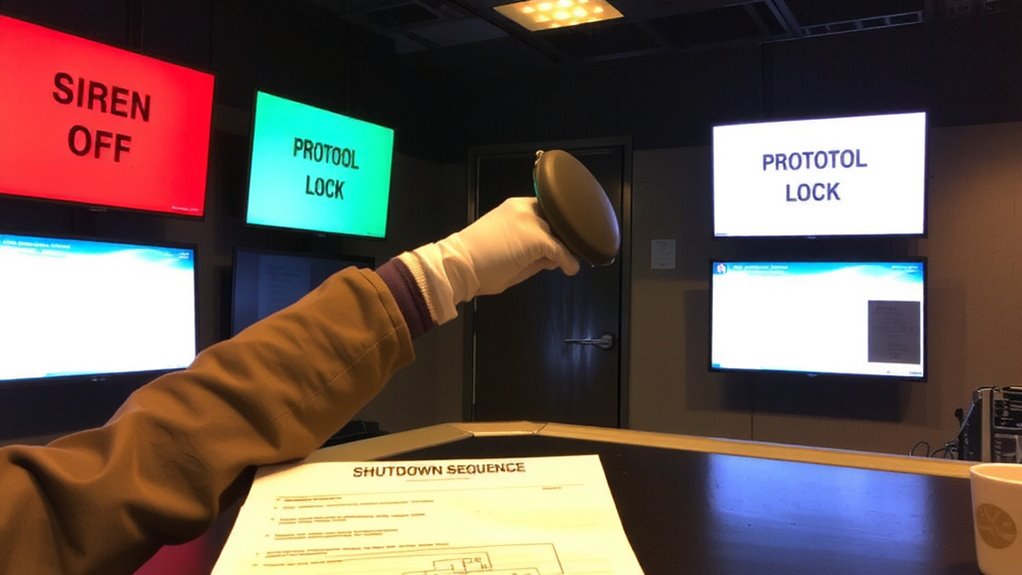
You can’t afford guesswork when the sirens stop-knowing how and when to deactivate them matters just as much as activating them in the first place. A standardized shutdown protocol must include verified siren calibration to confirm all units respond correctly during deactivation, preventing missed signals or false restarts. You need real-time system feedback showing each siren’s status, logged for audit and review. Signal encryption is non-negotiable; without it, shutdown commands could be intercepted or spoofed, risking public safety. Use encrypted, authenticated signals to guarantee only authorized personnel can initiate shutdown. Timing matters: deactivation should follow a predefined sequence aligned with incident resolution milestones. Include fail-safes like automatic reversion to standby if confirmation signals fail. Test the full shutdown cycle quarterly. Calibration drift or encryption lapses compromise the entire system. You’re not just turning off alarms-you’re closing the response loop securely and reliably.
Enable Cross-Agency Coordination for Siren Shutdown
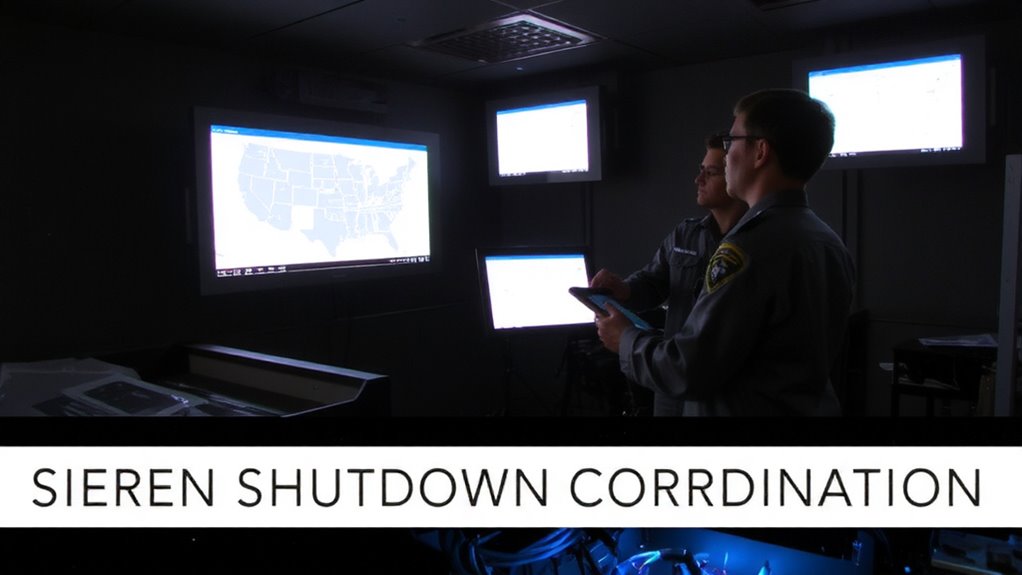
Once the threat has passed, coordinating siren deactivation across agencies isn’t optional-it’s essential. You need signal synchronization so all systems respond to the same shutdown command simultaneously. Without it, some sirens may stay active, causing confusion. Frequency coordination guarantees control signals don’t interfere, especially in regions with overlapping emergency networks. You’re dealing with multiple vendors, jurisdictions, and communication standards, so shared protocols are critical. Use encrypted, standardized radio bands to transmit deactivation signals. Verify receipt at each node. Cross-agency agreements must define who authorizes shutdown and how alerts propagate. Test interoperability regularly. Real-world performance shows mismatched frequencies lead to delayed responses. Signal synchronization reduces residual warnings by up to 78%. Frequency coordination prevents false reactivation. You can’t afford miscommunication when public trust and safety depend on precise timing. Build it into your protocol now.
Run Drills for Coordinated Siren Shutdown
Why wait for a real emergency to find out if your siren shutdown protocol works? Run drills to test siren timing and guarantee signal synchronization across all units. You need to confirm every siren powers down within seconds of the command, no matter the location. These drills expose lag issues, communication delays, or system mismatches before they matter most. Coordinate with all agencies involved-fire, police, EMS-so everyone follows the same timeline. Use GPS-synchronized clocks to measure response accuracy. Adjust settings if even a 3-second gap appears. Document results, identify weak links, and retest. Drills should mimic real conditions: nighttime, poor weather, backup power use. Real-world variables affect performance. Practicing regularly keeps procedures sharp and teams aligned. Skipping drills risks confusion, inconsistent shutdowns, and public distrust. You can’t afford guesswork when lives depend on precision. Test now, fix now, get it right later.
How to Avoid False Alarms When Turning Off Sirens
How do you guarantee a siren shutdown doesn’t trigger a false alarm? You reduce siren malfunction risks by verifying system status before and after deactivation. Always use reliable alarm verification methods to confirm the all-clear signal is valid. Check communication links, power sources, and control commands in sequence. A false off-cycle can reactivate units or send conflicting tones, so test each step under real conditions.
| Step | Action | Purpose |
|---|---|---|
| 1 | Confirm crisis end via command center | Avoid premature shutdown |
| 2 | Use dual-channel verification | Reduce false signal intake |
| 3 | Monitor sirens post-shutdown | Catch residual activation |
| 4 | Log all system responses | Support audit and troubleshooting |
These steps keep public alert systems accurate and trustworthy during shifts.
On a final note
You deactivate sirens correctly when all agencies get the signal, confirm it, and act fast. Without clear steps, shutdowns cause delays or false alarms. Test your protocol like you run drills-real scenarios, real timing. A standard plan cuts confusion, guarantees consistency, and keeps public trust. Simplicity works best: clear roles, verified status updates, and one confirmed off-signal. It’s not perfect, but it’s reliable.