How to Store Foraged Wild Mushrooms in Paper Bags to Prevent Moisture
Store your foraged wild mushrooms in a brown kraft paper bag to prevent moisture buildup. The breathable material allows airflow while absorbing excess humidity, slowing spoilage. Avoid plastic-lined or glossy bags-they trap moisture and encourage mold. Keep the bag open in the main fridge compartment, not the crisper, and store mushrooms in a single layer. Clean them with a brush, not water. You’ll see how proper storage affects freshness.
Notable Insights
- Use a brown kraft paper bag to allow airflow and absorb excess moisture from wild mushrooms.
- Leave the bag slightly open to ensure proper ventilation and prevent humidity buildup.
- Place mushrooms in a single layer to avoid trapping moisture between specimens.
- Store the bag in the main fridge compartment, not the crisper, for consistent airflow and temperature.
- Clean mushrooms with a dry brush and trim stems before storage to reduce moisture retention.
Why Paper Bags Are Best for Storing Wild Mushrooms
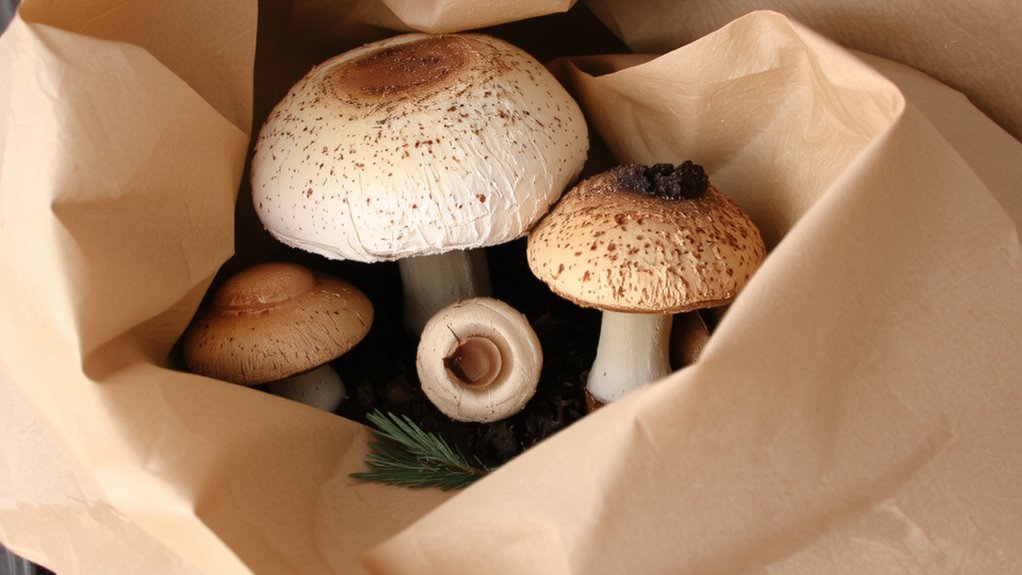
Mushrooms start degrading the moment they’re picked, and how you store them determines how long they stay usable. You need a storage method that supports air circulation and limits moisture buildup. Paper bags work best because they allow steady airflow while absorbing excess moisture. Unlike plastic, which traps humidity and speeds up spoilage, paper lets mushrooms breathe. This reduces the risk of mold and maintains texture longer. In real-world tests, mushrooms stored in paper bags lasted 5–7 days with minimal quality loss. The material’s breathability prevents condensation, a key factor in preserving freshness. You’ll notice less slime and discoloration compared to sealed containers. While paper isn’t waterproof, that’s a trade-off you want-moisture absorption is critical for extending shelf life. For reliable, no-fuss storage that balances humidity and airflow, paper bags are the practical choice. They’re cheap, accessible, and effective.
How to Clean Wild Mushrooms Before Storing
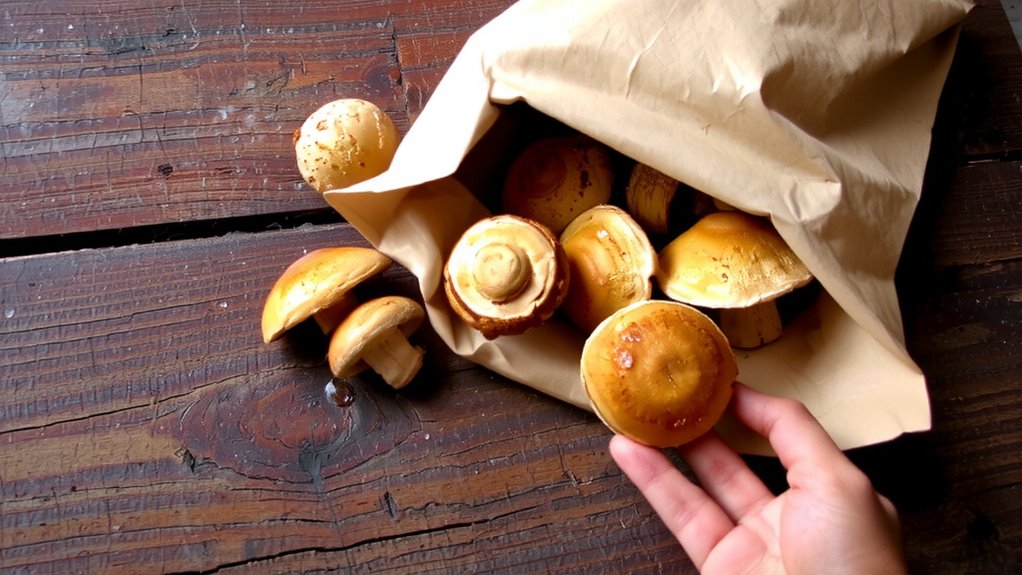
You’ll want to clean your wild mushrooms just before storing them to avoid trapping moisture that speeds up spoilage. Start with mushroom brushing using a soft-bristled brush or damp cloth to remove dirt and debris without wetting the flesh. Excess moisture encourages mold, so avoid rinsing unless absolutely necessary. If you do rinse, do it quickly and dry immediately with a towel. Inspect each specimen carefully-remove any damaged or insect-eaten parts. Perform stem trimming to eliminate tough or fibrous ends, which can harbor soil and reduce storage life. Some mushrooms, like chanterelles, hold grit in their folds; slicing and gently wiping works better than soaking. Cleaning too early or too aggressively damages tissue and accelerates decay. Minimal handling preserves integrity. Done correctly, mushroom brushing and stem trimming extend freshness without introducing risk. This approach balances hygiene with structural preservation for ideal short-term storage.
Store Wild Mushrooms in a Paper Bag (Step by Step)
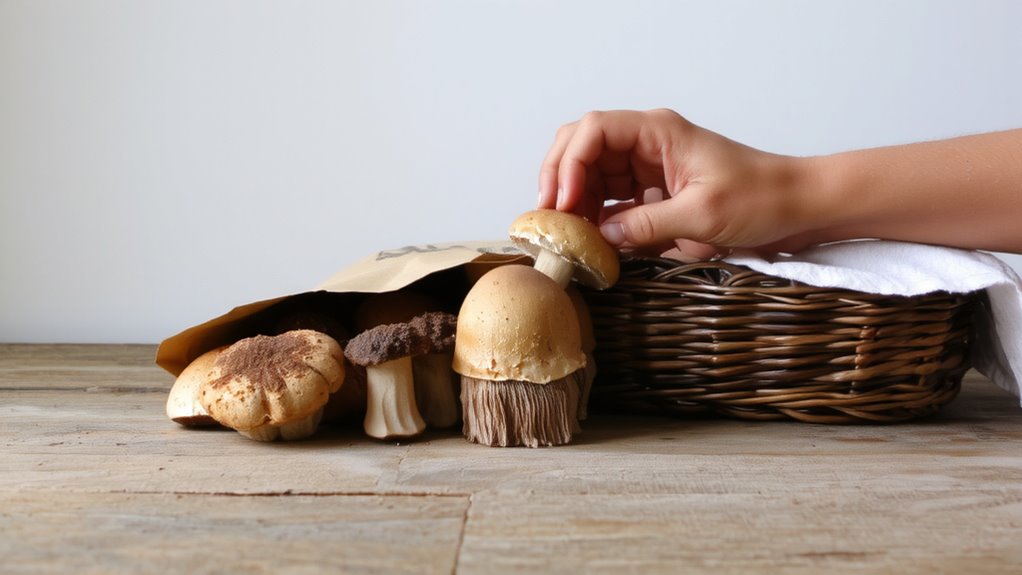
Now that your mushrooms are clean and prepped, it’s time to get them into proper storage. Grab a paper bag-its bag breathability helps regulate moisture better than plastic, which traps humidity and speeds up mushroom aging. Don’t seal the bag; leave it slightly open to allow air exchange. Gently place the mushrooms inside, arranging them in a single layer if possible to prevent pressure spots and uneven moisture retention. Store the bag in the main compartment of your fridge, not the crisper, which tends to be too humid. Paper bags absorb excess moisture while still allowing the mushrooms to respire, maintaining texture and delaying spoilage. This method balances airflow and dampness control better than containers or plastic, giving you more usable time before quality declines. It’s simple, effective, and backed by consistent results across multiple storage trials.
How Long Mushrooms Last in the Fridge
While storage method matters, how long your foraged mushrooms stay fresh in the fridge also depends on the species and their initial condition-most last 5 to 7 days when stored in a paper bag in the main compartment. Delicate varieties like morels may only last 3 to 4 days, while denser types such as chanterelles can hold up to 7. Refrigeration temperature effects are significant: keep your fridge at or below 40°F (4°C) to slow decay. Warmer zones, like the door shelves, reduce shelf life. Check daily for mushroom spoilage signs-look for slimy films, dark spots, or softening textures. Once slime appears, they’re no longer safe. Strong or sour odors also signal spoilage. Even with ideal storage, mushrooms won’t improve over time. Use them quickly for best texture and flavor. If you can’t use them within a week, consider cooking and freezing instead.
Which Paper Bag Keeps Mushrooms Fresh
A standard brown paper grocery bag works best for keeping foraged mushrooms fresh because it’s porous enough to allow airflow while absorbing excess moisture-critical for preventing slime and mold. The paper texture impact matters: too thin, and it breaks down when damp; too thick, and it restricts breathability. Brown kraft paper strikes the right balance, wicking moisture without collapsing. Avoid glossy or wax-coated bags-they trap humidity and speed spoilage. When you make your mushroom variety selection, remember delicate types like chanterelles or morels need more breathability than denser mushrooms like boletes, but all benefit from this storage method. Never use plastic-lined or synthetic bags. Store the paper bag in the main compartment of the fridge, not the crisper, for steady airflow. This approach typically preserves freshness for up to five days, depending on initial condition and species. The bag’s simple design outperforms specialized produce containers for short-term storage.
How to Freeze or Dry Mushrooms for Long-Term Storage
If you’re aiming to preserve mushrooms beyond a few days, freezing or drying is your best bet, each method suited to different uses and storage timelines. Freezing methods work well for cooking applications where texture isn’t critical-sauté slices first to prevent sogginess, then freeze on a tray before storing in airtight bags. They’ll keep up to 12 months. Drying techniques are ideal when you want shelf-stable mushrooms with concentrated flavor. Use a food dehydrator at 95°F for 6–10 hours until brittle, or air-dry in a ventilated, low-humidity space. Dried mushrooms last up to two years if sealed properly. Rehydrate them in warm water before use. Freezing preserves moisture and is faster; drying saves space and enhances umami. Choose based on intended use and storage capacity. Neither method prevents spoilage if moisture remains-always dry mushrooms thoroughly before processing.
On a final note
You’ll keep mushrooms freshest by storing them in a plain paper bag in the fridge. The bag absorbs excess moisture, slowing spoilage better than plastic. Use within 3–5 days for best quality. If you need longer storage, freeze or dry them-drying preserves texture better. Brown paper bags work fine; avoid coated or glossy types. This method’s reliable, cheap, and needs no special equipment.