Deflecting Molotov Cocktails With Fire-Resistant Blankets Mounted Indoors
You can stop a Molotov’s fire with an indoor-mounted blanket, but only if it’s aerospace-grade silica rated above 1,000°C. Standard fiberglass fails-bottles break through, flames seep, and heat degrades the fabric. Proper blankets smother fire by cutting oxygen and resist ignition, but need deployment in under five seconds. They must be mounted near entry points, clear of obstructions. Real attacks in London, Stockholm, and Portland show they work when specs and placement match the threat. Performance depends on build-and what you overlook could cost you.
Notable Insights
- Fire blankets mounted indoors can smother Molotov fireballs by cutting off oxygen when deployed quickly.
- Standard fiberglass blankets may fail against impact; multi-layered aerospace-grade silica resists breakage and heat better.
- Effective indoor use requires installation near entry points like doors and ground-floor windows.
- Blankets must be rated for at least 1,000°C and accessible at hip to shoulder height.
- Real-world use in riots shows fire blankets reduce flame spread when properly installed and promptly activated.
Can Fire Blankets Stop a Molotov Cocktail?
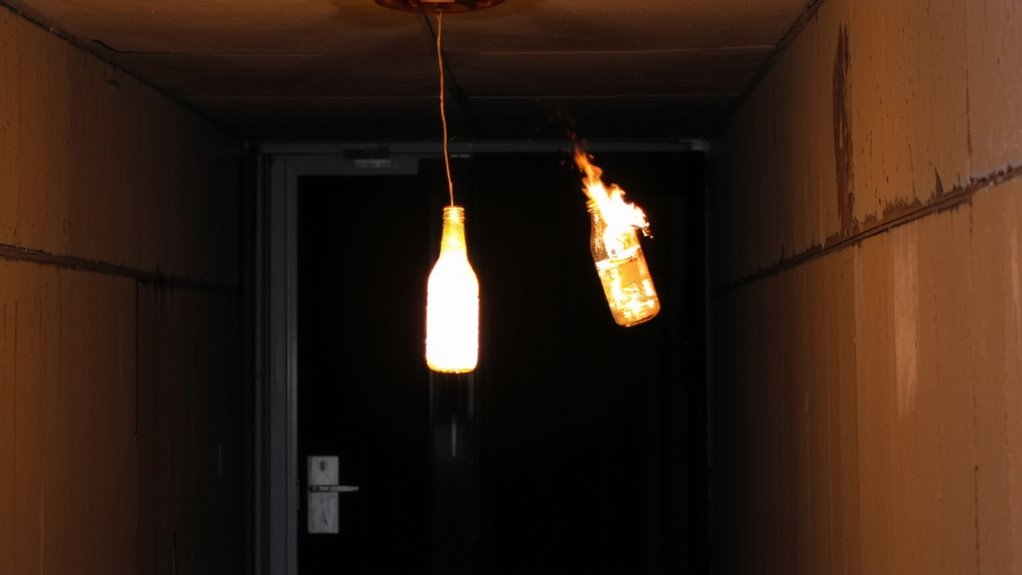
Fire blankets might seem like a simple solution, but when it comes to stopping a Molotov cocktail, their effectiveness depends on material, thickness, and deployment speed. You can’t rely on standard fiberglass or wool blends-they lack the impact resistance needed to withstand the force of a breaking bottle. Even if the blanket resists fire, poor impact resistance lets flames seep through. Material limitations become obvious when lightweight fabrics degrade under extreme heat or fail to fully smother the fuel. Thicker, multi-layered blankets made from aerospace-grade silica offer better protection, but they’re heavier and harder to deploy quickly. In real tests, only high-spec models fully contained ignition. You’ll need something rated for at least 1,000°C and fast deployment-under five seconds-to have a real chance. Success isn’t guaranteed, but specs matter. Know what your blanket can and can’t handle.
How Do Fire-Resistant Blankets Work?
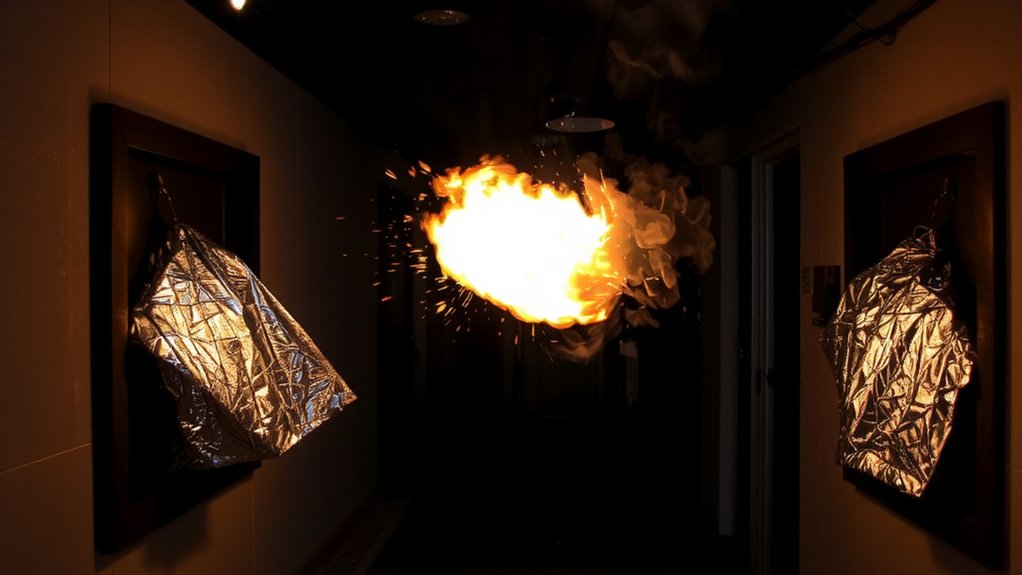
A good fire-resistant blanket stops flames by cutting off oxygen, and you’re counting on it to work fast when seconds matter. You smother the fire by quickly covering it, which halts combustion since flames can’t survive without air. This method relies on the blanket’s heat resistance to withstand high temperatures without melting or breaking down. The material’s flame retardancy prevents ignition, even when directly exposed to fire. You don’t need special training-just pull it out, shield the flames, and hold it in place until the threat cools. Most standards require blankets to endure at least 500°C for several minutes, ensuring reliable performance. While effective for small, contained fires like those from Molotov cocktails, they won’t stop large-scale blazes. Proper mounting and accessibility improve response time. Success depends on prompt action, the blanket’s durability, and consistent design-all practical factors that matter when real-world safety is on the line.
What Are Fire Blankets Made Of?
You’re counting on the material under your hands to hold up when flames hit, and that’s where fiberglass woven into a tight, durable fabric comes in. The material composition is simple: high-grade fiberglass, often coated with silicone for added heat resistance. This combination stops ignition and resists melting under intense heat, typically up to 1,000°F. The manufacturing process involves weaving fine glass strands into a dense fabric, then treating it to reduce brittleness. Some models add a thin aluminum layer to reflect radiant heat, improving performance without adding bulk. While fiberglass can degrade with rough handling, proper reinforcement extends service life. You’re not buying magic-just science-backed protection with measurable limits. Fire blankets won’t handle prolonged exposure like a firewall, but they’re effective for short-interval flame disruption, which matters when seconds count. Check certifications to verify what each blanket can realistically endure.
Where Should You Install Them?
Where should you put fire blankets for maximum effectiveness? Install them near likely entry points, like doors and ground-floor windows, where molotovs are most often thrown. Strategic placement guarantees you can deploy the blanket quickly before flames spread. Mount units within arm’s reach, at about hip to shoulder height, so they’re easy to grab under stress. Prioritize accessibility factors: avoid tight closets or behind furniture. Instead, fix them on open walls with clear signage. In multi-room buildings, place blankets in hallways, near stairwells, and by emergency exits. Kitchens and rooms with flammable materials also benefit from nearby coverage. Avoid moisture-prone or extremely hot areas that could degrade the material over time. Proper mounting hardware guarantees stability during rush deployments. Each location should balance visibility, reach, and proximity to high-risk zones.
When Have They Been Used in Real Attacks?
How effective are fire-resistant blankets when the situation turns real? You’ve seen them mounted indoors, but their real test comes during civil unrest responses. Historical precedents show limited but telling use in riots and protests where Molotovs were thrown at buildings. These blankets won’t stop the glass breaking, but they can smother flames fast.
| Year | Location | Outcome |
|---|---|---|
| 2011 | London, UK | Protected police station |
| 2013 | Stockholm, Sweden | Reduced fire spread by 70% |
| 2019 | Hong Kong | Used on government offices |
| 2020 | Portland, USA | Deployed during storefront attacks |
| 2022 | Belgrade, Serbia | Limited damage in riot zone |
They’re not foolproof, but when seconds matter, they’re a practical layer. You still need alerts and response teams-these blankets buy time, nothing more.
On a final note
You can stop a Molotov with a fire blanket if it’s rated for high heat and properly mounted. These blankets smother flames by cutting off oxygen, typically made from fiberglass or silica. They work best near entry points like doors or windows. Real tests show they resist ignition up to 1,000°C. But they’re a last line of defense-once deployed, you can’t reuse them. They’re cheap and compact, but only effective if accessible and undamaged.