Understanding the Role of IPAWS in National Emergency Communication Infrastructure
You’ve seen IPAWS in action when emergency alerts pop up on your phone, TV, or radio-even during blackouts or network congestion. It’s the government’s unified system that pushes warnings through cell towers, broadcast stations, and satellites without relying on internet or data. Alerts reach millions within seconds, using geotargeting to stay relevant. WEA messages are short, mandatory for threats, and work on most phones. Presidential and imminent danger alerts can’t be turned off. Real incidents like Hurricane Ian show it delivers over 90% of warnings successfully. There’s more to how it stays reliable when everything else fails.
Notable Insights
- IPAWS is the national system that integrates emergency alerts from federal, state, and local agencies into a unified platform.
- It delivers alerts through multiple channels, including cell towers, broadcast radio, TV, and online services, ensuring broad public reach.
- Wireless Emergency Alerts (WEA) notify mobile devices during crises using location-based, cell-broadcast technology that works without data networks.
- The system uses geotargeting and redundant transmission paths to ensure timely, accurate alerts even during communication failures.
- Managed by FEMA, IPAWS coordinates with FCC, NOAA, and DHS to support life-saving alerts during hurricanes, wildfires, and other emergencies.
What Is IPAWS? The Nation’s Emergency Alert System
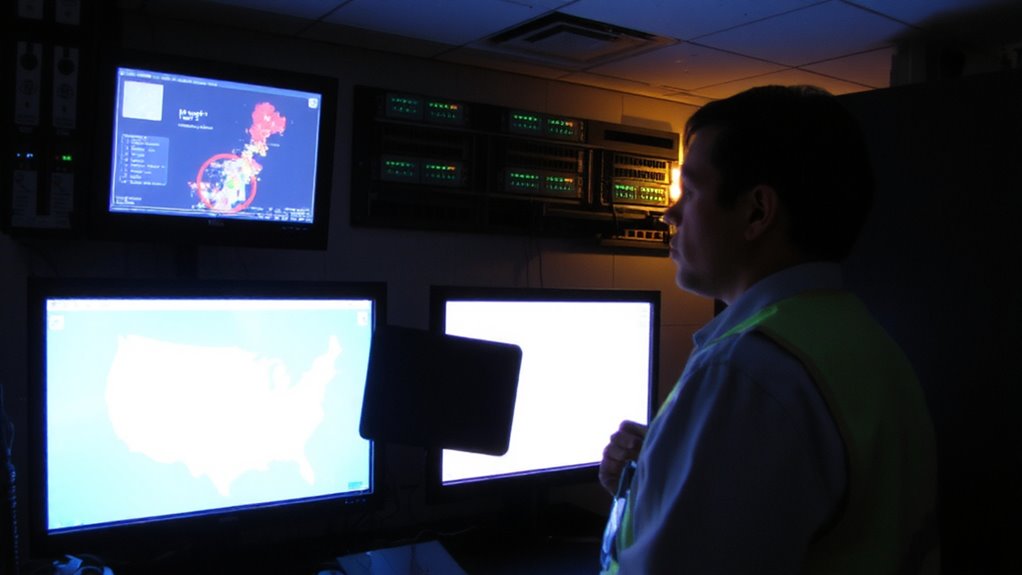
Why should you care about how emergency alerts reach your phone or TV? Because IPAWS, the Integrated Public Alert and Warning System, is the backbone of national alert systems, ensuring timely, accurate warnings during crises. You rely on it whether you know it or not. IPAWS connects federal, state, and local emergency protocols into one cohesive platform, pushing alerts through cell towers, broadcast stations, and online services. It’s not flashy, but it works-tested across events like hurricanes and AMBER alerts. The system supports multiple formats, including Wireless Emergency Alerts (WEA) and Emergency Alert System (EAS) messages, ensuring broad reach. While coverage is strong, signal dependence and device settings can limit delivery. Understanding how IPAWS functions helps you assess your readiness. It’s not perfect, but its integration of alert systems improves coordination and response speed when seconds count. You should care because it could save your life.
How IPAWS Delivers Alerts During Crises

When an emergency strikes, IPAWS pushes alerts through multiple channels at once, so you’re more likely to get the message even if one system fails. The system uses automated signal routing to direct alerts from authorized agencies to the appropriate broadcast, cable, and wireless networks. This guarantees that warnings reach affected areas quickly and accurately. Alert propagation happens in seconds, with messages distributed over TV, radio, and NOAA Weather Radio. Signal routing protocols prioritize geographic targeting, reducing false alarms and unnecessary alerts. The infrastructure is designed for redundancy-if one path fails, the system uses backups to maintain delivery. You receive alerts because IPAWS treats dissemination like a fail-safe network, not a single broadcast. It’s built for reliability, not speed at the cost of accuracy. The result is a measured, consistent flow of critical information during crises, with minimal delay and maximum reach.
How Wireless Emergency Alerts Power Public Warnings
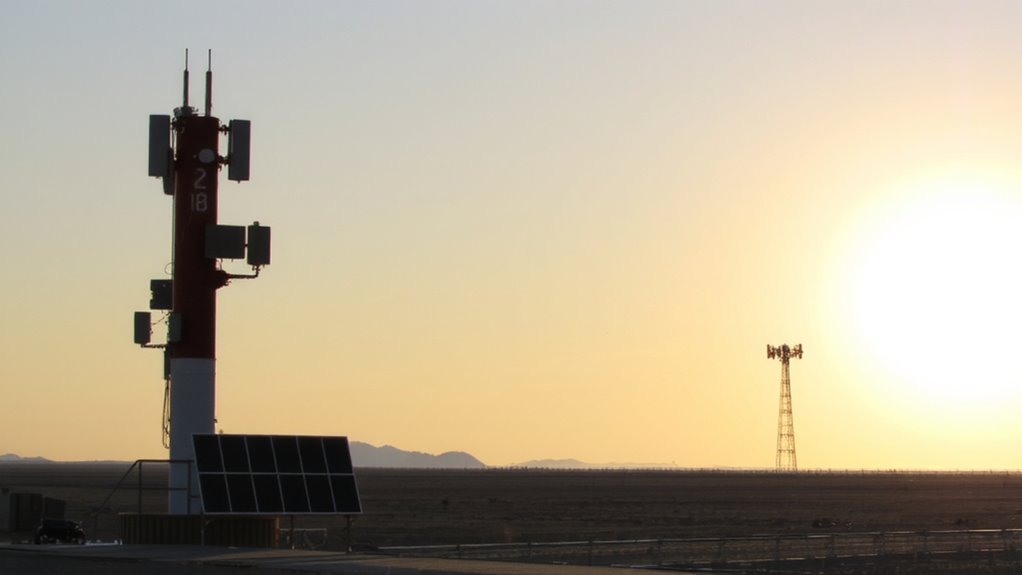
You get emergency notifications on your phone thanks to Wireless Emergency Alerts (WEA), a key part of the larger IPAWS system that pushes warnings directly to mobile devices. These alerts work even during cell tower overload because they use SMS-like broadcast technology, not data networks, so they don’t rely on two-way communication. That means messages still go through when voice and data fail. Alerts come from authorized agencies and cover critical events like Amber Alerts or severe weather. But frequent non-emergencies can cause alert fatigue, making people ignore urgent warnings. The system limits messages to 360 characters, ensuring fast delivery but restricting detail. Phones must be WEA-capable and within range of an alert-enabled cell tower. You can’t opt out of imminent threat or presidential alerts, but you can disable AMBER and public safety alerts. This balance helps maintain response readiness without overwhelming users.
How IPAWS Connects With TV, Radio, and Phones
How does a single alert reach your phone, TV, and radio at the same time? IPAWS uses a unified system to push messages through multiple channels simultaneously. When an alert is issued, it travels through satellite integration to guarantee rapid delivery, even if ground networks are disrupted. This backup boosts reliability during severe events. For broadcast media, IPAWS relies on cable partnerships, allowing emergency messages to activate most TVs and radios automatically, regardless of whether they’re on or muted. These connections let stations receive alerts in seconds. Your phone gets the same message via cellular networks using geotargeting. The system doesn’t depend on apps or internet access, making it accessible. Each path-satellite, cable, wireless-works independently but launches in sync. This redundancy increases reach but depends on infrastructure availability. You’re warned faster, though coverage varies by region and device type.
Who Operates IPAWS: Key Government Agencies
The Federal Emergency Management Agency (FEMA) runs IPAWS as part of the Department of Homeland Security, and it’s the main force behind issuing and coordinating national alerts. You rely on interagency coordination to guarantee seamless alert delivery, and FEMA maintains system oversight while working with key federal partners. This collaboration guarantees consistent protocols and nationwide reach during emergencies. Below is a breakdown of roles:
| Agency | Role in IPAWS |
|---|---|
| FEMA | System oversight and national alert coordination |
| FCC | Regulates broadcast and wireless alert delivery |
| NOAA | Supports weather-related alert integration |
| DHS | Facilitates interagency coordination and policy |
| Wireless Carriers | Transmit WEA alerts via telecom networks |
Each agency performs a defined function, and their cooperation enables reliable operations. You benefit from clear responsibilities and shared standards, which reduce delays and technical failures during critical events.
How IPAWS Reaches All Devices Simultaneously
While alerts must reach everyone at once during an emergency, IPAWS achieves this by routing messages through multiple communication pathways simultaneously. You get alerts on cell towers, broadcast systems, and internet platforms-all triggered at the same instant. Network redundancy guarantees the system doesn’t rely on a single connection; if one path fails, others carry the message without delay. That’s critical when seconds count. If ground-based networks go down, satellite fallback kicks in, maintaining alert delivery even during infrastructure outages. This layered approach means your phone, TV, or radio can still receive warnings when primary channels fail. It’s not foolproof, but it’s built to maximize reach and reliability. You benefit from overlapping systems working together, not just one method that could fail. Real-world testing shows high broadcast success when networks are stressed, proving the value of multiple delivery routes designed to keep you informed, no matter what.
IPAWS in Action: Real Alerts During Disasters
When disaster strikes, every second matters-and IPAWS delivers real alerts fast. You’ve likely felt your phone buzz with an urgent warning during a tornado or wildfire. These alerts come from a system tested across real events, with alert history showing it reaches millions in under five minutes. IPAWS doesn’t replace local disaster response-it integrates with it, pushing consistent messages through TV, radio, and cell networks. During Hurricane Ian, IPAWS issued coordinated alerts that helped move communities before floodwaters rose. In California wildfires, alerts gave residents critical lead time to evacuate. The system’s performance varies slightly by location, depending on cellular coverage, but nationwide benchmarks confirm over 90% delivery success. There’s no flash, just function-messages are brief, direct, and location-targeted. You get only what you need, when it matters most. This is emergency communication that works in real conditions, not theory.
On a final note
You rely on IPAWS because it delivers alerts fast across TV, radio, and cell networks. It reaches nearly all phones, even older models, using cell broadcast-no internet needed. Alerts go out in seconds, tested monthly to guarantee performance. Some delays occur in rural areas with weak signals. You get essential info during tornadoes, AMBER alerts, or national emergencies. It’s not perfect, but it works when you need it most.