Designing Public Alert Systems for Areas With High Electromagnetic Shielding
You need wired networks for reliable alert delivery in high-shielding areas-copper and fiber resist interference better than wireless. Use mesh networks underground with nodes every 30 meters to maintain coverage. Pair audible alarms with 110-candela strobes every 15 meters for redundancy. Combine systems and power them with batteries that last 72 hours. Test monthly in basements and parking zones. Generators back up power within 10 seconds. More details on ideal configurations follow.
Notable Insights
- Use wired networks with copper or fiber cabling to ensure reliable alert delivery in electromagnetically shielded environments.
- Deploy mesh networks with nodes spaced every 30 meters to maintain connectivity in underground or concrete-heavy areas.
- Install audible and visual signals, including strobes over 110 candelas and speaker arrays, in radio-denied zones.
- Combine wired, wireless, and mechanical alert systems to achieve redundant, synchronized coverage across all environments.
- Test alert systems monthly and maintain 72-hour battery backup with automatic switchovers and generator support.
Use Wired Networks for Reliable Emergency Alerts
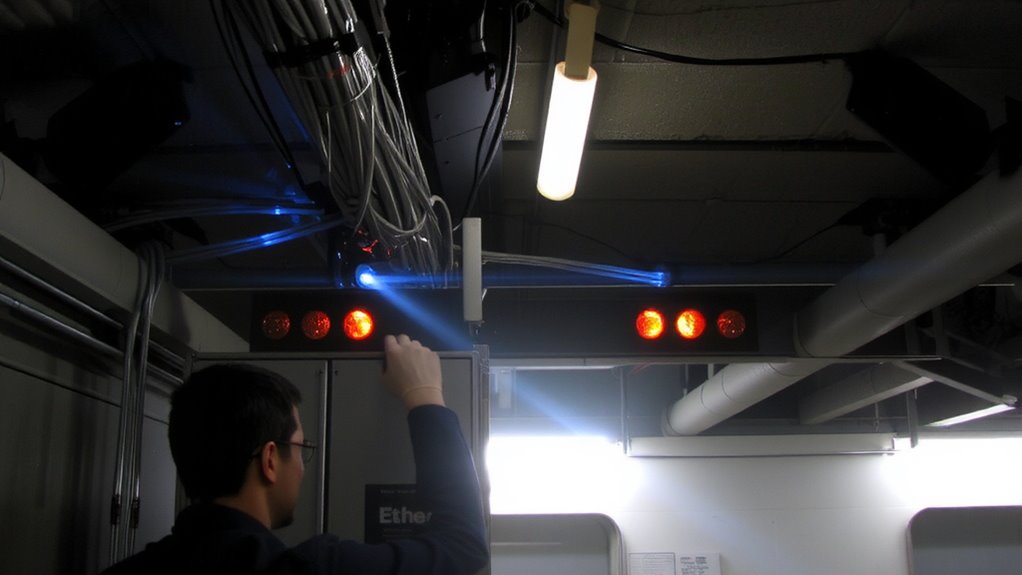
When it comes to emergency alerts, system reliability matters more than speed or features, and wired networks deliver consistent uptime because they’re less vulnerable to interference or overload. You can’t afford dropped signals during a crisis, especially in electromagnetically shielded environments where wireless systems often fail. Wired redundancy guarantees your alert system stays operational even if one line goes down-backbone circuits stay active through physical separation and failover routing. Unlike wireless, wired connections maintain signal integrity across long distances and dense infrastructure, minimizing data loss or corruption. You’ll find that copper and fiber both support stable transmission, though fiber resists electromagnetic interference better. Power surges or physical damage remain concerns, so conduit protection and surge suppressors are non-negotiable. Testing shows wired systems achieve 99.99% uptime in controlled environments. For mission-critical alerts, that reliability outweighs the convenience of wireless setup. Your priority is function, not flexibility.
Deploy Mesh Networks in Underground Areas

Wired networks hold up well in most emergencies, but they can’t always reach confined or subterranean spaces where cables are hard to route or vulnerable to damage. You’ll need something more adaptive-like mesh networks. These self-healing systems let devices relay signals dynamically, so if one node fails, others reroute the alert. That’s signal redundancy in action, and it enhances network resilience markedly. They’re proven in subway tunnels and underground parking, where traditional RF signals struggle. You’re not relying on a single path, so partial system damage won’t kill communication. Power requirements are low, and many models run on battery for days. Yes, initial setup takes planning, and bandwidth is limited, but for alert messages, that’s rarely an issue. Just guarantee nodes are spaced properly-tests show 30-meter intervals work in concrete-heavy environments. This isn’t a fix-all, but in shielded zones, it’s one of the few methods that keeps alerts moving when you need them most.
Add Audible and Visual Signals Where Radio Fails
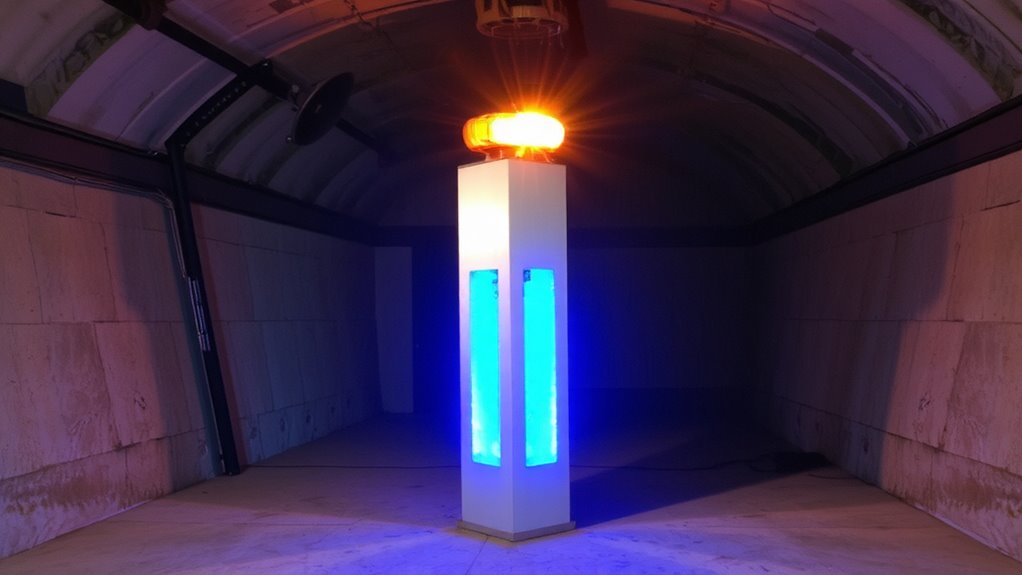
Even if radio signals degrade in dense or obstructed environments, you can still deliver alerts reliably by combining audible and visual signals at strategic locations. Speaker arrays provide clear, directional sound that penetrates background noise, ensuring messages are heard even in loud or sprawling spaces. Tests show coverage up to 30 meters in concrete-heavy zones when arrays are mounted at ideal heights. Strobe alarms, with light output exceeding 110 candelas, deliver visible warnings in smoky or low-light conditions. They’re effective across 180-degree arcs when spaced no more than 15 meters apart. You’ll need both systems operating in tandem-audio for detail, light for immediacy. Power redundancy is essential; use backup batteries rated for at least 72 hours. These signals don’t require wireless connectivity, so they function when networks fail. Their performance is measurable, predictable, and critical in shielded zones like parking garages or subway platforms.
Combine Systems for Maximum Alert Coverage
A well-designed public alert system combines audible and visual signals with networked controls to cover all areas reliably. You need signal redundancy so alerts still reach people if one method fails-like using sirens, strobe lights, and vibrating devices together. This reduces the chance of missed warnings in high-shielding environments where radio signals weaken or drop. Cross system integration lets your emergency network share data with building management, fire alarms, and public address systems, ensuring synchronized responses. Without it, delays or mismatches can occur. Wired systems back up wireless ones, giving you consistent performance even during interference events. You’ll likely use a mix of IP-based speakers, FM overrides, and hardwired pull stations, depending on structure layout. There’s no single solution that works everywhere, so layering systems improves reach. You trade higher upfront costs for greater reliability-worth it when lives depend on response speed.
Test Alerts Regularly in High-Shielding Environments
When you’re dealing with basements, reinforced concrete structures, or metal-dense buildings, signals degrade fast-so you’ve got to test alerts often to confirm coverage. Signal attenuation in these spaces can block or delay warnings, leaving occupants at risk. You need real-world tests to verify your system’s reach and guarantee infrastructure compatibility across networks. Routine checks reveal weak zones and help fine-tune device placement.
| Test Location | Result |
|---|---|
| Underground parking | Partial signal loss |
| Steel-reinforced room | Low reception |
| Central lobby | Full alert delivery |
These results let you adjust transmitters or add repeaters where needed. Don’t assume factory specs match field performance-actual signal attenuation varies by materials and layout. Schedule monthly tests to catch issues before emergencies. Consistent verification guarantees alerts work when it matters, not just on paper. Infrastructure compatibility with existing comms systems keeps the network operational across devices.
Maintain Backup Power for Continuous Operation
If the power goes out during a crisis, your alert system won’t help anyone if it’s not running-so you need backup power that kicks in instantly and lasts long enough to matter. You should use battery redundancy to guarantee at least 72 hours of runtime; multiple battery banks allow continued operation if one fails. Lithium-ion units are reliable and compact, but they require thermal monitoring. Pair them with automatic transfer switches that engage within 10 seconds of outage. For longer disruptions, integrate a generator-diesel units offer proven durability and can run 7–10 days with proper fuel reserves. Your generator integration must include self-test modes and load-bank verification every 30 days. Combine both systems so batteries bridge the gap until the generator stabilizes. This dual-layer approach balances response time and endurance. It’s not optional-it’s essential for uninterrupted alerts in shielded zones where signals already struggle. For quiet, reliable generator operation, consider incorporating a best quiet generator suitable for continuous use in sensitive environments.
On a final note
You need reliable alerts in high-shielding areas, so wired networks give consistent backbone coverage. Mesh networks fill underground gaps where signals struggle. Add loud, bright signals where wireless fails. Combine systems to guarantee no zone is left blind. Test every setup in real shielding conditions-concrete, metal enclosures-to confirm reach. Keep backup power ready; outages happen. Redundancy isn’t overkill. It’s how alerts actually work when they’re needed.