How to Reinforce Garage Doors to Withstand Hurricane-Force Winds
Check your garage door’s wind rating-look for ASTM E1886/E1996 or Miami-Dade certification. A 50 psf door handles more pressure than a 30 psf model. Upgrade to a hurricane-rated door if yours isn’t rated for your zone’s wind speeds. Install reinforced bracing, seal gaps with durable weatherstripping, and anchor the frame to studs. Use 14-gauge tracks and hardened rollers to maintain alignment under stress. Test the system yearly-proper setup matters as much as the product. Details on matching upgrades to your risk level follow.
Notable Insights
- Check your garage door’s wind resistance rating and ensure it meets ASTM E1886/E1996 or Miami-Dade certification standards.
- Install a hurricane-rated garage door designed to withstand regional wind speeds, especially in high-risk coastal areas.
- Add reinforced bracing systems, such as cross or diagonal supports, to prevent door buckling under extreme wind pressure.
- Seal all gaps around the door with durable weather stripping and secure the frame to wall studs using high-wind-rated fasteners.
- Upgrade rollers to hardened steel or steel-core nylon and install 14-gauge or thicker reinforced tracks for better wind resistance.
Check Your Door’s Wind Resistance
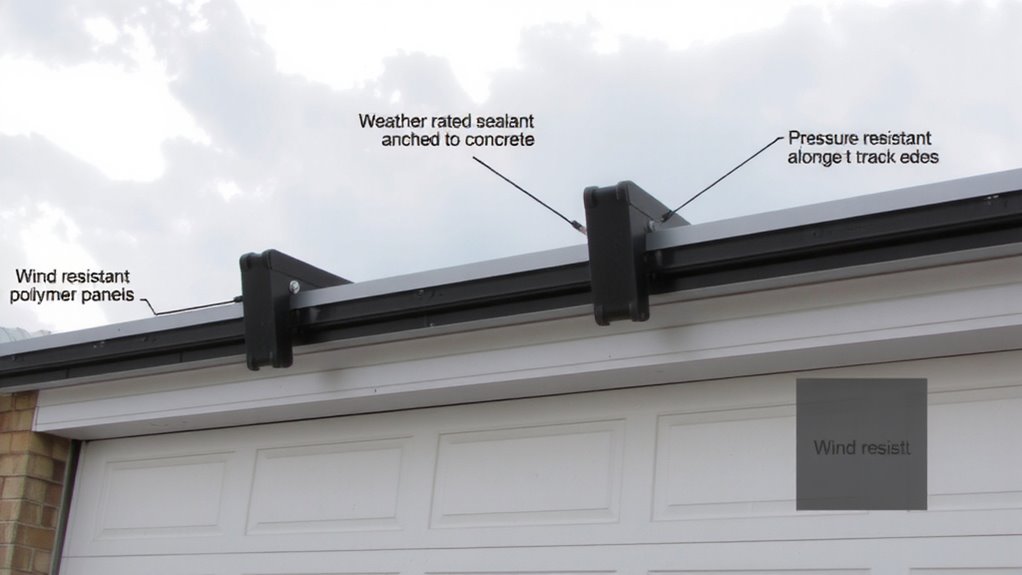
If you’re looking to protect your home from hurricane-force winds, you’ll want to start by checking your garage door’s wind resistance rating, since it’s often the weakest point in the garage envelope. You need to know the door’s tested wind load capacity-this tells you how much pressure it can handle before failing. Look for documentation or labels indicating compliance with regional building codes, such as Miami-Dade County standards or ASTM E1886 and E1996. A door rated for 50 psf (pounds per square foot) performs better than one rated for 30 psf. Wind load directly affects the structural integrity of your garage; if the door fails, pressure builds inside, increasing the risk of roof or wall collapse. Older or standard residential doors typically lack sufficient reinforcement. Checking the manufacturer’s specifications gives you a factual baseline, not a guess, about whether your door can survive a direct hit or needs immediate reinforcement.
Choose a Hurricane-Rated Garage Door
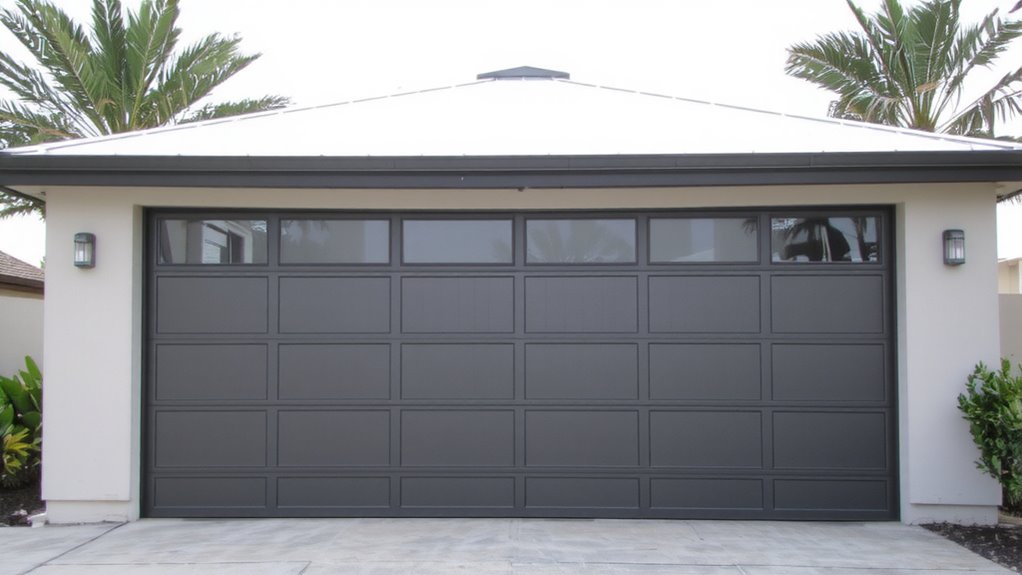
While your existing garage door might seem sturdy, upgrading to a hurricane-rated model is one of the most effective steps you can take when storm winds threaten. These doors are built to meet strict wind rating and door certification standards, ensuring they can survive extreme pressure and flying debris. Look for models tested and certified to withstand specific wind speeds in your area.
| Wind Rating (mph) | Door Certification | Typical Use Case |
|---|---|---|
| 110–120 | Dade County | Coastal regions |
| 121–140 | Miami-Dade NOA | High-risk hurricane zones |
| 141–160 | Florida Building Code | Severe wind areas |
| 160+ | ASTM E1886/E1996 | Maximum protection zones |
Choose based on your location’s risk level. A certified door with the right wind rating reduces failure risk when it matters most.
Add Bracing for Wind Resistance
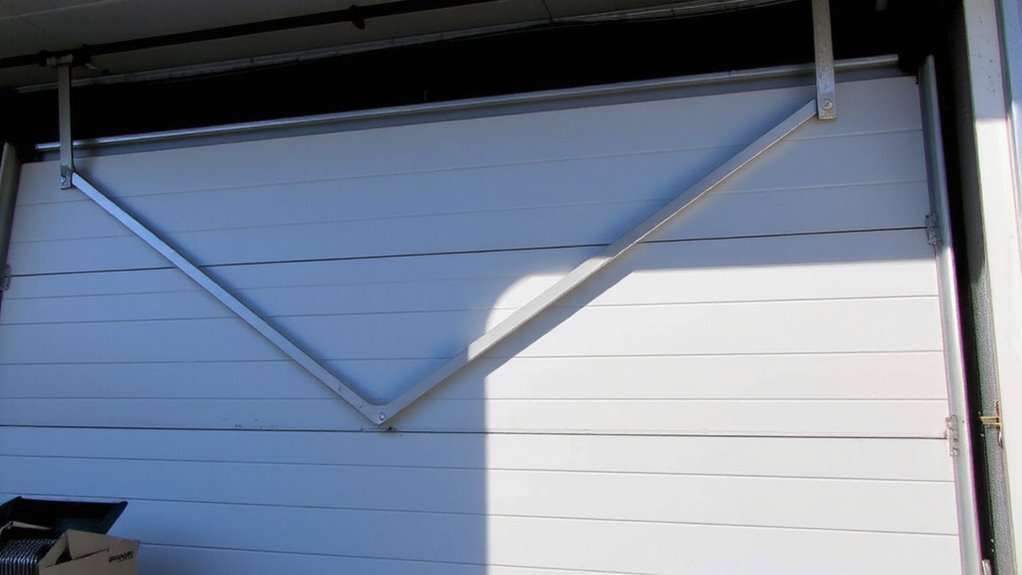
When hurricane-force winds hit, your garage door faces immense pressure that standard bracing can’t handle, so installing a reinforced bracing system is essential for keeping it intact. You’ll need cross bracing-horizontal and vertical supports that stabilize large panels and prevent buckling. Most residential systems use steel rods or tracks, bolted directly to the door’s frame and sections. Diagonal supports add rigidity by transferring wind load to stronger points, reducing flex. Tests show doors with both cross bracing and diagonal supports withstand winds up to 140 mph, meeting many local hurricane codes. You can buy retrofit kits, but check their load ratings-some only suit moderate winds. Poorly installed bracing shifts stress unevenly, increasing failure risk. Make sure all hardware is tight and anchors into solid framing. Bracing won’t help a weak door, but paired with a rated model, it markedly boosts performance.
Seal Gaps and Reinforce the Frame
Start by sealing gaps around the garage door to block wind intrusion and water entry, both of which can escalate structural damage during a storm. Apply durable weather stripping along the sides and top to close openings where wind can penetrate; vinyl or rubber strips with adhesive backing work well for most standard doors. Check the threshold seal too-replace it if cracked or compressed. For frame anchoring, secure the door frame to the wall studs using heavy-duty metal brackets or retrofit anchors that resist uplift. Standard frame fasteners often fail under hurricane conditions, so opt for anchors rated for high-wind zones. Reinforced frames reduce flexing, which maintains door integrity. Combined, proper weather stripping and frame anchoring lower the risk of wind-driven failure. These upgrades don’t stop flying debris, but they limit internal pressurization and water damage. They’re low-cost steps that support overall storm readiness when paired with structural bracing.
Upgrade Rollers and Tracks for Strength
You’ve sealed the gaps and reinforced the frame, but strong winds can still exploit weak points in the garage door’s movement system. Standard rollers and tracks aren’t built for hurricane-force stress. You need reinforced rollers made from hardened steel or nylon with steel cores-they handle heavier loads and resist bending or popping out under pressure. Pair them with durable tracks, ideally 14-gauge or thicker, which resist warping when wind creates torsional strain. Look for tracks with reinforced mounting brackets; they keep the system aligned during extreme conditions. Aftermarket garage door hardware often cuts corners-don’t rely on stock components. Upgrading both rollers and tracks guarantees smooth operation under load and reduces the chance of catastrophic failure. The system must hold firm when winds hit 100+ mph. This isn’t overkill-it’s necessary for structural continuity. Test fit and alignment post-install, but save functional testing for later.
Test Before Hurricane Season and Maintain
Regularly testing your garage door system before hurricane season isn’t optional-it’s essential. You need to confirm every component can handle extreme pressure. Start by inspecting hinges for wear or misalignment; weak hinges compromise structural integrity. Then tighten bolts connecting tracks, brackets, and panels-loose bolts reduce performance under wind load. Perform a visual and physical check monthly. Use this simple table to stay on track:
| Task | Frequency | Notes |
|---|---|---|
| Inspect hinges | Monthly | Look for cracks or warping |
| Tighten bolts | Every 3 months | Use correct torque |
| Test reverse mechanism | Biannually | Door should reverse on contact |
| Lubricate moving parts | Every 6 months | Reduces strain |
| Full system test | Annually | Simulate high-wind stress |
Maintain it now-don’t wait for warnings.
On a final note
You’ll need a garage door rated for at least 130 mph winds to survive most hurricanes. Bracing helps, but a certified door outperforms retrofitted models. Seal gaps to block wind-driven rain and reinforce the frame to prevent warping. Upgraded tracks and rollers reduce failure points. Test the system annually; a weak seal or worn roller can compromise the whole setup. No upgrade beats proper installation and maintenance.