Recognizing Animal Trails That Lead to Reliable Water in Dense Jungle Areas
Follow animal trails that cut straight through dense jungle, especially those heading downhill or toward depressions-fresh droppings, broken branches, and damp soil mean recent use and likely nearby water. Stick to paths with consistent, unbroken signs every 10–15 meters to avoid getting lost. Avoid visiting at dawn or dusk when predators are active; midday is safer. Boil or filter any water you find. There’s more to know about staying safe and hydrated in the wild.
Notable Insights
- Animal trails in dense jungle often follow consistent paths toward water, especially near dawn or dusk.
- Look for converging game paths in low-lying areas, as these frequently lead to water sources.
- Fresh signs like warm droppings or broken branches indicate recent animal use and nearby water.
- Trails avoiding steep slopes and cutting directly through vegetation often lead to reliable water access.
- Check for trail markers every 10–15 meters to maintain direction and avoid disorientation in dense jungle.
How Animal Trails Lead to Water
While animals don’t carry maps, they do follow reliable paths to water, and you can use those trails to your advantage. Animal trail patterns are consistent, especially near dawn or dusk when creatures move to drink. These routes often cut through dense jungle with minimal detours, leading directly to water sources. You’ll notice trails converging in low-lying areas or near depressions where water collects. Game paths avoid steep grades when possible, preferring gradual slopes, which helps you identify reliable access points. Following these beaten paths increases your odds of finding water faster than random searching. Trail patterns near dry riverbeds or moist soil often signal hidden springs. Though not foolproof, these routes have been tested by repeated animal use. They provide a measurable efficiency gain in navigation, reducing travel time and energy. Use them as practical guides, not guarantees.
Spot Fresh Tracks and Animal Signs
If you’re tracking animals to find water, start by identifying fresh signs along the trail, since recent activity increases the likelihood of a nearby source. Look for fresh droppings-moist or warm ones mean the animal passed recently. Check for broken branches at nose or shoulder height; these marks show active use. Crush a dropping lightly; if it deforms without cracking, it’s likely less than six hours old. Trails near water see more traffic, so these signs cluster closer to the source.
| Sign | Emotional Impact |
|---|---|
| Fresh droppings | Hope – water may be near |
| Broken branches | Urgency – trail is active |
| Warm tracks | Relief – recent animal movement |
| Muddy paw prints | Anticipation – water close |
| Trampled grass | Confidence – reliable path used often |
These cues, when recent, guide you efficiently.
Follow Trails Without Getting Lost
You’ve spotted the fresh droppings, broken branches, and muddy prints that signal animal movement toward water, but staying on the trail without losing your way is just as important as finding it. Use natural trail markers like bent saplings, scuffed bark, or disturbed leaves to confirm direction. These signs are most reliable when they show consistent path consistency-meaning the trail follows a logical, uninterrupted route toward lower ground or drainage lines. Avoid faint or splitting paths; they lack consistency and increase disorientation risk. Recheck markers every 10–15 meters to stay aligned. If the trail fades, backtrack to the last clear indicator. Relying on memory alone fails under stress. Mark your own progress sparingly with non-perishable indicators like small rock stacks if needed, but prioritize observation over alteration. Steady tracking beats speed. Lose the trail, and you lose your best chance at water.
Stay Safe Around Predators at Water
How do you avoid becoming prey when you’re desperate for water? You stay alert and move smart. Predators patrol watering holes, especially at dawn and dusk, so arrive during midday when they’re less active. Always approach downwind-animals rely on scent, and you don’t want to surprise them. Scan for signs like tracks, droppings, or claw marks; heavy predator traffic means you should find another spot. Stick to open ground near water, avoiding ambush zones like dense brush, overhanging branches, or narrow game trails. Stay quiet and avoid sudden movements. Minimizing splashing reduces noise that draws attention. Never wade in deep or murky zones where animals may lurk. Carry water quickly and retreat the same way. Your safety depends on awareness, not speed.
Purify Stagnant Water in the Wild
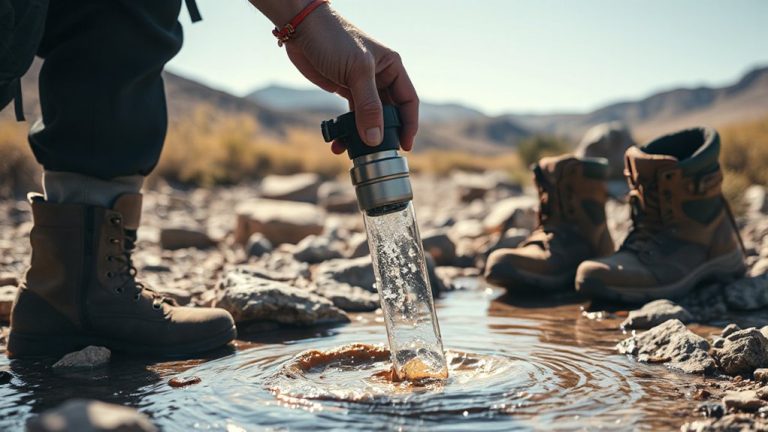
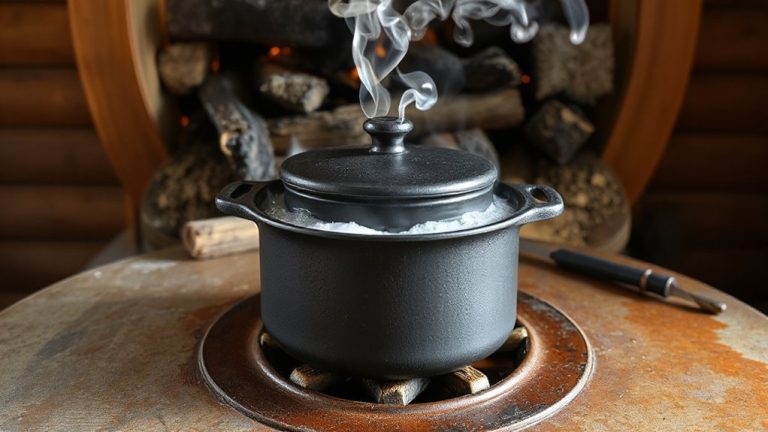
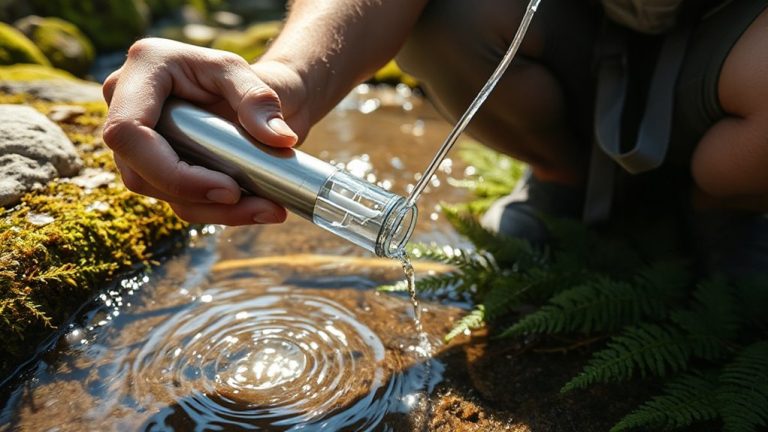
Though stagnant water looks uninviting, it’s often your only option in dense jungle terrain-so knowing how to treat it matters. Boiling methods are reliable: bring water to a rolling boil for one minute (three at higher elevations) to kill bacteria, viruses, and protozoa. It’s effective but requires fuel and time. Portable filtration systems remove debris, cysts, and bacteria; most use hollow fiber membranes with pore sizes around 0.2 microns. These systems work fast and need minimal effort, but they won’t stop viruses unless combined with chemical treatment. UV pens or chlorine dioxide tablets can fill that gap. Some filters clog in silty water, so pre-strain through cloth. Boiling leaves no chemical taste, while filters allow immediate drinking. For broad protection, pair boiling methods with a trusted filtration system. Each method has limits-understanding them keeps you safe when no clean source is available. A reliable option for removing contaminants is using a top water filter that meets EPA standards.
On a final note
You can rely on animal trails to find water-they lead to reliable sources more consistently than random foraging. Fresh tracks or droppings mean recent use, increasing your odds. Follow trails downhill, but mark your path to avoid disorientation. Stay alert near water; predators visit at dawn and dusk. Stagnant water must be boiled or filtered-no exceptions. Speed matters, but safety trumps urgency.