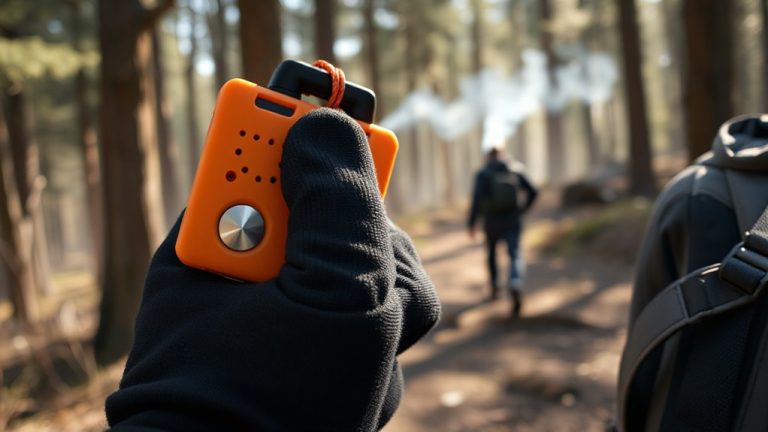
Disinfecting Water With a Portable UV Water Purifier Bottle
You can disinfect water in about 60 seconds with a portable UV purifier bottle, killing 99.9% of bacteria, viruses, and protozoa without chemicals or filters. It uses UV-C light at 254 nm to destroy pathogens, leaves no aftertaste, and needs no replacement parts. Just charge it, press a button, and stir the water. It won’t remove chemicals or sediment, so pre-filter if the water’s cloudy. It’s light and reliable-ideal for hiking. There’s more to think about if you’re counting on it in remote areas.
Notable Insights
- UV-C light at 254 nm neutralizes 99.9% of bacteria, viruses, and protozoa in about 60 seconds.
- No chemicals are added, preserving water taste and leaving no harmful residue.
- The bottle requires clear water; pre-filtering is essential if the water is cloudy or turbid.
- A full charge supports 100–200 disinfections, making it ideal for outdoor and emergency use.
- UV bottles don’t remove chemicals, heavy metals, or particles-use with a filter for comprehensive purification.
Why a UV Water Purifier Bottle Beats Filters and Chemicals
While filters trap particles and chemicals alter taste, a UV water purifier bottle tackles the root problem-microorganisms-without adding anything to your water or requiring replacement parts. You get UV effectiveness against bacteria, viruses, and protozoa, typically eliminating 99.9% of pathogens in about 60 seconds. That’s proven in lab tests and field use, making it reliable where boiling isn’t practical. Unlike iodine or chlorine tablets, it leaves no chemical residue, so your water tastes clean and safe. You won’t deal with aftertastes or potential long-term concerns from consuming treated water regularly. It works regardless of water clarity, though visibly dirty water should be pre-filtered. The trade-off? It doesn’t remove physical debris or chemicals, so pairing it with a basic cloth filter helps. But for pure disinfection, UV beats chemicals and filters where safety, weight, and maintenance matter most.
How UV Purifier Bottles Work in Seconds
You’ve seen how UV bottles outperform filters and chemicals when it comes to killing pathogens, but how do they deliver clean water in just seconds? It’s simple: when you press the button, a UV-C bulb inside the bottle emits light at a high uv intensity-usually around 254 nm-which damages microorganisms’ DNA in under 60 seconds. The process doesn’t filter particles, but it neutralizes bacteria, viruses, and protozoa effectively. Most models use low-power, rechargeable bulbs with a typical bulb lifespan of 8,000 to 10,000 uses. That’s enough for years of regular outdoor trips. Clarity matters-turbid water reduces uv intensity effectiveness, so pre-straining helps. These devices don’t alter taste or require consumables. You get fast, chemical-free disinfection with consistent performance, provided the bulb is functioning and the water isn’t murky. It’s not magic-just solid science in a bottle.
When to Use a UV Water Purifier Bottle in the Wild
Where should you rely on a UV purifier bottle in the wild? Use it during remote trekking where water sources are uncertain but visibly clear. It’s ideal when you need emergency hydration and can’t risk boiling or waiting. UV bottles work fast-no pumping or chemicals needed-but only if the water isn’t murky. If you’re deep in the backcountry and your supply runs low, tapping into streams or lakes with a UV bottle keeps you moving safely. It won’t filter debris, so pre-strain cloudy water. Battery life matters: most models last 100–200 treatments, enough for weeks of solo travel. Weight is low, usually under 10 oz, making it efficient for pack space. In storms or unexpected delays, it’s a reliable backup. Just make sure the unit has an intact sleeve and clean bulb. It’s not for heavy sediment, but for clear water on the go, it delivers consistent disinfection.
Disinfect Water in 60 Seconds: A Step-by-Step Guide
A UV purifier bottle won’t fix dirty water, but when you’ve got clear liquid from a mountain stream and minimal time to spare, it gets the job done fast. Start by filling the bottle, making sure the water is clear-cloudy water reduces UV effectiveness. Shake out large particles; water clarity is critical because shadows block UV rays. Screw the cap on tightly, then press the button to activate the UV light. Hold the bottle upright and stir slowly for 60 seconds-this guarantees even exposure. Don’t skip the full minute; timing affects disinfection. UV effectiveness drops if the bulb is dirty, so wipe it after each use. Most models last 8,000 to 10,000 treatments on one charge. You’ll know it’s working when the indicator lights turn green. It’s not filtration, but it reliably kills bacteria and protozoa. Use it only when water clarity supports it-otherwise, pre-filter first.
What UV Purification Can’t Clean (And How to Handle It)
While UV purification kills bacteria and protozoa quickly, it won’t remove chemical contaminants, heavy metals, or microplastics from water. You’ll still be exposed to pollutants like pesticides or lead if they’re present. Sediment buildup can also block UV light, reducing effectiveness. For safer drinking water, pair your UV bottle with a filter that traps particles and absorbs chemicals.
| Risk Type | Can UV Remove? | Your Risk Level |
|---|---|---|
| Bacteria | Yes | Low |
| Chemical contaminants | No | High |
| Sediment buildup | No | Medium |
| Heavy metals | No | High |
Use a pre-filter when water looks cloudy. This combo handles both microbes and invisible pollutants. Relying only on UV leaves health hazards unchecked.
Key Features to Look for in a UV Water Purifier Bottle
If you’re relying on a UV water purifier bottle in the backcountry or abroad, you need one that works fast and won’t fail when it matters. Look for a model with at least 40 seconds per treatment cycle-any longer slows you down. Battery life is critical; choose a bottle that delivers 50 or more full charges on a single charge so you’re not hunting outlets. A USB-C rechargeable battery adds convenience, especially overseas. Material durability makes a difference when you’re hiking, traveling, or in rugged conditions. Opt for bottles made with BPA-free, shock-resistant plastic or stainless steel to survive drops and temperature swings. The UV bulb should be encased securely to avoid damage. Don’t trust claims without testing-verified lab results against bacteria and viruses matter. Balance size, weight, and function so it fits your pack and lifestyle without compromise.
How to Care for Your UV Purifier So It Lasts
You’ve picked a UV purifier bottle with a quick 40-second cycle, solid battery life, and verified lab results-now keep it working like new. Regular battery maintenance extends lifespan and guarantees reliable performance; charge fully before first use and avoid letting the battery drain completely. Don’t leave it plugged in past full charge to prevent wear. Most models last 100+ cycles per full charge-track usage to anticipate needs. The UV bulb degrades over time, so plan for bulb replacement every 1,000 to 8,000 uses, depending on the model. A faded or slow-activating light means it’s nearing end-of-life. Clean the chamber monthly with a soft brush and water; mineral buildup blocks UV rays. Don’t submerge charging ports or use bleach. Store dry and at room temperature. These steps keep disinfection effective and the device durable under real-world conditions.
On a final note
You get fast, chemical-free disinfection with a UV bottle, killing 99.9% of bacteria and viruses in about a minute. It won’t filter sediment or chemicals, so use it in clear water. Battery life matters-most models last 50–80 uses per charge. Weigh the trade-off: lightweight convenience versus the need for pre-filtering in dirty water. It’s reliable for backpacking and travel where water sources are questionable but fairly clear. Just keep the bulb clean and charge it.