Building a DIY Safe Room for Tornado or Active Shooter Scenarios at Home
Pick an interior ground-floor closet or bathroom near family members, avoiding stairs. Use 6-inch reinforced concrete or 1/4-inch steel plates anchored to floors and ceilings for walls. Install a steel door with a reinforced frame, continuous hinge, and multi-point lock. Stock 72 hours of water, food, meds, and a NOAA radio. These materials meet FEMA and ICC-500 standards for withstanding tornado debris and ballistic threats. You’ll want to know how each component performs under real attack and stress conditions.
Notable Insights
- Choose an interior closet or bathroom on the lowest floor for quick, barrier-free access during emergencies.
- Use FEMA and ICC-500 compliant steel panels or 6-inch reinforced concrete walls for maximum storm and ballistic protection.
- Install a solid-core steel door with continuous hinges and multi-point locking to resist forced entry.
- Reinforce wall connections to floor and ceiling with anchors or embeds to withstand blast and impact pressure.
- Stock the room with 72 hours of water, food, first aid, lighting, and communication tools, rotating supplies every six months.
Choose the Best Location for Your DIY Safe Room
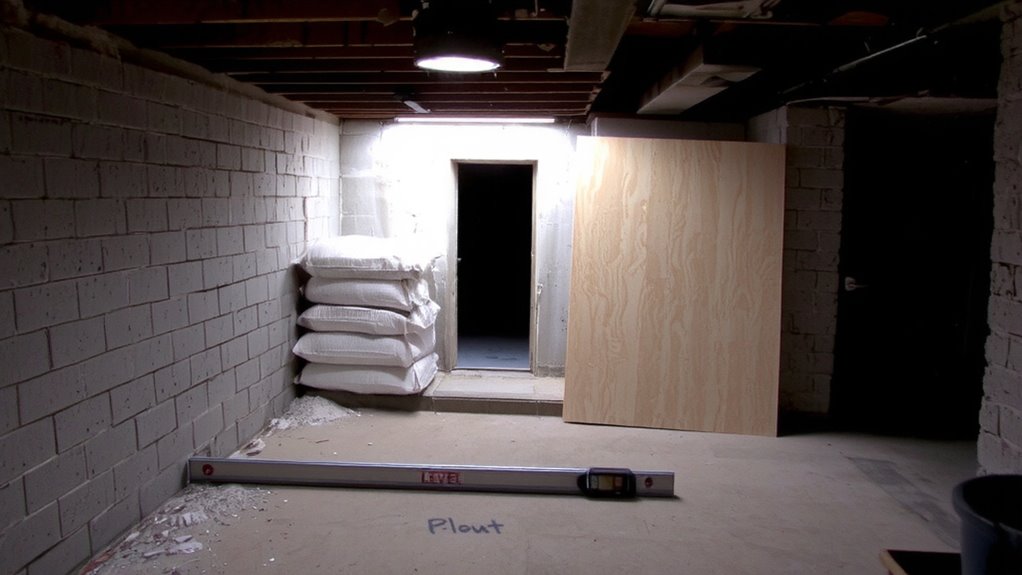
Where should you put your safe room when seconds count? Choose an interior room on the lowest floor, away from windows and exterior walls. Basements or ground-floor closets work best, offering structural protection and quick access during emergencies. Prioritize room accessibility-everyone in your household must reach it fast, including children and elderly members. Avoid spaces requiring stairs or complex entry. Closets, bathrooms, or hallways are ideal if they meet size and access needs. Ventilation planning is critical; even short-term shelter requires fresh air. Install a secure, small-diameter duct or passive vent that resists debris and intrusion. Avoid kitchens or garages due to fire, gas, and exposure risks. Location affects survival odds-proximity, simplicity, and structural integrity matter more than size. A well-placed safe room reduces response time and maximizes protection when every second counts.
Use DIY Safe Room Materials That Resist Storms and Intruders
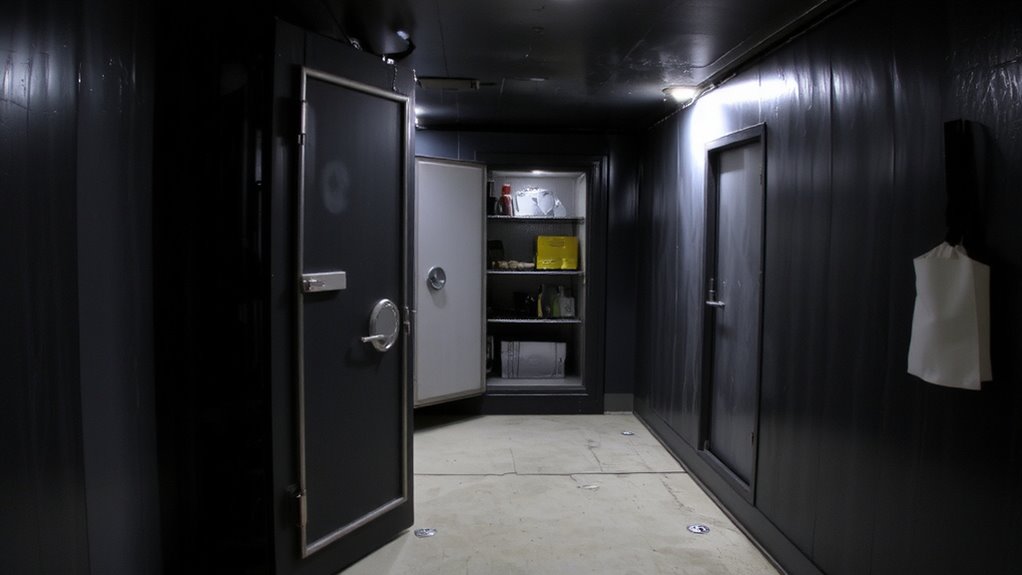
Your safe room’s strength starts with what you build it from. You need materials tested to stop both flying debris and forced entry. Look for steel panels that have undergone impact testing-FEMA and ICC-500 standards confirm they can handle tornado-force projectiles. For active shooter protection, add ballistic shielding rated at least Level III, which stops rifle rounds like 5.56mm and .223. Composite wood-clad steel doors with reinforced frames also help, but verify they’ve passed ballistic and forced-entry tests. Some products claim protection but lack certified results-don’t trust marketing over data. Materials like 14-gauge steel or laminated sheeting with polyethylene offer a balance of durability and practicality. Remember: thickness alone isn’t enough. Real-world performance comes from proven impact testing and proper installation. Choose wisely-the difference could be minutes or lives in a crisis.
Reinforce Your DIY Safe Room Walls With Concrete or Steel
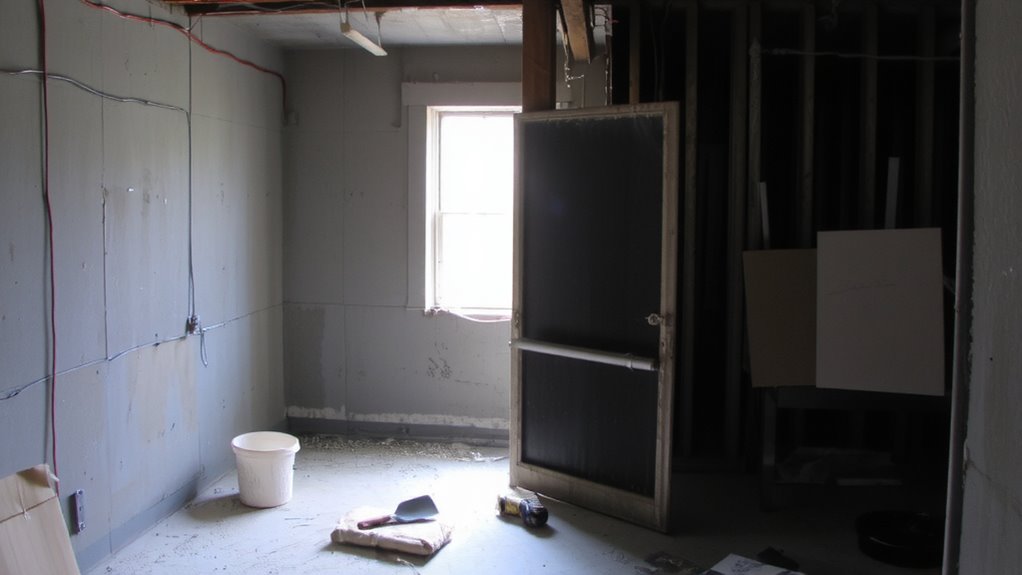
A steel-safe room stands up to both tornado winds and ballistic threats when built right. You need blast resistance and structural integrity, so choose materials wisely. Concrete walls at least 6 inches thick offer solid protection, while 1/4-inch steel plate provides a lighter but strong alternative. Both resist deformation under pressure, but steel installs faster. Anchoring is critical-unsecured walls fail. Below is a comparison:
| Material | Blast Resistance | Structural Integrity |
|---|---|---|
| 6″ Concrete | High (tested to 250 mph winds) | Excellent (with rebar) |
| 1/4″ Steel Plate | High (NIJ Level III+) | Strong (if welded & anchored) |
Concrete handles impact and fire better; steel saves space. Either must connect securely to floor and ceiling to prevent collapse or penetration. Use expansion bolts or welded embeds. Don’t cut corners-lives depend on reliable performance when danger hits.
Install a Secure Door in Your DIY Safe Room
The best safe room door acts as a true barrier, not just a placeholder, so skip standard interior models-they’ll fail under pressure. You need a solid-core steel door, at least 18-gauge thickness, with continuous hinge reinforcement. Standard hollow doors won’t resist forced entry or debris impact. Door reinforcement is critical: install metal door frames anchored to wall studs with at least 3-inch screws. Add steel plates around the strike plate to prevent kick-in breaches. Use lock mechanisms that include a multi-point lock or a deadbolt with a minimum 1-inch throw; single cylinder deadbolts are acceptable if you control interior access. Avoid exposed hinges or weak strike zones. Exterior trim should be minimal or recessed to block tampering. Pressure from tornado winds or forced intrusions exploits weak points-your door and its components must perform as a unified system, tested against real threats, not assumed secure. Every inch matters.
Stock Your DIY Safe Room With Emergency Supplies
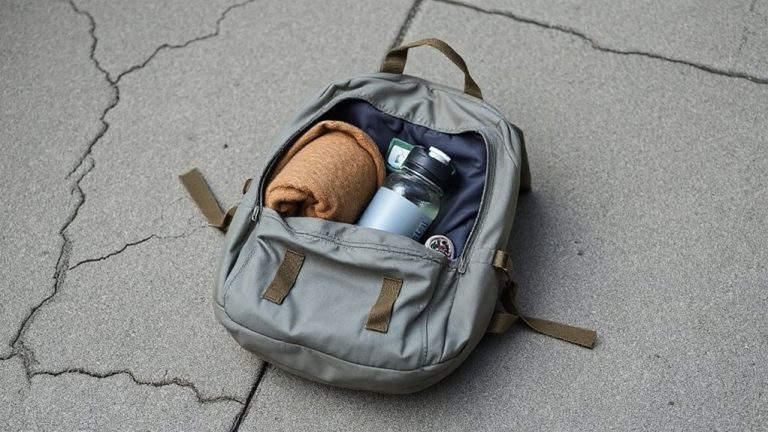
Don’t assume you’ll have time to gather supplies mid-crisis-stock the room now with essentials that cover at least 72 hours of occupancy. Include emergency lighting like LED lanterns or headlamps with long battery life; they’re brighter and more efficient than incandescent options. Pair these with hand-crank or solar-powered models to guarantee function if batteries fail. Store communication devices such as a NOAA weather radio and a charged cell phone with a portable power bank. A two-way radio lets you contact family without cell service. Use a waterproof container to protect electronics and documents. Include water (one gallon per person per day), non-perishable food, a manual can opener, first aid supplies, medications, and dust masks. Check supplies every six months. Rotate food and water annually. Label everything clearly. This setup balances space, weight, and real-world reliability. For reliable alerts during severe weather, include a best weather radio that receives NOAA broadcasts and has multiple power options.
On a final note
You’ve built a functional safe room using tested materials like steel-reinforced concrete and a rated door, meeting FEMA and ICC-500 standards. It withstands winds up to 250 mph and resists forced entry. The location minimizes exposure, and stocked supplies cover 72-hour needs. Trade-offs include space use and cost, but protection is measurable. This solution offers proven, practical safety without overengineering. For most homes, it’s the most effective balance of security, code compliance, and real-world performance.