Evaluating Airway Obstruction Risks in Unconscious Hikers at High Altitude
You’re at serious risk if an unconscious hiker can’t breathe at altitude-low oxygen levels mean brain damage starts in minutes. The tongue relaxes and blocks the airway, while vomiting, thick mucus, or gear can worsen obstruction. Check for breathing quickly, adjust the helmet and backpack without moving the spine, then open the airway with a head-tilt or jaw thrust. Position them on their side to prevent choking. You’ll find better ways to respond effectively.
Notable Insights
- At high altitude, reduced oxygen levels accelerate hypoxia, making airway obstruction in unconscious hikers rapidly life-threatening.
- Tongue relaxation and soft tissue collapse commonly block the airway when a hiker loses consciousness, especially when lying supine.
- Vomiting and aspiration are frequent at high altitude due to altitude sickness, increasing airway obstruction risk.
- Cold-induced mucus buildup, ice formation, or constrictive gear can physically impede airflow in unresponsive hikers.
- Proper airway maneuvers like jaw thrust or head-tilt chin lift are critical, depending on suspected spinal injury.
Why Airway Obstruction Is Deadly at High Altitude
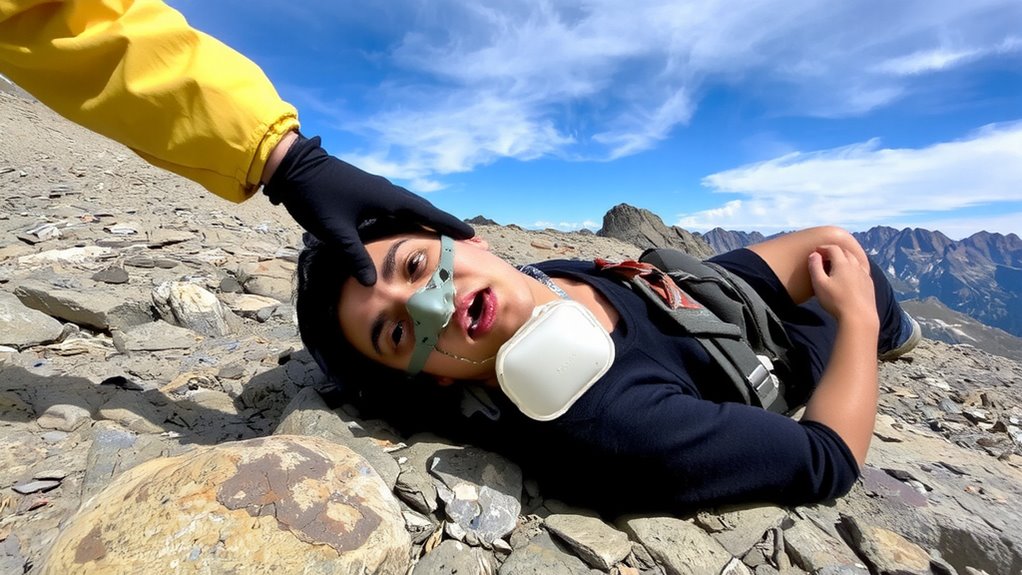
While you might think a blocked airway is just a breathing issue, at high altitude it becomes life-threatening fast because oxygen levels are already low. Your body relies on every breath to maintain oxygen saturation, and when airways narrow or close, that balance collapses. Even mild obstruction cuts oxygen delivery, and within minutes, oxygen saturation drops below 90%, impairing function. At elevation, this decline accelerates, pushing you into cerebral hypoxia before symptoms fully register. Cerebral hypoxia disrupts brain function-judgment, coordination, and consciousness-making self-rescue impossible. Unlike at sea level, there’s no oxygen reserve to buffer delays. You can’t wait for help; the window to clear the airway and restore airflow is short. Devices or techniques that secure the airway must work immediately and reliably under cold, rugged conditions. Failure to do so means rapid deterioration, no matter your fitness or preparation.
What Happens to the Airway When a Hiker Passes Out?
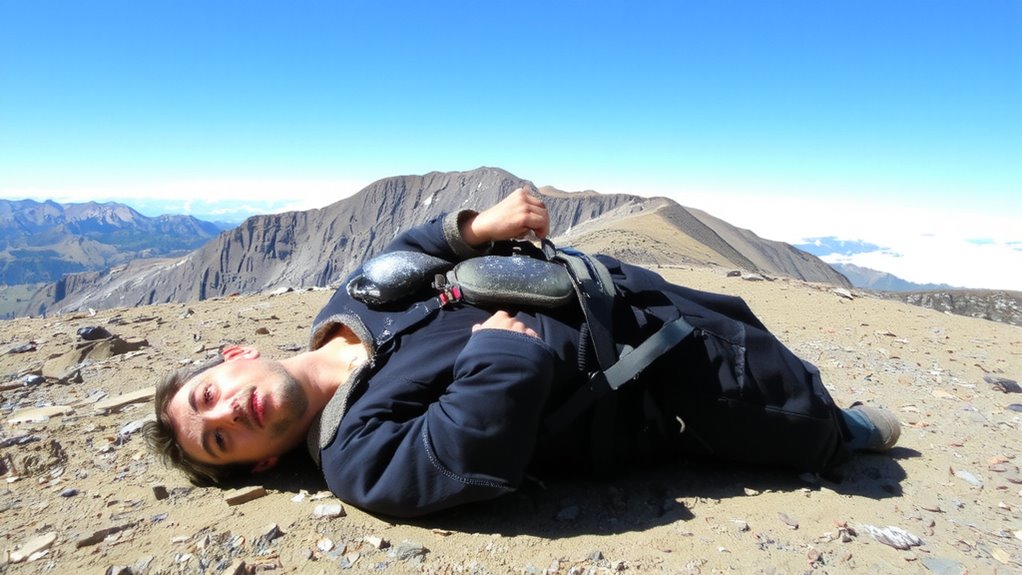
Why does a hiker’s airway become so vulnerable the moment they lose consciousness? Because muscle control vanishes, especially in the upper airway. Tongue relaxation is immediate-you’ve no active force to keep it forward, so it falls back toward the throat. That collapse can narrow or block the airway fast, especially if you’re lying on your back. Jaw position plays a critical role too; a slack jaw reduces oral cavity space, worsening obstruction. Gravity works against you, pulling soft tissue deeper into the pharynx. Even slight misalignment can impair airflow. In high-altitude environments, where oxygen is already scarce, any restriction becomes life-threatening quickly. You can’t rely on automatic reflexes alone-they may not trigger in time. Positioning matters: tilting the head slightly or shifting to a recovery position helps maintain patency. But without intervention, structural changes from simple unconsciousness start the clock on hypoxia.
Top Causes of Airway Blockage at High Altitude
When you’re unconscious at high altitude, the biggest threats to your airway aren’t just the terrain or weather-they’re the physical and physiological factors that stack up the moment you go down. Your relaxed throat muscles let the tongue fall back, blocking airflow. Vomiting and aspiration are common, especially with altitude sickness. Cold exposure thickens mucus and depresses respiratory drive, worsening obstruction risks. Ice or pooled saliva can further narrow the airway. Terrain instability increases danger-rockfalls or snow slides can bury or partially crush a downed hiker, compressing the chest or neck. Uneven ground makes airway positioning nearly impossible without proper support. Helmets or packs might shift and restrict breathing. Even clothing or straps can press against the neck. These hazards combine silently and fast. You don’t need extreme weather for suffocation to start-just altitude, gravity, and time working against you.
Check an Unconscious Hiker’s Airway
You’ve got to act fast if a hiker goes down at altitude-the same factors that cause airway blockages now make checking them harder. Hypoxia and fatigue reduce your precision, but a systematic check is critical. First, guarantee the scene is safe-loose ropes or shifting terrain increase risk of airway trauma or gear entanglement. Clear the neck and head area before assessment.
| Factor | Risk Level | Mitigation Step |
|---|---|---|
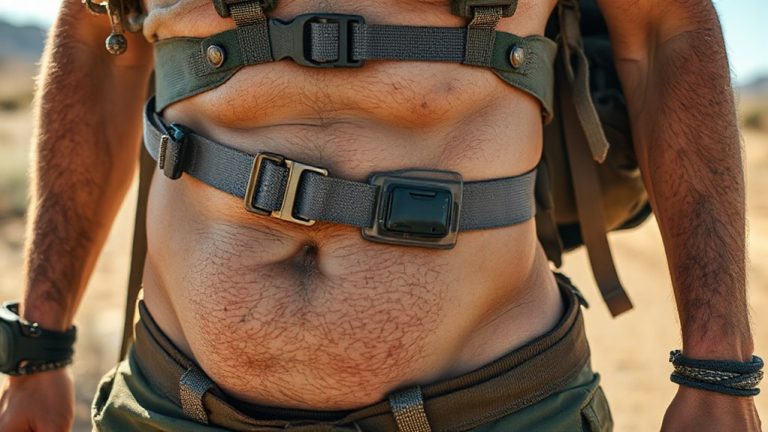
| Helmet position | High | Adjust without spinal movement |
| Backpack straps | Medium | Loosen carefully |
| Neck gaiter/scarf | Low | Lift, don’t pull |
| External load | Medium | Check for entanglement |
Look for obstructions, listen for breath sounds, feel for airflow. Gear entanglement can pull the head forward, distorting airway alignment. If trauma is suspected, minimize movement. Every second counts, but so does technique.
Open a Blocked Airway in the Field
How do you clear an airway when every breath counts and help is hours away? You act fast and use proven techniques. If the hiker’s unresponsive and not breathing right, first try a head-tilt chin lift-tilt the head back gently and lift the chin to open the airway. But if you suspect a neck injury, skip that and use the jaw thrust instead. Place your fingers behind the jaw angles and push forward without moving the neck. The jaw thrust is safer at altitude where trauma is more likely, though it takes practice. The chin lift works faster if the spine’s clear. Both methods can shift the tongue from the airway, but success depends on correct hand placement and firm pressure. Test airflow by listening and feeling for breath. Reassess every few seconds. You’ve got one chance-do it right the first time.
Prevent Airway Emergencies: Signs and Prep
Could you really spot the warning signs before a hiker stops breathing? You need to act early. Look for noisy breathing, gasping, or irregular respirations-these signal airway compromise. At high altitude, confusion or lethargy can also point to low oxygen due to poor airflow. Regular airway monitoring is critical; check every 5–10 minutes in an impaired hiker. Keep the person on their side if unconscious but breathing, to prevent obstruction from the tongue or vomit. Pack a whistle and mirror for emergency signaling-sound and light get attention faster when help’s distant. Know that portable suction devices weigh under 6 oz but require battery checks. Pre-position emergency gear during ascent. You won’t always have time to improvise. Prevention beats rescue. Stay alert, stay prepared, and use real-time signs to guide your response.
On a final note
You need to act fast if a hiker loses consciousness at altitude-airway blockage kills quickly. Check for obstructions immediately; use a head-tilt, chin-lift to open the airway. Most deaths stem from tongue obstruction or vomit, not equipment failure. Carry a simple rescue mask-it’s lighter than an intubation kit and works reliably. Prevention beats rescue: monitor for confusion or vomiting, signs of early altitude illness. Know that supplemental oxygen helps but won’t fix a blocked airway.