Managing Chronic Conditions While Living Off-Grid: Medical Considerations for Survivors
You treat your diagnosis like a survival blueprint-because it is. Stay on schedule with meds using pill organizers and alarms, and stock a six-month supply with 2x redundancy. Use solar generators (1000W+) to power devices like CPAP or insulin fridges, backed by LiFePO4 batteries. Store supplies in UV-resistant, airtight containers and rotate quarterly. Link with local clinics for lab work and emergency protocols. Satellite phones and telemedicine drones offer backup when off-grid. Smart planning keeps you stable when help’s hours away. There’s more to get right.
Notable Insights
- Treat chronic condition diagnosis as a survival blueprint to guide daily health decisions off-grid.
- Stockpile at least six months of medications with 2x redundancy and quarterly expiration tracking.
- Power essential medical devices using solar generators paired with LiFePO4 battery backups for reliability.
- Build local clinic partnerships for lab checks, emergency care, and telemedicine access when needed.
- Maintain satellite communication and emergency protocols with 30-day supply reserves and condition logs.
Treat Your Diagnosis Like a Survival Blueprint
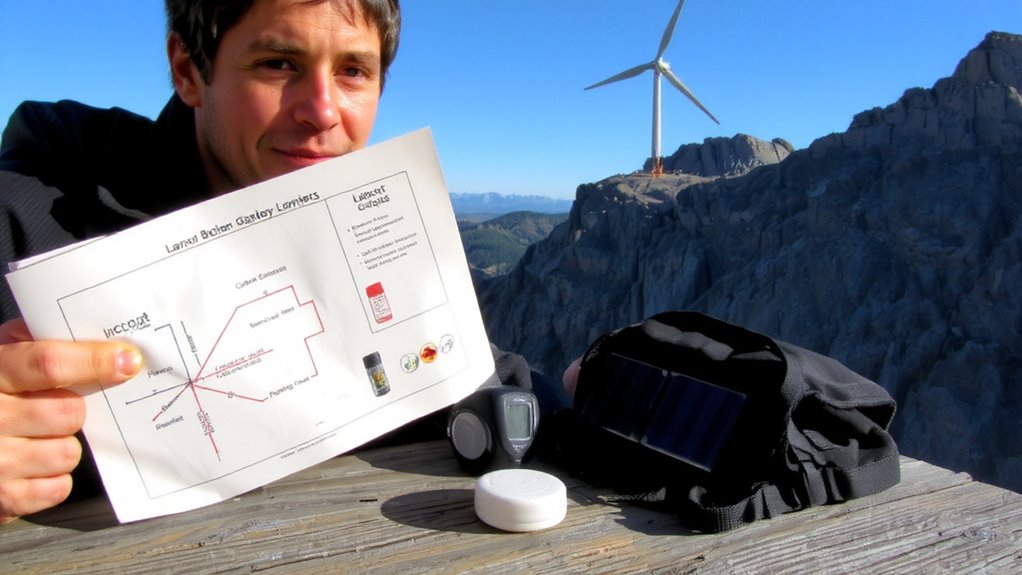
If you’re managing a chronic condition off-grid, your diagnosis isn’t just medical information-it’s the foundation of your survival plan. You need medication discipline to stay stable when help is hours or days away. Missing doses risks complications that could compromise your mobility, clarity, or heart function. Relying on memory alone isn’t enough-use pill organizers with daily slots and set multiple alarms. Routine resilience means structuring your day around consistency, not convenience. Track symptoms, triggers, and response times like mission-critical data. A stable A1C or blood pressure isn’t luck-it’s adherence under variable conditions. Automate what you can: prefilled syringes, timed dispensers, or checklists reduce cognitive load during stress. Your condition won’t adjust to the chaos of off-grid life-your systems must absorb that chaos instead. Diagnoses inform protocols. Protocols enable survival. You’re not just treating illness-you’re engineering reliability into a high-risk environment.
Stockpile Meds and Supplies Before You Go Off-Grid
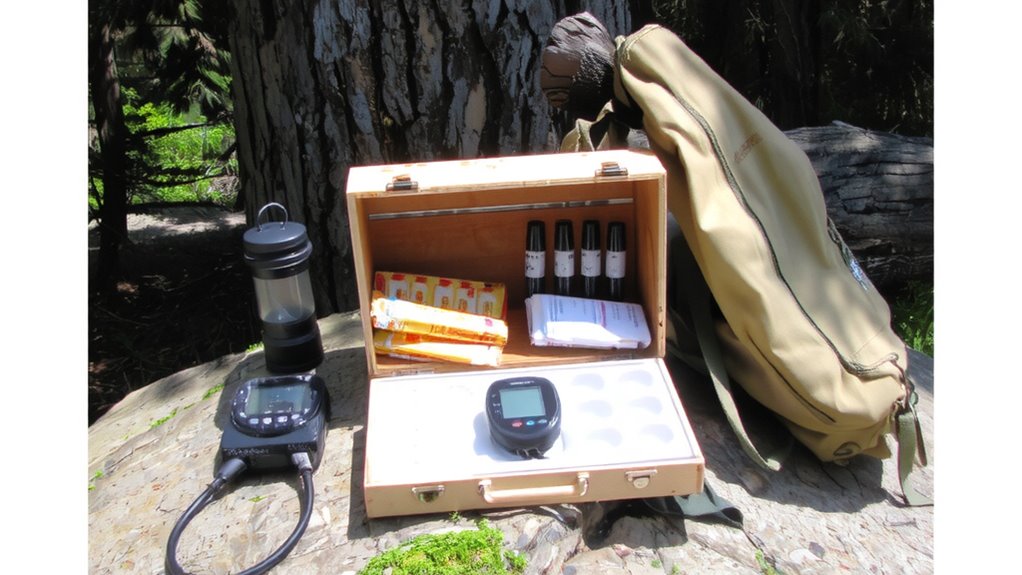
The smart move is to stockpile at least a six-month supply of medications and related supplies before heading off-grid-because once you’re out there, resupply isn’t just inconvenient, it’s potentially impossible. Plan for medication rotation by labeling each item with expiration dates and tracking usage quarterly to avoid waste. Supply redundancy isn’t overkill; it’s insurance against delays, spoilage, or loss. Store duplicates of critical items like insulin, blood pressure meds, or EpiPens in separate, climate-controlled locations.
| Item Type | Redundancy Level |
|---|---|
| Essential meds | 2x supply |
| Diagnostic tools | 1 spare |
| Injectable supplies | 3x needles/syringes |
Use airtight, UV-resistant containers and check stock every three months. Assume no access to pharmacies and factor in shelf life when calculating totals. You’ll rely on what you pack-make it last and make it count.
Power Your Medical Needs Off-Grid
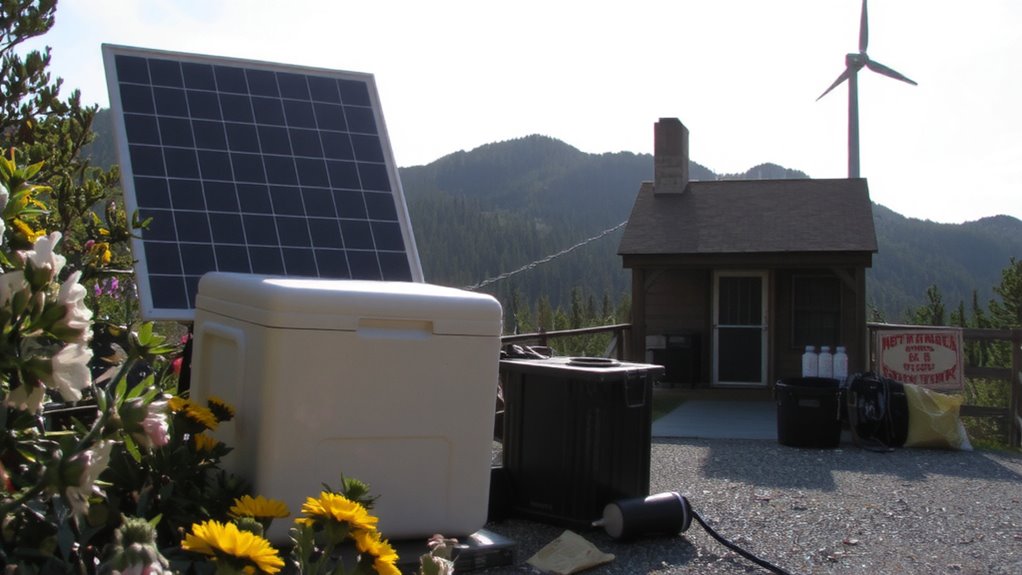
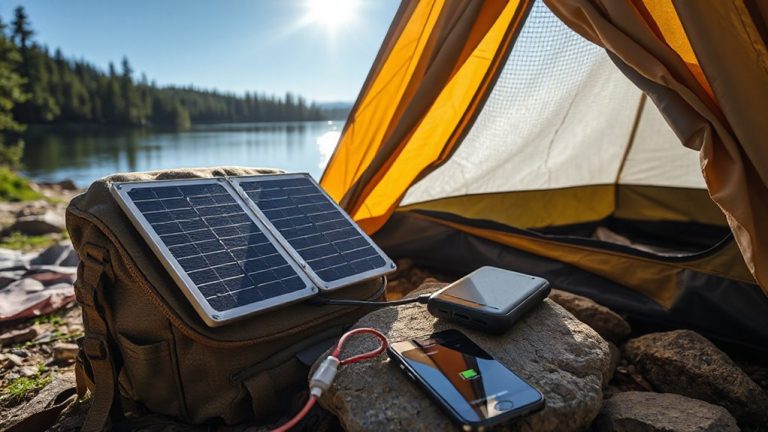
You’ve secured your meds and planned for redundancy, but none of it matters if you can’t power the devices that keep your condition manageable. Insulin refrigeration, CPAP machines, oxygen concentrators-they all need electricity. Solar generators deliver reliable off-grid power without fuel dependence, offering silent operation and low maintenance. A 1000W model with lithium-ion storage can run a CPAP for 8–10 hours per charge. Pair it with battery backups to bridge nighttime or cloudy periods. Larger 2000W+ units handle higher loads but cost more and take up space. Most solar generators recharge fully in 4–8 hours with ideal sunlight. Battery backups, like deep-cycle AGM or LiFePO4, last longer and tolerate deeper discharges than car batteries. Realistic power planning means matching device wattage to generator output and battery capacity. Test your setup weekly. Assume partial sun. Redundancy isn’t optional. It’s survival. For homes needing backup with fuel flexibility, a best dual-fuel generator can provide reliable power during extended outages.
Build Local Care Partnerships Now: Not in Crisis
While stockpiling supplies and gear matters, having someone local who knows your condition and treatment plan could mean the difference between stability and crisis when help is hours or days away. You need trusted contacts now, not during an emergency. Establish relationships with nearby community clinics-even if you’re off-grid, they can monitor labs, adjust meds, and handle acute issues. These clinics often coordinate with telemedicine networks, letting specialists review your case without you traveling. Build these ties while you’re healthy; waiting until a flare-up or complication hits reduces options and increases risk. Local providers can also store your medical summary and preferred protocols. They won’t replace your main doctor, but they offer continuity when signals are spotty or weather traps you at home. Think of them as backup systems-low-tech but reliable, like a hand pump when the electric well fails.
Get Medical Help Remotely (Even With No Signal)
What if the grid goes down and your phone shows no signal bars? You’re not cut off. Satellite clinics and telemedicine drones now deliver remote diagnostics and emergency meds, even in dead zones. These systems bypass traditional networks using low-orbit satellites and pre-programmed flight paths. Off-grid communication remains possible with reliable alternatives like best off-grid radios, which can maintain contact during extended outages. Below compares current remote medical access options:
| Method | Range (miles) | Response Time (hrs) | Max Payload (g) |
|---|---|---|---|
| Telemedicine Drones | 60 | 2–4 | 1500 |
| Satellite Clinics | Global | 4–12 | N/A (virtual) |
| Emergency Beacons | 100+ | 12–24 | 0 |
| Mesh Radio Networks | 5–10 | 1–3 | 0 |
| Handheld Sat Phones | Global | Immediate call setup | 0 |
Telemedicine drones work best for urgent supplies; satellite clinics suit routine consults. Both reduce isolation without relying on cell towers. Choose based on need, terrain, and power access.
Make an Off-Grid Emergency Plan for Chronic Illness
Having access to remote medical support doesn’t replace the need for a structured emergency plan if you rely on treatment for a chronic condition. Emergency preparedness means anticipating treatment disruptions and having backup options ready. You should store at least a 30-day reserve of medications and test supplies, more if resupply is infrequent. Use supply rotation to keep stock fresh-label each item with expiration dates and move older ones to the front. Power outages can disable refrigeration or medical devices, so include battery backups or solar-compatible alternatives. Share your plan with nearby contacts who can assist during crises. Monitor your condition daily and keep a log-it helps if communication is delayed. A written emergency protocol, updated quarterly, reduces guesswork when time matters. Off-grid living demands reliability; your health plan must meet that standard without exception. Be sure to include essential emergency medical supplies in your preparedness kit to address acute health issues promptly.
On a final note
You’ll need reliable meds, power, and backup plans. Stockpile with expiration in mind. Solar generators can run critical devices, but test runtime under load. Satellite messengers work when cell towers don’t-register ahead. Local contacts offer faster help than distant clinics. Telehealth apps save trips, but require pre-arranged access. Your plan must include evacuation routes and medical records on hand. Off-grid living doesn’t excuse poor prep-it demands better.