Evaluating Scene Safety in a Thunderstorm With Lightning Risk
If your hair stands on end or you hear crackling, lightning could strike within seconds-act now. Seek a fully enclosed building or metal-topped vehicle; they reduce injury risk by over 90%. Avoid tall trees, open fields, and ridgelines. Crouch low on the balls of your feet if caught outside. Wait 30 minutes after the last thunder before resuming activity. Early action and proper shelter make the critical difference in survival. There’s more to weigh when timing and terrain shape your choices.
Notable Insights
- Seek enclosed buildings or metal-topped vehicles immediately when thunder follows lightning within 30 seconds.
- Avoid tall trees, open fields, and elevated areas that increase lightning strike risk.
- Watch for warning signs like darkening skies, static sensations, or hair standing on end.
- Stay at least twice a tree’s height away from its base to reduce side-flash danger.
- Crouch low on the balls of your feet if caught outside, minimizing ground contact until the storm passes.
Recognize Lightning Danger Signs
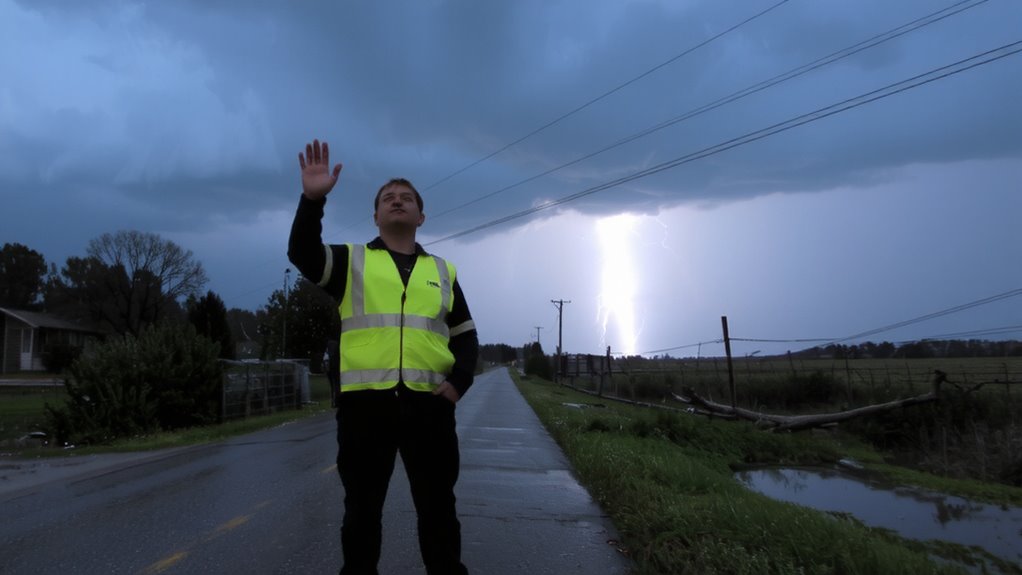
How do you know when a storm’s close enough to be dangerous? You watch for changes in the environment that signal lightning formation is likely. If your hair stands on end or you hear crackling, strong electrical fields are building-lightning could strike soon. Thunder less than 30 seconds after lightning means the storm is within 6 miles, a clear danger zone. Darkening skies, increasing wind, and distant flashes also indicate risk. These signs don’t guarantee a strike but show conditions are favorable for lightning formation. Metal objects and open areas increase your exposure, but the real warning is the presence of strong electrical fields, detectable only by physical cues. You can’t measure them without gear, so rely on observation. Acting early, before rain starts, is critical. Waiting until lightning hits nearby is too late. Pay attention-you have seconds, not minutes, to respond once the signs are clear.
Find Shelter Fast When Lightning Risk Is High
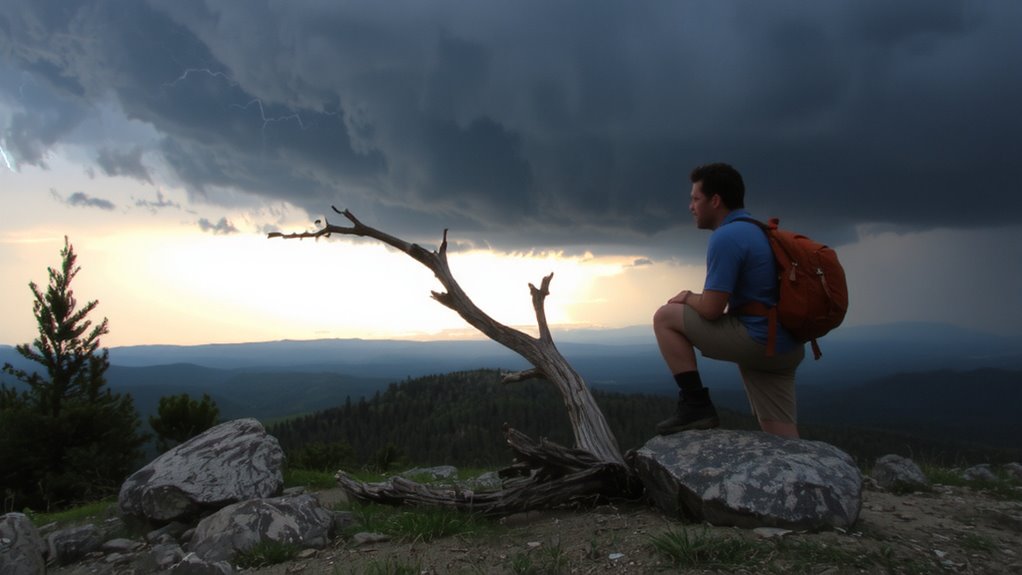
When lightning risk is high, getting to shelter quickly isn’t just smart-it’s a survival necessity. You’re safer inside a fully enclosed building or metal-topped vehicle, where lightning research confirms the structure redirects current away from occupants. Expect shelter to offer grounding, not comfort-walls and roofs must be solid, not open or temporary. Even brief exposure increases your risk, especially if you’re capturing storm photography, which often tempts people to delay retreat. No shot is worth the danger: lightning can strike 10 miles from a storm’s core, and reaction time is minimal. Reliable shelters reduce injury odds by over 90% compared to open areas. You should reach shelter before the storm arrives, not after thunder rolls. Lightning research consistently shows that speed and proximity matter more than shelter perfection. If you’re tracking storms for photography, build in early exit times. Prioritize safety metrics over visuals-your survival depends on fast, informed action, not chance.
Avoid Places Where Lightning Strikes Most
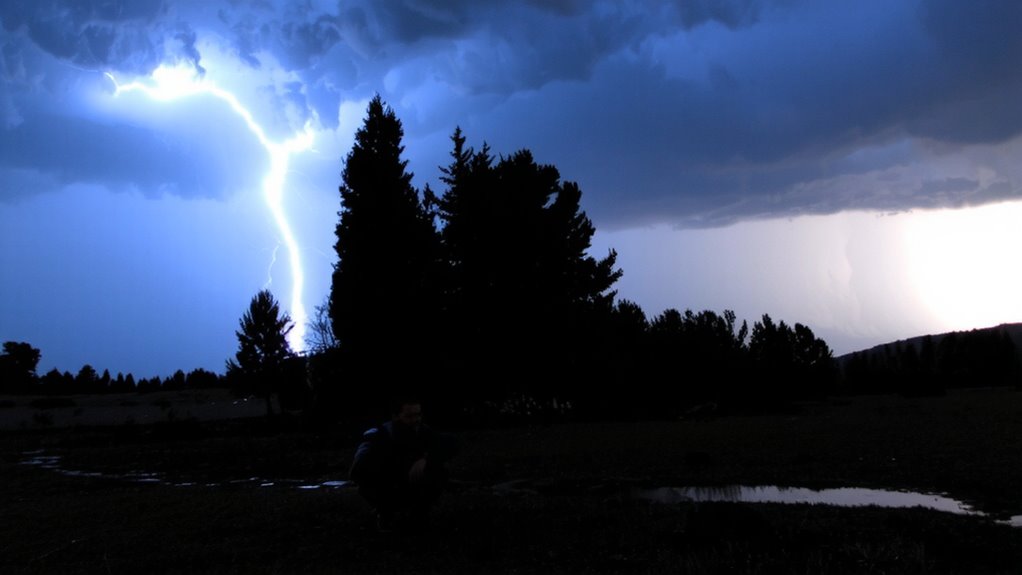
You’ve already reached shelter, but where you position yourself within or around that space still matters. Lightning preferentially strikes tall trees and other elevated objects, so standing near one-even for cover-increases your risk considerably. The electrical current can jump from the tree to you, especially if you’re within a few feet. Open fields are equally dangerous because you become the tallest target when no structures or trees are nearby. Avoid remaining in or crossing these areas once thunderstorms approach. Instead, move toward low ground and away from isolated trees or groups of tall trees. Stay at least twice the height of any nearby tree away from its base. Open fields offer no protection and increase exposure. Your safest position is inside a fully enclosed building or hard-topped metal vehicle, not beside or beneath natural or vertical features that attract strikes.
Watch for Storm Warning Signs
What tells you a storm’s about to hit-besides thunder? You’ll see darkening storm clouds building on the horizon, often with a greenish or gray tint, signaling moisture and instability. Towering cumulonimbus formations mean conditions are ripe for lightning. Watch for sudden wind shifts-those abrupt changes in direction or speed often precede storm arrival. A calm breeze turning erratic means pressure systems are shifting. You might also notice the air getting heavier and more humid. These signs don’t guarantee immediate danger, but they raise risk levels quickly. Ignoring them cuts your reaction time short. You need at least 15–20 minutes to get to safety once a storm is imminent. If the clouds thicken and the wind shifts noticeably, assume lightning could follow. Act before the storm reaches you.
Stay Safe Outdoors During Lightning Risk
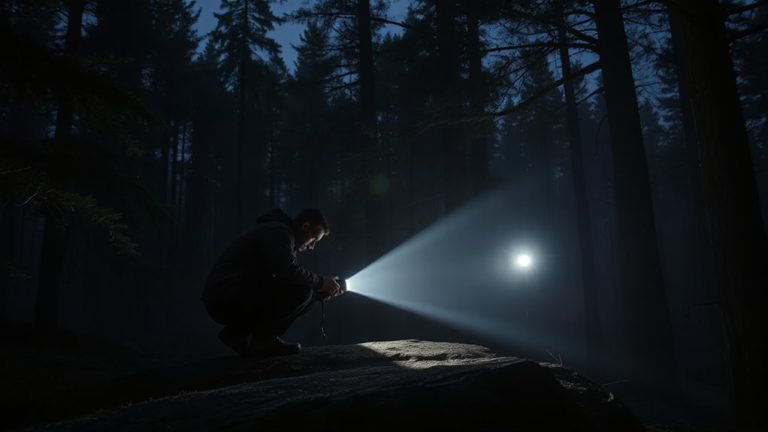
Dark skies and shifting winds mean you’re already behind if you wait for the first lightning strike to act. You should be moving toward safer terrain well before the storm hits. Avoid ridgelines, open fields, and isolated trees. Seek lower elevation with uniform tree cover, but stay away from tall trunks. If visibility drops, use flashlight signaling in short, deliberate bursts-it conserves battery and increases detection over noise. Pack an emergency whistle and know the standard three-blast signal; it carries farther than shouting and requires less energy. Metal gear or trekking poles won’t attract lightning markedly, but they can conduct it if a strike occurs nearby. Ditch open areas quickly and don’t wait for rain. Storms move fast. Your best defense is early action, not gear. Time matters more than equipment when lightning’s in play.
Use Last-Resort Moves in Open Areas
How do you stay safe when caught in an open field with no shelter and lightning closing in? You use last resort positioning to reduce risk. Crouch low on the balls of your feet, keeping your head down and hands over your ears-this minimizes contact with the ground and lowers your height. Avoid lying flat; it increases exposure. Isolate yourself from others by at least 20 feet to prevent side-flash. Remove metal backpacks or gear, but don’t waste time shedding clothing. If you’re with a group, use emergency signals like loud calls or whistle blasts to coordinate without standing. Last resort positioning won’t guarantee safety, but it reduces strike likelihood. You’re still exposed, so this method is a temporary, minimal-protection option when no better cover exists. It’s tested in field simulations and recommended by safety standards as a final action.
Wait for the All-Clear After Lightning Risk Ends
Once you’ve used last-resort positioning in an open area, your next step isn’t to stand up and move immediately-it’s to wait. Lightning can strike up to 10 miles from a storm’s core, so even if the rain stops, the risk remains. You need at least a 30-minute window without thunder or flashes before it’s safe to assume the threat has passed. This period allows for signal confirmation-using reliable cues like a weather radio or app alerts-to verify that conditions have stabilized. Rushing too soon cuts into safe waiting time and increases exposure. Staying put during this phase isn’t passive; it’s a calculated delay that reduces risk. Movement before confirmation raises danger without benefit. Use the time to assess your next steps, gear, and exit route. Only after verified signal confirmation should you consider relocating or resuming activity. Safe waiting saves lives-it’s the final, essential step. A portable power source like a solar charger can keep your weather radio or smartphone running during extended waits.
On a final note
You know the risks when thunderstorms hit, and lightning moves fast. Seek shelter in a fully enclosed building or metal-topped vehicle immediately-no exceptions. Avoid open fields, trees, and water. If trapped outside, crouch low on the balls of your feet, minimizing contact with the ground. Wait 30 minutes after the last thunder before resuming activity. No gear replaces sound judgment-staying proactive keeps you alive.