Using Shock-Cord Loops to Hold Folded Blankets or Sleeping Mats Externally
Use shock-cord loops to securely attach folded blankets or sleeping mats to your pack-they hold tight over rough terrain and handle wet, abrasive conditions better than flat straps. Install them vertically or horizontally depending on gear shape, and size the loops to match your mat or blanket width, up to 20 inches. Roll mats tightly, fold blankets into compact sections, and match the profile to the loop spacing. Retighten after 10 minutes of hiking, as cords relax when cold or wet. Reinforced attachment points prevent tearing, while 3.5mm to 5mm braided nylon offers 40–60 lbs break strength. You’ll find better balance and reduced snag risk with proper placement and tension. Details on long-term care and multi-use options follow.
Notable Insights
- Place shock-cord loops on backpack sides or top to securely hold folded blankets or sleeping mats.
- Fold mats tightly from foot to head, then compress into thirds for a compact, stable shape.
- Accordion-fold blankets into 12- to 18-inch sections to match shock-cord loop spacing and reduce bulk.
- Use 3.5mm to 5mm braided nylon shock cord with 40–60 lbs strength for durable, elastic retention.
- Retighten loops after initial wear and before harsh conditions to maintain secure, snag-free packing.
Choose Shock-Cord Loops for Secure Pack Attachment
A good tie-down starts with reliable hardware, and shock-cord loops outperform basic webbing straps when securing blankets or sleeping mats to your pack. You need consistent tension, and elastic shock cords maintain grip over uneven terrain. Material strength matters-quality loops use 3.5mm to 5mm braided nylon cord, tested to 40–60 lbs of break strength, ensuring they hold under load without stretching out. Cheaper cords fray fast and lose elasticity. Loop placement is just as critical. Side or top-mounted loops work best, letting you compress bulky items without shifting. Poorly placed loops pull unevenly, creating imbalance. You’ll notice it on long hikes-gear stays put or doesn’t. Real-world use shows shock cords outlast flat straps in wet, abrasive conditions. They’re lighter, too, saving ounces that add up. You get secure attachment without fuss, assuming the loops are well-positioned and made with durable materials. That’s what keeps your blanket from snagging or dropping mid-trail.
Install Shock-Cord Loops on Any Backpack
You’ve seen how shock-cord loops keep gear secure under real trail conditions, but that benefit only matters if your pack has them in the right places. Installing loops yourself allows custom placement based on your gear and pack design. You can add them vertically on side panels for sleeping mats or horizontally across the front for folded blankets. Use durable shock cord, typically 3/32-inch diameter, and anchor it with barrel knots or cord locks. Loop sizing matters-too loose and gear shifts, too tight and it’s hard to load. Aim for loops that stretch snugly around your gear with minimal slack. Nylon webbing tabs can reinforce attachment points on thin fabrics. This mod works on most packs, even those without built-in compression straps. The fix is lightweight, low-profile, and reliable under dynamic loads. With thoughtful placement and sizing, your pack adapts precisely to your needs, without relying on aftermarket add-ons. For campers using self-inflating mattresses, proper loop placement ensures compatibility with bulkier sleep systems.
Fold Blankets and Mats for External Packing
Proper folding keeps blankets and sleeping mats compact and stable when strapped externally. Use simple folding techniques-roll sleeping mats tightly from foot to head, then compress sideways into thirds for minimal bulk. For wool or synthetic blankets, fold in half lengthwise, then accordion-fold into 12- to 18-inch sections. These methods promote compact storage without reliance on compression sacks. Avoid bulky diagonal folds or loose rolling, which increase wind resistance and strain shock-cord tension. A flat, rectangular profile integrates better with external frames and reduces snagging. Test fold with your gear to confirm dimensions align with your shock-cord loop spacing-most loops fit bundles up to 20 inches wide. Nylon and down-insulated mats respond best, maintaining shape after repeated folding. Foam mats may require tighter rolls to avoid springback. These folding techniques enhance load security and balance, critical for long-distance carrying. Consistent results come from practice, not special gear.
Keep Gear Tight in Storms and Rough Terrain
When winds pick up or trails turn rugged, loose gear shifts and stresses shock-cord loops, so retightening before exposure is non-negotiable-loops stretch under load, and even well-folded bundles can sag if tension isn’t evenly redistributed. You need gear stability, especially on uneven terrain, where shifting weight can throw off balance or snag brush. Pull each loop end firmly to maximize load compression; this minimizes flapping and keeps the bundle close to your pack’s center of gravity. Test tension after 10 minutes of hiking-shock cords relax over time, particularly when cold or wet. Re-secure if gaps appear between the pack and the load. Avoid over-tightening, which strains stitching. In storms, check alignment across all anchor points; misalignment increases drag and wear. Proper compression takes 15 seconds but can prevent a cascade failure mid-trail. Your pack should ride snug, not bounce.
Use Shock-Cord Loops for Poles, Chairs, and More
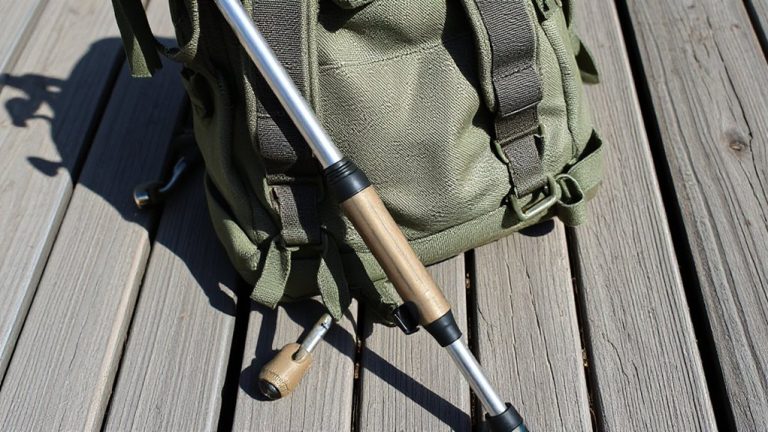
Shock-cord loops aren’t just for compressing sleeping mats or blankets-they’re a go-to for securing long, rigid gear like trekking poles, tent poles, and camp chairs. You can easily strap them to your pack’s exterior without adding bulk. The elastic tension holds items firmly, reducing sway and noise on uneven trails. For tent storage, looping shock cords around pole segments keeps them bundled and tangle-free. It’s a simple method that saves time when packing or unpacking. Regarding gear organization, these loops offer consistent access and prevent scratches or damage during transit. Most shock cords last years under regular use, stretching to fit various diameters-typically 12 to 20 inches. They weigh under 0.5 ounces, so there’s no meaningful load penalty. While not ideal for heavy loads over 5 lbs, they’re reliable for lightweight trekking setups. You’ll find they integrate easily with most backpack compression systems, making them a practical addition to your routine.
Maintain Loops for Long-Term Durability
A well-maintained shock-cord loop lasts years, but it won’t survive neglect. You need to inspect it regularly for material fatigue, especially where the cord bends or attaches to fabric. Over time, repeated stress weakens fibers, reducing elasticity and load capacity. If the cord feels stiff or develops kinks, it’s nearing failure. Clean dirt and grit from the loops after trips, since abrasion accelerates wear. Check stitching at stress points; torn seams compromise function. Reinforced stitching-like bar tacks or zigzag patterns-adds seam reinforcement that doubles lifespan under load. Don’t overload loops beyond design limits; stretched cords lose tension and sag. UV exposure degrades both cord and fabric, so store gear out of direct sunlight. Replacing a frayed cord or resewing a seam takes minutes but prevents mid-trip failures. Simple care keeps loops functional and reliable season after season.
On a final note
You’ll keep your pack light and accessible by using shock-cord loops for blankets or sleeping mats. They hold gear snug, even in wind or rain, and work just as well for trekking poles or camp chairs. Setup takes seconds and adds minimal weight. Over time, UV exposure and friction will wear the cord, so inspect it every few months. Replacing a frayed loop costs less than $5. It’s a simple fix that lasts.