Using a Flint Rock and Knife Back to Create Sparks in Darkness
Use a high-carbon steel knife with a 55–58 HRC hardness and the back of the blade at a 30- to 45-degree angle to strike a flint or ferrocerium rod. This gives you hot, consistent sparks even in total darkness. Pair with fast-igniting tinder like char cloth, sheltered from wind. Stainless or overly hard blades won’t work-they resist spark generation. With the right tools and angle, ignition takes seconds; get it wrong and you’ll only see dust. Your next attempt could already be burning.
Notable Insights
- Use a high-carbon steel knife back to strike the flint at a 30- to 45-degree angle for optimal sparks.
- Aim sparks directly onto fine, dry tinder like char cloth placed in a low, sheltered depression.
- Hold the flint steady between thumb and forefinger while striking with a firm, full stroke in darkness.
- Shield the tinder with your body or hand to block wind and increase ignition chances in adverse conditions.
- Pre-test your flint and knife in daylight to ensure reliable spark production before relying on them at night.
How to Start a Fire With Flint and Knife: Fast
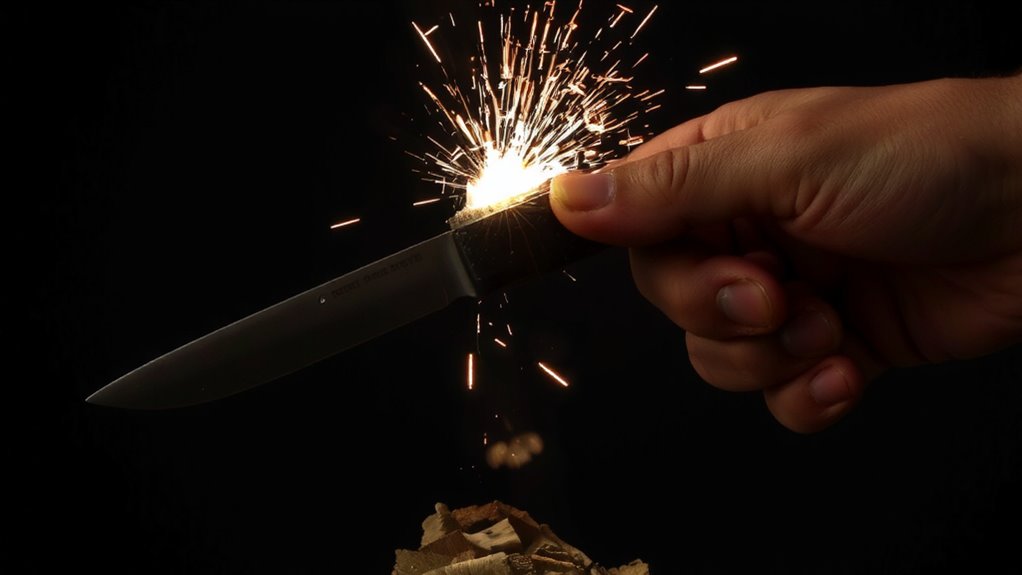
Why struggle with matches when you can get sparks in seconds using just a flint rock and knife? You need proper fire selection-place your tinder bundle where sparks land easily, like in a small depression sheltered from wind. Use dry, fine tinder such as char cloth or cotton balls for best ignition success. Strike the knife edge down along the flint with firm, quick motion to produce sparks. Spark timing matters: aim repeated strikes at the same spot on the tinder to build heat. A sharp, high-carbon steel blade creates better sparks than a dull or stainless one. You won’t always get flame on the first try, so adjust angle and force quickly. With practice, ignition takes under 30 seconds. Success depends on consistency, not luck. Proper technique makes flint and knife faster than lighters in damp woods or windy ridges.
Best Knife and Flint for Sparks (Even When Wet)
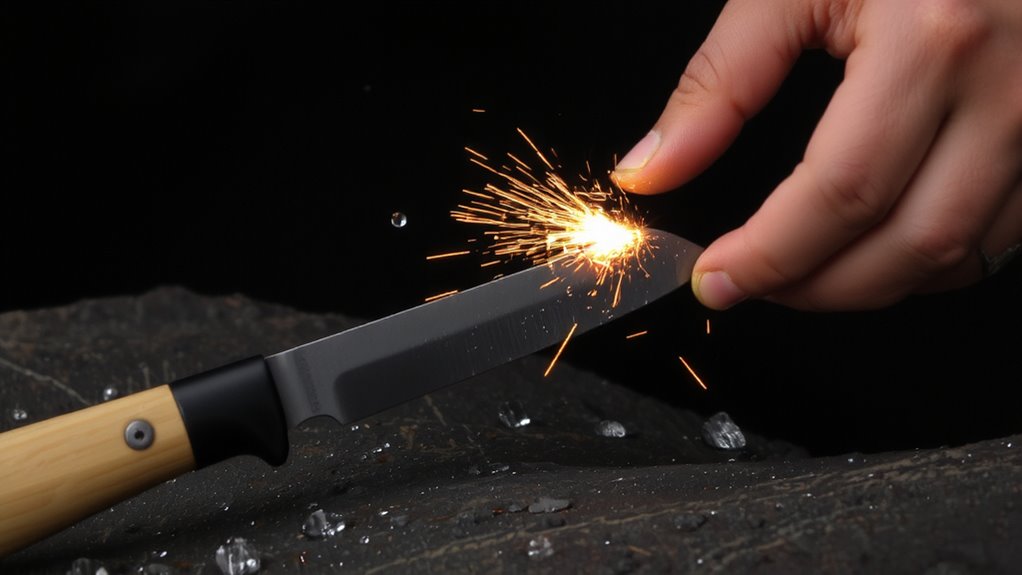
Even when soaked, the right combination of flint and knife still produces sparks if you choose gear built for failure conditions. Flint selection matters-go with high-silica rocks like chert or quality man-made ferrocerium rods, which spark reliably even when wet. Natural flint must have sharp, clean edges; smooth or weathered surfaces reduce strike efficiency. Your knife material is equally critical. High-carbon steel works best-softer steels won’t shave off enough material, while stainless steel, if too hard, resists striking. A blade with a 55–58 HRC rating strikes the ideal balance. Avoid serrated edges; a smooth, unbroken spine at 90 degrees delivers consistent sparks. Test your setup: if you’re not getting hot, visible sparks after firm strikes, one of these factors is off. Match proven flint with the right knife material, and you’ll ignite fire under harsh conditions.
Set Up Tinder to Catch Sparks in Wind or Damp
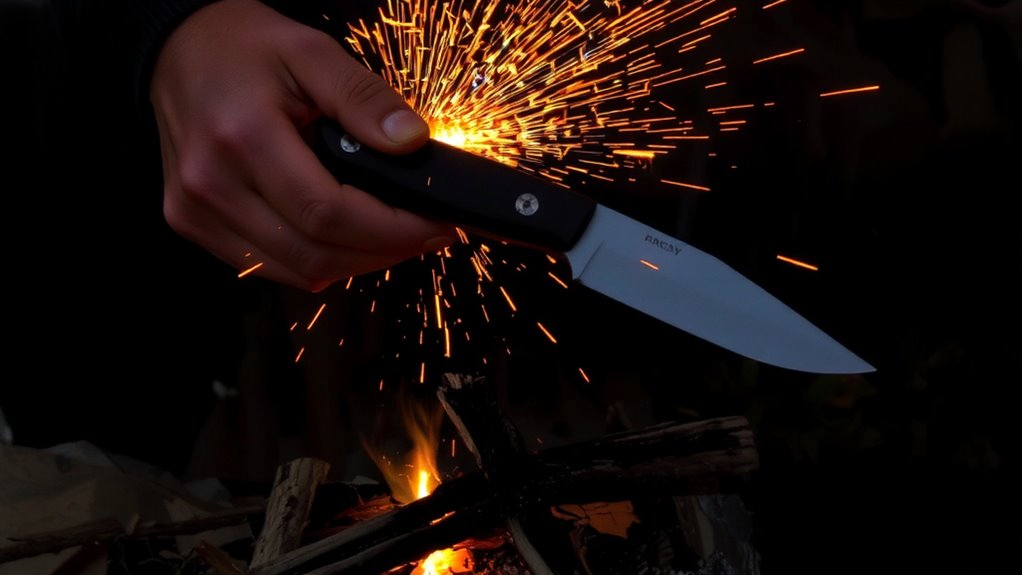
Your tinder’s job is to catch a spark and hold it long enough to ignite, especially when wind or damp threatens that transfer. Success hinges on tinder selection and wind shielding. Use fine, dry material like char cloth or amadou for reliability-they catch sparks faster than coarser options. If you’re in damp conditions, prep by drying tinder near body heat or using a windproof container. Shield the setup with your hand, knife, or natural cover to block gusts. Even a slight breeze can blow away weak sparks or cooling embers. A fire piston can also be used in conjunction with natural tinders to ensure ignition in adverse conditions, especially when fire piston technique is mastered.
| Factor | Best Practice |
|---|---|
| Tinder Selection | Use char cloth or processed plant fibers |
| Wind Shielding | Block with hand or knife while striking |
| Damp Protection | Pre-dry tinder; store in sealed container |
Position the bundle low and compact to minimize exposure.
Strike at the Right Angle for Instant Fire
You’ve shielded your tinder and prepared it to catch a spark, but the strike itself determines whether that preparation pays off. Aim for a 30- to 45-degree angle between the flint and knife spine-this range delivers the sharpest impact for consistent sparks. A proper grip on the flint guarantees control; hold it firmly between thumb and forefinger, exposing just enough edge to strike. Your free hand should hold the knife near the base, allowing full, confident strokes down the flint’s edge. Use a consistent rhythm-about one solid strike per second-so sparks fall in rapid succession. Too fast and you lose precision; too slow and you miss the window. Steel must hit flint with direct force, not glancing blows. Test different angles under real conditions to confirm what works with your tools. Precision beats power every time.
Why Aren’t You Getting Sparks?: And How to Fix It
What’s stopping the spark-poor technique, the wrong tools, or both? You’re likely dealing with poor flint quality or a weak striking force. Low-grade flint chips too easily and won’t shave off hot sparks. Test your flint: if it feels soft or produces dust instead of shavings, replace it. Hard, glassy flint works best. Your striking force matters just as much. A timid strike won’t generate the heat needed. You need a fast, firm pull stroke along the knife’s spine, not a tap. Use the back of a high-carbon steel blade-softer metals won’t create sparks. Angle the knife at 30–45 degrees and strike in one continuous motion. If you’re still failing, check for rust or coating on the blade. Clean steel makes a difference. Fix these variables, and you’ll ignite reliably. For reliable tinder to catch those sparks, consider making DIY fire starters using household materials.
On a final note
You won’t always get sparks on the first strike, but the right flint and a high-carbon steel blade increase reliability. Test your kit in wet conditions-some rods work when damp, others don’t. Angle the knife at 30–45 degrees for maximum spark transfer. Cotton tinder catches better than dry grass. Practice improves success more than gear upgrades. A good setup lights fire in under a minute, even in wind, if you use a proper feather stick and shield.