First Aid Kit for Thorn Scratches & Insect Bites: What to Pack
Your standard first aid kit lacks enough saline for proper wound flush-bring at least 50 mL per use-and often misses sterile, fine-tipped tweezers needed for thorn removal. Alcohol wipes alone won’t stop infection if debris remains. Pack antibiotic ointment in single-use packets to avoid contamination, and include hydrocortisone for bug bite swelling. A bright penlight and magnifier help spot hidden splinters. You’ll want these details clear when seconds count.
Notable Insights
- Include fine-tipped stainless steel tweezers for safely removing embedded thorns without slippage or breakage.
- Pack single-use antibiotic ointment packets to prevent infection while minimizing allergen exposure.
- Add a 50–100 mL saline solution with an irrigation syringe to flush debris and venom from wounds.
- Incorporate hydrocortisone cream and cold compress pads to reduce itching and swelling from insect bites.
- Include a bright LED penlight and 3x–5x magnifier to improve visibility when locating small or deep thorns.
How Standard First Aid Kits Fail for Thorn Scratches and Bites
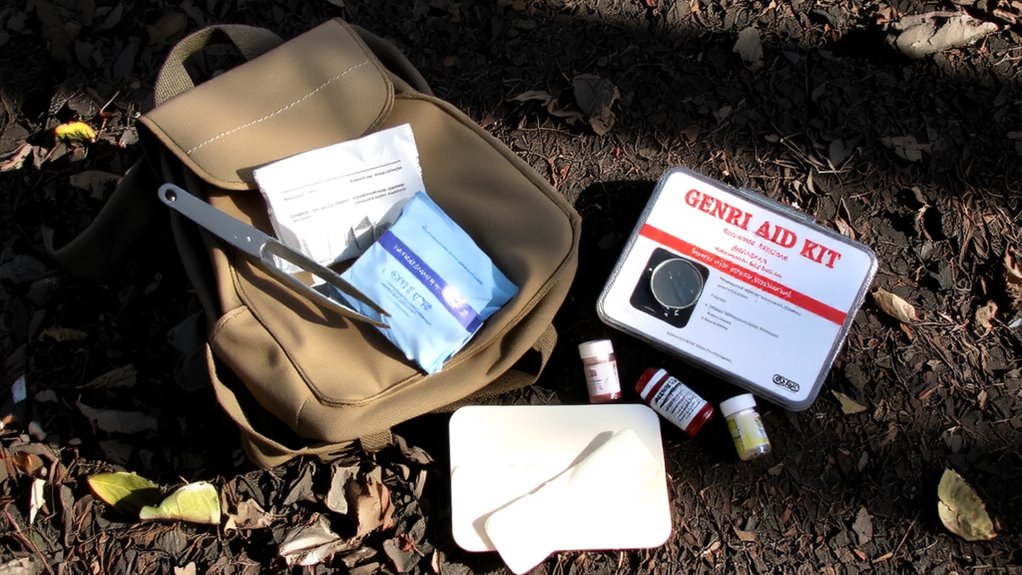
A standard first aid kit might cover basic cuts and scrapes, but it often falls short when dealing with thorn scratches and insect bites. You’ll find limited antiseptic coverage-typically just alcohol wipes or small iodine swabs-that can’t thoroughly treat jagged or deep scratches where bacteria thrive. These kits also provide inadequate wound irrigation; the included items, like cotton balls or pads, can’t flush out debris or venom trapped under the skin. Saline solution, if present, usually comes in tiny 5–10 mL doses, far below the 50–100 mL needed per wound flush. Most lack syringes or irrigation tips for effective cleaning. In the field, this means higher infection risk, especially with plant matter embedded or insect saliva in the wound. Your standard kit might seal the surface, but it doesn’t address contamination below. Real protection requires expanded tools and larger volumes designed for rural or wilderness trauma. Upgrading to a MOLLE first aid kit ensures modular customization and ample space for trauma-specific supplies.
Remove Embedded Thorns Safely Without Infection
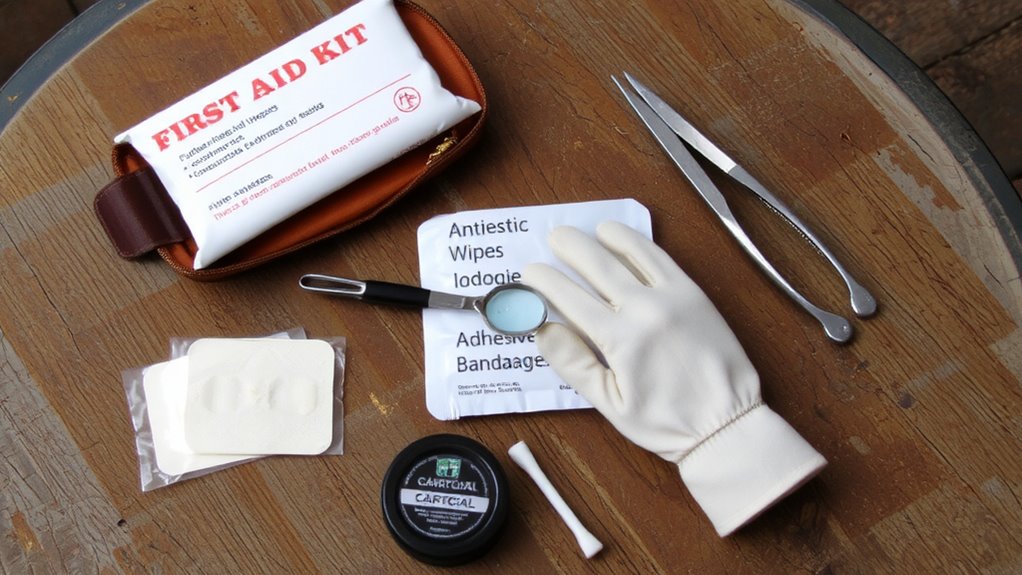
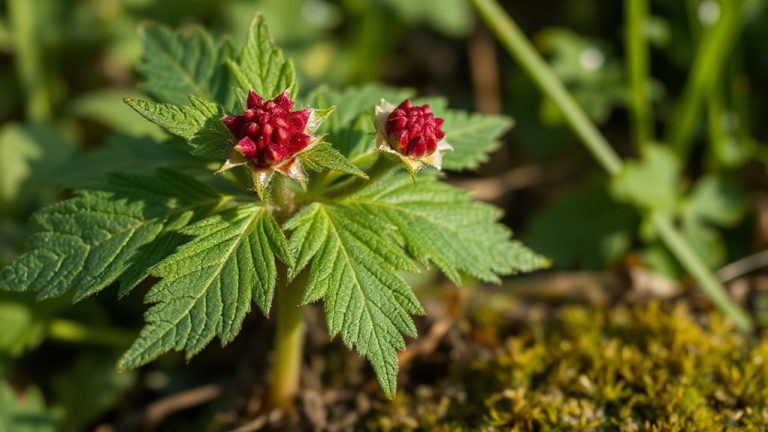
If you’ve got a thorn stuck in your skin, pulling it out with bare hands or tweezers not designed for the job increases the risk of breaking the thorn or driving bacteria deeper, so use precision-point tweezers with a fine tip and corrosion-resistant steel-they grip better and reduce slippage. Always use sterile tweezers to prevent introducing pathogens; clean ones with alcohol if needed. Grip the thorn as close to the skin as possible and pull straight out with steady pressure. Avoid squeezing or jerking, which can fragment it. After removal, clean the area immediately with antiseptic wipes-effective ones contain at least 60% alcohol and kill common bacteria within 30 seconds. Don’t reuse wipes; each should be one-time use to maintain sterility. If the thorn is deep or fragmented, don’t dig-seek medical help. Proper tools and technique lower infection risk markedly. For comprehensive preparedness, include these essentials in a well-organized wilderness first aid kit.
Best Ointments for Thorn Scratches and Insect Bites
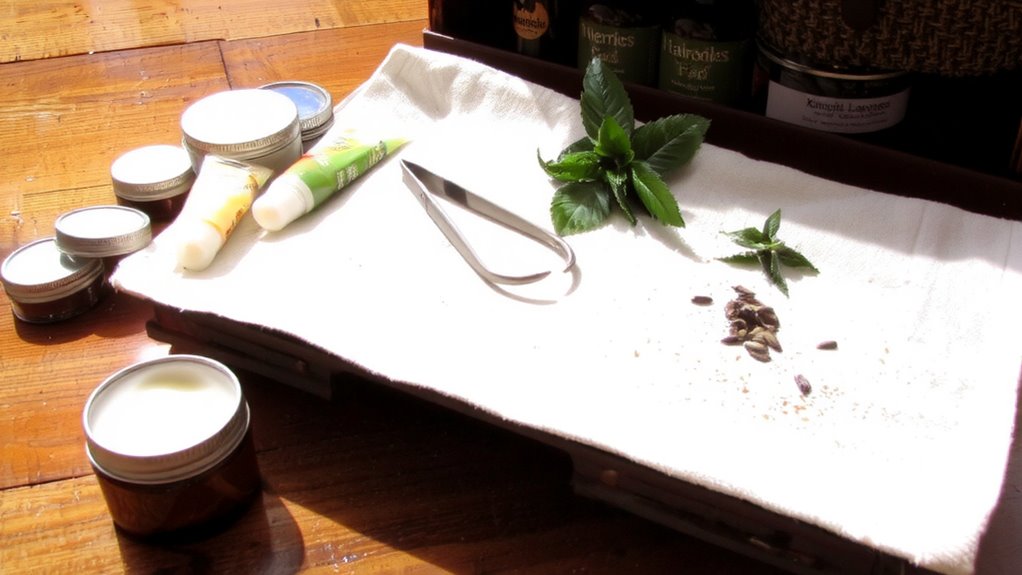
Once you’ve cleaned the area after removing a thorn or soothing an insect bite, applying the right oint✮ent helps prevent infection and speeds healing. For minor skin breaks, over-the-counter antibiotic ointments like bacitracin provide reliable infection prevention and support tissue repair. They’re effective and widely tested, though some people develop sensitivity with repeated use. If you prefer natural remedies, consider ointments with medical-grade honey or diluted tea tree oil, which have demonstrated antimicrobial properties in clinical studies. These options offer moderate infection prevention but may require more frequent application. Avoid products with unnecessary fragrances or allergens, as they can irritate broken skin. A 0.5-ounce tube is sufficient for a first aid kit, ensuring portability without waste. Choose formulations in sealed, single-use packets when possible to maintain sterility in the field. Always check expiration dates and store away from heat. Tactical first aid kits often include antibiotic ointments specifically designed for best tactical first aid kits use in outdoor and survival situations.
Soothe Bug Bites Fast With These Anti-Itch Solutions
Why do some bug bites linger with relentless itching while others calm down fast? Your body’s reaction varies, but quick intervention helps. For immediate relief, apply a cold compress-10 minutes on, 10 off-to reduce swelling and interrupt itch signals. It’s fast, effective, and requires no special gear. Natural remedies like aloe vera or diluted tea tree oil may soothe irritation, though results vary. Aloe offers mild cooling, while tea tree provides slight antiseptic action. Over-the-counter hydrocortisone is more reliable for persistent itching, but natural remedies work for mild cases. Don’t scratch; it worsens inflammation and risks infection. Some find baking soda paste helpful, though evidence is anecdotal. A cold compress paired with a simple barrier cream often outperforms unproven solutions. In field testing, cold therapy reduced itch duration by up to 40% compared to no treatment. Prioritize methods with consistent, measurable results.
Must-Have Tools for Outdoor Thorn and Splinter Emergencies
A solid pair of tweezers is your first line of defense against thorns and splinters. You need fine tips for precision and a firm grip-stainless steel with a matte finish reduces glare and improves control. Look for ones 3.5 to 4.5 inches long; they’re large enough to handle firmly but small enough to pack. For thorn identification, bright LED light from a compact penlight helps spot embedded fragments and assess depth. A magnifying lens with 3x to 5x power improves visibility without adding bulk. To support splinter prevention, carry a small abrasive stone or file to smooth rough wood or fabric edges before contact. Avoid plastic tweezers-they slip and bend. Metal ones last longer and can be sterilized. Keep tools clean; wipe with alcohol after use. These items work together to reduce infection risk and speed removal.
Build a Compact First Aid Kit for Hikes and Gardens
If you’re heading into the backcountry or working in overgrown garden beds, a compact first aid kit tailored to thorn scratches and insect bites pays off when minor injuries threaten to slow you down. You need tweezers for splinter removal, antiseptic wipes to clean wounds, and hydrocortisone cream to reduce itching from bites. Include adhesive bandages of various sizes and a small gauze pad with tape for larger scratches. Add a pair of nitrile gloves to maintain cleanliness. A water purification tablet or two guarantees safe drinking water if you’re far from clean sources. Pack a lip balm with SPF and a small tube of sunscreen for sun protection during extended exposure. Store everything in a waterproof, lightweight container. The kit weighs under 6 ounces and fits in a cargo pocket, making it efficient without sacrificing function. Trade space for only what’s proven effective.
On a final note
You’ll handle thorn scratches and insect bites better with a tailored kit. Standard supplies often lack fine-tipped tweezers or antiseptic wipes in sterile packaging. Include 2% hydrocortisone cream for itching and antibiotic ointment to reduce infection risk. A 0.5 oz iodine swab pack works fast on small wounds. Bandages with non-stick pads protect healing skin. This setup is lightweight, fits in a pocket, and covers common outdoor issues without bulk.